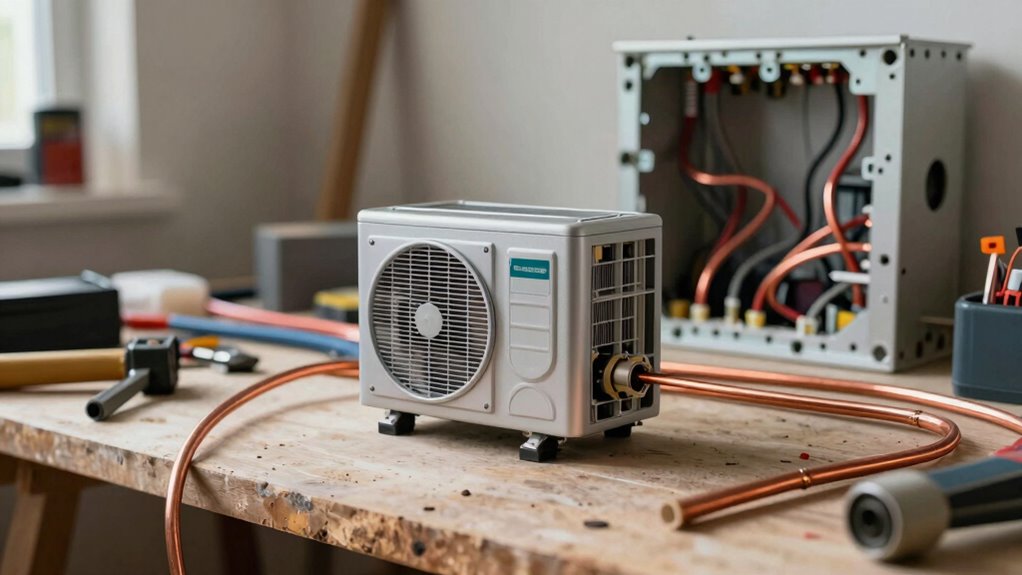

For most shoppers, the MrCool DIY 12,000 BTU with a 25-foot line set is the best overall ductless mini split DIY kit in this group, pairing a DIY-oriented setup with extra line-set reach. The Klimaire 18,000 BTU 23 SEER2 models stand out for buyers who need more capacity and higher stated efficiency, while the MRCOOL Easy Pro 12,000 BTU is a simpler alternative for shoppers comparing installation approaches. The main tradeoffs are matching capacity to the room, choosing the right voltage, and deciding how much line-set flexibility matters. DIY-ready hardware can reduce installation complexity, but it does not remove electrical, code, or site-preparation requirements. Read on for how these ten options compare and which one fits your project.

Turn your quiet moments into listening time
- Thousands of audiobooks, podcasts and originals
- Listen on your phone, tablet or Echo — also offline
- Cancel anytime
Key Takeaways
- The 25-foot MRCOOL DIY line set offers more routing flexibility than the 11.5-foot MRCOOL DIY Select kit, which can matter when the indoor and outdoor units cannot sit close together.
- Capacity divides this lineup: most models are 12,000 BTU, while the 18,000 BTU Klimaire units and 24,000 BTU MRCOOL Easy Pro serve larger cooling and heating loads.
- Stated efficiency varies considerably. Klimaire’s 18,000 BTU models list 23 SEER2, while other options list lower figures or do not provide an efficiency figure in their product name.
- Voltage is a project constraint, not a minor spec. The 115V model may suit a compatible circuit, while many of the higher-capacity choices require 230V and a suitable electrical supply.
- DIY branding does not make every installation identical. Quick-connect or fast-fit line-set designs can simplify refrigerant connections, but mounting, electrical work, permits, and local code still shape the real workload.


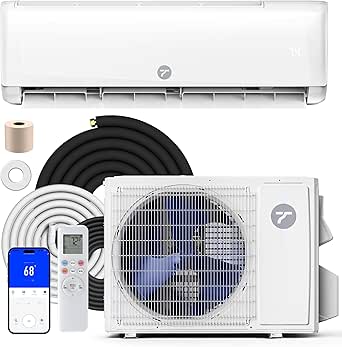


| ductless mini split diy kit | Cooling capacity | Listed coverage | Voltage | Refrigerant |
|---|---|---|---|---|
| MrCool DIY Select Mini Split A | 12,000 BTU (1 ton) | 500–1,200 sq ft | 120V | R-454B |
| MRCOOL Easy Pro 12,000 BTU Duc | 12,000 BTU | Up to 1,200 sq ft | — | — |
| 12000 BTU Mini Split Air Condi | 12,000 BTU | Up to 750 sq ft | 115V | R-32 |
| Albott 12,000 BTU DIY Mini Spl | 12,000 BTU | Up to 750 sq ft | 115V | R-32 |
| MRCOOL DIY 12,000 BTU Mini-Spl | 12,000 BTU | 500 sq ft | 115V | R-454B |
| MrCool Easy Pro 24,000 BTU 18. | — | Under 500 to 1,200 sq ft | — | — |
| Klimaire DIY 18,000 BTU 23 SEE | 18,000 BTU | 1,000 sq ft | 230V | R454B |
| Upstreman 12,000 BTU DIY Mini | 12,000 BTU | — | 230V | R32 |
| Klimaire 18,000 BTU 23 SEER2 D | 18,000 BTU | 1,000 sq ft | 230V | R454B |
| Albott Easy DIY Series 12,000 | 12,000 BTU | 750 sq ft | 115V | R32 |
More Details on Our Top Picks
MrCool DIY Select Mini Split AC & Heat Pump (12,000 BTU, 1 Ton) with 11.5ft Line Set
The pre-charged quick-connect line set makes this MrCool a strong fit for buyers who want a more direct DIY setup, while the MrCool Comfort App adds remote adjustments after installation. Its 12,000 BTU capacity is listed for spaces from 500 to 1,200 square feet, though actual fit depends on the room and building conditions. Compared with the MRCOOL DIY 12,000 BTU Mini-Split with 25-Foot Line Set, this model’s 11.5-foot line set gives less flexibility for placing the outdoor unit farther away, but it includes a stated 1-year labor warranty. The tradeoff is a 132.1-pound system that may be awkward to handle, plus the listed warranty is shorter on parts and compressor coverage than the other MRCOOL DIY option. Choose it for a compact, app-connected installation—not for an older system you hope to reuse.
Pros:- Pre-charged quick-connect line set is designed to simplify DIY installation
- MrCool Comfort App supports remote monitoring and adjustments
- 17.5 SEER2 rating and Energy Star certification are listed
- Includes a 1-year labor warranty
Cons:- 11.5-foot line set offers less placement flexibility than the 25-foot MRCOOL DIY model
- 132.1-pound listed weight can make positioning and handling difficult
- Requires a new outdoor unit rather than reusing one from an older system
Best for: Homeowners installing a new 120V mini split who value quick-connect setup, app control, and a stated labor warranty.
Not ideal for: DIYers who need a long run to the outdoor unit, anyone unable to manage a 132.1-pound system during setup, or buyers replacing only an older outdoor unit.
- Cooling capacity:12,000 BTU (1 ton)
- Listed coverage:500–1,200 sq ft
- Voltage:120V
- Refrigerant:R-454B
- Line set length:11.5 ft
- Efficiency:17.5 SEER2; Energy Star certified
- Noise level:44.5 dB
- Listed weight:132.1 lb
- Warranty:1 year labor/parts; 2 years compressor
Our verdict“Choose this MrCool for app-connected, quick-connect DIY installation when its shorter line set suits your layout.”
MRCOOL Easy Pro 12,000 BTU Ductless Heat Pump Split System
The included 16-foot line set gives this Easy Pro more placement latitude than the 11.5-foot MrCool DIY Select, which can help when the outdoor unit cannot sit close to the indoor head. Its variable-speed compressor supports heating and cooling, while the Gold Fin condenser coating is intended to help protect against corrosion. The listed coverage reaches 1,200 square feet, but that figure should not replace a room-by-room capacity check. Unlike the MRCOOL DIY 12,000 BTU Mini-Split with 25-Foot Line Set, this model has a shorter line set, so it is less suited to layouts with a distant outdoor-unit location. Its main compromise is modest warranty detail: the product information names a one-year labor warranty, without listing parts or compressor terms here. This is a practical pick when reach and corrosion protection matter more than a longer line or extensive warranty coverage.
Pros:- 16-foot line set offers more placement flexibility than the MrCool DIY Select’s 11.5-foot set
- Variable-speed compressor provides heating and cooling operation
- Gold Fin coating is intended to help protect the condenser from corrosion
- Listed for residential spaces up to 1,200 square feet
Cons:- Line set is shorter than the 25-foot MRCOOL DIY option
- Only a 1-year labor warranty is specified in the supplied product data
- No efficiency rating is provided in the supplied specifications
Best for: Homeowners who want a 12,000 BTU heat pump and need more line-set reach than a short DIY kit provides.
Not ideal for: Buyers whose outdoor unit needs to sit more than 16 feet from the indoor unit, or shoppers prioritizing clearly stated long-term parts and compressor coverage.
- Cooling capacity:12,000 BTU
- Capacity range:9,000–24,000 BTU
- Listed coverage:Up to 1,200 sq ft
- Line set length:16 ft
- Compressor:Variable speed
- Power:3.52 kW
- Condenser protection:Gold Fin coating
- Warranty:1-year labor warranty included
Our verdict“Pick the Easy Pro if a 16-foot line set and corrosion-protected condenser fit your installation better than a longer-run kit.”
12000 BTU Mini Split Air Conditioner, 115V 22 SEER2 AC & Heat Pump
Quiet operation and smart controls set this 115V system apart: the listing gives a low noise figure of 23 dB and support for app, Alexa, and Google Assistant control. Its 22 SEER2 rating is higher than the 18 SEER2 listed for the Albott 12,000 BTU DIY system, and it adds a 24-hour timer, multiple operating modes, and a self-cleaning function. Those extras suit a bedroom, office, or other room where sound and scheduling matter. But the supplied information does not identify a quick-connect or pre-charged line set, so I would not assume installation is as simple as the MrCool DIY Select or the Albott Pro Fast-Fit kit. Coverage is listed up to 750 square feet, less than the broader figures given for some other models. Choose this for connected comfort, not on smart features alone if DIY connection details are your deciding factor.
Pros:- Listed 23 dB noise level suits sound-sensitive rooms
- 22 SEER2 rating is higher than the Albott 18 SEER2 model’s listed rating
- 115V power and 12,000 BTU capacity
- Wi-Fi app, Alexa, and Google Assistant control are listed
Cons:- Supplied product information does not specify line-set length or quick-connect installation details
- Listed coverage is limited to up to 750 square feet
- Warranty information provided is limited to one year
Best for: Owners of a bedroom, home office, or sunroom up to the listed capacity who want quiet operation and app or voice control.
Not ideal for: DIY buyers who require clearly documented quick-connect installation hardware, or those heating and cooling a space larger than the listed 750 square feet.
- Cooling capacity:12,000 BTU
- Heating capacity:12,300 BTU
- Listed coverage:Up to 750 sq ft
- Voltage:115V
- Efficiency:22 SEER2
- Refrigerant:R-32
- Noise level:23 dB
- Controls:Wi-Fi app, remote, Alexa, and Google Assistant
- Warranty:1-year manufacturer warranty
Our verdict“Choose this model for a quiet, connected room when its 750-square-foot coverage and unspecified DIY connection details fit your plans.”
Albott 12,000 BTU DIY Mini Split AC & Heating System with Pro Fast-Fit Set
Pre-connected indoor wiring and a Pro Fast-Fit set make the Albott especially appealing to first-time installers trying to reduce on-site connection steps. The listing says it does not require vacuuming or extra testing, and includes a step-by-step guide and installation video—more explicit DIY guidance than the supplied details for the Temprium 12,000 BTU Mini Split. Its 115V power, 18 SEER2 rating, and coverage up to 750 square feet suit a smaller room or addition. The payoff is a simpler stated installation path, but the product data does not give a line-set length, making placement planning harder than with the 16-foot MRCOOL Easy Pro or 25-foot MRCOOL DIY kit. Also, a power cord is not included, so electrical planning remains part of the job. Its long stated parts and compressor warranty is a plus, though labor coverage is not specified.
Pros:- Pre-connected indoor unit reduces on-site wiring steps
- Fast-fit installation is described as requiring no vacuuming or extra testing
- Includes a step-by-step guide and installation video
- Lists 5-year compressor and 8-year parts warranties
Cons:- Line-set length is not specified in the supplied product information
- Power cord is not included
- No labor warranty term is stated in the supplied data
Best for: A first-time DIY installer fitting a 115V mini split in a bedroom or living area up to the listed 750-square-foot coverage.
Not ideal for: Buyers who need a specified line-set length before planning outdoor-unit placement, or anyone expecting an included power cord or stated labor warranty.
- Cooling capacity:12,000 BTU
- Listed coverage:Up to 750 sq ft
- Voltage:115V
- Efficiency:18 SEER2
- Refrigerant:R-32
- Noise level:Under 29 dB
- Installation details:Pre-connected indoor unit; Pro Fast-Fit set; no vacuuming or extra testing stated
- Power cord:Not included
- Warranty:5 years compressor; 8 years parts
Our verdict“Choose the Albott Pro Fast-Fit if beginner-focused installation guidance matters more than a documented line-set length.”
MRCOOL DIY 12,000 BTU Mini-Split Heat Pump with 25-Foot Line Set and 1-Year Labor Warranty
A 25-foot line set is the clearest reason to choose this MRCOOL: it allows more distance between indoor and outdoor units than either the 11.5-foot DIY Select or the 16-foot Easy Pro. The system also lists 23.6 SEER2 efficiency, a variable-speed compressor, and heating, cooling, and dehumidification. At 12,000 BTU and a listed 500-square-foot coverage area, its stated application is narrower than the broader coverage claim for the Easy Pro, so match capacity to the actual room rather than relying on a headline figure. The supplied data gives five years of parts and seven years of compressor coverage plus one year of labor, a fuller warranty outline than the Easy Pro listing. The tradeoff is that the labor term remains limited, and the 43 dB noise figure is higher than the quiet-focused Temprium’s listed 23 dB.
Pros:- 25-foot line set offers the most placement reach among the reviewed MRCOOL options
- 23.6 SEER2 rating is specified
- Supports heating, cooling, and dehumidification
- Lists 5-year parts, 7-year compressor, and 1-year labor coverage
Cons:- Listed coverage is 500 square feet, narrower than the Easy Pro’s up-to-1,200-square-foot claim
- 1-year labor warranty is shorter than its parts and compressor coverage
- Listed 43 dB noise level is higher than the Temprium’s 23 dB figure
Best for: Homeowners whose outdoor unit must sit farther from the indoor head and who want a 12,000 BTU kit with a long line set.
Not ideal for: Buyers needing coverage beyond the listed 500 square feet, prioritizing very low listed noise, or seeking extended labor coverage.
- Cooling capacity:12,000 BTU
- Listed coverage:500 sq ft
- Efficiency:23.6 SEER2
- Voltage:115V
- Refrigerant:R-454B
- Line set length:25 ft
- Noise level:43 dB
- Compressor:Inverter, variable speed
- Warranty:5 years parts; 7 years compressor; 1 year labor
Our verdict“Choose this MRCOOL when the 25-foot line set solves your placement needs and the listed 500-square-foot coverage fits your room.”
MrCool Easy Pro 24,000 BTU 18.9 SEER2 Ductless Heat Pump Mini Split System, 5th Generation, 16 ft Line Set
The 24,000 BTU capacity gives this MrCool Easy Pro a different job from the 12,000 BTU Albott Easy DIY: it is aimed at larger areas, with listed coverage reaching 1,200 square feet. It also supplies both heating and cooling, so it can serve as year-round conditioning rather than a cooling-only solution. The included 16-foot line set and Gold Fin condenser coating add practical value, especially where corrosion protection matters. The tradeoff is that the line set is shorter than the 25-foot kit supplied with the Klimaire DIY 18,000 BTU, which may limit placement options. Its stated efficiency range is also below that Klimaire’s advertised peak. I’d shortlist it for a large open area, but check the room load and installation requirements before choosing a high-capacity unit.
Pros:- Provides heating and cooling in one ductless system
- Capacity range reaches 24,000 BTU and listed coverage extends to 1,200 square feet
- Gold Fin condenser coating is intended to protect against corrosion and rust
- Includes a 16-foot line set and a one-year labor warranty from IWAE
Cons:- The 16-foot line set is shorter than the Klimaire DIY 18,000 BTU’s 25-foot set
- Its 18.9–20.2 SEER2 range is below the Klimaire models’ advertised peak of 23 SEER2
- The broad coverage claim does not replace sizing the system for the specific room and climate
Best for: Homeowners conditioning a large open-plan room or connected space that needs both heating and cooling.
Not ideal for: People conditioning a small bedroom or seeking a longer installation reach; its 24,000 BTU maximum may be excessive for a small zone, and the included line set is 16 feet.
- Capacity:9,000–24,000 BTU
- SEER2:18.9–20.2
- HSPF2:11.2
- Listed coverage:Under 500 to 1,200 sq ft
- Line set:16 ft
- Condenser coating:Gold Fin
- Generation:5th
- Labor warranty:1 year
Our verdict“Choose this MrCool when a larger zone needs heat and cooling, but compare its capacity and shorter line set against the room layout before buying.”
Klimaire DIY 18,000 BTU 23 SEER2 Quick Connect Mini-Split AC 230V
The 25-foot pre-charged Quick-Connect line set is the main reason I’d rank this Klimaire above conventional split kits for a self-install project: the listing says no vacuum pump, gauges, or special HVAC tools are required. That makes it a more approachable DIY choice than the MrCool Easy Pro 24,000 BTU, whose supplied details list a line set but do not describe the same tool-free process. The 18,000 BTU capacity and listed 1,000-square-foot coverage suit a substantial single zone, while R454B refrigerant, app control, and Alexa and Google Assistant support add modern features. It also claims a wide heating operating range. The compromises are a required 230V supply and a 53 dB listed noise figure; buyers should verify the electrical setup and installation clearances rather than treating “DIY” as a fit for every home.
Pros:- 25-foot pre-charged Quick-Connect line set is designed to avoid vacuum pumps and gauges
- Provides 18,000 BTU cooling with heating capability
- Up to 23 SEER2 and R454B refrigerant are specified
- Smart Life app and Alexa and Google Assistant compatibility allow remote and voice control
Cons:- Requires a 230V power supply
- Listed noise level is 53 dB, higher than the Upstreman unit’s stated minimum of 30 dB
- The 25-foot line set may still not suit every outdoor-unit placement
Best for: Hands-on homeowners who want an 18,000 BTU heat pump and a pre-charged connection system that avoids specialized refrigerant tools.
Not ideal for: Renters or owners without a suitable 230V circuit, and anyone seeking the quietest listed unit; the listed noise level is 53 dB.
- Cooling capacity:18,000 BTU
- Efficiency:Up to 23 SEER2
- Voltage:230V
- Refrigerant:R454B
- Line set:25 ft pre-charged Quick-Connect
- Listed coverage:1,000 sq ft
- Operating range:Cooling 5°F to 131°F; heating -13°F to 86°F ambient
- Noise level:53 dB
- Smart controls:Smart Life app, Alexa, and Google Assistant
Our verdict“Pick this Klimaire for a capable, tool-light DIY installation when the home has 230V power and the 25-foot line set fits the route.”
Upstreman 12,000 BTU DIY Mini Split Air Conditioner and Heat Pump, 230V
For a smaller room where indoor sound matters, the Upstreman’s 30 dB minimum noise claim is its clearest point of difference. It is a 12,000 BTU heat pump with app control, inverter operation, and a pre-charged quick-connect system, so it offers a simpler DIY path than a conventional field-connected setup. Compared with the 18,000 BTU Klimaire DIY, it targets a smaller zone and gives up that model’s 25-foot line set and listed smart-speaker compatibility. Its four-way airflow, sleep mode, and 24-hour timer help tailor comfort, while R32 refrigerant and an 18-month warranty round out the package. The listing says professional installation is recommended, though, and the power cord is not included. That makes it less turnkey than the DIY language alone might suggest.
Pros:- Heating and cooling with a 12,000 BTU capacity
- Listed indoor operation as quiet as 30 dB
- Pre-charged quick-connect system is designed to simplify installation
- App control, four-way airflow, self-cleaning, sleep mode, and a 24-hour timer
Cons:- Power cord is not included
- System ships in two packages
- Professional installation is recommended for performance, tempering the DIY appeal
Best for: Owners of a bedroom, home office, or similarly sized zone who value low indoor noise and app-based control.
Not ideal for: Buyers needing a fully supplied electrical setup or a clearly tool-free installation; the power cord is not included and professional installation is recommended.
- Cooling capacity:12,000 BTU
- Voltage:230V
- Noise level:As low as 30 dB
- Refrigerant:R32
- Operating temperature range:5°F to 131°F
- Airflow:4-way
- Warranty:18 months
- Power cord:Not included
- Included components:Indoor unit and outdoor unit
Our verdict“Choose the Upstreman for a quieter 12,000 BTU zone with app features, provided you plan for the missing power cord and installation guidance.”
Klimaire 18,000 BTU 23 SEER2 DIY Quick-Connect Mini-Split Heat Pump, 230V
This Klimaire pairs 18,000 BTU heating and cooling with a 25-foot pre-charged Quick-Connect line set, making it a strong match for buyers who want a larger single-zone system and smart-home control. Its advertised up to 23 SEER2 matches the Klimaire DIY 18,000 BTU AC model, but this listing clearly identifies heat-pump operation and gives heating and cooling temperature ranges. The Smart Life app and Alexa and Google Assistant compatibility are useful for remote scheduling, while the included communication cable, mounting hardware, disconnect, and whip help clarify what arrives in the package. Compared with the 12,000 BTU Upstreman, this is better suited to a larger space, but it requires 230V and carries a 53 dB listed noise level. Buyers should also confirm the kit’s installation steps and local electrical requirements.
Pros:- 18,000 BTU system provides both heating and cooling
- Up to 23 SEER2 efficiency is specified
- 25-foot pre-charged Quick-Connect line set supports DIY-oriented installation
- Includes app and voice-assistant controls plus listed mounting and electrical accessories
Cons:- Requires a 230V power supply
- Listed noise level is 53 dB
- Requires a new outdoor unit, so it is not a replacement indoor head for an existing system
Best for: Homeowners needing an 18,000 BTU heating-and-cooling system for a larger zone who want app and voice-assistant control.
Not ideal for: People without 230V service or those prioritizing a low listed noise level; the unit requires 230V and is specified at 53 dB.
- Cooling capacity:18,000 BTU
- Efficiency:Up to 23 SEER2
- Voltage:230V
- Refrigerant:R454B
- Line set:25 ft pre-charged Quick-Connect
- Listed coverage:1,000 sq ft
- Operating range:Cooling 5°F to 131°F; heating -13°F to 86°F ambient
- Smart controls:Smart Life app, Alexa, and Google Assistant
- Noise level:53 dB
Our verdict“Choose this Klimaire for a larger connected zone when its 25-foot quick-connect route and 230V electrical requirements suit the installation.”
Albott Easy DIY Series 12,000 BTU Mini Split AC & Heat Pump, 18 SEER2
The Albott’s 115V requirement sets it apart from both Klimaire 18,000 BTU systems and the 230V Upstreman, which can make it a more practical choice for a suitable existing household circuit. Its 12,000 BTU capacity and listed 750-square-foot coverage point to a moderate-sized zone, not the larger areas targeted by the 24,000 BTU MrCool Easy Pro. For DIY buyers, pre-wired indoor components and a vacuum-free outdoor unit reduce some installation complexity; WiFi, inverter operation, and a 29 dB noise claim add everyday convenience. The stated 5-year compressor and 7-year parts warranties are also longer than the Upstreman’s 18-month warranty. Its limits are clear: 18 SEER2 trails the Klimaire models’ advertised 23 SEER2, and the listing still recommends professional installation for people without basic technical skills.
Pros:- 115V operation may suit installations where a 230V system is not practical
- Pre-wired indoor components and a vacuum-free outdoor unit simplify parts of DIY setup
- 18 SEER2 inverter system with WiFi, sleep mode, auto clean, and child lock
- Listed warranty covers the compressor for 5 years and parts for 7 years
Cons:- 18 SEER2 is below the Klimaire models’ advertised peak of 23 SEER2
- Professional installation is recommended for buyers without basic technical skills
- Requires a new outdoor unit rather than using an existing compatible condenser
Best for: DIY-minded homeowners with a suitable 115V circuit who need a 12,000 BTU system for a room or zone listed up to 750 square feet.
Not ideal for: Buyers conditioning a large open area or seeking the highest listed efficiency; its 12,000 BTU capacity and 18 SEER2 rating trail the larger, higher-efficiency Klimaire options.
- Model:SAC012
- Cooling capacity:12,000 BTU
- Efficiency:18 SEER2
- Voltage:115V
- Listed coverage:750 sq ft
- Refrigerant:R32
- Noise level:29 dB
- Warranty:5-year compressor; 7-year parts
- Features:WiFi, inverter compressor, sleep mode, auto clean, child lock
Our verdict“Pick the Albott for a moderate-sized zone when 115V compatibility and a simpler DIY-oriented setup matter more than maximum capacity or efficiency.”

How We Picked
I compared the ten kits on the factors that determine whether a DIY mini split is a practical match: stated BTU capacity, voltage, listed efficiency, line-set length or connection style, and the amount of installation detail included in the product description. I gave extra weight to specifications that help buyers plan a real installation, such as a longer line set or a clearly stated quick-connect setup, rather than treating DIY labeling alone as proof of easy installation.
The order reflects fit and flexibility for the broadest range of buyers first, then specialized strengths. The 12,000 BTU MRCOOL DIY option with a 25-foot line set leads for its combination of common capacity and routing reach; higher-capacity or higher-efficiency models rank well for specific needs, not as universal choices. Products with fewer stated details rank below comparable options because buyers have less information to confirm compatibility before purchase. I did not treat product names as a substitute for checking installation manuals, electrical requirements, local codes, or room-load calculations.
| ductless mini split diy kit | Refrigerant |
|---|---|
| MrCool DIY Select Mini Split A | R-454B |
| MRCOOL Easy Pro 12,000 BTU Duc | — |
| 12000 BTU Mini Split Air Condi | R-32 |
| Albott 12,000 BTU DIY Mini Spl | R-32 |
| MRCOOL DIY 12,000 BTU Mini-Spl | R-454B |
| MrCool Easy Pro 24,000 BTU 18. | — |
| Klimaire DIY 18,000 BTU 23 SEE | R454B |
| Upstreman 12,000 BTU DIY Mini | R32 |
| Klimaire 18,000 BTU 23 SEER2 D | R454B |
| Albott Easy DIY Series 12,000 | R32 |
Factors to Consider When Choosing Ductless Mini Split Diy Kit
A suitable DIY mini split starts with the room and the installation site, not the product label. Before choosing from this lineup, check the electrical supply, the path between the indoor and outdoor units, and whether the kit’s connection method matches your comfort level and local rules.
Match Capacity to the Room, Not Just the Floor Area
BTU capacity needs to reflect more than square footage. Ceiling height, insulation, window area, sun exposure, air leakage, and the number of people using the room can all change the heating and cooling load. A unit that is too small may run for long stretches without keeping up, while an oversized unit can cycle in a way that affects comfort and moisture removal. Treat the 12,000 BTU choices as candidates for appropriately sized spaces, not as automatic fits for every room. The 18,000 and 24,000 BTU models may suit larger or harder-to-condition areas, but a load calculation is a better guide than guesswork. For adjoining rooms, also check whether the layout allows air to circulate as intended.
Confirm Voltage and Electrical Capacity Before Ordering
A unit’s voltage requirement can rule it in or out before installation begins. This roundup includes a 115V option, while several other models specify 230V; the home must have a compatible circuit with the capacity and wiring required by the installation manual. Do not assume an existing outlet or nearby circuit is suitable just because its voltage appears to match. Electrical work may require a dedicated circuit, a disconnect, and a qualified electrician, depending on the model and local rules. Check the nameplate and installation documentation for minimum circuit ampacity and maximum overcurrent protection. Getting this information first can prevent a kit from arriving only to reveal that the electrical work exceeds the project plan.
Measure the Full Line-Set Route
Line-set length is about installation geometry, not simply convenience. Measure the actual route between the indoor head and outdoor unit, including vertical rises, bends, and the path through the wall, then compare it with the supplied line set and the manufacturer’s limits. The MRCOOL DIY models here show why this matters: one lists an 11.5-foot line set and another a 25-foot set, giving them different placement flexibility. Avoid choosing a location based only on the shortest possible route if it puts the outdoor unit in a poor service or airflow position. Also verify whether the manufacturer allows extra line length or requires a specific procedure for longer runs. A clean route reduces the chance of awkward bends or an installation that falls outside the instructions.
Understand What DIY Connections Do—and Do Not—Simplify
Quick-connect, fast-fit, and DIY line-set systems are intended to make refrigerant connections more accessible, but they do not turn the entire job into a plug-in appliance installation. You still need to mount the indoor unit securely, place the outdoor unit on an appropriate base or bracket, make a properly sealed wall penetration, manage condensate drainage, and complete electrical connections. Read the model-specific installation manual before buying, since connection steps and permitted line-set handling can differ. Confirm what tools and accessories are included rather than assuming every needed item comes in the box. If a step calls for work outside your skills or conflicts with local rules, plan for qualified help rather than improvising.
Compare Efficiency With the Conditions Behind the Number
SEER2 is useful for comparing stated cooling efficiency, but it does not tell the whole operating-cost story. The Klimaire 18,000 BTU options list 23 SEER2, while other products provide different figures or omit that number in their names; those specifications should be checked against the full documentation. Heating performance, outdoor temperature range, climate, thermostat habits, and utility rates also affect real energy use. Look for the heating-efficiency information and operating limits if winter heat is a major reason for buying. Paying more for a higher stated efficiency may make sense in a frequently used space, but the benefit depends on local energy costs and how often the system runs. Compare complete specifications rather than using one headline figure as a guarantee of savings.
Check Site Rules, Service Access, and Warranty Conditions
Before committing to a DIY kit, check whether permits, inspections, or restrictions on outdoor equipment apply where you live. A homeowner installation may affect warranty coverage if the work does not follow the manufacturer’s requirements, so read the warranty terms alongside the installation manual. Keep the outdoor unit accessible for cleaning and service, with clearance for airflow and protection from likely snow, debris, or runoff. Think through condensate drainage too: a poor drain route can create water problems even when the refrigeration system is installed correctly. If the system will serve a bedroom, office, or other noise-sensitive area, review the published indoor and outdoor sound figures and placement guidance. These checks can change which model or mounting location makes sense before any holes are drilled.
Frequently Asked Questions
Can I install one of these kits without hiring an HVAC contractor?
Some kits are designed to make refrigerant-line connections more accessible to DIY installers, but that does not mean every part of the installation is suitable for every homeowner. Wall mounting, lifting equipment, drilling, condensate routing, and electrical work still require planning and the right skills. Local permit rules and manufacturer warranty terms may also affect who can do the work. Read the exact manual for the model you are considering before purchasing, and hire qualified help for tasks outside your experience. DIY connection hardware is a feature, not a substitute for following code and installation instructions.
Is the 115V 12,000 BTU model a better choice than a 230V model?
Neither voltage is automatically better; the right choice depends on the unit’s requirements and the electrical supply available at the installation site. A 115V model may fit a project with a suitable existing circuit, while a 230V model may require different wiring or a dedicated circuit. Confirm the electrical specifications in the manual rather than relying on the product title alone. Also compare capacity and efficiency, since voltage does not tell you how well a unit suits the room. If a new circuit is needed, include that work in the project plan before choosing between models.
How do I decide between 12,000, 18,000, and 24,000 BTU?
Start with a heating and cooling load estimate for the room or area, using its insulation, ceiling height, windows, sun exposure, and air leakage—not just its square footage. The 12,000 BTU units make up most of this roundup, while the Klimaire 18,000 BTU models and MRCOOL 24,000 BTU Easy Pro address larger loads. A higher-capacity unit is not a safe shortcut for a poorly insulated room, and oversizing can bring comfort and humidity-control drawbacks. If the system will serve more than one room, consider the layout and airflow as well as total area. When the load is uncertain, getting a qualified assessment can be less costly than choosing the wrong capacity.
What should I do if the included line set is too short for my installation?
Measure the planned route before ordering and compare it with the line-set length and maximum run allowed for the exact model. This roundup includes a MRCOOL DIY Select with an 11.5-foot line set and a separate MRCOOL DIY kit with a 25-foot set, so placement flexibility differs. Do not assume that an extension can be added or that a longer run is acceptable; the manufacturer may specify limits or require particular procedures. Check the installation manual and ask the manufacturer about approved options before changing the supplied setup. If the route is close to the limit, adjust equipment placement or get professional advice before installation.
Is the Klimaire 23 SEER2 rating enough reason to choose it over a 12,000 BTU kit?
Not by itself. The Klimaire 18,000 BTU models pair a stated 23 SEER2 figure with a higher capacity, so they may suit a larger load than a 12,000 BTU unit; that capacity difference can matter more than the efficiency headline. Check whether 18,000 BTU matches the space, whether 230V power is available, and how the full heating and cooling specifications compare. Actual energy use also depends on climate, usage, installation quality, and utility rates. Choose the Klimaire for a compatible load and project setup, not simply because its listed SEER2 number is higher.
Conclusion
For the broadest mix of common capacity and installation reach, I’d choose the MRCOOL DIY 12,000 BTU with a 25-foot line set as the best overall option. The Upstreman 12,000 BTU 230V is a value-oriented pick for buyers whose electrical setup and room load match its specifications, while the Klimaire 18,000 BTU 23 SEER2 models are the premium fit for shoppers who need more capacity and prioritize their stated efficiency. Beginners should compare the MRCOOL Easy Pro 12,000 BTU and Albott Pro Fast-Fit by reading their installation manuals closely; a DIY label alone does not make a project simple. For a larger area, consider the MRCOOL Easy Pro 24,000 BTU only after confirming the load and 230V electrical requirements. Match capacity, voltage, line-set routing, and installation demands to your actual site before choosing.
Halloween Picks
halloween
As an affiliate, we earn on qualifying purchases.