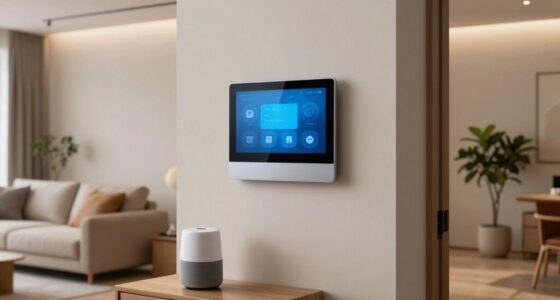
Wi-Fi offers fast speeds and broad device compatibility, ideal for streaming and high-data devices, but it consumes more power and may slow as more devices join. Zigbee uses a mesh network, making it energy-efficient, reliable, and great for battery-powered sensors, though compatibility can vary. Thread also employs a mesh design, focusing on low power, security, and future-proof standards, supporting seamless device integration. Keep exploring to understand which protocol best suits your smart home needs.

Turn your quiet moments into listening time
- Thousands of audiobooks, podcasts and originals
- Listen on your phone, tablet or Echo — also offline
- Cancel anytime
Key Takeaways
- Wi-Fi offers high data transfer speeds suitable for streaming, while Zigbee and Thread focus on low power consumption for battery devices.
- Zigbee and Thread utilize mesh networks for reliability and extended coverage, unlike Wi-Fi’s centralized approach.
- Zigbee and Thread are more energy-efficient, ideal for battery-powered sensors, whereas Wi-Fi consumes more power.
- Thread provides robust security and broad interoperability, with widespread support among device manufacturers.
- Wi-Fi is widely adopted and easy to integrate, with Zigbee and Thread emphasizing future-proofing and device compatibility.
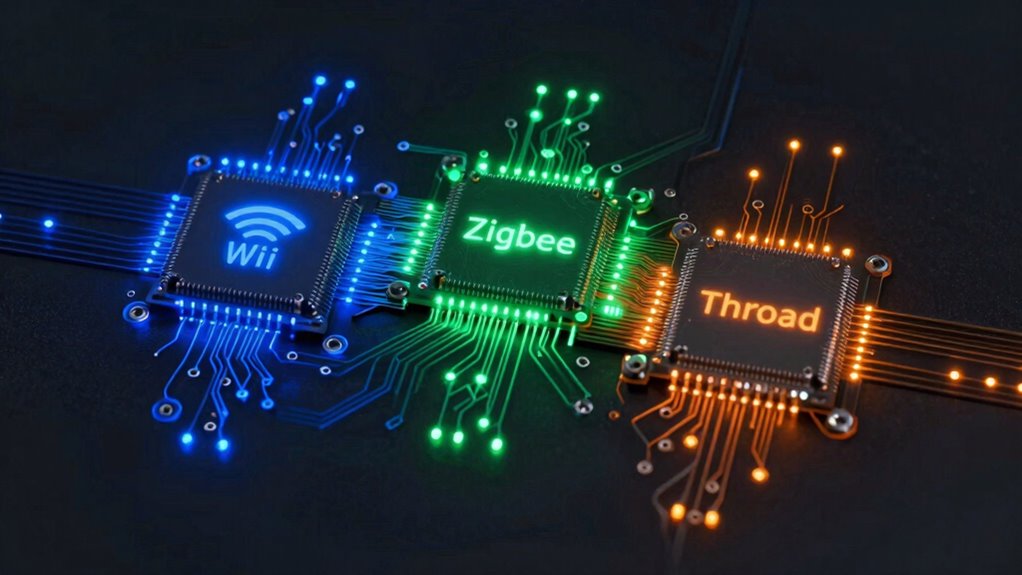
With the rise of smart home devices, understanding the differences between Wi-Fi, Zigbee, and Thread becomes essential for choosing the right connectivity technology. Each offers unique advantages and limitations, especially when it comes to smart home security and IoT device compatibility. Recognizing how these protocols communicate can help you build a more reliable, secure, and efficient smart home ecosystem.
Wi-Fi is the most familiar and widely used connectivity option. It offers high data transfer speeds, making it ideal for streaming security cameras or controlling smart TVs. Since most homes already have Wi-Fi networks, adding compatible devices is usually straightforward. However, Wi-Fi’s high power consumption and bandwidth demands can strain your network, especially as more devices connect. For smart home security, Wi-Fi cameras and alarms benefit from the high data rates, but the increased load can potentially slow down your network or pose security risks if not properly secured. When considering IoT device compatibility, Wi-Fi supports a broad range of devices, from smart lights to door locks, making it versatile but sometimes less energy-efficient for battery-operated gadgets.
Wi-Fi offers fast speeds and broad device support but can strain your network and consume more power.
Zigbee operates on a different frequency and uses a mesh network topology, meaning devices communicate directly with each other and extend the network’s range by passing signals along. This design makes Zigbee highly energy-efficient, which is beneficial for battery-powered sensors and switches. It also allows for a more resilient network—if one device drops out, the others can reroute traffic, ensuring your smart home remains responsive. When it comes to smart home security, Zigbee’s encryption and device authentication protocols add layers of safety, but you need a Zigbee hub or bridge to connect your devices to the internet. Compatibility is generally good among Zigbee devices, but you may encounter compatibility issues if you mix brands or use non-certified products. Additionally, Zigbee’s interoperability standards are continually evolving to improve device compatibility across brands. Furthermore, Zigbee’s low latency communication enhances real-time responsiveness in smart home systems. The protocol’s energy efficiency also helps extend the battery life of connected devices, reducing maintenance needs. As a result, Zigbee’s flexible network architecture makes it well-suited for a variety of smart home applications.
Thread, a newer protocol, is designed specifically for IoT device compatibility and smart home security. It also uses a mesh network, enabling devices to communicate securely and reliably without relying solely on a central hub. Thread emphasizes low power consumption and robust security, making it suitable for battery-powered sensors and locks, while providing a seamless experience for smart home automation. Its open standard ensures broad interoperability, so devices from different manufacturers can work together smoothly. For IoT device compatibility, Thread is rapidly gaining support among device makers, making it an attractive option for those looking to future-proof their smart homes. Its self-healing mesh network helps maintain connectivity even if some devices go offline, ensuring your smart home remains operational. Additionally, Thread’s compatibility with IP-based networks allows for easier integration with existing internet infrastructure, promoting wider adoption and compatibility. This open standard also encourages innovation and reduces vendor lock-in, benefiting consumers seeking a diverse ecosystem of smart devices. The focus on security features in Thread further enhances its appeal for safeguarding connected devices.
Wi-Fi smart home security cameras
As an affiliate, we earn on qualifying purchases.
As an affiliate, we earn on qualifying purchases.
Frequently Asked Questions
Which Protocol Offers the Best Security Features?
You’ll find that Zigbee offers the best security, thanks to its robust encryption protocols like AES-128 and strict device authentication. It also supports secure firmware updates, ensuring vulnerabilities are patched promptly. Wi-Fi has strong encryption options, but it’s more vulnerable if not properly configured. Thread provides decent security with encryption and authentication, but Zigbee’s focus on low-power, secure communication makes it stand out for safeguarding your smart home devices.
How Do These Protocols Impact Device Battery Life?
You’ll find that Zigbee and Thread generally consume less power compared to Wi-Fi, which impacts device battery life more markedly. Zigbee and Thread are designed for low power consumption, helping extend battery longevity in your smart devices. Wi-Fi’s higher power consumption means your devices might need more frequent recharging. So, choosing Zigbee or Thread can be better if you want longer-lasting batteries in your connected home gadgets.
Are These Protocols Compatible With Smart Home Assistants?
Think of your smart home as a bustling city; these protocols act like different languages. Wi-Fi, Zigbee, and Thread are compatible with most smart home assistants, enabling device interoperability. For example, Zigbee devices often seamlessly integrate with Amazon Alexa. Their protocol scalability guarantees future device compatibility, so your assistant can manage more gadgets over time. Overall, they’re designed to work smoothly, making your smart home smarter and more connected every day.
What Is the Typical Range for Each Protocol?
Wi-Fi typically offers a range of about 100 feet indoors, but signal interference from walls and devices can reduce this. Zigbee has a shorter range—around 10 to 20 meters—yet it uses lower frequency bands to help penetrate obstacles. Thread, designed for smart home devices, generally provides a range similar to Zigbee, around 10-20 meters, but its performance can also be affected by signal interference and the specific environment.
How Do Setup Complexities Compare Among Them?
Setting up Wi-Fi is usually straightforward, especially with familiar devices, but it can become complex as your network scales, leading to interoperability challenges. Zigbee offers easier setup for smart home devices, but managing network scalability and ensuring seamless communication can be tricky. Thread provides a more seamless setup for IoT devices, focusing on interoperability and scalability, though initial configuration might be more involved. Overall, each protocol varies in setup complexity based on your network needs.
As an affiliate, we earn on qualifying purchases.
Conclusion
While each wireless technology has its own strengths, choosing the right one depends on your needs and environment. Wi-Fi offers speed, Zigbee provides low power consumption, and Thread ensures reliable mesh connectivity. Remember, sometimes the best choice isn’t about which is superior, but which fits seamlessly into your daily life. Embrace the subtle differences—they can quietly enhance your experience without making a fuss, guiding you toward a smarter, more connected home.
As an affiliate, we earn on qualifying purchases.
As an affiliate, we earn on qualifying purchases.
Fall Picks
fall essentials
As an affiliate, we earn on qualifying purchases.