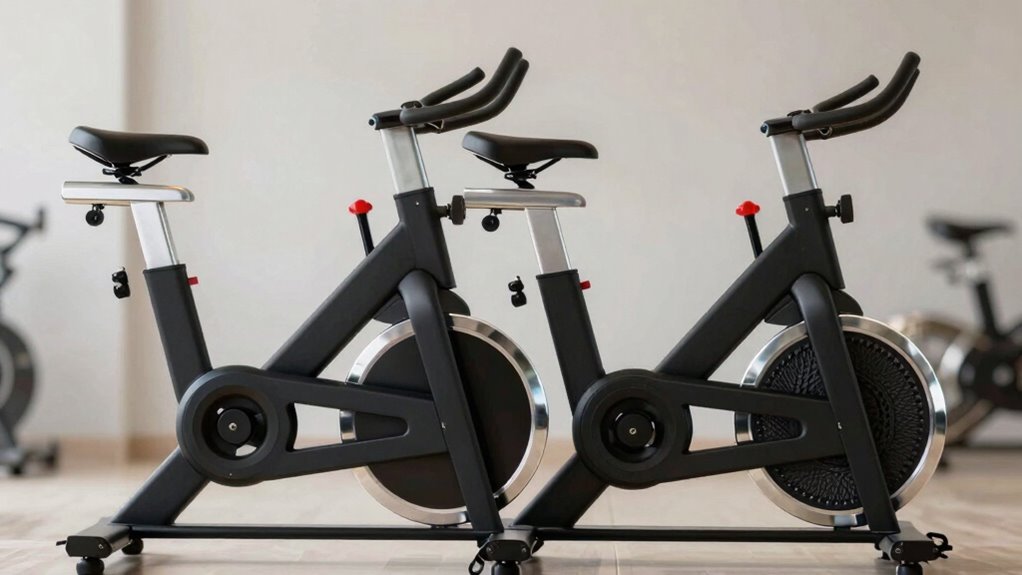

If you’re choosing between magnetic and friction spin bikes, consider your priorities. Magnetic bikes offer a smooth, quiet ride with precise resistance control and less maintenance, making them ideal for a consistent, low-noise workout. Friction bikes are more budget-friendly and responsive with tactile feedback but tend to be noisier and require more upkeep. To understand which system suits your needs best and how they compare, keep exploring the details below.

Turn your quiet moments into listening time
- Thousands of audiobooks, podcasts and originals
- Listen on your phone, tablet or Echo — also offline
- Cancel anytime
Key Takeaways
- Magnetic spin bikes provide quieter, smoother rides with precise resistance control, ideal for low-maintenance, consistent workouts.
- Friction spin bikes are typically more affordable and offer tactile resistance adjustment, appealing for responsive, high-intensity training.
- Magnetic systems require less maintenance and have longer durability due to no contact wear, reducing long-term costs.
- Friction resistance bikes may be noisier and need brake pad replacements over time, increasing upkeep.
- Both types suit indoor cycling, but your choice depends on budget, noise preference, maintenance willingness, and riding feel.
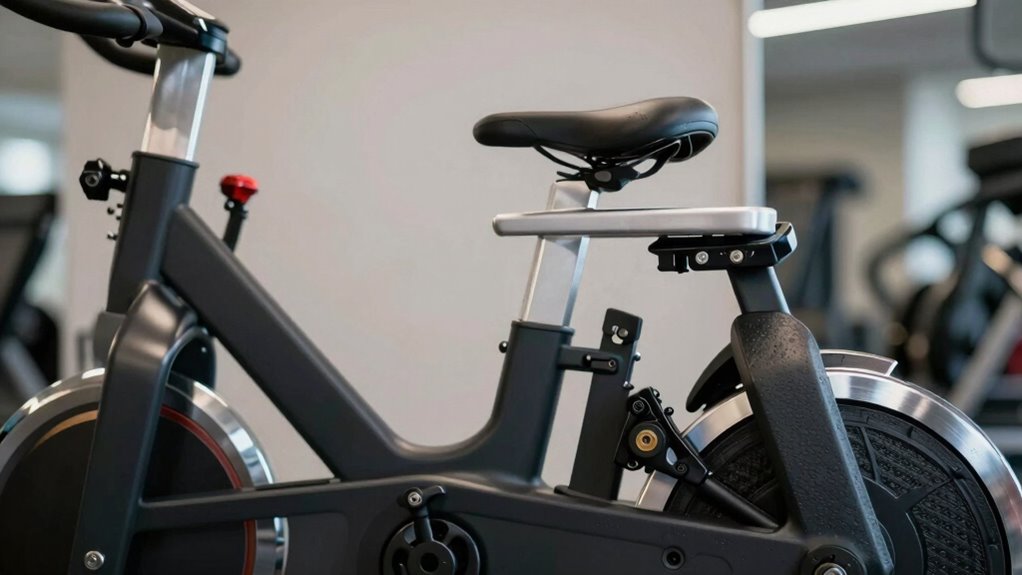
When choosing a spin bike, understanding the differences between magnetic and friction resistance systems is essential to finding the right model for your workout. Both types are used in indoor cycling, but they operate differently and can impact your experience in various ways. Resistance systems play a vital role in how challenging your workout feels and how smoothly the bike operates, so it’s worth considering which one aligns best with your fitness goals.
Magnetic resistance systems use magnets positioned near the flywheel to create resistance. When you turn the resistance knob or adjust the digital controls, the magnets move closer or farther from the flywheel, changing the magnetic field and increasing or decreasing resistance. This setup results in a very smooth and quiet ride because there’s no physical contact involved. If you prefer a quieter indoor cycling experience, especially if you plan to work out early mornings or late nights, magnetic resistance bikes are a solid choice. They also tend to require less maintenance since they don’t generate as much heat or wear on components. The adjustment tends to be precise, enabling you to fine-tune your workout intensity easily, making magnetic resistance ideal for consistent, controlled workouts. Additionally, the low-maintenance nature of magnetic systems can extend the lifespan of your bike’s components, reducing long-term costs. Moreover, magnetic resistance systems often include digital controls, allowing for more precise resistance adjustments. The ability to seamlessly switch between resistance levels can enhance your overall training experience and help you progress more effectively. To ensure optimal performance, choosing a system with accurate resistance control is beneficial.
Magnetic resistance bikes offer smooth, quiet rides with precise adjustments and low maintenance.
Friction resistance systems, on the other hand, rely on a brake pad pressing against the flywheel to generate resistance. As you turn the resistance knob, the brake pad increases pressure, creating a friction that slows the flywheel down. These bikes often feel more direct and responsive, giving you a tactile connection to your workout. However, because of the physical contact, friction resistance models tend to be noisier and require more maintenance to replace worn brake pads over time. They’re typically less expensive upfront, making them attractive if you’re budget-conscious or just starting with indoor cycling. The resistance adjustment can be less precise compared to magnetic systems, which might be a consideration if you prefer very specific levels of intensity during your training. Despite these differences, some users find the responsive feel of friction resistance bikes more motivating for high-intensity intervals and sprinting.
Ultimately, both systems support effective indoor cycling workouts, but your choice will influence your overall experience, maintenance needs, and comfort during each ride. If you’re looking for a low-maintenance option, magnetic resistance bikes are often the better choice.
As an affiliate, we earn on qualifying purchases.
Frequently Asked Questions
Which Bike Type Is More Suitable for Beginners?
If you’re a beginner, a magnetic spin bike is more suitable because it offers smoother gear resistance, making your workout comfortable and easy to adjust. Plus, magnetic bikes often provide more workout variety with different resistance levels, helping you gradually build strength without feeling overwhelmed. You’ll find it easier to focus on your form and endurance, making your initial riding experience enjoyable and motivating to keep going.
How Do Magnetic and Friction Bikes Compare in Maintenance Costs?
Have you considered how your resistance mechanism impacts maintenance costs? Magnetic bikes tend to have lower maintenance because their resistance system has fewer moving parts, making them more cost-efficient in the long run. Friction bikes, however, require regular brake pad replacements and more upkeep due to wear and tear. So, if you’re looking for a budget-friendly option, magnetic bikes usually offer better cost efficiency and less hassle over time.
Are There Any Safety Concerns Specific to Each Type?
You should be aware of safety concerns with both types. Magnetic bikes often have fewer risk factors because they use smooth, consistent resistance, reducing the chance of sudden stops. Friction bikes, on the other hand, might pose a higher risk of overheating or slipping if the resistance pad wears down. Always check safety features like sturdy handlebars and secure pedals, and stay alert during your workout to prevent accidents on either type.
Can Both Types Be Used for High-Intensity Interval Training?
Yes, both magnetic and friction spin bikes are suitable for high-intensity interval training (HIIT). Magnetic bikes offer resistance consistency and smooth power accuracy, making it easier to perform precise, rapid changes in intensity. Friction bikes, while slightly less smooth, still provide adequate resistance control for HIIT. Your choice depends on your preference for resistance feel and maintenance, but both can effectively support your high-intensity workouts.
How Do Noise Levels Differ Between Magnetic and Friction Bikes?
Think of magnetic bikes as a whispering breeze and friction bikes as a busy street. Magnetic bikes generally produce lower noise levels due to their smooth, contactless resistance, making them quieter overall. The mechanical differences mean friction bikes generate more sound because of brake pads rubbing against the flywheel. If noise matters, magnetic bikes are your best bet, offering a peaceful workout experience without sacrificing performance.
friction resistance indoor cycling bike
As an affiliate, we earn on qualifying purchases.
As an affiliate, we earn on qualifying purchases.
Conclusion
When choosing between magnetic and friction spin bikes, consider your training style and budget. Notably, magnetic bikes tend to last longer with less maintenance, saving you money in the long run. Did you know that nearly 70% of indoor cycling enthusiasts prefer magnetic resistance for its smooth and quiet operation? Whichever you pick, both options can deliver an effective workout—so go with what suits your needs best and stay motivated on your fitness journey!
As an affiliate, we earn on qualifying purchases.
As an affiliate, we earn on qualifying purchases.
Halloween Picks
halloween
As an affiliate, we earn on qualifying purchases.