
To reduce light at night, start by checking and adjusting outdoor streetlight timings or advocating for dimmer, energy-efficient bulbs to minimize external glow. Use blackout curtains or heavy, fitted window coverings designed to block out external light, and seal any gaps with adhesive strips or magnetic seals to prevent leaks. Combining these steps creates a dark environment essential for good sleep. Exploring additional tips can help you achieve even better results and rest more peacefully.

Turn your quiet moments into listening time
- Thousands of audiobooks, podcasts and originals
- Listen on your phone, tablet or Echo — also offline
- Cancel anytime
Key Takeaways
- Use blackout curtains or heavy window coverings to block external light sources effectively.
- Seal gaps around curtains and windows with adhesive strips or magnetic seals to prevent light leaks.
- Advocate for adjusting streetlight schedules or installing dimmer/energy-efficient bulbs in your neighborhood.
- Combine indoor window treatments with outdoor lighting management for maximum darkness.
- Raise community awareness about light pollution’s health impacts and promote better outdoor lighting practices.
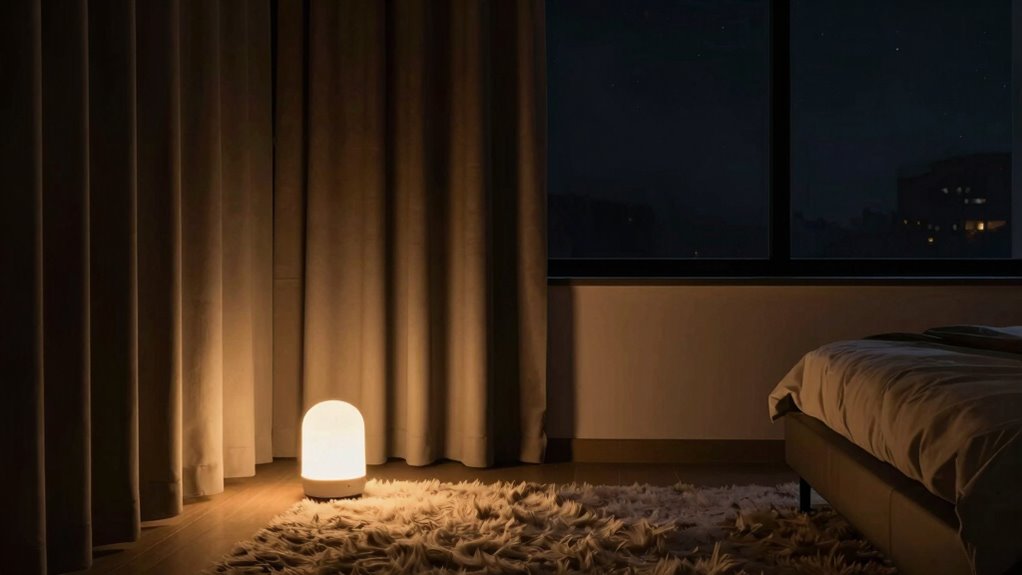
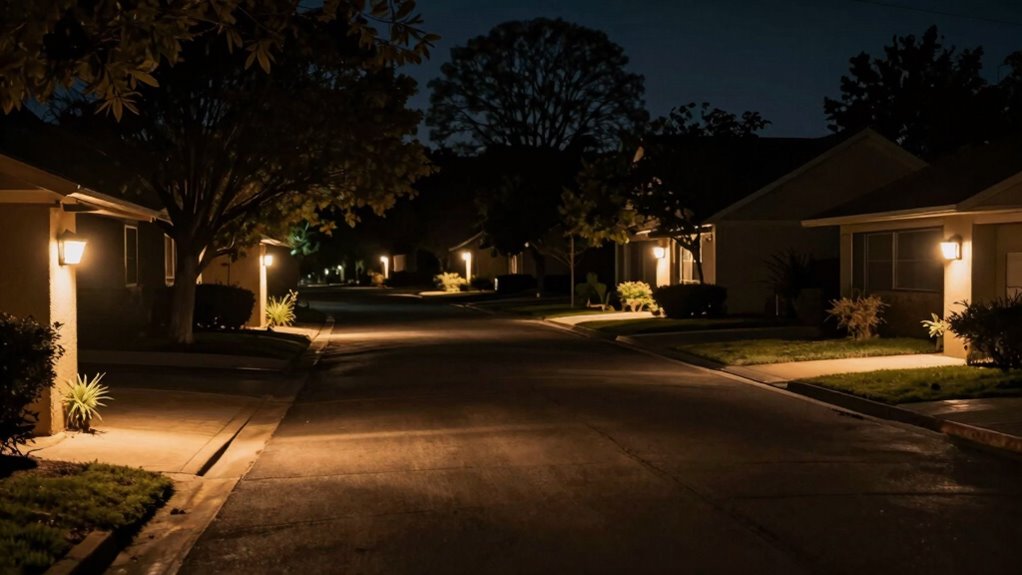
Have you ever noticed how bright nights can disrupt your sleep? It’s a common problem, especially if you live in an area with lots of streetlights. Bright outdoor lighting, combined with nearby city glow, can spill into your bedroom, making it hard to fall asleep or stay asleep. To combat this, start by considering the timing of streetlights in your neighborhood. Many streetlights operate on schedules that switch off late at night or turn on early in the evening. You can contact your local authorities or neighborhood associations to inquire about adjusting streetlight timing or installing dimmer, more energy-efficient bulbs. Sometimes, simply advocating for better streetlight management can significantly reduce unnecessary light pollution during late hours, allowing your eyes and mind to relax naturally.
In addition to addressing streetlight timing, focusing on your window coverings can make a big difference. Standard curtains or blinds often aren’t enough to block out intrusive light, especially if streetlights are shining directly into your window. Investing in blackout curtains or heavy, light-blocking window coverings can create a dark environment conducive to restful sleep. These coverings work by preventing exterior light from entering your room, giving you control over the darkness, regardless of external conditions. When choosing window coverings, look for options specifically designed to block out as much light as possible. Installing a double-layered curtain system can also improve effectiveness, with a blackout curtain on the inside and an opaque layer on the outside for added protection.
It’s also helpful to ensure your window coverings are properly fitted and sealed around the edges. Even small gaps can let in unwanted light, undermining your efforts to create a dark sleeping environment. Consider using adhesive strips or magnetic seals to close gaps around curtains or blinds. Additionally, being aware of light pollution and how it impacts our environment can motivate you to take these measures seriously. Reducing light pollution not only benefits your sleep but also supports broader environmental health. Furthermore, you can explore light-blocking window treatments that are specifically designed to enhance darkness and improve sleep quality. When combined with efforts to manage outdoor lighting, you’ll notice a marked improvement in your sleep quality. Creating a dark, peaceful sleeping environment isn’t just about comfort; it’s essential for your overall health and well-being.
Frequently Asked Questions
Can Blackout Curtains Completely Eliminate All Outdoor Light?
Blackout curtains substantially reduce outdoor lighting, but they can’t completely eliminate all light. They block most streetlights, moonlight, and other ambient sources, creating a darker environment. However, tiny gaps around the edges or light coming through the fabric may let some outdoor lighting seep in. For maximum darkness, consider combining blackout curtains with additional measures like window sealing or using blackout shades for complete coverage.
Are There Health Benefits to Reducing Light at Night?
Reducing light at night offers health benefits by supporting your circadian rhythm and boosting melatonin production. When you limit exposure to artificial light, especially blue light, your body naturally prepares for sleep, improving sleep quality and duration. This can decrease stress, enhance immune function, and lower risks of metabolic issues. So, by minimizing night-time light, you help your body restore its natural cycle, promoting overall well-being and better health.
How Does Reducing Light at Night Improve Sleep Quality?
Reducing light at night improves your sleep quality by boosting melatonin production, the hormone that helps regulate sleep. When you limit exposure to artificial light, your body better synchronizes your circadian rhythm, the internal clock that signals when to sleep and wake. This synchronization leads to deeper, more restful sleep, reduces waking during the night, and helps you wake up feeling more refreshed and alert in the morning.
What Are Eco-Friendly Options for Nighttime Light Reduction?
Did you know that over 80% of the world’s population lives under light-polluted skies? To cut your environmental impact, consider solar-powered options like outdoor lights or lanterns, which harness renewable energy. Additionally, opt for biodegradable materials in your lighting accessories to reduce waste. These eco-friendly solutions not only lower your carbon footprint but also promote healthier nights for you and the planet.
Does Reducing Light at Night Affect Outdoor Security?
Reducing light at night can impact outdoor security by creating darker areas, which might affect urban safety. However, strategic lighting, such as motion-activated lights, helps balance safety with light reduction. Keep in mind that excessive lighting can disturb wildlife, so minimizing unnecessary illumination benefits local ecosystems. By thoughtfully adjusting outdoor lights, you support urban safety while reducing wildlife disturbance, creating a safer and more eco-friendly environment at night.
Conclusion
Reducing light at night can markedly improve your sleep and overall well-being. By taking simple steps like using blackout curtains and turning off unnecessary electronics, you create a darker, more restful environment. Did you know that exposure to artificial light at night can reduce melatonin production by up to 50%? Embracing these changes not only enhances your sleep quality but also supports your health in the long run. Make small adjustments tonight for a brighter, healthier tomorrow.
Halloween Picks
halloween
As an affiliate, we earn on qualifying purchases.