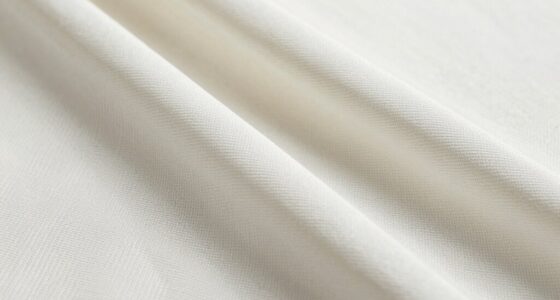
When choosing blackout curtains, your fabric’s durability, weight, and weave play key roles. Durable materials like polyester or synthetic blends resist wear and fading, offering longer-lasting use. Heavier fabrics, like velvet, block light more effectively and provide better insulation, while lighter fabrics are easier to handle but may need more frequent replacement. Fabric treatments boost water resistance and ease maintenance. Understanding these differences helps you find the perfect fit—click further to explore all the details.

Turn your quiet moments into listening time
- Thousands of audiobooks, podcasts and originals
- Listen on your phone, tablet or Echo — also offline
- Cancel anytime
Key Takeaways
- Durable fabrics like polyester and synthetic blends resist wear, fading, and tearing, ensuring longer-lasting blackout curtains.
- Fabric weave quality directly impacts light-blocking ability and visual texture of the curtains.
- Heavier fabrics such as velvet and thick polyester blocks more light and provides better insulation.
- Fabric treatments enhance water resistance, stain resistance, and ease of maintenance, extending curtain lifespan.
- Eco-friendly and lightweight fabrics offer sustainable options, but may provide less insulation and durability.
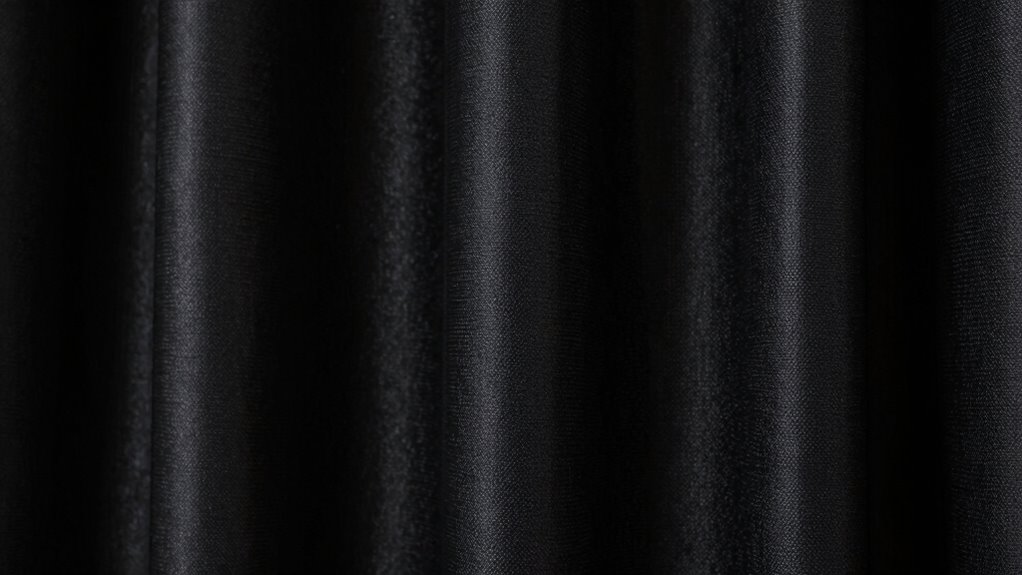
When choosing blackout curtains, understanding the fabric differences can substantially impact their effectiveness and appearance. The material you select plays an essential role in how well the curtains block light, insulate your space, and hold up over time. Fabric durability is a key factor to evaluate because it determines how long your curtains will last, especially if you plan to use them daily. Durable fabrics, like polyester or tightly woven synthetic blends, resist wear and tear better than lighter, more delicate materials. They’re less prone to tearing, pilling, or fading, ensuring that your blackout curtains stay looking fresh and functional for years. On the other hand, fabrics that are less durable may require more careful handling and frequent replacement, which can add to the overall cost and effort. The fabric weave** also plays a crucial role in how well the curtains perform and look, affecting both blackout capability and aesthetic appeal. Fabric weight variations also markedly influence the blackout effectiveness and the overall look of your curtains. Heavier fabrics, such as velvet or thick polyester blends, tend to block out light more effectively because their density prevents light from seeping through. These fabrics often provide better insulation, helping to regulate room temperature and reduce energy costs. The choice of fabric in terms of quality can also impact the ease of cleaning and maintenance, which is an important consideration for long-term use. Additionally, the fabric treatment can enhance properties such as water resistance or ease of stain removal, contributing to the curtain’s longevity. It’s worth noting that fabric composition influences the environmental impact and sustainability of your blackout curtains. Lighter fabrics, like thin polyester or sheer blackout blends, may still block a significant amount of light but might not insulate as well. They can be easier to hang and fold, making them a popular choice for decorative purposes or spaces where complete blackout isn’t essential. When evaluating fabric weight, keep in mind that heavier curtains generally have a more substantial feel and a luxurious drape, which can elevate the aesthetic of your room. Conversely, lighter fabrics tend to be more flexible and easier to handle but may not provide the same level of darkness or insulation. Additionally, choosing eco-friendly fabrics can be important for sustainability-conscious consumers**.
Frequently Asked Questions
Are Blackout Curtains Suitable for All Window Sizes?
Blackout curtains are generally suitable for most window sizes, but you need to take into account window installation and curtain rod compatibility. Measure your windows carefully to ensure a proper fit, especially if you want full coverage or custom sizes. Choose a curtain rod that can support the weight of blackout fabric, and make sure it’s compatible with your curtain’s header style. Proper fitting and installation are key for effective blackout and a sleek look.
How Do Blackout Curtains Impact Room Temperature?
Blackout curtains help regulate your room temperature by providing excellent thermal insulation, which keeps the heat in during winter and blocks out heat during summer. This enhances your energy efficiency, reducing the need for extra heating or cooling. You’ll notice a more consistent, comfortable environment, and potentially lower energy bills. Keep in mind, the fabric’s quality and lining quality play a significant role in how well these curtains impact temperature control.
Can Blackout Curtains Be Washed or Cleaned Easily?
A stitch in time saves nine, so you’ll want to keep your blackout curtains clean. You can usually wash them at home, but it depends on the fabric durability—some are machine washable, while others need gentle handwashing. Always check the care label for cleaning methods. Regular cleaning keeps them looking fresh and guarantees they block out light effectively. Just be cautious with delicate fabrics to avoid damage.
Do Different Fabrics Affect Noise Reduction?
Different fabrics do affect noise reduction because of their weave and sound absorption qualities. Thicker, tightly woven fabrics block more sound, reducing noise effectively, while lighter, looser weaves allow sound to pass through more easily. When choosing blackout curtains, consider fabrics with dense weaves and good sound absorption properties to enhance noise reduction. Your choice of fabric directly impacts how well your curtains dampen outside noise and create a quieter space.
Are Blackout Curtains Safe for Children and Pets?
Blackout curtains are generally safe for children and pets when made from non-toxic, fire-retardant fabrics. You should check for child safety and pet safety certifications to guarantee they don’t contain harmful chemicals. Avoid curtains with loose cords or hooks, which could pose choking or entanglement hazards. Opt for designs with secure, child-proof features to keep your little ones and furry friends safe while enjoying the benefits of blackout curtains.
Conclusion
Understanding the fabric differences in blackout curtains helps you choose the right option for your space. Whether you opt for polyester, cotton, or a blend, each material offers unique benefits. Did you know that polyester blackout curtains can block up to 99% of light? That’s nearly complete darkness, perfect for a good night’s sleep or a cozy movie night. With the right fabric, you’ll enjoy better comfort and energy savings every day.
Halloween Picks
halloween
As an affiliate, we earn on qualifying purchases.