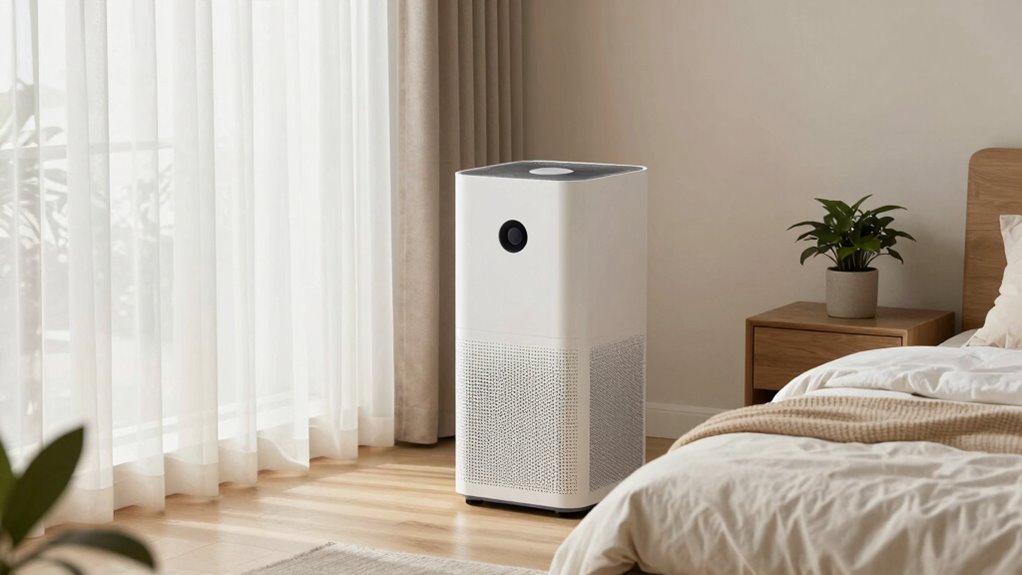

To optimize your bedroom air purifier placement, position it centrally near the bed or pollutant sources for better circulation, and keep it away from corners or furniture that block airflow. Place it on a flat, stable surface in a quiet area, and avoid nearby moisture or electronic interference. Use quiet modes at night and experiment with airflow settings for balance. Proper placement boosts efficiency, noise reduction, and sleep quality—continue to explore for more helpful tips.

Turn your quiet moments into listening time
- Thousands of audiobooks, podcasts and originals
- Listen on your phone, tablet or Echo — also offline
- Cancel anytime
Key Takeaways
- Place the purifier centrally near the bed or pollutant sources for optimal air circulation.
- Keep it away from corners, furniture, and moisture to prevent airflow obstruction and damage.
- Use sleep or quiet mode and position the device away from your pillow for peaceful, effective operation.
- Ensure the purifier is on a flat, stable surface for minimal noise and vibrations.
- Regularly check and replace filters to maintain efficiency and reduce noise levels.
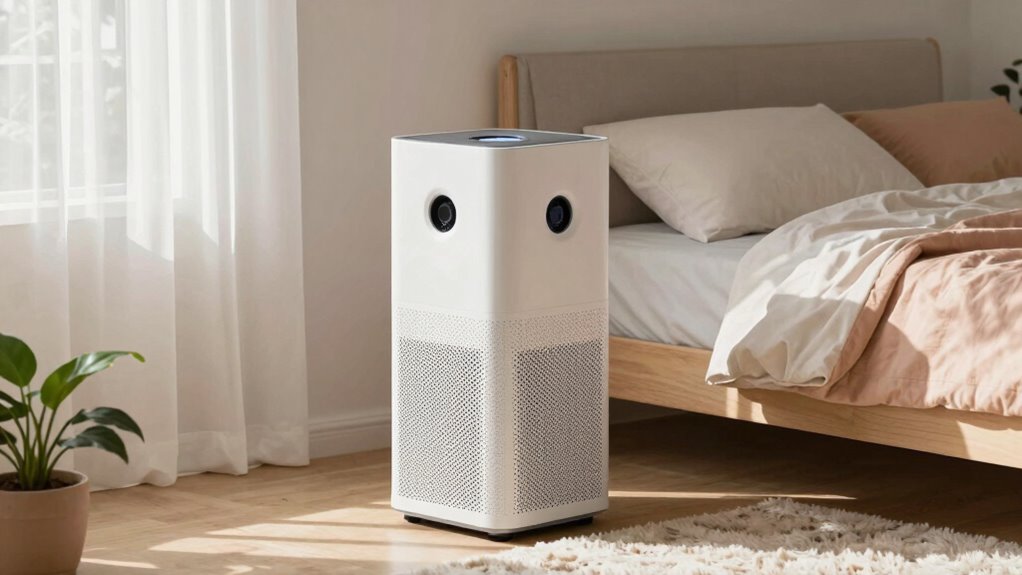
Ever wondered how to create a healthier sleeping environment? It all starts with where you place your air purifier in your bedroom. Proper placement can markedly improve air quality and reduce noise levels, making your sleep more restful and invigorating. First, consider positioning your air purifier in a central location, ideally near the source of pollutants or allergens, such as close to your bed or a frequently used area. This guarantees the purifier can circulate and filter the air efficiently throughout the room. Avoid placing it in corners or behind furniture, as these spots can obstruct airflow and diminish its effectiveness. Instead, keep it in a spot where air can flow freely around it, maximizing filtration and ensuring cleaner air reaches every corner of your space.
Place your air purifier centrally near your bed for optimal air circulation and cleaner sleep.
Noise levels are another vital factor when deciding on placement. Some air purifiers can be quite loud, especially on high settings, which can disturb your sleep. To minimize noise disruptions, place the purifier slightly away from your pillow or head while sleeping, but still within effective range for air circulation. Many models feature a sleep or quiet mode—use this setting once you’re ready to sleep, and position the unit so that the sound isn’t intrusive. If your bedroom has a particular quiet zone, consider placing the purifier in that area or using the lowest setting during nighttime hours to maintain a peaceful environment. Additionally, choosing a device with electromagnetic compatibility can help prevent interference with other electronic devices in your space. Including proper airflow in your placement considerations ensures the device operates optimally. Furthermore, ensuring the device is placed on a flat, stable surface can prevent unnecessary vibrations or noise during operation. Maintaining a consistent air quality level through correct placement can significantly impact your overall well-being and sleep quality.
Another tip is to keep the purifier away from sources of moisture or direct sunlight, which could damage the device or reduce its efficiency. Also, avoid placing it near electronic devices that generate electromagnetic interference, as this can affect its operation. When setting up the purifier, guarantee it’s on a flat, stable surface—either on the floor or a sturdy table—to prevent vibrations that might create noise or cause the device to shift. If your purifier has adjustable airflow settings, experiment to find a balance between effective air filtration and minimal noise, especially during sleep hours. Regularly checking and replacing filters is crucial, as clogged filters can compromise air quality and increase noise levels. Routine maintenance like this ensures the device continues functioning efficiently. Proper placement combined with Routine maintenance will help your air purifier function at its best. Creating the perfect environment isn’t just about the device itself but how and where you position it. With thoughtful placement, you’ll enjoy cleaner air, lower noise levels, and better sleep every night.
Frequently Asked Questions
How Often Should I Clean or Replace My Bedroom Air Purifier Filters?
You should clean or replace your bedroom air purifier filters every 3 to 6 months, depending on usage and air quality. Regular filter maintenance guarantees ideal performance and air quality. Check your purifier’s user manual for specific replacement frequency recommendations, as some filters need more frequent attention. If you notice reduced airflow or odors, it’s a sign to replace or clean the filters sooner. Staying on top of filter maintenance keeps your air clean and healthy.
Can I Leave My Air Purifier on All Night?
Leaving your air purifier on all night is like having a silent guardian watching over your sleep. It improves nighttime air quality, helping you breathe easier. Modern purifiers are designed with low noise levels, so they won’t disturb your rest. As long as your device is maintained and filter changes are up-to-date, running it overnight is safe and beneficial, ensuring cleaner, fresher air while you sleep.
Is It Safe to Use an Air Purifier Around Children or Pets?
Yes, it’s safe to use an air purifier around children and pets when you choose a model with child safety features and pet protection. Make certain the purifier’s filters and parts are non-toxic, and keep cords out of reach. Regularly clean and maintain the device to prevent any hazards. By taking these precautions, you guarantee a healthier environment for your loved ones without risking their safety.
Do Air Purifiers Reduce Odors in Bedrooms Effectively?
Ever wonder if an air purifier can truly tackle bedroom odors? It definitely can, thanks to odor absorption and improved air circulation. You just need to place it strategically—away from walls and clutter—to maximize its effectiveness. Regularly changing filters also helps. When positioned correctly, your air purifier will efficiently reduce smells from pets, cooking, or smoke, leaving your bedroom fresh and inviting.
What Features Should I Look for in a Bedroom Air Purifier?
When choosing a bedroom air purifier, look for features like HEPA filters for allergen removal and activated carbon filters for odors. Make sure it’s easy to maintain with accessible filters and clear maintenance indicators. Consider a quiet operation mode to avoid disruptions. These features help improve your bedroom air quality and make air purifier maintenance simple, so you can breathe cleaner air effortlessly and enjoy a healthier sleeping environment.
Conclusion
When it comes to placing your air purifier in the bedroom, remember that location is key. Position it where it can do the most good—away from walls and vents, yet close enough to circulate clean air effectively. Think of your purifier as a trusted ally, working behind the scenes to keep your air fresh and healthy. Get it right, and you’ll breathe easier, knowing you’re taking a smart step toward better sleep and overall wellness.
Halloween Picks
halloween
As an affiliate, we earn on qualifying purchases.