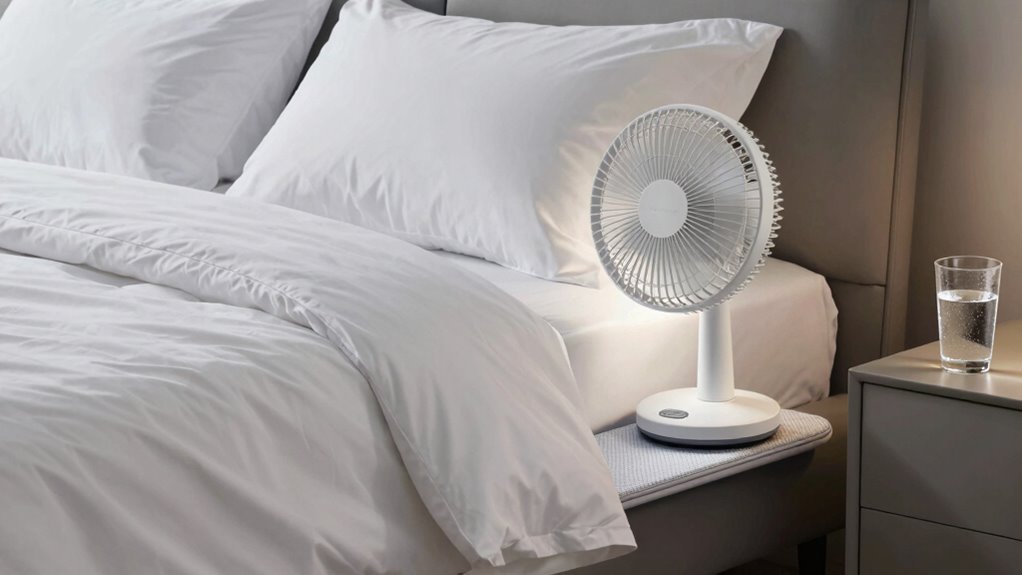

To cool your bed effectively, choose breathable materials like cotton or linen and avoid heavy blankets that trap heat. Use cooling mattress toppers or gel-infused memory foam to better regulate temperature. Keep your room cool with fans or air conditioning, and position fans near the bed for airflow. Adjust your sleep position and bedding to enhance heat dissipation. Continue exploring these strategies to discover how to stay comfortable all night long.

Turn your quiet moments into listening time
- Thousands of audiobooks, podcasts and originals
- Listen on your phone, tablet or Echo — also offline
- Cancel anytime
Key Takeaways
- Use breathable bedding materials like cotton or linen to promote airflow and wick away moisture.
- Incorporate cooling mattress pads, gel-infused foam, or phase-change materials for active temperature regulation.
- Lower room temperature with fans or air conditioning and position fans to create a cooling breeze.
- Utilize smart cooling devices or climate-responsive bedding that adapt to body heat and maintain consistent temperature.
- Sleep on your back and minimize bedding to enhance airflow and reduce heat retention during sleep.
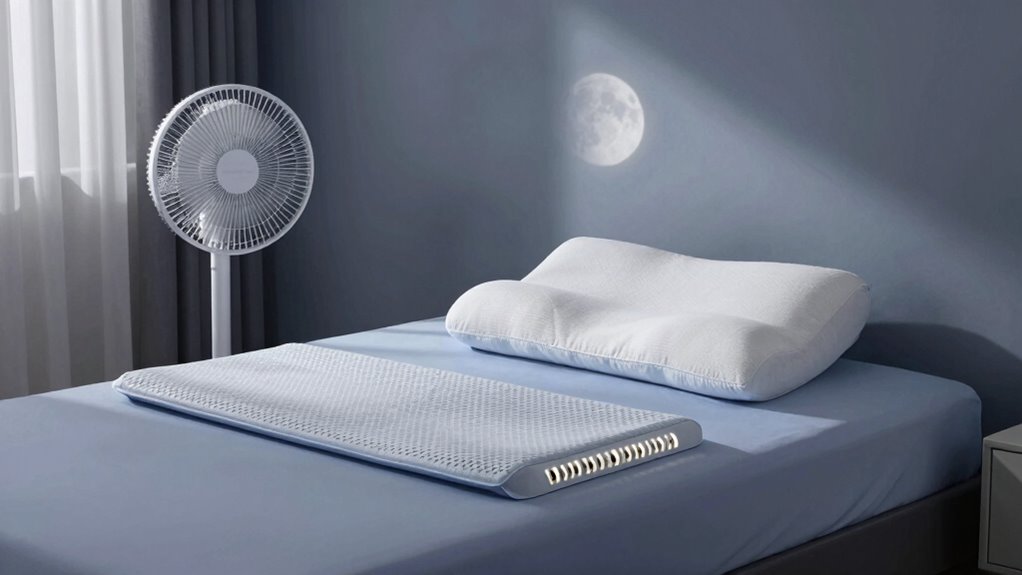
When hot nights make it difficult to sleep, implementing effective bed cooling strategies can make a noticeable difference. You want to create a sleep environment that supports temperature regulation, helping you stay comfortable throughout the night. The key is to optimize your sleep environment by reducing heat buildup and promoting airflow around your body. Small changes can have a big impact on how well you rest when temperatures soar.
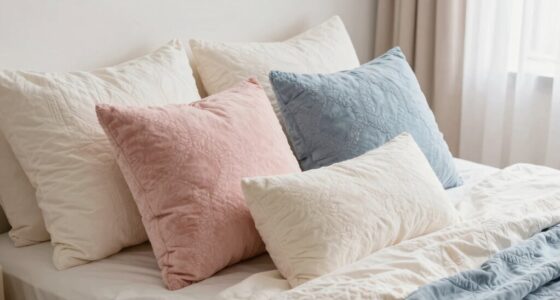
Start by choosing breathable bedding materials like cotton or linen. These fabrics allow air to circulate, preventing heat from trapping against your skin. Avoid heavy, insulating blankets that can trap heat and make you feel hotter. Instead, opt for lightweight, moisture-wicking sheets that draw sweat away from your body. These help keep your skin dry and cool, which is essential for maintaining a comfortable sleep environment.
Choose breathable, moisture-wicking bedding like cotton or linen for cooler, more comfortable sleep in hot weather.
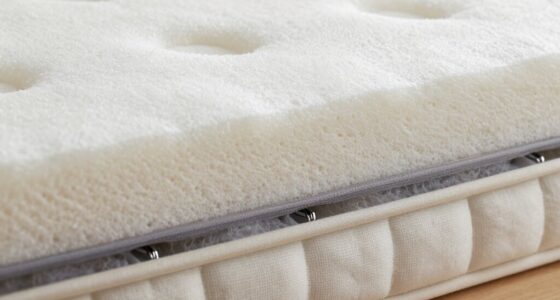
You can also consider using a cooling mattress pad or topper. These products are designed to absorb and dissipate heat, providing a cooler surface for sleep. Many incorporate gel-infused memory foam or phase-change materials that actively regulate temperature, helping to keep you from overheating during the night. Pairing this with a ventilated mattress can enhance airflow, promoting better temperature regulation and creating a more comfortable sleep environment overall. Additionally, temperature regulation can be optimized by choosing products specifically designed for heat dissipation. Incorporating smart cooling technology can further enhance your sleep comfort by adapting to your body’s needs throughout the night. Using climate-responsive materials in your bedding can also help maintain a consistent temperature, preventing sudden heat spikes.
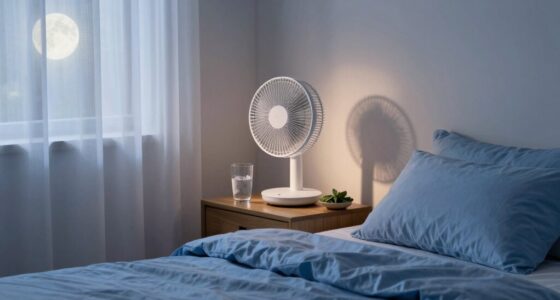
Another effective method is to lower the room temperature before bedtime. Using a fan or air conditioner can considerably reduce the ambient heat, making it easier to maintain a cooler sleep environment. Positioning a fan near your bed can also create a breeze that helps evaporate sweat and cool your skin. If you don’t have air conditioning, placing a bowl of ice water in front of a fan can produce a chilled airflow, providing a simple yet effective cooling effect. Incorporating airflow techniques can further improve heat dissipation and overall comfort.
Finally, consider your sleep position and bedding arrangement. Sleeping on your back exposes more skin to the air and can help with heat dissipation. Keep your bedding minimal to reduce heat retention, and consider using a cooling pillow designed with breathable materials or cooling gel. These small adjustments support better temperature regulation and help you stay comfortable all night long.
cooling mattress topper gel-infused memory foam
As an affiliate, we earn on qualifying purchases.
As an affiliate, we earn on qualifying purchases.
Frequently Asked Questions
Can Cooling Strategies Improve Sleep Quality Long-Term?
Yes, cooling strategies can improve your long-term sleep quality by optimizing your sleep environment through effective temperature regulation. When your bedroom stays cooler, you fall asleep faster and experience deeper, more restorative sleep cycles. Consistent temperature control helps prevent overheating, reduces night awakenings, and promotes better overall sleep health. Incorporating cooling techniques into your routine can lead to more restful nights and improved daytime functioning over time.
Are There Health Risks With Certain Bed Cooling Methods?
Health concerns and safety precautions matter when choosing bed cooling methods. Some cooling products, like certain gels or pads, may cause skin irritation or allergic reactions if not used properly. Always check for safety instructions, avoid overly cold devices that can cause frostbite, and guarantee good ventilation to prevent overheating or humidity buildup. By prioritizing safety precautions, you reduce potential health risks and enjoy a comfortable, safe sleep environment.
How Do Cooling Strategies Vary for Different Mattress Types?
You’ll find cooling strategies differ based on your mattress material and cooling technology. For memory foam, choose breathable covers or cooling gel layers to combat heat retention. In innerspring mattresses, focus on ventilation and airflow. Hybrid mattresses often combine these features, so consider cooling technology like phase-change materials or moisture-wicking fabrics. Adjust your approach based on your mattress type to optimize comfort, ensuring a cooler, more restful sleep.
Do Cooling Pillows Work Better Than Mattress Toppers?
Think of cooling pillows as the cool breezes whispering against your skin, offering quicker relief than mattress toppers. Cooling pillow benefits include targeted temperature regulation and enhanced comfort. When comparing mattress topper options, toppers cover more surface area but may take longer to cool down. If you crave instant relief and precise cooling, a cooling pillow often works better, while toppers provide overall temperature moderation for the entire bed.
What’s the Most Energy-Efficient Cooling Option?
The most energy-efficient cooling option for your bed is using a breathable, moisture-wicking sheet or a cooling pad with minimal power use. This choice offers significant energy savings compared to electronic cooling devices. When considering cost comparison, these passive solutions are more affordable and eco-friendly. They help maintain a comfortable temperature without high energy consumption, ensuring you get a cool, restful sleep while saving on electricity bills.
breathable cotton linen bedsheets
As an affiliate, we earn on qualifying purchases.
As an affiliate, we earn on qualifying purchases.
Conclusion
Now that you know these cooling strategies, your bed becomes a fortress against heat, a cool oasis in a desert of discomfort. Imagine slipping beneath sheets that breathe with you, turning your sleep into a revitalizing escape. With these tips, you hold the key to restful nights and energized mornings. Embrace the chill, and let your bed transform from a warm trap into a cool haven—your personal retreat from the blazing heat.
As an affiliate, we earn on qualifying purchases.
portable fan with ice water bowl
As an affiliate, we earn on qualifying purchases.
As an affiliate, we earn on qualifying purchases.
Halloween Picks
halloween
As an affiliate, we earn on qualifying purchases.