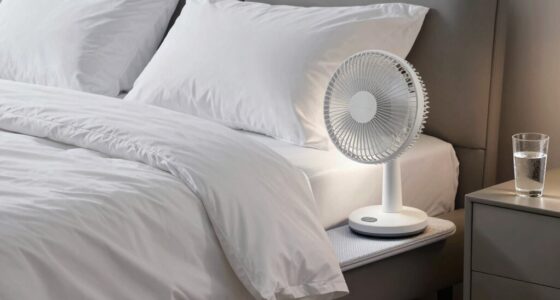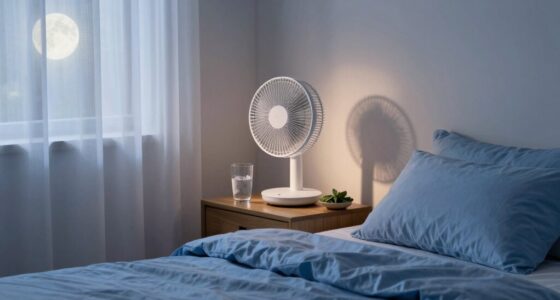
To improve your sleep, keep your bedroom humidity between 40% and 60%. Proper moisture levels help you breathe easier, reduce dryness, and prevent stuffiness or mold growth. If humidity is too low, your skin and sinuses can become irritated, making it harder to rest. Too high, and dust mites or mold may affect your breathing. Using an air purifier with humidity control can help maintain the ideal balance. Keep going to discover more ways to optimize your sleep environment.

Turn your quiet moments into listening time
- Thousands of audiobooks, podcasts and originals
- Listen on your phone, tablet or Echo — also offline
- Cancel anytime
Key Takeaways
- Maintain bedroom humidity between 40-60% to promote optimal sleep quality and comfort.
- Use air purifiers with humidification or dehumidification features to regulate moisture levels.
- Address dry skin, sore throat, or stuffiness by adjusting humidity to prevent sleep disturbances.
- Monitor indoor humidity regularly to avoid issues caused by excessively dry or damp air.
- Proper humidity control reduces allergens, mold growth, and improves overall sleep environment health.

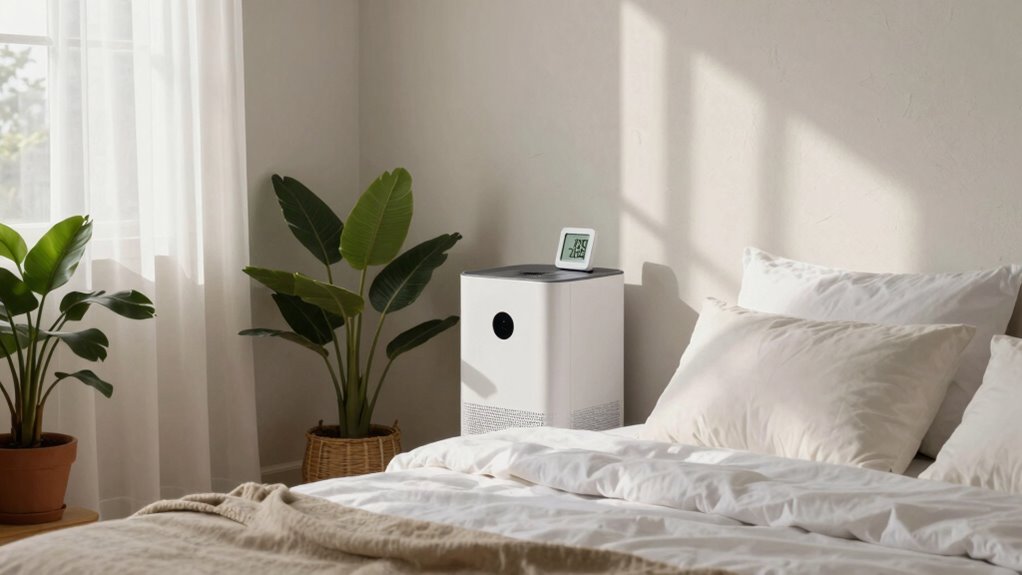
Maintaining the right humidity level in your bedroom can substantially improve your sleep quality. When the air feels too dry or too damp, it affects your comfort and can lead to restless nights. One effective way to manage this is by using an air purifier equipped with a humidification or dehumidification feature. These devices help regulate humidity levels, ensuring the air remains within the ideal range of 40-60%. When humidity is properly balanced, your breathing improves, and your body can relax more easily, leading to a deeper, more restorative sleep.
Proper humidity levels in your bedroom promote better sleep and overall health.
If the air is too dry, usually below 40%, you may notice dry skin, irritated sinuses, and even a sore throat. These discomforts can make it difficult to fall asleep or stay asleep through the night. An air purifier with humidifying capabilities adds moisture to the air, alleviating these issues and creating a more comfortable environment. Conversely, if the humidity levels are too high, above 60%, you might experience stuffiness, mold growth, or dust mite proliferation. These conditions can trigger allergies or asthma symptoms, disrupting your sleep. In this case, a dehumidifying feature in your air purifier can help pull excess moisture from the air, preventing health issues and making it easier to breathe comfortably throughout the night.
Maintaining ideal humidity levels isn’t just about comfort; it also impacts your overall health. Proper humidity reduces the presence of airborne viruses, bacteria, and allergens, which thrive in either overly dry or damp environments. An air purifier that actively monitors and adjusts humidity levels keeps these irritants at bay, contributing to healthier, more restful sleep. Additionally, balanced humidity helps protect your bedding, furniture, and electronics from damage caused by excess moisture or dryness, prolonging their lifespan and maintaining a clean, inviting space. It’s also important to pay attention to seasonal changes, as indoor humidity can fluctuate significantly depending on the weather outside, making humidity control even more essential. Proper humidity levels also support indoor air quality, which is crucial for overall health and well-being.
You should also pay attention to your surroundings and your body’s signals. If you wake up feeling stuffy or develop dry skin, it’s a sign to check your humidity levels and consider using an air purifier with appropriate features. Ensuring your bedroom stays within the recommended humidity range creates a stable environment that promotes consistent, uninterrupted sleep. Properly managed humidity levels are essential for indoor air quality, making your bedroom a sanctuary where restful sleep becomes effortless. By investing in a quality air purifier designed to control humidity, you’re taking a proactive step toward better sleep hygiene and overall health. Properly managed humidity levels make your bedroom a sanctuary where restful sleep becomes effortless.
air purifier with humidification and dehumidification
As an affiliate, we earn on qualifying purchases.
As an affiliate, we earn on qualifying purchases.
Frequently Asked Questions
How Does Humidity Affect Allergy Symptoms During Sleep?
Humidity levels directly impact your allergy symptoms during sleep. If it’s too dry, you may experience nasal congestion and respiratory discomfort, disrupting allergy relief. Conversely, high humidity encourages mold and dust mites, worsening allergies and affecting respiratory health. Maintaining a balanced humidity, around 40-50%, helps reduce allergens, supports better allergy relief, and promotes healthier breathing throughout the night. Proper humidity levels are key for a restful, allergy-free sleep.
What Are the Best Types of Humidifiers for Bedrooms?
Imagine you’re in a futuristic speakeasy—sleek, quiet, and efficient. For your bedroom, choose a cool-mist ultrasonic humidifier; it’s known for quiet operation and easy humidifier maintenance. Look for models with adjustable humidity controls and low noise levels, so it won’t disturb your sleep. Regular cleaning prevents mold and bacteria buildup, ensuring you breathe comfortably. These features help create the ideal environment for restful, allergy-free sleep.
Can High Humidity Cause Mold Growth in Bedrooms?
Yes, high humidity can cause mold growth in bedrooms. When moisture levels stay elevated, mold prevention becomes difficult. You should control moisture by using dehumidifiers or ensuring proper ventilation, especially in areas prone to dampness. Keeping humidity levels between 40-60% helps prevent mold buildup and promotes better sleep. Regularly monitoring and managing moisture control is key to avoiding mold issues and maintaining a healthy, comfortable sleeping environment.
How Do I Measure My Bedroom’s Humidity Levels Accurately?
To measure your bedroom’s humidity accurately, don’t leave it to guesswork—use a hygrometer. You can choose between digital and analog models; digital ones often offer more precise readings and easier calibration. Make sure to calibrate your hygrometer regularly for reliability, especially if it’s digital. Think of it as keeping your finger on the pulse—this way, you’ll maintain ideal humidity levels for better sleep and a healthier room.
What Is the Ideal Humidity Range for Sleep Comfort?
The ideal humidity range for sleep comfort is between 40% and 60%. In your sleep environment, maintaining this range helps prevent dry skin, congestion, and discomfort. Use humidity control devices like humidifiers or dehumidifiers to keep levels steady. You’ll find that a balanced humidity creates a more comfortable, restful atmosphere, helping you fall asleep faster and stay asleep longer. Regularly monitor and adjust to optimize your sleep quality.
As an affiliate, we earn on qualifying purchases.
Conclusion
Maintaining the right bedroom humidity balances comfort and health, transforming your space into a sanctuary. As you breathe in the crisp, fresh air, imagine the dryness giving way to a gentle, soothing mist that calms your body. Just like the perfect night’s sleep, ideal humidity levels create a peaceful oasis amidst chaos. When you control moisture, you invite serenity, turning your bedroom into a haven where restful nights become a natural part of your life.
As an affiliate, we earn on qualifying purchases.
As an affiliate, we earn on qualifying purchases.
Evergreen bestsellers Picks
bestsellers
As an affiliate, we earn on qualifying purchases.