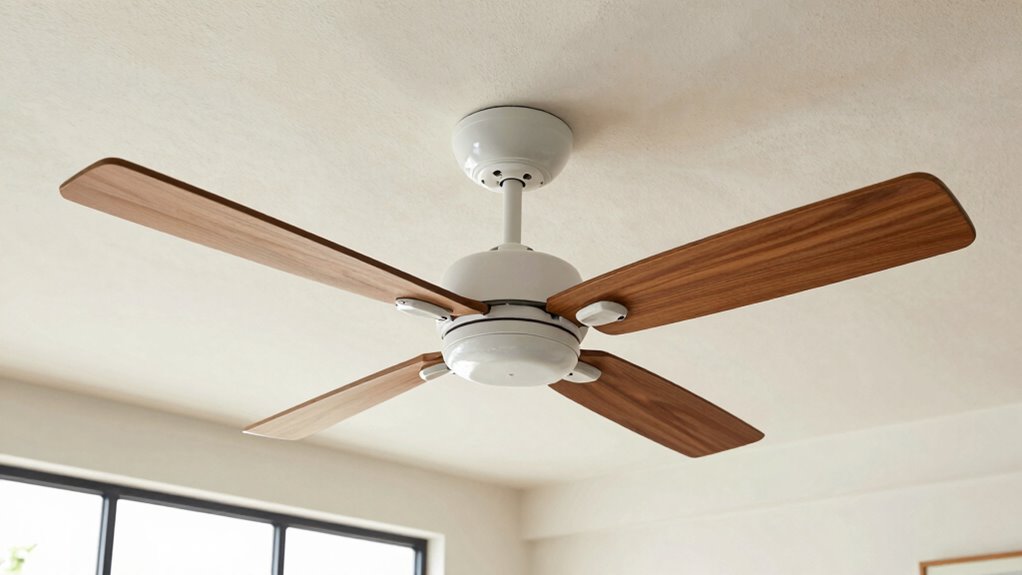

Choosing the right ceiling fan size depends on your room size and blade span. For small rooms under 75 sq ft, opt for a 29-inch blade span. For rooms up to 144 sq ft, go for 36 inches, and for larger spaces up to 225 sq ft, a 42-inch fan works best. Rooms over 225 sq ft benefit from 52-inch or larger fans. Proper sizing guarantees effective airflow and comfort. Keep exploring for more tips on ideal fan selection.

Turn your quiet moments into listening time
- Thousands of audiobooks, podcasts and originals
- Listen on your phone, tablet or Echo — also offline
- Cancel anytime
Key Takeaways
- Match blade span to room size: smaller fans for small rooms, larger fans for bigger spaces.
- Under 75 sq ft rooms need approximately 29-inch blades; larger rooms require 36-52 inch blades.
- Proper sizing ensures effective air circulation and prevents excessive noise or drafts.
- Accurate room measurement helps select the appropriate fan size for optimal cooling.
- Larger blade spans move more air, suitable for high-ceiling or large-area rooms.
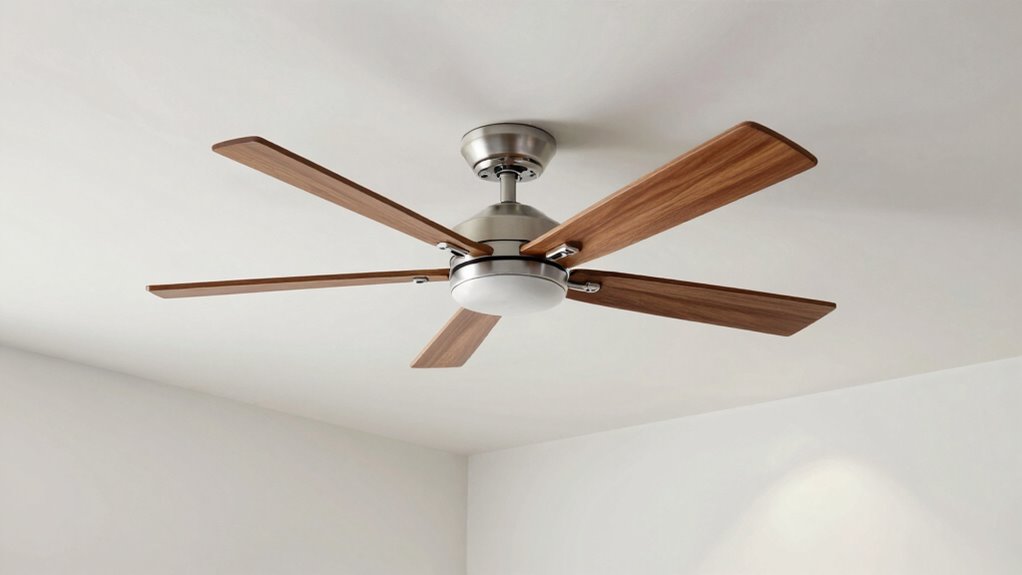
Have you ever wondered how to keep a room comfortable without cranking up the air conditioning? One effective way is by choosing the right ceiling fan, and understanding the relationship between blade span and room size is key. When selecting a fan, you want to maximize energy efficiency, which means opting for a model that moves air effectively without wasting power. Larger blade spans generally circulate more air, making them suitable for bigger rooms, while smaller fans work well in cozy spaces. Proper sizing is essential because a fan that’s too small won’t cool the room adequately, and one that’s too large might create unnecessary noise or wind drafts.
Installation tips play a significant role in guaranteeing your ceiling fan operates at peak efficiency. First, make sure the fan is mounted at the correct height—typically about 8 to 9 feet from the floor—and that it’s centered in the room. Proper installation not only improves energy efficiency but also reduces wobbling and noise. If you’re installing the fan yourself, confirm that your ceiling can support the weight of the fixture, and follow the manufacturer’s instructions carefully. Using the right mounting hardware and ensuring the fan is balanced can make a noticeable difference in performance. Additionally, selecting a fan with an energy-efficient motor can significantly reduce your overall energy consumption and operating costs. Ensuring proper installation can also extend the lifespan of your ceiling fan. To further enhance efficiency, choosing a fan with adjustable speed settings allows for better control over airflow and energy use. Considering the airflow efficiency of a fan, which measures how effectively it moves air relative to its power consumption, can also help you make a more informed choice.
When choosing a fan based on room size, consider the blade span. For small rooms under 75 square feet, a fan with a blade span of around 29 inches is sufficient. For rooms between 75 and 144 square feet, a 36-inch blade span works well. Medium-sized rooms, roughly 144 to 225 square feet, benefit from fans with a 42-inch blade span. Larger spaces, such as living rooms and open-concept areas over 225 square feet, often require fans with a blade span of 52 inches or more. This ensures the air circulates evenly and keeps the entire space comfortable. Proper room size measurement is crucial for selecting the most effective fan. Taking accurate measurements can help you avoid choosing a fan that’s either too small or too large for your space. Additionally, measuring the room’s height and layout can influence your choice of mounting options and overall fan performance.
Energy efficiency is always a priority, especially if you want to save on energy costs. Look for fans with energy-efficient motors and blades designed to maximize airflow with minimal power consumption. Many fans come with ceiling fan remote controls, allowing you to adjust speed settings easily and avoid unnecessary energy use. Proper installation, selecting the right size, and choosing a fan with good energy ratings all contribute to comfort and cost savings. With the right fan, you’ll enjoy a cooler, more comfortable room without over-relying on your AC, making your space both cozy and eco-friendly.
Frequently Asked Questions
How Does Ceiling Fan Blade Shape Affect Airflow?
The shape of your ceiling fan blades influences airflow dynamics considerably. Blade curvature affects how air is pushed, with more curved blades creating better lift and airflow. If you choose blades with a gentle curve, you’ll experience smoother, more efficient circulation, while steeper curves produce stronger airflow. Understanding blade shape helps optimize your fan’s performance, ensuring you get the right airflow for your room’s size and comfort needs.
Can Multiple Fans Improve Room Cooling Efficiency?
Using multiple fans can boost cooling efficiency, especially in large rooms. When you incorporate HVAC integration and smart controls, you can synchronize fans to optimize airflow and comfort. This setup allows you to adjust fan speeds or turn them on/off remotely, saving energy and maintaining a consistent temperature. Multiple fans distribute air more evenly, reducing hot spots and enhancing overall cooling, making your space more comfortable and energy-efficient.
What Is the Ideal Ceiling Height for Fans?
You’re on the right track to find the sweet spot for ceiling height and fan placement. Ideally, ceiling fans should be installed 8 to 9 feet above the floor for ideal airflow. If your ceiling is higher, consider using downrods to lower the fan to this height. This setup ensures efficient circulation without making the room feel off-balance, giving your space a breath of fresh air.
How Often Should Ceiling Fans Be Cleaned?
You should clean your ceiling fan at least once every few months to prevent dust buildup and guarantee ideal fan maintenance. Regular cleaning helps reduce dust accumulation on blades, which can affect airflow and efficiency. Turn off the fan, use a damp cloth or an extendable duster to wipe blades and motor housing, and avoid harsh chemicals. Consistent cleaning keeps your fan running smoothly, improves air quality, and prolongs its lifespan.
Are Energy-Efficient Fans Worth the Investment?
Yes, energy-efficient fans are worth the investment; they’re like a breath of fresh air for your wallet and the environment. They cut down your energy bills with smarter energy savings and offer excellent cost effectiveness over time. While they might cost a bit more initially, the long-term savings and reduced carbon footprint make them a savvy choice. Plus, you’ll enjoy a cooler, more comfortable space with less guilt.
Conclusion
Ultimately, choosing the right ceiling fan is about matching blade span to your room size, ensuring comfort without a fuss. Think of it as selecting the perfect quill for your writing—each has its place, and the right fit makes all the difference. Don’t let the “flying horses” of confusion distract you; with a little knowledge, you’ll be the master of your space, bringing cool breezes and style together seamlessly.
Fall Picks
fall essentials
As an affiliate, we earn on qualifying purchases.