Rowing machines offer different resistance types to match your fitness needs. You can choose adjustable tension, which lets you change difficulty levels for a tailored workout. Water resistance mimics real rowing with smooth, natural feel and intensifies with effort. It’s quiet, joint-friendly, and offers immersive movement. Exploring these options helps you find the best fit for your goals and progress. Keep exploring to learn more about how each resistance type can enhance your training.

Turn your quiet moments into listening time
- Thousands of audiobooks, podcasts and originals
- Listen on your phone, tablet or Echo — also offline
- Cancel anytime
Key Takeaways
- Water resistance systems use fluid dynamics to create smooth, natural, and adjustable resistance that mimics real water rowing.
- Adjustable tension resistance allows users to modify difficulty levels, catering to different fitness levels and training needs.
- Resistance types include water, air, magnetic, and hydraulic, each offering unique feel, noise levels, and adjustability features.
- Water resistance provides quiet operation, low-impact movement, and an immersive experience, ideal for joint-friendly workouts.
- Magnetic and air resistance machines typically have digital controls for precise resistance adjustments, unlike hydraulic systems.
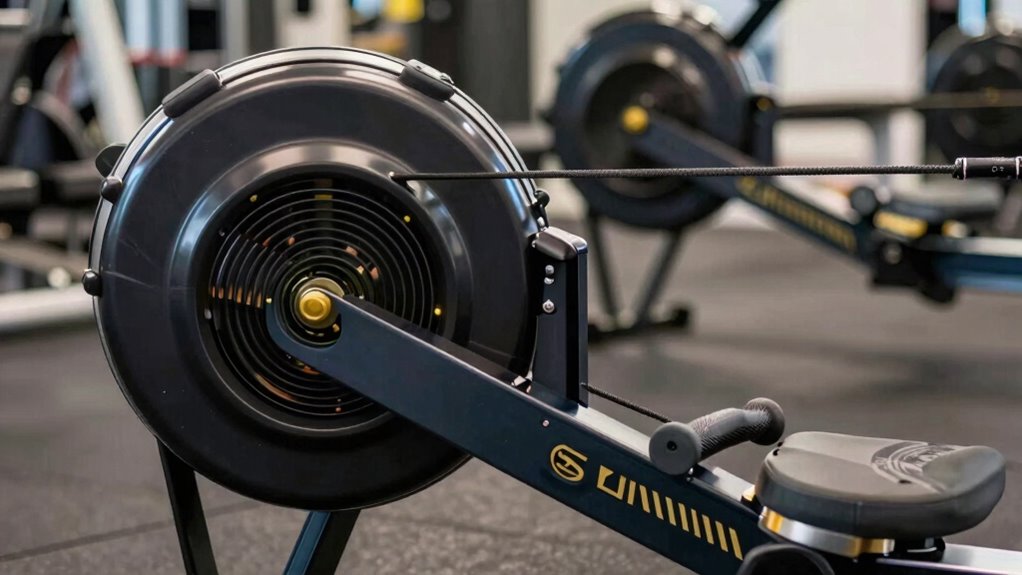
When choosing a rowing machine, understanding the different resistance types is essential because each offers a unique workout experience. One of the most common resistance methods involves adjustable tension, which allows you to modify the difficulty level to match your fitness goals. With adjustable tension, you can increase or decrease the force needed to pull the handle, making it suitable for beginners or more advanced athletes. This feature provides a customizable workout, so you can challenge yourself as you improve, or ease up when you need a lighter session. It’s especially useful if you’re looking to vary your training intensity without changing machines or settings *considerably*. Understanding resistance mechanisms can help you choose the right machine for your needs. Fluid dynamics resistance is another popular type, and it operates on the principles of water movement. When you pull the handle, a flywheel spins inside a water tank, creating natural resistance through fluid movement. This resistance is smooth and consistent, mimicking the feel of rowing on actual water. As you increase your effort, the resistance intensifies naturally, giving you a realistic rowing experience that’s both fluid and engaging. Many users appreciate fluid dynamics for its quiet operation and the way it responds intuitively to your effort, making each stroke feel natural and satisfying. Additionally, water resistance tends to be more forgiving on the joints and offers a more immersive workout, especially if you enjoy the sensation of rowing on water. Incorporating adjustable resistance options can further enhance your workout by allowing you to tailor the intensity precisely to your fitness level, making it adaptable as you progress. For those seeking a low-impact exercise, water resistance rowing machines provide an excellent option that minimizes joint strain while providing effective cardio training.
As an affiliate, we earn on qualifying purchases.
Frequently Asked Questions
Which Resistance Type Is Best for Beginners?
For beginners, air resistance rowing machines are often your best choice because they offer smooth rowing with natural ergonomics, making it easier to learn proper form. They require minimal resistance maintenance tips, as airflow adjusts automatically to your effort. Plus, their intuitive feel helps you develop good technique quickly, reducing injury risk. You’ll find air resistance machines engaging and adaptable, perfect for building strength and endurance at the start of your rowing journey.
Can Resistance Types Be Combined in One Machine?
Ever wonder if resistance types can be combined in one machine? Yes, many rowing machines feature resistance customization through multi resistance integration, allowing you to switch or blend resistance types. This versatility helps you tailor workouts, challenge different muscle groups, and keep things interesting. With multi resistance integration, you get the best of both worlds—smooth, adjustable resistance that adapts to your fitness level and goals.
How Does Resistance Affect Workout Intensity?
Resistance directly impacts your workout intensity by increasing muscle engagement and challenging your strength. Higher resistance levels make your muscles work harder, boosting calorie burn and endurance. On the other hand, lower resistance allows for faster, cardio-focused sessions. Adjusting resistance provides workout variety, preventing plateaus. You can tailor your rowing sessions for different goals, whether building muscle or improving cardiovascular health, making resistance a key factor in your overall fitness progress.
Are Some Resistance Types More Durable Than Others?
Think of resistance types as the armor protecting your workout. Some, like air resistance, are lightweight but can wear out faster with intense use, while magnetic resistance offers a fortress of durability, standing strong over time. In a durability comparison, magnetic resistance typically boasts longer resistance longevity, making it ideal for daily use. You’ll find it more resilient, ensuring your rowing sessions remain smooth and consistent, mile after mile.
Do Resistance Types Impact Noise Levels During Use?
Yes, resistance types do impact noise levels during use. Magnetic resistance tends to be the quietest, producing minimal noise as you row, making it ideal for shared spaces. Air resistance machines generate more noise due to the fan mechanism, which can be loud at higher intensities. Water resistance models produce a calming swooshing sound, but they can also be relatively noisy. Your choice of resistance impacts both your workout experience and the surrounding environment.
magnetic resistance rowing machine
As an affiliate, we earn on qualifying purchases.
As an affiliate, we earn on qualifying purchases.
Conclusion
Think of rowing machine resistance types as different paths on a river. Some flows are smooth and steady, like air or magnetic resistance, guiding you gently toward your goal. Others are more turbulent, like water or hydraulic resistance, challenging you with every stroke. Choosing the right resistance is like selecting your ideal river—each offers a unique journey. Find the one that feels right, and you’ll enjoy a rewarding, invigorating voyage to better fitness.
adjustable tension rowing machine
As an affiliate, we earn on qualifying purchases.
As an affiliate, we earn on qualifying purchases.
As an affiliate, we earn on qualifying purchases.
Fall Picks
fall essentials
As an affiliate, we earn on qualifying purchases.

![A Better Way To Tie Your Gym Shorts. (Or Any Drawstring) [Video]](https://oboval.com/wp-content/uploads/2026/07/a-better-way-to-tie-your-gym-shorts-or-any-drawstring-video-featured-560x300.jpg)