Your massage gun’s amplitude is how deep it penetrates your muscles, helping target trigger points or gentle areas based on your needs. When the device stalls, it’s a sign the muscles are tight or fatigued, and you should adjust pressure or amplitude to avoid discomfort. Recognizing these cues helps you customize your session for safety and effectiveness. Keep exploring to discover how mastering these basics can improve your recovery and muscle relief.

Turn your quiet moments into listening time
- Thousands of audiobooks, podcasts and originals
- Listen on your phone, tablet or Echo — also offline
- Cancel anytime
Key Takeaways
- Amplitude determines how deep the massage gun’s head penetrates, affecting effectiveness for different muscle needs.
- Stall occurs when the motor struggles to push deeper, signaling safe pressure limits during use.
- Recognizing muscle responses like stall helps prevent discomfort and tailor massage intensity.
- Adjusting pressure and technique can prevent stall and optimize deep tissue targeting.
- Mastering amplitude and stall awareness enhances massage safety, effectiveness, and recovery benefits.
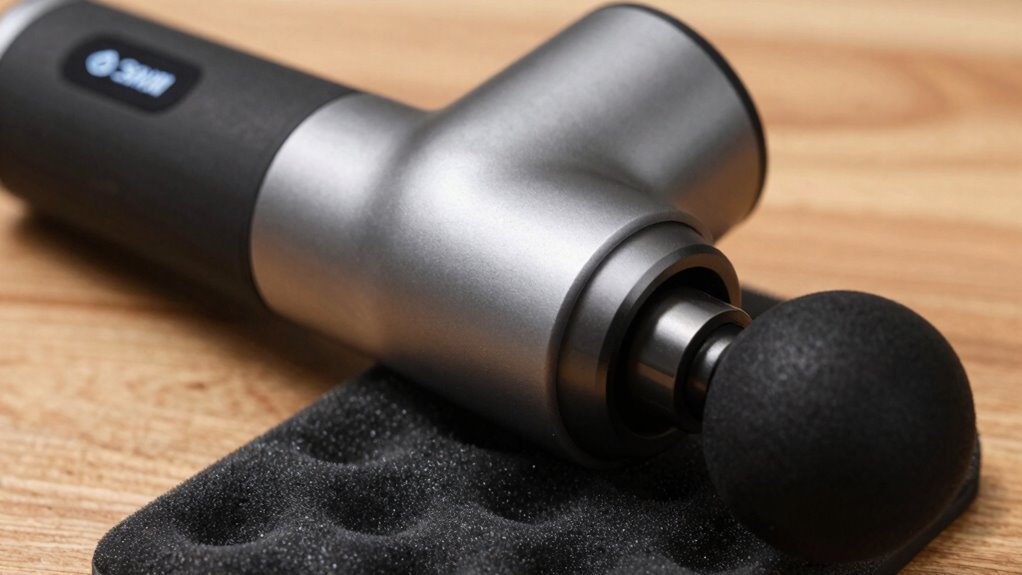
If you’re new to massage guns, understanding the basics can help you get the most out of this popular recovery tool. Two key features to consider are amplitude and stall, which directly influence how effectively your massage gun targets trigger points and relieves muscle fatigue. Amplitude refers to how deep the device’s head can penetrate into your muscle tissue. Higher amplitude means the gun can reach deeper layers, making it more effective for stubborn trigger points or intense muscle fatigue. Conversely, lower amplitude is gentler and better suited for sensitive areas or beginners. Knowing your muscle needs helps you select the right setting to maximize benefits without causing discomfort.
Understanding amplitude and stall helps optimize your massage gun for safe, effective muscle relief.
Stall occurs when the massage gun’s motor struggles to push deeper into the muscle, often because the tissue is too tight or fatigued. When a stall happens, the device may slow down, stop, or pulsate, signaling that you’ve reached the limit of safe pressure. Recognizing stall is essential because pushing past it can cause discomfort or even injury. If you’re working on a trigger point that’s particularly tight or painful, you’ll notice the gun slowing or stalling as it attempts to penetrate the stubborn tissue. This is a good sign you need to decrease pressure or switch to a lower amplitude setting. Stall also indicates when your muscles are reaching muscle fatigue, meaning they’re exhausted from the massage or activity. Instead of forcing through, it’s better to ease up and give your muscles a break, helping them recover faster. Understanding device feedback can help you adjust your technique for better results. Additionally, understanding how muscle tissue responds to pressure can further improve your massage effectiveness. Being aware of these responses allows you to tailor your session to your body’s unique needs and avoid unnecessary strain. Developing an awareness of your body’s tolerance levels can also prevent overstimulation and enhance recovery.
Understanding amplitude and stall can also improve your overall massage technique. For example, if you’re targeting a trigger point, you want an amplitude high enough to reach deep tissue but not so high that you cause pain or stall frequently. When you feel stall, it’s a cue to adjust your pressure or move the device slightly to avoid overworking the muscle. This not only prevents discomfort but also ensures you’re effectively releasing tension. As your muscles warm up, they become more pliable, reducing the chances of stall and allowing deeper penetration. Over time, you’ll learn to listen to your body and the device’s feedback, optimizing each session for relief from muscle fatigue and trigger points.
Ultimately, mastering amplitude and stall lets you customize your massage routine, making it both safe and effective. By paying attention to these features, you’ll get better results, whether you’re working out, recovering from injury, or simply relaxing after a long day. Developing a mindful approach to massage enhances both safety and effectiveness, ensuring you gain maximum benefit from your sessions.
massage gun with adjustable amplitude
As an affiliate, we earn on qualifying purchases.
As an affiliate, we earn on qualifying purchases.
Frequently Asked Questions
How Long Should I Use a Massage Gun on One Area?
You should use a massage gun on one area for about 1-2 minutes, focusing on muscle relaxation and pain relief. Keep the device moving gently to avoid overstimulation or discomfort. If your muscles feel tender or sore, reduce the intensity or duration. Always listen to your body; if you experience pain, stop immediately. Proper use helps maximize pain relief without causing strain or injury.
Can Massage Guns Replace Professional Physiotherapy Treatments?
Think of a massage gun as a helpful tool, but not a silver bullet. While it offers effective massage therapy and can be a great physiotherapy alternative for relaxing muscles, it can’t replace personalized treatment plans from a professional physiotherapist. For chronic issues or injury recovery, you still need expert guidance. Relying solely on a massage gun might be like trying to fix a complex puzzle with only a few pieces.
Are Massage Guns Safe for Pregnant Women?
Massage guns can be safe for pregnant women if you follow proper pregnancy safety guidelines and massage precautions. Always consult your healthcare provider before use, especially during pregnancy, to make sure it’s suitable for you. Use gentle settings, avoid sensitive areas like the abdomen and lower back, and keep sessions brief. By taking these precautions, you can safely enjoy some relief, but professional advice is essential to avoid any risks.
How Do I Choose the Right Amplitude Setting?
To choose the right amplitude setting, focus on amplitude customization and pressure regulation. Start with a lower amplitude to gently target sensitive areas, then increase as needed for deeper relief. Pay attention to how your body responds—if you feel discomfort, reduce the amplitude. Opt for adjustable settings that allow you to regulate pressure comfortably, ensuring a personalized massage experience that effectively relieves tension without overdoing it.
What Are Common Signs of Overuse or Injury From a Massage Gun?
You might notice muscle fatigue, skin irritation, or increased soreness if you overuse your massage gun. These signs indicate you’ve pushed too hard or used it for too long. Pay attention to discomfort, redness, or tenderness, and stop using the device if these occur. Using the massage gun properly, with appropriate settings and duration, helps prevent injury and promotes muscle recovery without adverse effects.
deep tissue massage gun for muscle recovery
As an affiliate, we earn on qualifying purchases.
As an affiliate, we earn on qualifying purchases.
Conclusion
Understanding amplitude and stall is key to getting the most out of your massage gun. For instance, imagine you’re recovering from a tough workout, and adjusting the amplitude helps you target sore muscles more effectively. By mastering these basics, you’ll enhance your recovery routine and prevent injury. So, next time you use your massage gun, remember to tweak the settings to suit your needs—your muscles will thank you for it!
As an affiliate, we earn on qualifying purchases.
As an affiliate, we earn on qualifying purchases.
Halloween Picks
halloween
As an affiliate, we earn on qualifying purchases.