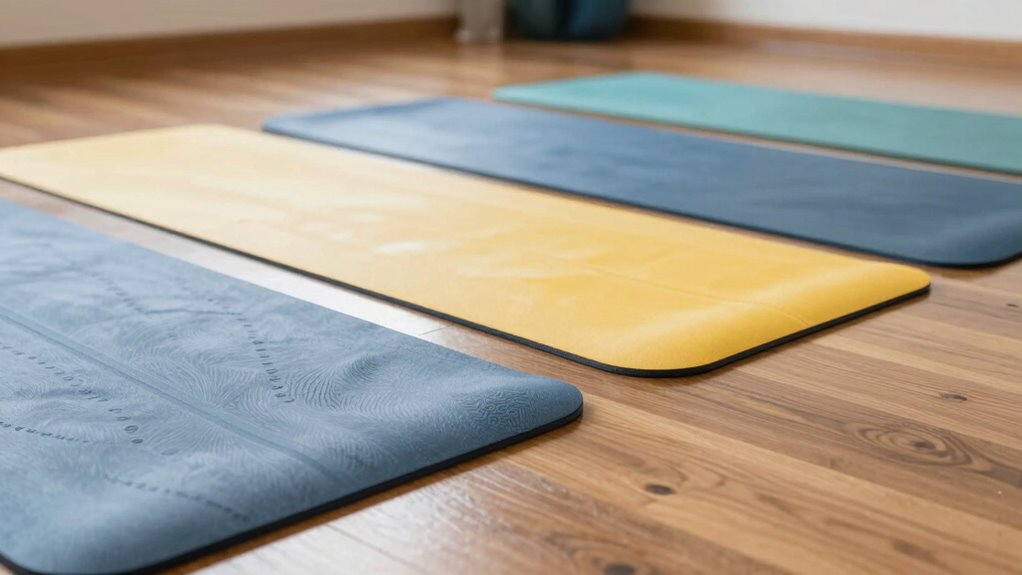
Choosing the right yoga mat depends on your practice; thicker mats (6-8mm) offer more cushioning and support for joints, making them ideal for gentle or restorative routines. Thinner mats (around 3mm or less) provide better stability for balance and power poses. Grip is equally important—look for eco-friendly materials like natural rubber or jute that offer excellent traction, especially when sweaty. For more tips on selecting the perfect mat, keep exploring how thickness and grip can elevate your practice.

Get books, candles and calm essentials delivered free — and shop member deals
- Fast, free delivery on millions of items
- Access to Prime Big Deal Days deals on October 6–7
- Prime Video, Amazon Music and more included
Key Takeaways
- Thicker mats (6-8mm) provide better joint cushioning, ideal for restorative or gentle practices, while thinner mats (around 3mm) offer enhanced stability for balance poses.
- Grip quality is crucial; mats with textured surfaces or made from natural rubber ensure slip resistance, especially when sweating.
- Material choice impacts grip and safety; eco-friendly options like natural rubber and jute typically offer superior traction and durability.
- Thicker mats are often heavier and less portable, whereas thinner, lightweight mats are better for on-the-go practice.
- Avoid mats with synthetic, chemical-laden materials for safer, environmentally friendly options that support better grip and long-term use.
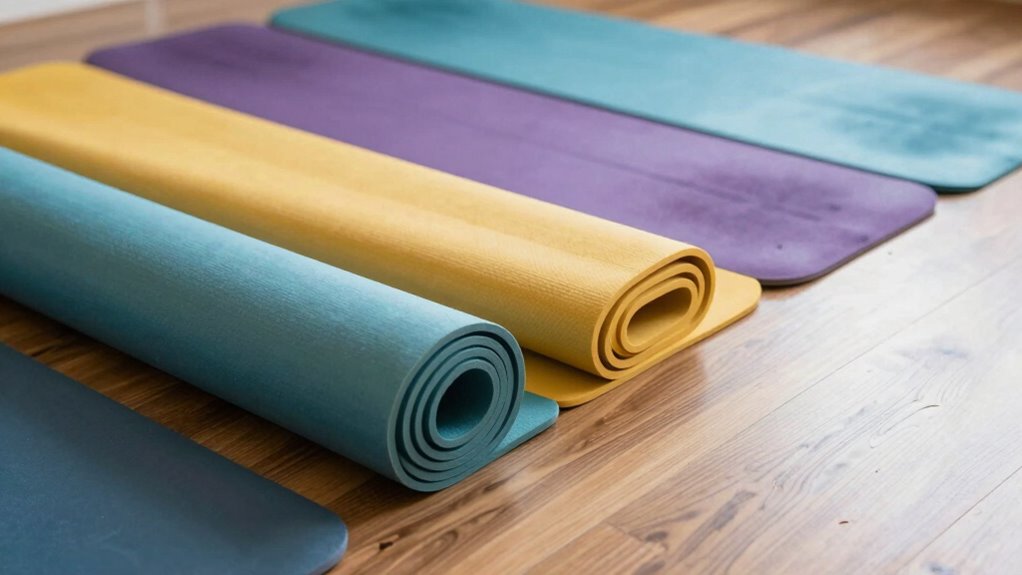
Have you ever wondered what makes a yoga mat truly vital for your practice? The right yoga mats can elevate your experience, providing comfort, stability, and confidence with every pose. When choosing a mat, considerations like thickness and grip are essential, but so is the material it’s made from. Eco friendly materials are increasingly popular because they not only support your health but also protect the planet. These sustainable options often avoid harsh chemicals and plastics, making your practice safer and more environmentally conscious.
Thickness plays a significant role in how comfortable and supportive your yoga mat feels during different poses. If you’re into gentle stretches or restorative yoga, a thicker mat—around 6mm to 8mm—can cushion your joints and provide extra comfort. Thicker mats are especially helpful if you have sensitive knees or wrists, as they absorb impact and reduce strain. Conversely, if you prefer more stability for balance poses or power yoga, thinner mats—around 3mm or less—offer better ground contact, helping you feel more connected and steady. Thinner mats are also lighter and easier to carry, which is a plus if you’re on the go. Additionally, eco friendly materials like natural rubber or jute tend to provide excellent traction, especially when sweaty. Using non-toxic materials can also enhance the overall safety and sustainability of your practice. Incorporating sustainable materials into your choice can further align your practice with eco-conscious principles. Selecting mats made from biodegradable substances can also contribute to reducing environmental impact over time.
eco-friendly natural rubber yoga mat
As an affiliate, we earn on qualifying purchases.
As an affiliate, we earn on qualifying purchases.
Frequently Asked Questions
How Often Should I Replace My Yoga Mat?
You should replace your yoga mat every 6 to 12 months, depending on your usage. Regular cleaning routines help extend its life, but if you notice persistent odors, cracks, or loss of grip, it’s time for a new one. Proper storage tips, like rolling it up and keeping it in a cool, dry place, prevent unnecessary wear. Trust your comfort and safety to know when it’s time to upgrade your mat.
Are Eco-Friendly Mats as Durable as Synthetic Ones?
Eco-friendly mats can be just as durable as synthetic ones, especially when you choose high-quality options. For example, a yoga instructor switched to a cork mat and found it lasted over a year with proper care, showing great eco durability. While synthetic mats often boast longer longevity, many eco mats now incorporate advanced materials that guarantee lasting performance. Your choice depends on your priorities for sustainability and durability.
Can I Use a Towel on My Yoga Mat for Extra Grip?
Yes, you can use a towel on your yoga mat for extra grip. A towel provides towel traction, helping prevent slipping during your practice. To enhance grip, choose a towel with a textured surface and dampen it slightly with water. This grip enhancement can make challenging poses safer and more stable. Just make sure the towel stays in place and doesn’t bunch up to maintain your balance and focus.
What Are the Best Mats for Hot Yoga Practices?
For hot yoga, choose mats specifically designed for sweat absorption and grip. Look for mats made from natural rubber or polyurethane, as they provide excellent traction when you’re sweating. These mats help prevent slipping and offer durability for intense sessions. Avoid thin or slippery mats, and consider ones with textured surfaces to enhance grip. Staying secure during hot yoga is essential, so invest in a mat that handles sweat effectively and keeps you stable.
Do Thicker Mats Provide Better Joint Support?
Thicker mats do provide better joint support because they offer increased joint cushioning and impact absorption. When you practice, the extra thickness helps reduce pressure on your knees, wrists, and hips, making poses more comfortable and safer. However, be mindful that too thick a mat may compromise stability. Find a balance that offers sufficient cushioning without sacrificing your balance and control during poses.
As an affiliate, we earn on qualifying purchases.
Conclusion
When choosing your yoga mat, remember it’s more than just a piece of gym gear—it’s your gateway to transforming your practice. The right thickness and grip can make every pose feel like floating on air or sticking like glue. Don’t settle for less; your perfect mat can turn your yoga routine into a life-changing experience. Invest wisely, and watch your practice soar to heights you never thought possible—your mat is your secret weapon!
As an affiliate, we earn on qualifying purchases.
As an affiliate, we earn on qualifying purchases.
Halloween Picks
halloween
As an affiliate, we earn on qualifying purchases.


![A Better Way To Tie Your Gym Shorts. (Or Any Drawstring) [Video]](https://oboval.com/wp-content/uploads/2026/07/a-better-way-to-tie-your-gym-shorts-or-any-drawstring-video-featured-560x300.jpg)