Wrist heart rate monitors are convenient and easy to use, resembling fitness watches and ideal for casual workouts. Chest straps, worn snug around your chest, offer more precise and consistent data, making them great for serious training. While wrist devices might struggle with accuracy during intense activities or sweat, advancements are improving their reliability. If you want to discover how these devices compare in comfort and technology, keep exploring what makes each option unique.

Turn your quiet moments into listening time
- Thousands of audiobooks, podcasts and originals
- Listen on your phone, tablet or Echo — also offline
- Cancel anytime
Key Takeaways
- Chest straps provide more accurate and reliable heart rate data, especially during high-intensity workouts.
- Wrist monitors are more convenient and comfortable for casual use and quick activity checks.
- Optical sensors in wrist devices may struggle with accuracy due to skin tone, sweat, or movement.
- Chest straps transmit continuous data, making them preferred for serious athletes and precise training.
- Advances in sensor technology are improving the accuracy and usability of both wrist and chest heart rate monitors.
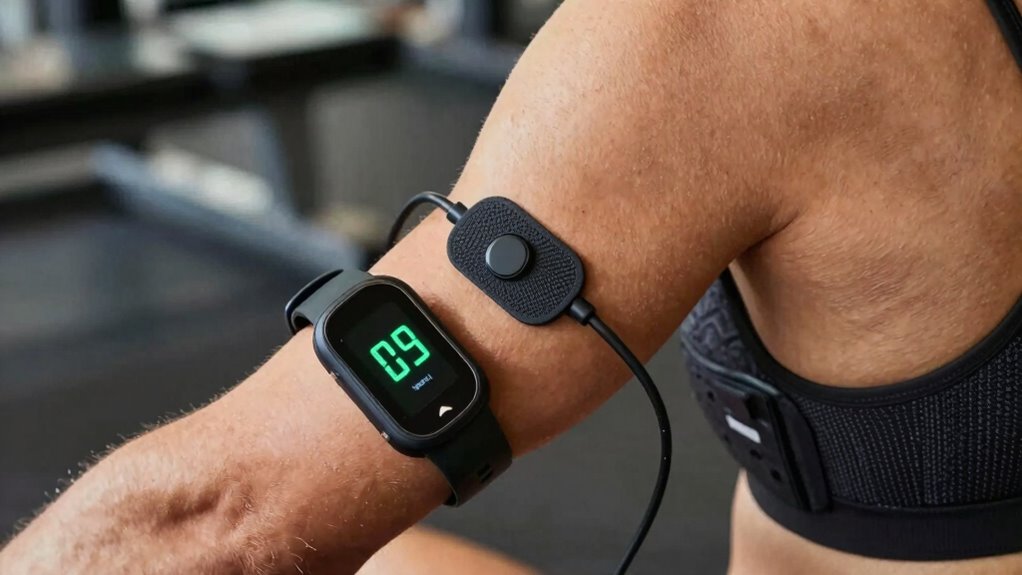
When it comes to monitoring your heart rate during exercise, choosing the right device can make a significant difference in your workout experience. Your goal is to get reliable fitness tracking, so you can push yourself appropriately and track your progress accurately. The two main options are wrist-based monitors and chest straps, and understanding their differences helps you decide which suits your needs best.
Wrist heart rate monitors are popular because they’re convenient and easy to wear. They look like fitness watches and don’t require much setup. You can quickly check your heart rate during a workout without interrupting your session. These devices work by using optical sensors that shine light into your skin and measure blood flow changes. While they’re user-friendly, their data accuracy can sometimes be compromised, especially during high-intensity movements or when your wrist is in certain positions. The optical sensors may struggle to track your pulse precisely if your skin is dark, if you’re sweating heavily, or if the device isn’t snug enough. This can lead to inconsistent fitness tracking, making it harder to rely on the data for precise training zones or progress measurement. Still, for casual workouts or everyday activity monitoring, wrist monitors do a decent job. Additionally, sensor technology continues to improve, enhancing their accuracy over time. Advances in heart rate monitoring technology are also contributing to more reliable results from wrist devices. Furthermore, ongoing research into optical sensor performance is helping to address some of the current limitations. As wearable device technology evolves, these improvements are expected to make wrist monitors increasingly dependable.
Chest straps, on the other hand, are considered the gold standard for data accuracy in heart rate monitoring. They use electrical signals to detect your heartbeat directly from your chest, providing a more precise and consistent reading. Because they are designed to transmit data continuously and accurately, they’re especially useful for athletes or anyone serious about their fitness tracking. You’ll find that chest straps maintain their accuracy regardless of how vigorous your workout gets or how much you sweat. The downside is that they can be less comfortable and more cumbersome to wear, as they need to be snug against your chest and often involve a bit more setup. Some users find them inconvenient for everyday wear, but if your priority is reliable data to optimize your training, they’re hard to beat. Additionally, heart rate monitor technology continues to improve, making newer models more comfortable and easier to use.
best heart rate monitor chest strap
As an affiliate, we earn on qualifying purchases.
As an affiliate, we earn on qualifying purchases.
Frequently Asked Questions
Are Wrist or Chest Monitors More Accurate for Measuring Heart Rate?
Wrist monitors generally provide slightly less accurate readings than chest monitors, especially during intense exercise. For precise fitness tracking, you might prefer a chest monitor because it closely measures your heart rate through electrical signals. However, wearable technology has improved wrist monitors’ accuracy, making them convenient for everyday use. If you want the most reliable data, especially for training, a chest monitor is your best bet, but wrist devices are great for convenience.
How Do Weather Conditions Affect Wrist and Chest Heart Rate Monitors?
Weather conditions can affect both wrist and chest heart rate monitors, but wrist devices tend to be more weather-sensitive, especially in cold or humid conditions, which can disrupt signal accuracy. Chest monitors are generally more durable and less affected by weather, maintaining consistent readings. If you often exercise outdoors in varying weather, choose a device designed for durability and weather resistance to guarantee reliable heart rate tracking.
Can Wrist and Chest Monitors Be Used Interchangeably During Workouts?
You can often use wrist and chest monitors interchangeably during workouts, but keep in mind that device comfort and data consistency vary. Chest monitors tend to provide more accurate, consistent heart rate data, especially during intense activities. Wrist monitors are more comfortable and easier to wear, but they might occasionally give less precise readings. For the best results, choose based on your comfort and the level of data accuracy you need.
What Is the Typical Battery Life Difference Between Wrist and Chest Monitors?
Ever wonder which monitor lasts longer? Typically, wrist monitors have better battery longevity because they consume less power with their simpler displays and wireless connections. Chest monitors often need more frequent charging due to higher power consumption from continuous heart rate tracking and Bluetooth or ANT+ transmission. So, if long-lasting power matters most, wrist monitors usually outperform chest ones, making them more convenient for extended workouts or daily wear.
Are There Health Risks Associated With Wearing Chest Heart Rate Monitors?
Wearing chest heart rate monitors can pose some health risks, especially if you have skin sensitivity. You might experience electrode irritation or skin discomfort from prolonged use. If you have allergies or sensitive skin, it’s crucial to make certain the monitor is hypoallergenic and to remove it promptly if irritation occurs. Regular cleaning and proper fit can help minimize these risks, making your workout safer and more comfortable.
wrist heart rate monitor fitness watch
As an affiliate, we earn on qualifying purchases.
As an affiliate, we earn on qualifying purchases.
Conclusion
So, whether you prefer the comfort of a wrist monitor or the accuracy of a chest strap, it’s all about what suits your activity and goals. If you’re worried about convenience, wrist monitors have come a long way and are nearly as precise as chest straps. Don’t let that hold you back—pick what feels right and stay consistent. After all, tracking your heart rate accurately is the key to reaching your fitness goals.
accurate heart rate monitor for high intensity workouts
As an affiliate, we earn on qualifying purchases.
As an affiliate, we earn on qualifying purchases.
optical heart rate monitor wrist
As an affiliate, we earn on qualifying purchases.
As an affiliate, we earn on qualifying purchases.
Fall Picks
fall essentials
As an affiliate, we earn on qualifying purchases.