
Proper venting is key to saving money with your dryer. By ensuring your vent is clear, you prevent longer drying times, reduce energy consumption, and avoid costly repairs due to lint buildup or machine damage. Regularly cleaning your lint trap, inspecting the vent hose, and using rigid metal ducts help maintain ideal airflow. When your vent is properly maintained, your dryer runs more efficiently and lasts longer. Keep going to discover how detailed venting care can make a real difference.

Turn your quiet moments into listening time
- Thousands of audiobooks, podcasts and originals
- Listen on your phone, tablet or Echo — also offline
- Cancel anytime
Key Takeaways
- Proper venting prevents lint buildup, reducing fire hazards and costly repairs.
- Using rigid metal ducts ensures optimal airflow and minimizes energy consumption.
- Regular cleaning of lint traps and vents improves dryer efficiency and decreases drying time.
- Proper vent placement outdoors avoids moisture buildup and backdrafts, saving energy.
- Routine maintenance extends dryer lifespan and lowers long-term repair and utility costs.

Proper venting is essential for your dryer’s efficiency and safety, yet many overlook this detail, costing themselves money in energy bills and repairs. When your dryer isn’t properly vented, it has to work harder to dry clothes, which means it consumes more energy. Over time, this inefficiency adds up, leading to higher utility bills. Additionally, poor ventilation can cause lint buildup, increasing the risk of fires and damaging the machine. Staying on top of ventilation maintenance isn’t just about safety; it’s a smart move to keep your energy efficiency at its peak.
Proper venting boosts dryer efficiency, safety, and saves money on energy and repairs.
Regularly inspecting your dryer’s venting system is key. Over time, lint and debris accumulate in the ductwork, restricting airflow. When airflow is blocked, your dryer’s heating element runs longer to dry the same load, wasting energy and increasing wear and tear. You should clean the lint trap after every use, but don’t forget the duct itself. Periodic cleaning of the vent hose and exhaust vent helps prevent blockages and ensures your dryer operates smoothly. If you notice your clothes taking longer to dry or your machine overheating, it’s a clear sign that ventilation maintenance is overdue. Proper ventilation is crucial for maintaining optimal airflow and safety.
Investing in proper ventilation also extends the lifespan of your dryer. When airflow isn’t restricted, your machine doesn’t have to work as hard, which reduces mechanical stress and minimizes the risk of breakdowns. This means fewer repairs and replacements, saving you money in the long run. Plus, a well-maintained vent system improves your dryer’s energy efficiency, meaning you use less power to get the job done. Over time, these savings can appreciably offset the costs of cleaning and maintaining the ductwork. Regular inspections help identify potential issues early, preventing costly repairs down the line. Proper venting materials also play a significant role in maintaining efficient airflow and reducing lint buildup.
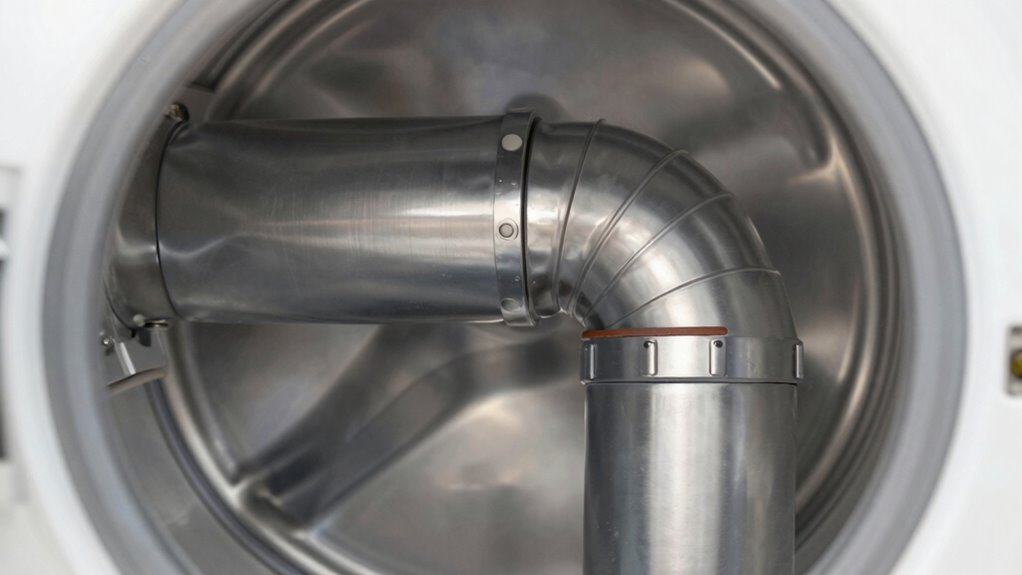
Choosing the right venting materials matters, too. Use rigid metal ducts rather than flexible plastic or foil ones, as they resist lint buildup better and allow for smoother airflow. Also, ensure your vent terminates outdoors and isn’t blocked by debris or snow. Proper vent placement can prevent backdrafts and moisture buildup that could damage your home or create mold issues. Regularly inspecting venting system components ensures optimal performance and safety. Properly installed and maintained vents are essential for preventing moisture problems and maintaining indoor air quality.
Ultimately, keeping your dryer’s ventilation system clean and well-maintained is a straightforward way to boost energy efficiency, prolong its life, and prevent costly hazards. It’s a small effort that pays off by making your laundry routine safer, faster, and more economical. Regular ventilation maintenance isn’t just good practice—it’s vital to keep your dryer running smoothly and efficiently for years to come.
As an affiliate, we earn on qualifying purchases.
Frequently Asked Questions
How Often Should Dryer Vents Be Cleaned for Optimal Efficiency?
You should clean your dryer vents at least once a year to maintain ideal efficiency. Regular venting maintenance prevents lint buildup, which can cause drying times to increase and energy costs to rise. If you use your dryer frequently or notice longer drying cycles, consider cleaning the vents more often. Incorporating these efficiency tips guarantees your dryer runs smoothly, saves money, and reduces fire hazards.
Can Improper Venting Cause Dryer Fires?
Improper venting definitely increases the risk of dryer fires. When vents are clogged or poorly installed, lint and hot air can build up, creating a fire hazard. For fire prevention and venting safety, confirm your dryer vent is clean, unobstructed, and properly routed. Regular maintenance reduces fire risk, protects your home, and keeps your dryer running efficiently. Don’t overlook venting issues—they’re a critical safety concern.
What Materials Are Best for Dryer Vent Hoses?
You should use rigid ducts or flexible hoses made of metal for your dryer vent. Rigid ducts are best because they resist lint buildup and are less prone to crushing or kinking, which improves airflow. Flexible hoses are convenient but often less durable and can trap lint, increasing fire risk. For safety and efficiency, opt for metal rigid ducts whenever possible, and guarantee all connections are secure and properly sealed.
How Long Can a Dryer Vent Run Be Without Losing Efficiency?
Think of your dryer vent as a highway for air—longer routes mean more traffic jams. Typically, a vent run should stay under 25 feet to avoid loss of efficiency. Vent restrictions and poor airflow optimization can slow drying time and increase energy costs. If your vent exceeds this length, consider adding a vent booster or reducing turns to keep airflow smooth and your dryer running efficiently.
Are There Specific Venting Designs That Save More Energy?
Yes, certain venting configurations and energy-efficient designs help save more energy. Opt for shorter, straight runs with smooth, rigid metal ducts to minimize airflow resistance. Avoid flexible or corrugated hoses, which increase friction. Installing a venting system with proper insulation and a high-quality vent cap also boosts efficiency. These designs reduce drying time and energy consumption, ensuring your dryer operates more effectively while saving you money on utility bills.
As an affiliate, we earn on qualifying purchases.
Conclusion
By paying attention to the venting detail, you’re gently steering your dryer’s efficiency in the right direction. A simple tweak can quietly keep your energy bills from climbing too high, while ensuring your machine runs smoothly for years to come. Think of it as giving your home a little extra care—subtle, yet impactful. In the end, a small adjustment today can lead to a more comfortable, cost-effective tomorrow, all without breaking a sweat.
As an affiliate, we earn on qualifying purchases.
As an affiliate, we earn on qualifying purchases.
Halloween Picks
halloween
As an affiliate, we earn on qualifying purchases.