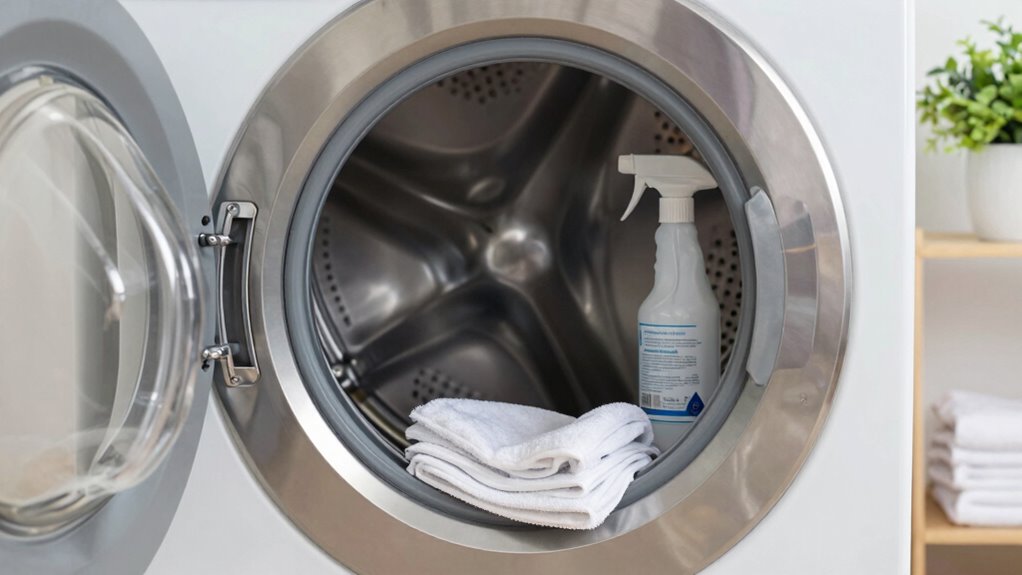
To prevent mold in your front-load washer, use high-efficiency, dye-free, and fragrance-free detergents, and avoid overloading the machine. After each cycle, leave the door slightly open and wipe the gasket and drum dry to reduce moisture. Regularly clean the detergent dispenser and run cleaning cycles with vinegar or washer cleaner. Maintaining a dry, well-ventilated environment is key. If you want to discover more tips, keep exploring how to keep your washer mold-free.

Turn your quiet moments into listening time
- Thousands of audiobooks, podcasts and originals
- Listen on your phone, tablet or Echo — also offline
- Cancel anytime
Key Takeaways
- Use eco-friendly, dye-free detergents and run regular cleaning cycles with vinegar or washer cleaner.
- Leave the washer door slightly open after each cycle to promote airflow and drying.
- Wipe down the door seal, gasket, and drum after each wash to remove moisture and residues.
- Avoid overloading the washer to ensure proper rinsing and water circulation.
- Regularly inspect and clean detergent dispensers and rubber gaskets to prevent mold buildup.

Are you tired of dealing with moldy smells in your front-load washer? If so, you’re not alone. Many people face this issue because of how front-load washers operate and how easily moisture can linger inside. The good news is that with a few simple habits, you can prevent mold buildup and keep your washer smelling fresh. A key part of this routine involves understanding detergent types and loading techniques. Using the right detergent and loading your machine properly can make a significant difference.
First, pay attention to the detergent types you use. High-efficiency (HE) detergents are designed specifically for front-load washers, and using them helps prevent excess suds that can trap moisture and encourage mold growth. Avoid using too much detergent, as overloads of soap can leave residue on the drum and seals, creating a breeding ground for mold. Some detergents contain additives that may leave behind residues or build-up, so opting for a minimal or eco-friendly detergent can help reduce this risk. It’s also beneficial to occasionally run a cleaning cycle with a washer cleaner or white vinegar to eliminate soap scum and mold spores. Additionally, choosing detergents free of dyes and fragrances can further reduce the risk of residue buildup. Regularly inspecting and cleaning the detergent dispenser can also prevent mold from developing in hidden areas. Being mindful of detergent residues and how they interact with your washer’s components is crucial for maintenance.
Next, your loading techniques play a crucial role. Always avoid overstuffing your machine; when you cram in clothes, water and detergent can’t rinse away thoroughly, leaving behind damp spots. Load your laundry loosely, allowing enough space for water to circulate and drain properly. After each wash, leave the door slightly ajar to allow air to circulate inside. This simple act helps moisture evaporate instead of getting trapped, which is crucial for mold prevention. Proper drying techniques, such as wiping the door seal and drum dry after cycles, can also help reduce residual moisture. Also, be sure to check and clean the gasket regularly because mold often starts in those rubber seals. Wiping down the gasket with a cloth after each wash keeps mold spores at bay and prevents them from spreading. Incorporating routine maintenance into your schedule will further support a mold-free environment and keep your washer in optimal condition. Ensuring all parts of the machine are kept clean and dry minimizes the chances of mold developing over time.
Incorporating these practices into your laundry routine doesn’t take much effort but yields big results. Using the correct detergent types ensures that no excess soap residue remains, while proper loading techniques promote thorough rinsing and drying. Leaving the door open after each cycle prevents moisture buildup, making mold less likely to develop. Paying attention to washer maintenance and regularly cleaning your machine will further support a mold-free environment. By paying close attention to these details, you’ll not only eliminate moldy smells but also extend the lifespan of your washer. Consistency is key—stick with these habits, and you’ll enjoy fresh, clean laundry without the worry of mold creeping in.
As an affiliate, we earn on qualifying purchases.
Frequently Asked Questions
How Often Should I Run a Cleaning Cycle on My Front-Load Washer?
You should run a cleaning cycle on your front-load washer once a month to prevent detergent residue buildup and maintain washer hygiene. Regularly doing this helps keep mold and mildew at bay, ensuring better washer maintenance. If you notice a musty smell or detergent residue, increase the frequency to every two weeks. Consistent cleaning keeps your washer fresh, efficient, and prolongs its lifespan.
Can Using Too Much Detergent Cause Mold Buildup?
Using too much detergent can definitely cause mold buildup in your washer. Excess detergent leaves behind residue, which traps moisture and creates an ideal environment for mold spores to grow. This buildup can lead to unpleasant odors and mold growth over time. To prevent this, use the recommended amount of detergent, run regular cleaning cycles, and leave the door open after washes to allow air circulation and keep mold spores at bay.
Are Certain Fabrics More Prone to Mold in Front-Load Washers?
Certain fabrics, like towels and gym clothes, are more prone to mold because of their fabric types and higher moisture retention. These items have greater mold susceptibility, especially if left damp for too long. To prevent mold buildup, you should promptly remove these fabrics after washing, guarantee thorough drying, and avoid overloading your washer. Regularly cleaning your machine also helps reduce mold risks associated with mold-prone fabrics.
What’s the Best Way to Dry the Door Seal Thoroughly?
To dry the door seal thoroughly, you should focus on door seal maintenance and proper drying techniques. After each wash, wipe the seal with a clean, dry cloth to remove excess moisture. Leave the door slightly open to promote airflow and airflow helps prevent mold. Regularly inspect the seal for mold or residue, and make sure it’s completely dry to reduce humidity and keep your washer fresh.
Do Mold Prevention Routines Vary by Washer Brand or Model?
Yes, mold prevention routines can vary by washer brand or model, like different recipes for the same dish. Each machine has unique features and maintenance needs. To keep mold at bay, follow specific washer maintenance and mold prevention tips outlined in your user manual. Always clean door seals regularly, leave the door ajar, and run maintenance cycles—these small steps make a big difference in keeping your washer fresh and mold-free.
eco-friendly HE laundry detergent
As an affiliate, we earn on qualifying purchases.
As an affiliate, we earn on qualifying purchases.
Conclusion
By following these simple steps, you’ll stay ahead of mold, maintain a pristine washer, and prolong your appliance’s life. Regularly rinse, remove moisture, and keep the interior invitingly dry. With consistent care and a conscious cleaning routine, mold becomes a manageable menace rather than a persistent problem. Embrace these essential efforts, and your front-load washer will function flawlessly, fostering freshness and fostering peace of mind, all while fostering a fuss-free laundry experience.
As an affiliate, we earn on qualifying purchases.
As an affiliate, we earn on qualifying purchases.
Columbus Day / Indigenous Peoples' Day Picks
long weekend sales
As an affiliate, we earn on qualifying purchases.