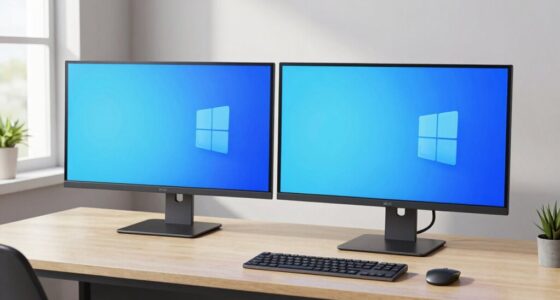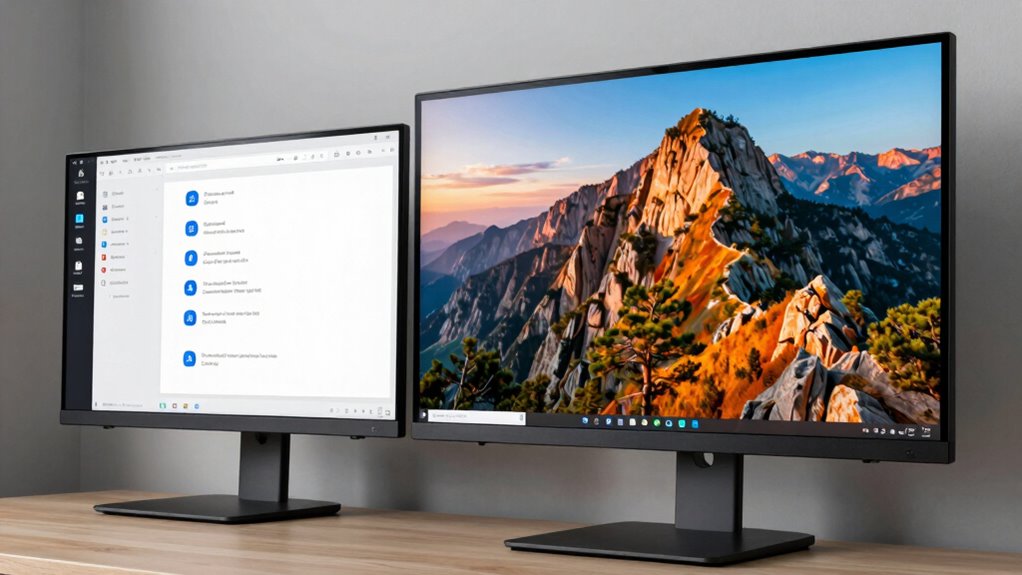

When choosing a monitor, you’ll want to balance resolution and size based on your needs. High resolution (like 4K) offers sharper images, but on a large screen, it can look pixelated if the resolution isn’t high enough. Smaller screens with high resolution provide crisp visuals without taking up much space. Think about your primary tasks and workspace. Keep exploring further, and you’ll find out how to make the best choice for your setup.

Get books, candles and calm essentials delivered free — and shop member deals
- Fast, free delivery on millions of items
- Access to Prime Big Deal Days deals on October 6–7
- Prime Video, Amazon Music and more included
Key Takeaways
- Prioritize resolution for detailed tasks like photo editing, and size for immersive experiences like gaming or video editing.
- Balance resolution and size to avoid pixelation on large screens or a lack of clarity on small screens.
- Consider primary use to determine whether high resolution or larger size will enhance productivity or entertainment.
- Account for physical space and ergonomic comfort when choosing larger monitors with higher resolutions.
- Additional features like color accuracy and brightness are crucial for professional work, complementing resolution and size choices.
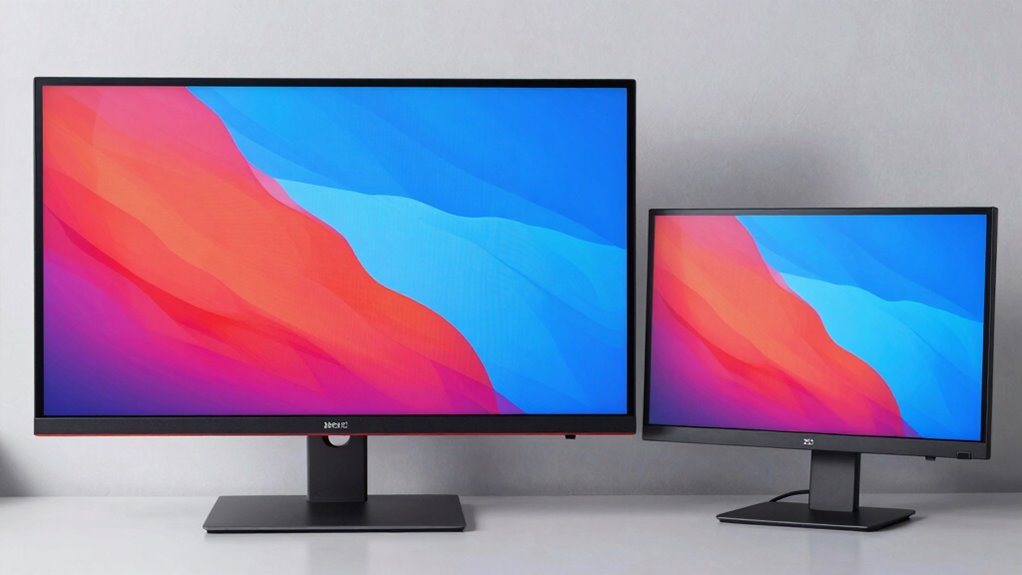
Are you unsure where to start when selecting a monitor? It can feel overwhelming with so many options available. One of the most crucial decisions involves understanding the balance between resolution and size. Both factors significantly influence your viewing experience, but they serve different purposes. Higher resolution, like 4K or QHD, offers sharper images and more detail, which is especially beneficial if you work with graphics or enjoy high-definition content. However, a larger screen size doesn’t automatically mean better quality. A bigger monitor with a low resolution might result in pixelation, making images look blurry or pixelated. Conversely, smaller screens with high resolution can deliver crisp visuals but may be less immersive for tasks like gaming or video editing.
Choosing the right monitor involves balancing resolution, size, and your specific needs for clarity and immersion.
When considering resolution versus size, think about your primary use. If color accuracy is essential, especially for creative work like photo editing or video production, a monitor with higher resolution often provides better clarity and finer detail, enabling more precise color representation. Keep in mind that a higher refresh rate, typically 60Hz or more, enhances your overall experience by delivering smoother motion, especially in fast-paced gaming or video playback. While resolution and size are important, don’t overlook refresh rate, as it directly impacts how fluid and responsive your display feels. A larger monitor with a high refresh rate can offer an immersive experience, but only if your system can support it.
You should also consider the physical space where you’ll place your monitor. A larger screen may require more desk space and could cause eye strain if it’s too close. On the other hand, a smaller, high-resolution monitor can fit comfortably into tighter spaces and still deliver excellent image quality. Brightness and color accuracy are additional factors to think about, particularly if you’re involved in tasks demanding precise color reproduction. A monitor with good color accuracy and consistent brightness across the screen ensures you see true-to-life images, which is vital for professional work. Additionally, understanding resolution and size can help you make a more informed decision tailored to your specific needs.
Ultimately, choosing between resolution and size depends on your specific needs and workspace. Balance the clarity and detail offered by higher resolution with the comfort and immersion of a larger display. Keep in mind that features like refresh rate and color accuracy also play critical roles in your overall satisfaction. By carefully evaluating these aspects, you can find a monitor that enhances your experience without overwhelming your desk or budget.
4K computer monitor for photo editing
As an affiliate, we earn on qualifying purchases.
As an affiliate, we earn on qualifying purchases.
Frequently Asked Questions
How Does Refresh Rate Impact Monitor Performance?
A higher refresh rate considerably improves monitor performance by enhancing gaming performance and visual fluidity. It updates images more frequently, reducing motion blur and screen tearing, which makes fast-paced gameplay smoother and more responsive. With a higher refresh rate, you’ll notice less lag and more precise visuals, giving you a competitive edge. So, if you prioritize seamless visuals and gaming performance, opt for a monitor with a higher refresh rate.
What Are the Benefits of Curved Monitors?
Curved monitors enhance your viewing experience with ergonomic design, reducing eye strain and offering a more natural, comfortable angle. They also boost aesthetic appeal, giving your setup a sleek, modern look. The curved shape wraps around your field of vision, making it easier to focus on content and immerse yourself in games or work. Overall, these features combine to improve comfort and style, making curved monitors a great choice for many users.
How Do I Compare Monitor Color Accuracy?
You wanna compare monitor color accuracy? Delve into color calibration and display gamut. Check if the monitor has hardware calibration options for precise adjustments. Look for a wide display gamut—sRGB, Adobe RGB, or DCI-P3—to guarantee vibrant, true-to-life colors. Use calibration tools or software to test consistency. Remember, a monitor claiming “accurate colors” isn’t worth much unless it’s been properly calibrated and covers a broad color gamut.
Is a Higher Resolution Always Better?
A higher resolution isn’t always better if you don’t consider screen calibration and ergonomic design. While a higher resolution offers sharper images, it can strain your eyes if your monitor isn’t well calibrated. Also, an ergonomic design ensures comfortable long-term use, regardless of resolution. Focus on balancing resolution with these factors to enhance your viewing experience, rather than just pursuing higher pixel counts.
What Connectivity Options Should I Consider?
Think of connectivity options as the backbone of your monitor setup. You should consider mounting options like VESA compatibility for flexible positioning and ergonomic features that reduce strain. Look for a variety of ports such as HDMI, DisplayPort, and USB-C to guarantee compatibility with your devices. This way, you keep your workspace organized and adaptable, making your monitor both functional and comfortable to use.
ultrawide gaming monitor 27 inch
As an affiliate, we earn on qualifying purchases.
As an affiliate, we earn on qualifying purchases.
Conclusion
So, when you’re choosing between resolution and size, think about what matters most to you—crystal-clear images or a larger viewing area? Remember, the best monitor suits your specific needs, whether for work, gaming, or creative projects. Don’t just focus on specs—consider how you’ll actually use it. After all, isn’t the perfect monitor the one that makes your daily tasks easier and more enjoyable? Happy shopping!
high resolution professional monitor
As an affiliate, we earn on qualifying purchases.
As an affiliate, we earn on qualifying purchases.
As an affiliate, we earn on qualifying purchases.
Halloween Picks
halloween
As an affiliate, we earn on qualifying purchases.