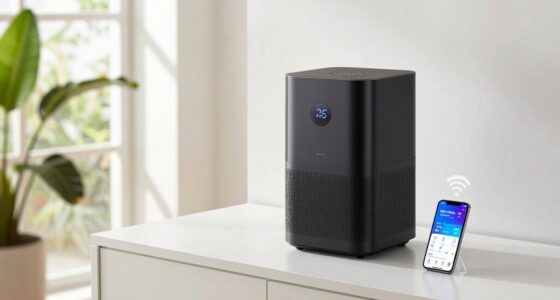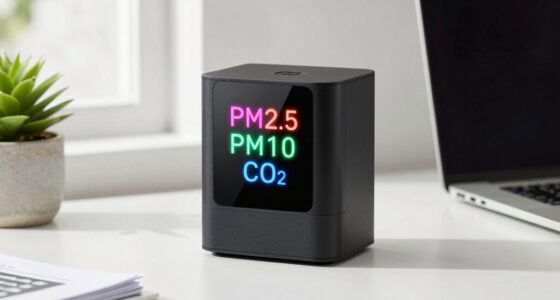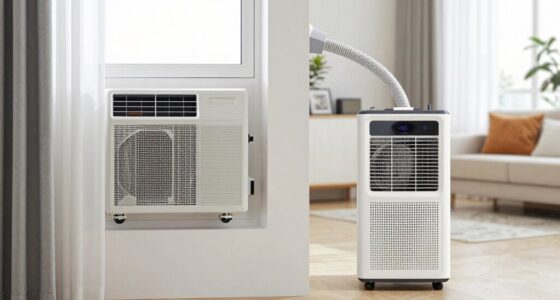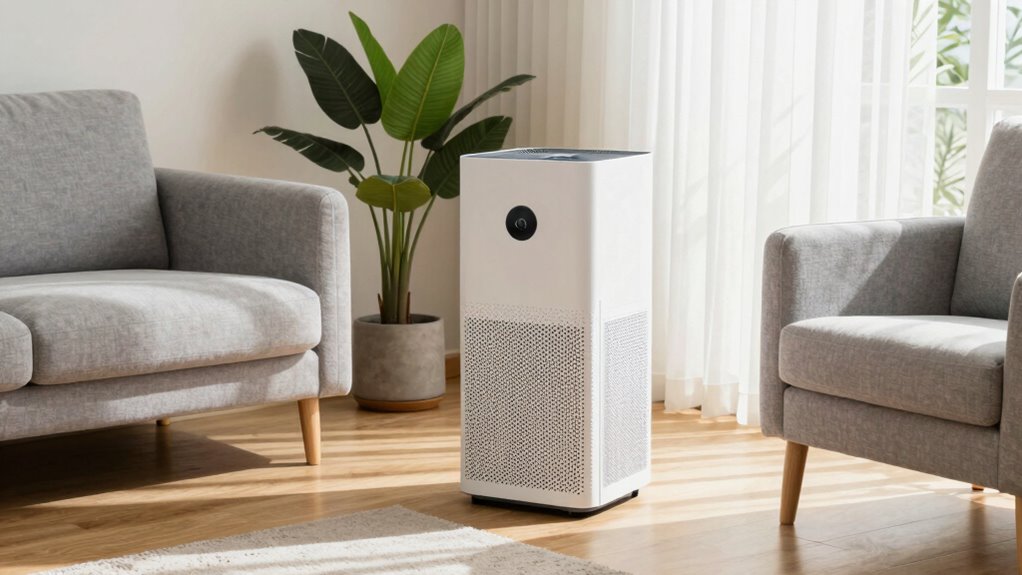
To guarantee your air purifier works effectively, place it in a central spot away from furniture, curtains, or walls to prevent airflow blockages. Position near pollution sources like pet areas, cooking zones, or smoking spots for better filtration. Elevate it slightly on a table to improve airflow and avoid high-traffic areas. Regularly observe air quality and adjust as needed. If you keep these tips in mind, you’ll discover more ways to optimize your air purifier’s performance.

Get books, candles and calm essentials delivered free — and shop member deals
- Fast, free delivery on millions of items
- Access to Prime Big Deal Days deals on October 6–7
- Prime Video, Amazon Music and more included
Key Takeaways
- Place the purifier in central locations to maximize air circulation throughout the room.
- Keep it away from furniture, curtains, and walls to prevent airflow obstruction.
- Position near pollution sources like pet areas, kitchens, or smoking zones for better filtration.
- Elevate the purifier slightly for improved airflow, especially if the intake is low.
- Regularly monitor air quality and adjust placement to optimize effectiveness over time.
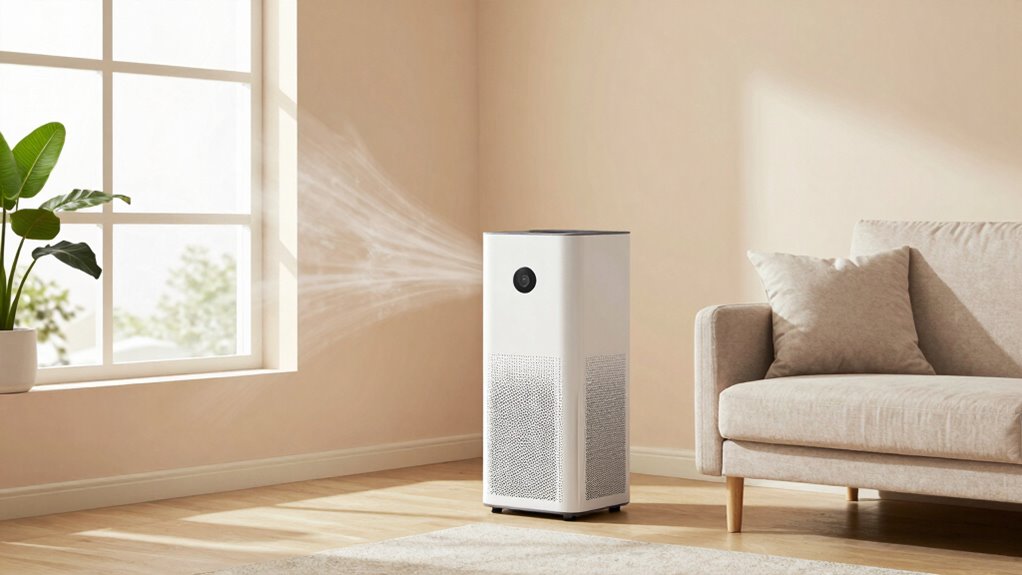
Have you ever wondered if where you place your air purifier truly affects its effectiveness? The answer is yes, and understanding how to position it properly can make a significant difference. When it comes to airflow optimization, placement is essential. You want to guarantee the purifier draws in air efficiently, circulating it through its filters and pushing clean air back into the room. Positioning the device in a spot where airflow isn’t obstructed—away from furniture, curtains, or walls—helps maximize its performance. If airflow is restricted, the purifier won’t work as effectively, and you might not notice the air quality improvements you’re aiming for.
Proper placement ensures your air purifier works efficiently by optimizing airflow and avoiding obstructions.
Room size considerations are also vital. A common mistake is placing a small purifier in a large space, where it simply can’t circulate enough air to make a difference. Conversely, putting a powerful unit into a tiny room might be overkill and could lead to unnecessary noise or energy use. To get the best results, match the purifier’s capacity to the room size. Many models specify their coverage area, so check that to avoid underperformance. If your room is large, consider placing multiple units or a higher-capacity purifier in strategic locations.
Placement near common sources of pollutants can also enhance its effectiveness. For example, if you have pets, placing the purifier near their bedding or feeding areas helps in capturing pet dander and odors. If cigarette smoke or cooking fumes are concerns, position the purifier closer to these sources rather than in a corner or behind furniture. Remember that the goal is to keep the air intake and outlet unobstructed, so avoid corners or tight spaces where airflow gets trapped.
In addition, think about the room’s layout. Position the purifier in central locations when possible, ensuring it can pull in air from different corners and distribute clean air throughout the space. Elevating it slightly off the floor—say, on a table or shelf—can sometimes improve airflow, especially if the device has a lower intake. Just make sure it’s stable and not in a high-traffic area where it might get bumped or knocked over. Being aware of airflow pathways within your room can help you choose the most effective placement. Understanding air circulation within your space can further optimize the purifier’s performance. Additionally, considering air exchange rates can help you determine how often the air in your room is refreshed, guiding you in placement decisions.
It’s also beneficial to monitor air quality levels over time to see how placement impacts the purifier’s efficiency and make adjustments accordingly.
Ultimately, effective air purifier placement combines airflow optimization and room size considerations. Think about how air moves through your space and choose a spot that allows unobstructed circulation. By doing so, you’ll guarantee your air purifier performs at its best, providing cleaner, healthier air in your home.
As an affiliate, we earn on qualifying purchases.
Frequently Asked Questions
How Often Should I Replace the Air Purifier Filters?
You should replace your air purifier filters based on the filter lifespan, which typically ranges from three to six months, depending on usage and air quality. Keep an eye on the replacement frequency recommended by the manufacturer, as clogged filters reduce efficiency. Regularly check the filters for dirt and debris, and replace them promptly to maintain peak air purification and guarantee your air purifier works effectively.
Can Air Purifiers Be Used Outdoors Effectively?
Using an air purifier outdoors is like trying to catch fog with a net—it’s generally less effective. Outdoor air quality varies greatly, making portable models more suitable than fixed ones, which are designed for indoor use. While some outdoor-specific purifiers exist, most are less efficient outside due to wind and pollution levels. So, for best results, keep purifiers indoors where they can truly make a difference.
What Size Air Purifier Do I Need for My Room?
You need an air purifier with a capacity suited for your room size, usually indicated by the square footage it covers. For a small room, a purifier rated for 100-200 square feet works well, while larger spaces need models covering 300-500 square feet. Keep in mind, a bigger unit may have a shorter filter lifespan if overused, so choose one that balances size with filter durability for *best* air quality.
Do Air Purifiers Reduce Odors Permanently?
Air purifiers can effectively reduce odors, but they don’t eliminate them permanently unless you maintain the filters properly. Odor elimination depends on regular filter maintenance; dirty filters lose their effectiveness. To keep odors at bay, change filters as recommended and choose an air purifier with activated carbon or odor-eliminating technology. While they can greatly improve air quality, ongoing filter care is essential for lasting odor control.
Are There Health Risks With Using Air Purifiers?
There are some health concerns with using air purifiers, especially if you have allergies or sensitivities. Poorly maintained filters can release trapped toxins back into the air. However, when you regularly change filters and choose a purifier with HEPA filters, it effectively filters toxins and improves air quality. Overall, using an air purifier is safe, but proper maintenance is essential to minimize risks and enjoy healthier indoor air.
As an affiliate, we earn on qualifying purchases.
Conclusion
To maximize your air purifier’s effectiveness, position it strategically, prioritize central locations, and keep it unobstructed. Guarantee it’s near sources of pollution, yet away from walls or furniture, for ideal airflow. Regularly adjust its placement based on room layout, and maintain it properly. By doing so, you create a healthier environment, improve air quality, and enjoy fresher, cleaner air. In your space, placement matters—make it thoughtful, intentional, and consistent.
air purifier with adjustable height
As an affiliate, we earn on qualifying purchases.
As an affiliate, we earn on qualifying purchases.
room size compatible air purifier
As an affiliate, we earn on qualifying purchases.
As an affiliate, we earn on qualifying purchases.
Fall Picks
fall essentials
As an affiliate, we earn on qualifying purchases.