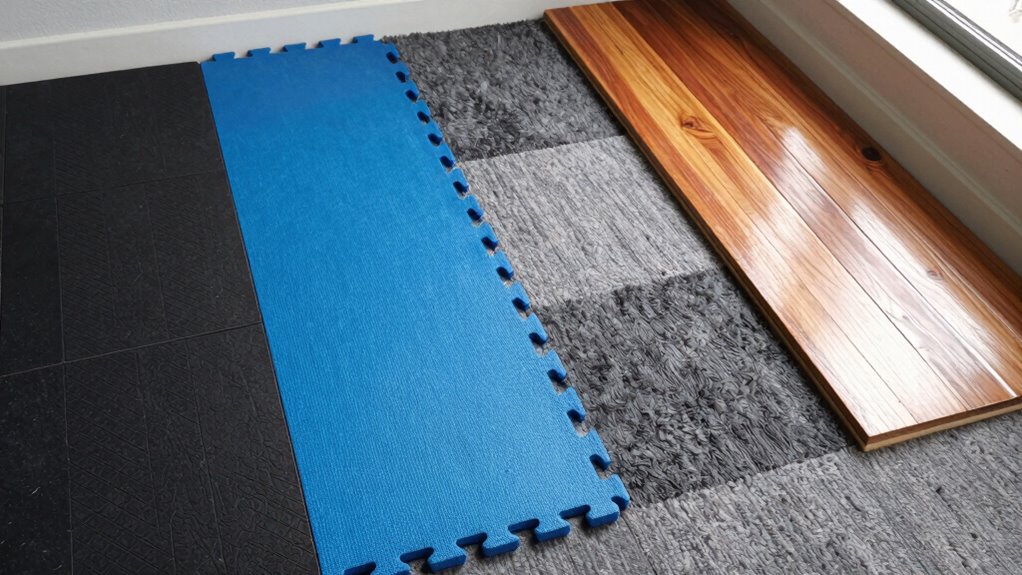

When choosing home gym flooring, consider rubber mats for durability, heavy lifting, and high-impact activities because they resist cracking, absorb shocks, and stay in place. Foam tiles offer cushioning and versatility, making them perfect for yoga, stretching, and lighter exercises—plus, they’re easy to install and replace. Combining both types can create a safe, functional space tailored to your workout style. Keep exploring to discover the best options for your fitness goals.

Turn your quiet moments into listening time
- Thousands of audiobooks, podcasts and originals
- Listen on your phone, tablet or Echo — also offline
- Cancel anytime
Key Takeaways
- Rubber mats are highly durable, ideal for heavy weights, and offer excellent shock absorption and slip resistance.
- Foam tiles are lightweight, customizable, and suitable for low-impact activities but may wear faster under heavy use.
- Rubber flooring is more expensive but long-lasting; foam tiles are affordable and easy to replace or customize.
- Rubber mats are better for high-impact, weightlifting routines; foam tiles excel in yoga, stretching, and light exercises.
- Combining rubber and foam flooring creates a versatile, safe workout environment tailored to different activity zones.
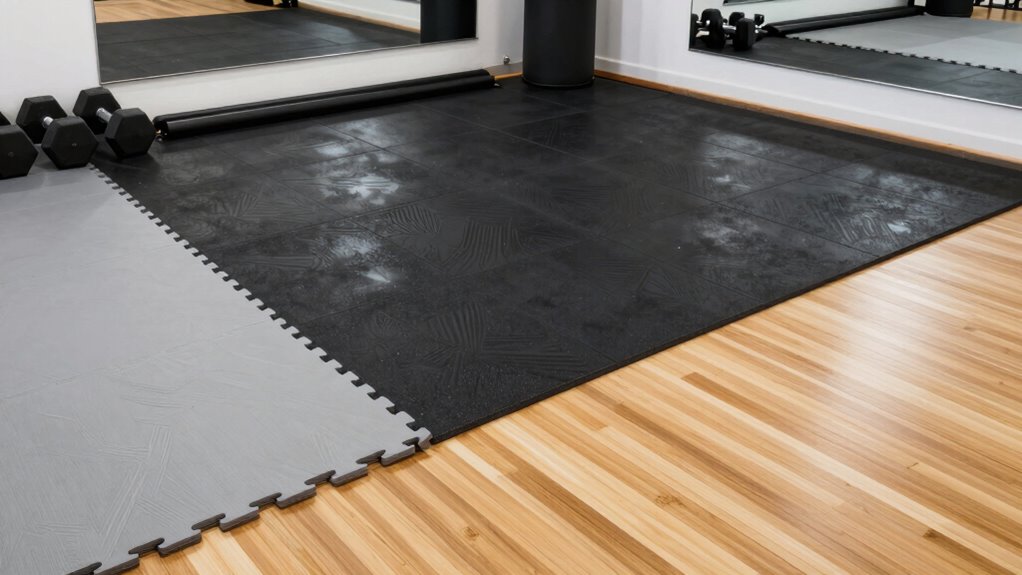
Creating a home gym is an exciting step toward better fitness, but choosing the right flooring is essential for safety, durability, and comfort. Your flooring sets the foundation for effective workouts and protects both your equipment and your floors. When comparing options, rubber mats and foam tiles are two popular choices, each offering unique benefits tailored to different needs.
Rubber mats are a top pick for serious fitness enthusiasts because they’re highly durable and provide excellent shock absorption. They’re designed to withstand heavy weights, dropping dumbbells or barbells without cracking or tearing. This makes them ideal if you’re planning to do weightlifting or high-impact exercises. Rubber mats also offer a non-slip surface, reducing the risk of accidents during vigorous workouts. Plus, they’re easy to clean—just sweep or wipe away sweat and dust. However, rubber mats tend to be heavier and more challenging to install, especially if you’re covering a large area. They can also have a distinct smell initially, which usually dissipates after a few days. Proper installation and maintenance are key to maximizing their lifespan and safety. Additionally, choosing eco-friendly rubber options can contribute to a more sustainable workout environment.
Rubber mats are durable, shock-absorbing, and ideal for weightlifting and high-impact workouts.
On the other hand, foam tiles are a flexible and beginner-friendly option. They’re lightweight, easy to install, and come in a variety of colors and patterns, allowing you to customize your workout space. Foam tiles are excellent for low-impact activities like yoga, stretching, or bodyweight exercises. They provide a cushioned surface that’s comfortable underfoot and helps reduce joint strain. Foam tiles are also affordable and easily replaceable if damaged or stained. Still, they’re less durable than rubber mats and may wear out faster under heavy weights or intense use. They can also shift or slide if not properly secured, which could pose a safety issue during high-movement routines. To prevent this, using interlocking tiles with a secure locking system can help maintain stability.
When choosing between rubber mats and foam tiles, consider your workout style and space. If your routine involves heavy weights or high-impact training, rubber mats are a safer and more durable choice. If you prioritize comfort and a versatile, easy-to-install setup for lighter activities, foam tiles might suit you better. Both options can be used together—placing rubber mats in weightlifting zones and foam tiles in stretching or cardio areas—to create a customized, functional gym. Ultimately, investing in quality flooring tailored to your workouts guarantees safety, longevity, and a more enjoyable fitness experience at home.
As an affiliate, we earn on qualifying purchases.
Frequently Asked Questions
Which Flooring Is Best for High-Impact Workouts?
Rubber flooring is your best choice for high-impact workouts because it offers excellent impact absorption, protecting your joints and equipment. It also acts as a soundproofing solution, minimizing noise from jumping or dropping weights. You’ll find rubber mats or tiles durable and easy to install, making them ideal for intense exercise routines. With rubber flooring, you create a safer, quieter workout space that withstands heavy use and reduces noise disturbance.
How Do I Maintain and Clean Gym Flooring?
To maintain and clean your gym flooring, follow regular maintenance routines like sweeping and vacuuming to remove dust and debris. Use appropriate cleaning supplies, such as mild soap and water or a manufacturer-recommended cleaner, to keep surfaces spotless. Avoid harsh chemicals that could damage the flooring. By staying consistent with these routines and using proper cleaning supplies, you’ll guarantee your gym floor remains durable, safe, and looking great.
Are There Eco-Friendly Flooring Options Available?
They say, “Every step counts,” and that’s true for eco-conscious choices too. Yes, eco-friendly flooring options are available. You can choose sustainable materials like cork, bamboo, or recycled rubber for your home gym. These options reduce environmental impact while providing durability. By selecting sustainable options, you’re making a positive difference, blending functionality with eco-awareness, and ensuring your workout space is kind to the planet.
What Is the Average Cost of Different Flooring Types?
The average cost of home gym flooring varies widely based on material durability and quality. Rubber flooring typically costs $2 to $5 per square foot, offering excellent durability. Foam options are more affordable, around $1 to $3 per square foot, but less durable. Vinyl flooring costs about $3 to $7 per square foot, balancing durability and price. Do a cost comparison to find the best fit for your budget and workout needs.
How Long Does Gym Flooring Typically Last?
Your gym flooring is like a trusted companion, lasting through countless workouts. Generally, it lasts 5 to 15 years, depending on durability concerns and usage. Rubber flooring tends to be more durable, while laminate or vinyl might face installation challenges that reduce lifespan. Regular maintenance helps extend its life, but heavy equipment and high traffic can shorten it. Choose wisely to keep your gym resilient and inviting for years to come.
As an affiliate, we earn on qualifying purchases.
Conclusion
Choosing the right home gym flooring isn’t just a small decision—it’s the foundation of your workout empire. Whether you opt for rubber, foam, or interlocking tiles, each option protects your space and boosts your performance. Remember, the right flooring can turn your workout area into a powerhouse of motivation, making your fitness journey feel like a victory parade every day. So pick wisely, because your home gym deserves nothing less than legendary!
As an affiliate, we earn on qualifying purchases.
As an affiliate, we earn on qualifying purchases.
Halloween Picks
halloween
As an affiliate, we earn on qualifying purchases.

![A Better Way To Tie Your Gym Shorts. (Or Any Drawstring) [Video]](https://oboval.com/wp-content/uploads/2026/07/a-better-way-to-tie-your-gym-shorts-or-any-drawstring-video-featured-560x300.jpg)