

On your recovery day, focus on mental relaxation by disconnecting from devices, practicing mindfulness, and doing deep breathing exercises. Nourish your body with healthy snacks and stay hydrated, avoiding sugary foods. Engage in gentle movement like stretching or a light walk, and prioritize self-care with warm baths or heating pads. Take time to reflect, set intentions, and plan balanced routines. Continuing will help you discover practical ways to support your mind and body for maximum recovery.

Turn your quiet moments into listening time
- Thousands of audiobooks, podcasts and originals
- Listen on your phone, tablet or Echo — also offline
- Cancel anytime
Key Takeaways
- Prioritize mental relaxation with deep breathing, mindfulness, and disconnecting from devices to reduce stress.
- Consume nutritious snacks and stay well-hydrated to support energy and recovery.
- Incorporate gentle movement like stretching or walking to boost circulation and ease stiffness.
- Practice self-care routines such as warm baths or heating pads to relax muscles and promote rest.
- Reflect on the day, set intentions, and plan balanced routines to maintain overall well-being.
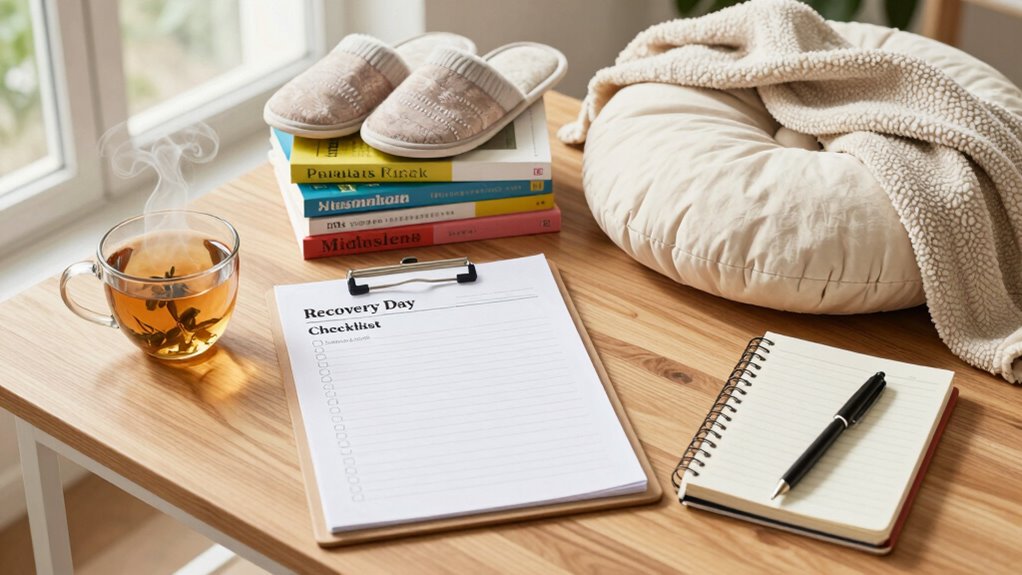
After a physically or mentally demanding day, taking time to prioritize recovery is essential for your well-being. It’s your chance to reset, recharge, and prevent burnout. One of the most effective ways to do this is by focusing on mental relaxation. You might start by setting aside your devices to disconnect from constant notifications and digital stress. Find a quiet space where you can breathe deeply and clear your mind. Practicing mindfulness or gentle meditation helps calm racing thoughts, easing tension in your body. You could also try deep breathing exercises or progressive muscle relaxation to further unwind. These practices not only soothe your mind but also lower your stress hormones, making recovery more efficient. Incorporating relaxation techniques like guided imagery or body scans can deepen your sense of calm and aid in complete recovery. Engaging in these practices regularly can also improve your overall resilience to future stressors. Recognizing the importance of biodiversity in maintaining a balanced environment can inspire more mindful choices that support your mental health and sustainability.
Alongside mental relaxation, nourishing your body plays a critical role. Keep nutritious snacks on hand to satisfy hunger without derailing your recovery. Opt for foods rich in healthy fats, protein, and complex carbs—think nuts, Greek yogurt, fresh fruit, or veggie sticks with hummus. These snacks provide sustained energy and promote muscle repair, especially after intense activity. Avoid processed, sugary treats that can spike your energy briefly but lead to a crash later. Hydration is equally important, so drink plenty of water or herbal teas to stay well-hydrated. Proper hydration supports your immune system and helps flush out toxins accumulated during stressful days. Incorporating hydration practices such as drinking herbal teas or electrolyte-rich drinks can further support your recovery process. Staying consistently hydrated can also improve your mood and mental clarity, making your recovery more effective.
In addition to mental relaxation and nutritious snacks, incorporate gentle movement if you feel up to it. Light stretching or a short walk can boost circulation, helping your muscles recover and reducing stiffness. However, listen to your body—if you’re feeling particularly drained, prioritize rest over activity. Use this time to indulge in self-care routines, such as a warm bath or using a heating pad on sore muscles. These simple acts can relax your muscles and improve blood flow, speeding up recovery. Taking time for self-care routines can also enhance your overall sense of well-being and help establish a comforting bedtime routine. Lastly, reflect on your day and set intentions for tomorrow. Journaling briefly about what went well or what you’re grateful for can shift your mindset to positivity. Planning a balanced routine for the upcoming days ensures you stay on track with your fitness and health goals. Remember, recovery isn’t just about resting—it’s about actively nurturing your body and mind. By integrating mental relaxation, nutritious snacks, gentle movement, and self-care into your recovery day, you create a sustainable approach that keeps you energized and healthy in the long run.
As an affiliate, we earn on qualifying purchases.
Frequently Asked Questions
How Long Should Recovery Day Last?
Recovery day should last at least 24 hours, giving your body enough time for post workout stretching and muscle repair. During this period, prioritize good sleep quality, which helps reduce soreness and boosts recovery. If you’re feeling particularly fatigued, extend your rest to 48 hours. Listening to your body is key; if you still feel sore or tired, give yourself extra time to fully recover before resuming intense workouts.
Can I Exercise on My Recovery Day?
You can absolutely exercise on your recovery day, but keep it light. Did you know that even gentle activity boosts circulation and speeds recovery? Focus on stretching routines to loosen muscles and improve flexibility. Remember to stay hydrated with hydration tips like drinking water or electrolyte drinks to replenish lost fluids. Keep intensity low, listen to your body, and avoid strenuous workouts to truly benefit from your recovery day.
What Foods Promote Recovery Best?
You should focus on nutrient-dense foods like lean proteins, fruits, vegetables, and whole grains to promote recovery. These foods supply essential vitamins and minerals your body needs to repair muscles and reduce inflammation. Also, prioritize hydration strategies by drinking plenty of water and electrolyte-rich drinks to replenish lost fluids. Avoid processed foods and excessive sugars, which can hinder recovery. Proper nutrition and hydration help you bounce back faster and feel energized.
How Do I Stay Motivated During Recovery?
Sure, staying motivated during recovery is a breeze—just channel your inner superhero! Build mental resilience by celebrating small wins and remind yourself why you started. Seek emotional support from friends or support groups, because who doesn’t love a good pep talk? Keep your goals visible, stay positive, and remember, your comeback story is worth every effort. Motivation flows when you believe in your strength—so, go ahead, prove it!
Is It Okay to Rest Multiple Days?
Yes, it’s perfectly okay to rest multiple days if your body needs it. Use rest techniques like gentle stretching, deep breathing, and mental relaxation to help your recovery process. Taking extra days allows your muscles to repair and reduces injury risk. Listen to your body, and don’t rush the process. Prioritizing rest guarantees you regain strength and stay motivated for your next workout.
As an affiliate, we earn on qualifying purchases.
Conclusion
As you finish your recovery day, picture yourself sinking into a cozy chair, a warm cup in hand, feeling the gentle ease of your muscles and mind. This day’s calming rituals have replenished your energy, readying you for tomorrow’s adventures. Embrace this peaceful moment, knowing you’ve nurtured your body and soul. With each mindful breath, you’re planting seeds for a stronger, more vibrant you—ready to face whatever comes next with renewed vigor.
As an affiliate, we earn on qualifying purchases.
As an affiliate, we earn on qualifying purchases.
Fall Picks
fall essentials
As an affiliate, we earn on qualifying purchases.