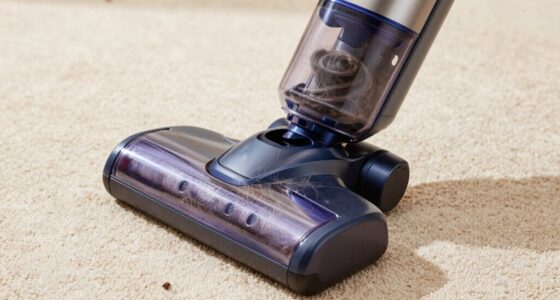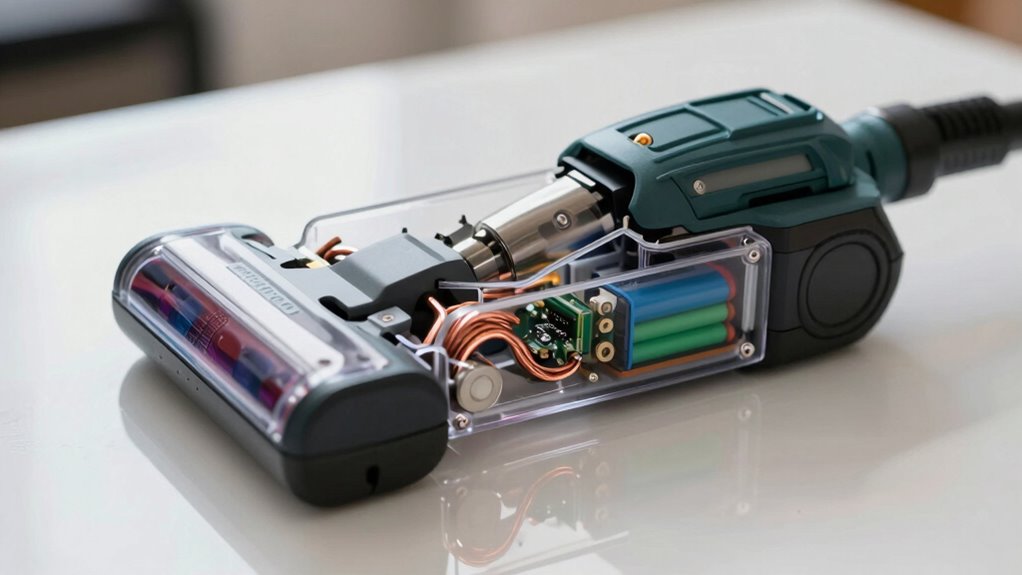

To understand cordless vacuum battery math, consider that capacity (mAh) affects runtime but isn’t the whole story. High-quality batteries with better chemistry and power management offer longer cycles and more efficient use of energy. Voltage impacts suction strength, but higher voltage can drain batteries faster if not managed well. Focus on overall design, efficiency, and how the system balances power with runtime. Keep exploring for smarter tips to choose a reliable, long-lasting vacuum.

Turn your quiet moments into listening time
- Thousands of audiobooks, podcasts and originals
- Listen on your phone, tablet or Echo — also offline
- Cancel anytime
Key Takeaways
- Battery capacity (mAh) indicates potential runtime but doesn’t guarantee performance; efficiency also impacts cleaning power.
- Higher voltage batteries usually deliver stronger suction but may drain faster without proper power management.
- Battery longevity depends on charge cycles and quality, affecting overall vacuum lifespan and maintenance costs.
- Advances in battery chemistry and energy management systems enhance safety, reliability, and efficiency of cordless vacuums.
- A balanced combination of capacity, voltage, and efficiency yields the best runtime and cleaning performance.

Ever wondered how to determine the right battery for your cordless vacuum? It all comes down to understanding a few key factors—namely, battery longevity and power efficiency. When shopping for a replacement or upgrade, these elements influence how well your vacuum performs and how long it lasts on a single charge. Battery longevity refers to how many charge cycles a battery can handle before it starts to lose its capacity. Typically, the higher quality batteries will endure more cycles, meaning you’ll get more use out of each one. Cheaper batteries might seem appealing initially, but they often degrade faster, forcing you to replace them more frequently and ultimately costing you more in the long run. Power efficiency, on the other hand, determines how effectively the battery converts stored energy into cleaning power. A highly efficient battery provides stronger suction and longer runtime without draining quickly, so you don’t have to stop mid-clean to recharge.
Choosing the right battery depends on longevity and efficiency for optimal vacuum performance and longer-lasting power.
When choosing a battery, don’t just focus on capacity (measured in milliamp-hours, or mAh). While higher capacity can mean longer usage per charge, it doesn’t automatically guarantee better performance if the battery isn’t efficient. Sometimes, a slightly lower-capacity battery with high power efficiency can outperform a larger, less efficient one. It’s essential to consider the overall design—how well the battery manages energy flow and minimizes waste. This is especially true if you have a larger home or need to clean multiple times a day; in such cases, a battery with both high longevity and efficiency becomes invaluable. Additionally, understanding the battery chemistry used in your vacuum can impact its performance and safety, so it’s worth researching which type suits your needs best. Knowing the energy management systems integrated into the battery and vacuum can further help optimize performance and extend battery life. Moreover, staying informed about advances in battery technology can help you select the most reliable and safe options available. A good understanding of battery capacity and how it relates to runtime can help prevent overestimating your vacuum’s cleaning time.
You also want to pay attention to the battery’s voltage, which impacts the vacuum’s suction power. Higher voltage batteries generally provide stronger performance, but they can also consume energy faster if not optimized for efficiency. Look for batteries that balance voltage with good power management systems built into the vacuum, ensuring you get maximum runtime without sacrificing suction strength.
cordless vacuum battery replacement
As an affiliate, we earn on qualifying purchases.
As an affiliate, we earn on qualifying purchases.
Frequently Asked Questions
How Do Battery Capacities Affect Vacuum Runtime?
Battery capacities directly impact your vacuum’s runtime; larger capacities mean longer use before needing a recharge. Battery chemistry influences how efficiently the battery holds and delivers power, affecting overall performance. Charging cycles also matter, as frequent charging can diminish capacity over time, shortening runtime. To maximize your vacuum’s run time, choose a model with appropriate capacity and good battery chemistry, and avoid excessive charging cycles to preserve battery health and performance.
What Is the Typical Lifespan of a Cordless Vacuum Battery?
You can expect a cordless vacuum battery to last about 2 to 4 years with proper care. To extend its lifespan, follow charging best practices like avoiding overcharging and letting the battery cool down between uses. When it’s time to replace, consider battery recycling options to dispose of it responsibly. Regular maintenance and mindful charging habits help guarantee your vacuum’s battery stays efficient longer.
Are Higher Voltage Batteries Always Better?
Higher voltage batteries aren’t always better because they can affect battery safety and compatibility. Using a battery with a voltage higher than your vacuum’s recommended specs may cause overheating or damage. Always check voltage compatibility to guarantee safe operation. While higher voltage can mean more power, it’s essential to follow your vacuum manufacturer’s guidelines to maintain safety and ideal performance. Never compromise voltage safety for extra power.
How Can I Safely Replace My Vacuum’s Battery?
To safely replace your vacuum’s battery, always disconnect the charger and power source first. Use the correct replacement battery, follow the manufacturer’s instructions, and avoid forcing connections. When disposing of the old battery, follow proper battery disposal guidelines to prevent environmental harm. During charging, guarantee safety by using compatible chargers and avoiding overcharging, which can cause overheating or damage. Always prioritize safety, proper disposal, and correct installation for a smooth, secure upgrade.
Do Battery Types Impact Vacuum Performance?
Yes, battery types impact vacuum performance. Different battery chemistries, like lithium-ion or nickel-metal hydride, influence power, runtime, and lifespan. Lithium-ion batteries generally offer higher energy density and faster charging methods, giving you longer cleaning sessions. Choosing the right battery chemistry guarantees your vacuum performs at its best and maintains efficiency over time. Proper charging methods also prevent damage, helping your vacuum stay reliable and effective longer.
As an affiliate, we earn on qualifying purchases.
Conclusion
So there you have it—your crash course in cordless vacuum battery math. Now, armed with these honest numbers, you’re basically a vacuuming wizard. No more falling for flashy claims or wasting money on batteries that die faster than your last diet. Remember, behind every cordless vacuum’s shiny exterior is a little calculator doing the real work. Happy vacuuming, and may your batteries last longer than your last relationship!
vacuum cleaner battery with long lifespan
As an affiliate, we earn on qualifying purchases.
As an affiliate, we earn on qualifying purchases.
efficient cordless vacuum batteries
As an affiliate, we earn on qualifying purchases.
As an affiliate, we earn on qualifying purchases.
Halloween Picks
halloween
As an affiliate, we earn on qualifying purchases.