To air dry indoors without mildew, guarantee your space is well-ventilated by opening windows or using exhaust fans, and avoid overcrowding clothes to allow good airflow. Use dehumidifiers or silica gel packs to keep humidity below 60%, and reposition damp clothes if they don’t dry after a few hours. Regularly monitor humidity levels and keep your drying area clean to prevent mold growth. Keep exploring to discover more effective tips for mildew-free indoor drying.

Turn your quiet moments into listening time
- Thousands of audiobooks, podcasts and originals
- Listen on your phone, tablet or Echo — also offline
- Cancel anytime
Key Takeaways
- Ensure thorough drying and avoid overcrowding to promote proper airflow around clothes.
- Increase ventilation by opening windows, using exhaust fans, or employing oscillating fans.
- Use dehumidifiers or moisture-absorbing products to maintain indoor humidity below 60%.
- Reposition damp clothes and monitor drying times to prevent prolonged moisture retention.
- Keep drying areas uncluttered and regularly assess humidity to prevent mold and mildew growth.
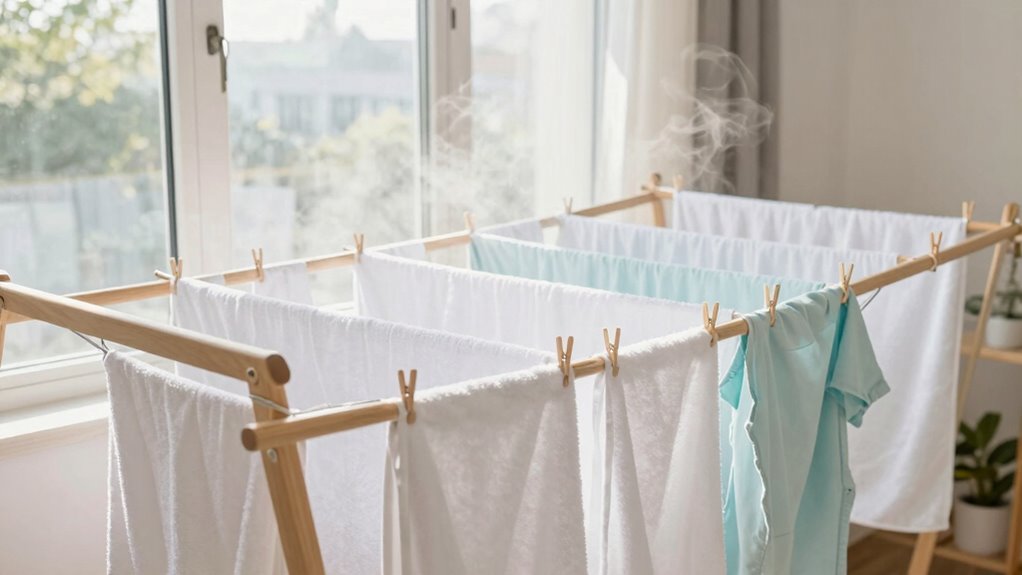
Drying laundry indoors can be convenient, but it often comes with the risk of mildew growth if not done properly. To keep your space fresh and mold-free, you need to focus on mildew prevention. The key is ensuring your laundry dries thoroughly and your room stays well-ventilated. If moisture lingers, it creates the perfect environment for mildew to develop, which can lead to unpleasant odors and potential health issues.
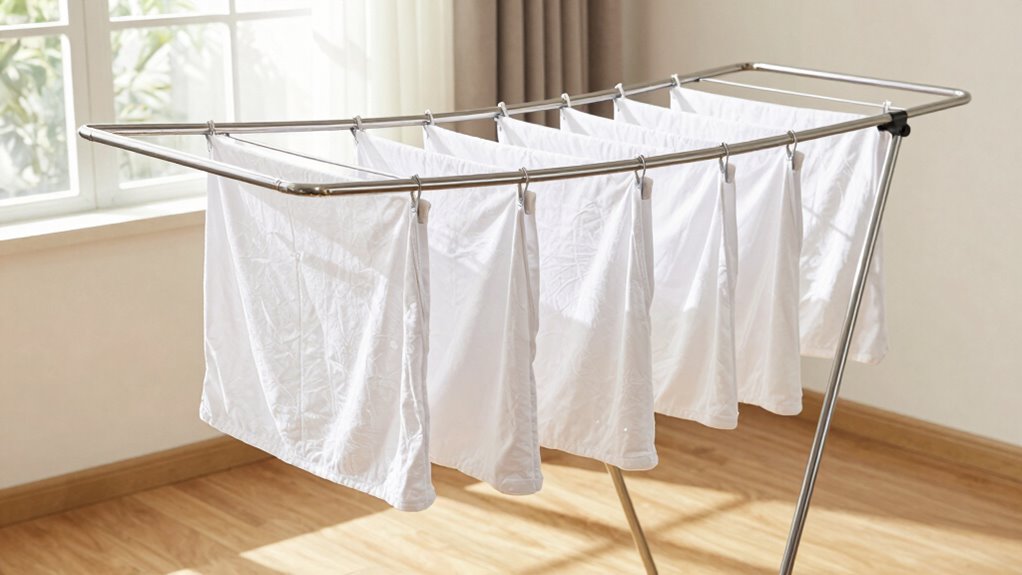
One of the most effective ways to prevent mildew is to use proper ventilation techniques. You want to circulate air consistently around your drying area. Opening windows and doors is a good start, especially if the weather allows. If you don’t have access to natural airflow, consider installing exhaust fans or using a dehumidifier. These devices help remove excess moisture from the air, reducing the humidity level in the room. When you’re hanging clothes, make sure they’re spaced out sufficiently so air can move freely around each piece. Overcrowding your drying space restricts airflow and prolongs the drying process, increasing the chance of mildew.
Positioning your laundry near a window or in a well-ventilated corner can also make a noticeable difference. Another effective ventilation technique involves using a fan. A simple oscillating fan can boost air circulation, helping moisture escape from the fabric and evaporate faster. Keep the fan directed toward the drying clothes or pointed at a vent to maximize airflow. Remember, the goal is to keep the air moving steadily, so stagnant air doesn’t trap moisture near your laundry. Ensuring proper airflow is essential for quick drying and mildew prevention. Additionally, choosing the right drying equipment, like a clothes dryer, can significantly reduce indoor moisture levels and prevent mildew formation. Proper humidity control is also crucial, as high humidity levels promote mold growth and must be managed effectively. Using moisture-absorbing products, such as silica gel packs or dehumidifying crystals, can also help maintain optimal dryness in small spaces.
Monitoring humidity levels in your room is equally important. Aim for a relative humidity below 60%, ideally around 50%, to inhibit mildew growth. You can do this with a hygrometer, which is an inexpensive device that measures moisture levels. If you notice high humidity, increase ventilation efforts or run the dehumidifier longer. Proper ventilation not only helps dry clothes faster but also prevents excess moisture from lingering in the air. Additionally, selecting the appropriate drying methods can make a significant difference in controlling indoor moisture.
Lastly, pay attention to the drying time. If your clothes feel damp after several hours, consider repositioning them or improving airflow. Using breathable hangers and avoiding plastic drying racks can also help moisture escape more efficiently. By combining good ventilation techniques with mildew prevention strategies, you can keep your indoor laundry dry, fresh, and free of mold. Consistency is key—maintain these habits, and you’ll enjoy a mildew-free indoor drying experience.
As an affiliate, we earn on qualifying purchases.
Frequently Asked Questions
Can Air Drying Clothes Indoors Cause Mold in Other Areas?
Yes, air drying clothes indoors can cause mold in other areas if clothing moisture isn’t managed properly. When you hang wet clothes inside, the excess moisture can increase humidity, creating the perfect environment for mold growth. To prevent this, guarantee proper ventilation, use a dehumidifier, and avoid overloading drying spaces. Good mold prevention techniques help keep your home safe and free from unwanted mold and mildew.
What Are the Best Indoor Air Circulation Methods?
To improve indoor air circulation, focus on airflow optimization and effective ventilation techniques. Use fans to promote even airflow and open windows regularly to exchange stale air with fresh air. Consider installing exhaust fans in high-moisture areas like bathrooms and kitchens. Keep interior doors open to enhance circulation, and use air purifiers with HEPA filters to remove moisture and pollutants. These methods help prevent mold growth and maintain fresh, healthy indoor air.
How Does Humidity Affect Indoor Mildew Growth?
High humidity levels promote indoor mildew growth by providing the moisture mold needs to thrive. To prevent this, you should focus on humidity control by using dehumidifiers or proper ventilation. Keeping indoor humidity below 60% inhibits mold development and supports mold prevention. Regularly monitoring humidity levels helps you maintain an environment that’s less hospitable to mildew, ensuring your indoor space stays dry, healthy, and free from mold-related problems.
Are There Specific Materials More Prone to Mildew When Air Drying?
Certain fabric types, like cotton and linens, are more prone to mildew when air drying indoors, especially in high humidity. Materials with low durability or thick textures trap moisture longer, increasing mildew risk. To minimize this, hang fabrics in well-ventilated areas and avoid stacking or crowding them. Using a dehumidifier or fan helps keep humidity low, reducing mildew chances on vulnerable fabric types and ensuring your items dry safely.
How Often Should I Clean My Indoor Drying Area to Prevent Mildew?
You should clean your indoor drying area at least once a week to prevent mildew. Investigate the theory that frequent cleaning reduces mold growth—it’s true. Pay attention to your clothing fabric and drying rack placement; guarantee proper air circulation and avoid overcrowding. Regular cleaning, combined with strategic space management, keeps your drying area fresh, dry, and free of mildew, especially when drying moisture-prone fabrics indoors.
As an affiliate, we earn on qualifying purchases.
Conclusion
By ensuring proper ventilation and avoiding excessive humidity, you can effectively air dry indoors without inviting mildew. It’s a common misconception that all moisture leads to mold growth—what truly matters is controlling airflow and moisture levels. Think of it like balancing a delicate scale: with awareness and the right precautions, you can enjoy dry, fresh clothes inside, proving that careful attention to environment is the key to preventing mold and maintaining a healthy space.
hygrometer for humidity monitoring
As an affiliate, we earn on qualifying purchases.
As an affiliate, we earn on qualifying purchases.
silica gel packs for moisture absorption
As an affiliate, we earn on qualifying purchases.
As an affiliate, we earn on qualifying purchases.
Fall Picks
fall essentials
As an affiliate, we earn on qualifying purchases.