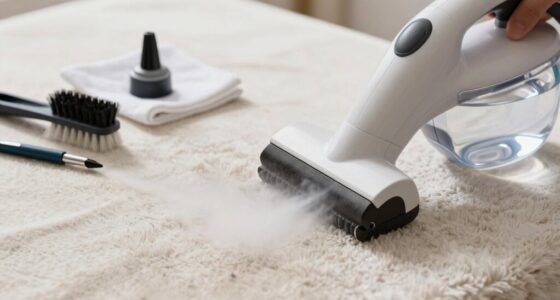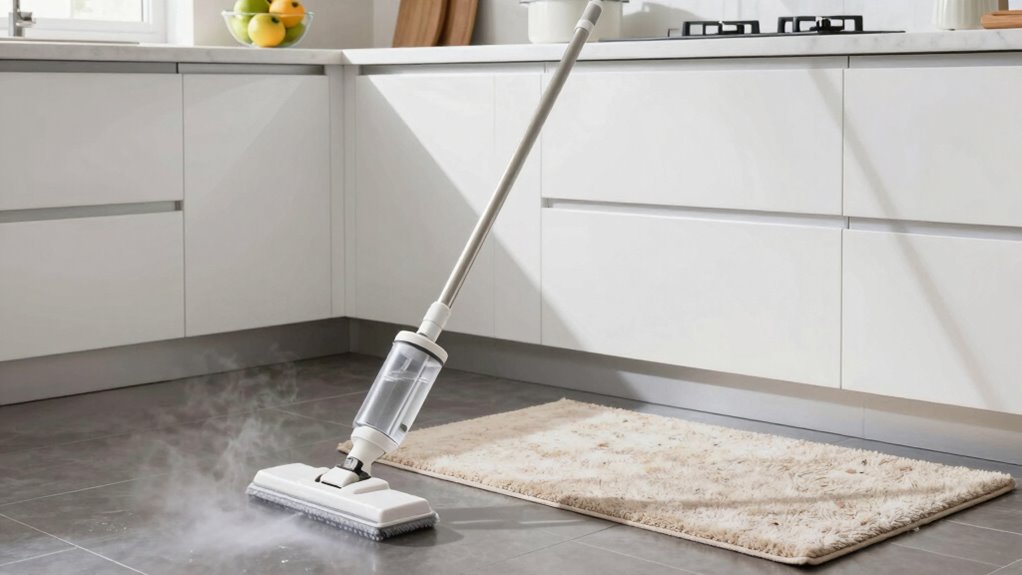

Steam mops work best on sealed hard floors like tile, linoleum, and sealed hardwood, where they loosen dirt, kill germs, and leave floors shiny without harsh chemicals. Avoid using them on unsealed wood, laminate, or moisture-sensitive surfaces, as they can cause damage or warping. Compatibility depends on surface sealant and material, so testing small areas first is wise. Want to learn more about maximizing steam mop effectiveness and avoiding pitfalls? Keep exploring!

Turn your quiet moments into listening time
- Thousands of audiobooks, podcasts and originals
- Listen on your phone, tablet or Echo — also offline
- Cancel anytime
Key Takeaways
- Steam mops are most effective on sealed hard floors like tile, linoleum, and sealed hardwood for deep cleaning and sanitation.
- They are less suitable for unsealed wood, laminate, or moisture-sensitive surfaces prone to warping or damage.
- Always check manufacturer guidelines and test small areas to avoid damaging delicate or porous surfaces.
- Effectiveness diminishes on caked-on stains; additional scrubbing or cleaning solutions may be necessary.
- Proper maintenance and adjustable steam settings improve performance and extend the lifespan of the steam mop.

Steam mops have become a popular cleaning tool because they offer a chemical-free way to sanitize and refresh your floors. You might find them appealing because they use just water to produce steam that loosens dirt and kills germs. But, before investing, it’s important to understand where they work best and where they might fall short. When it comes to cleaning effectiveness, steam mops excel on certain surfaces, providing a deep clean without harsh cleaners. They’re particularly good on sealed hard floors like tile, linoleum, and sealed hardwood. The hot steam can effectively break down grime, grease, and bacteria, leaving your floors hygienic and shiny. Plus, because they don’t rely on chemicals, they’re a safer choice for homes with kids or pets.
However, their cleaning effectiveness diminishes on surfaces that aren’t compatible with moisture. For example, unsealed wood or laminate floors can absorb water, leading to warping or damage over time. Similarly, delicate surfaces like certain types of stone or painted floors may be harmed by the heat and moisture. That’s why surface compatibility is essential. Before you start steaming, always check whether your floors are sealed and suitable for steam cleaning. Manufacturers often specify which surfaces are compatible, so reading the instructions can save you from costly mistakes. If you’re unsure about a particular surface, testing a small, inconspicuous area first can help determine if steam cleaning is safe. Using proper technique can also prevent potential damage and maximize cleaning effectiveness. Additionally, understanding the environmental impact of using steam mops can help you make more sustainable cleaning choices, considering their minimal use of chemicals and water. For optimal results, choosing a model with adjustable steam settings can allow you to tailor the cleaning process to different surfaces and dirt levels. It’s also worth noting that steam penetration varies depending on the mop model, which can influence cleaning outcomes. A newer trend is the integration of smart technology in some models, allowing for better control and efficiency. You should also be aware that steam mops don’t work equally well on all types of dirt or stains. While they’re effective against surface grime, caked-on or stubborn stains might require additional scrubbing or specialized cleaning solutions. Furthermore, the quality of the steam mop itself impacts performance; cheaper models may produce inconsistent steam or lack the heat necessary for thorough sanitation. Regular maintenance, like cleaning the mop head and refilling water tanks, guarantees peak cleaning effectiveness.
best steam mop for sealed hardwood floors
As an affiliate, we earn on qualifying purchases.
As an affiliate, we earn on qualifying purchases.
Frequently Asked Questions
Are Steam Mops Safe for Hardwood Floors?
Yes, steam mops are generally safe for wood flooring when used properly. You should avoid excessive moisture, as too much water can damage the wood or cause warping. Steam mops don’t leave chemical residue, making them a cleaner option. However, always check your wood flooring manufacturer’s recommendations, and use a low steam setting to prevent damage. Proper use guarantees your floors stay clean and undamaged.
How Long Does a Steam Mop’s Water Tank Last?
A steam mop’s water tank typically lasts between 15 to 30 minutes of continuous cleaning, depending on its water tank capacity. To guarantee peak performance, you should monitor the tank’s water level during use. Regular steam mop maintenance, like descaling and cleaning the tank, helps prevent mineral buildup and prolongs its efficiency. Being aware of your model’s capacity allows you to plan your cleaning sessions accordingly.
Can Steam Mops Remove Stubborn Stains?
Yes, steam mops can remove stubborn stains effectively, especially on sealed surfaces. The high temperature breaks down dirt and grime, making stains easier to lift. However, be cautious about chemical residue and pet safety—avoid using harsh chemicals with your steam mop. Always follow manufacturer instructions, guarantee your pets are away during cleaning, and use plain water or pet-safe solutions to keep your home safe and clean.
Are Steam Mops Effective on Tile Grout?
Did you know that steam mops can remove up to 99% of bacteria? They’re effective on tile grout, especially if you’ve sealed your tiles properly. Steam loosens dirt and grime, making it easier to clean grout lines and restore their original grout color. However, avoid using steam on unsealed grout, as it might cause damage or discoloration. For best results, keep your grout sealed and regularly maintained.
Do Steam Mops Sanitize Surfaces?
Yes, steam mops do sanitize surfaces effectively by using high-temperature steam that kills germs and bacteria. To guarantee ideal sanitation, you should perform regular steam mop maintenance, like cleaning the steam nozzles and water tank. Using compatible steam mop accessories, such as microfiber pads, enhances cleaning performance. Keep your steam mop in good shape, and it’ll reliably sanitize your floors and surfaces, reducing germs without harsh chemicals.
adjustable steam mop for tile and linoleum
As an affiliate, we earn on qualifying purchases.
As an affiliate, we earn on qualifying purchases.
Conclusion
So, now you know where steam mops excel and where they flop—turns out, they’re pretty much the superheroes of cleaning, as long as your floors are their superhero sidekicks. Just don’t expect them to tackle every mess from pet hair to stubborn grout stains without a little help. Remember, even the mighty steam mop has its limits, so keep a backup plan handy—you never know when you’ll need it to save your sanity!
steam mop with multiple steam settings
As an affiliate, we earn on qualifying purchases.
As an affiliate, we earn on qualifying purchases.
chemical-free steam floor cleaner
As an affiliate, we earn on qualifying purchases.
As an affiliate, we earn on qualifying purchases.
Halloween Picks
halloween
As an affiliate, we earn on qualifying purchases.