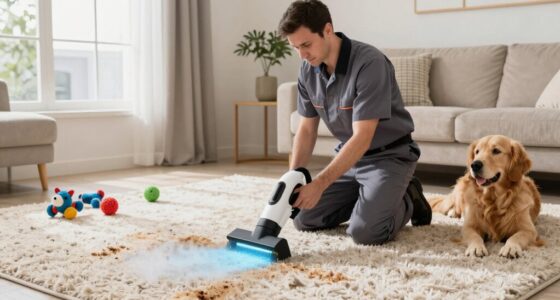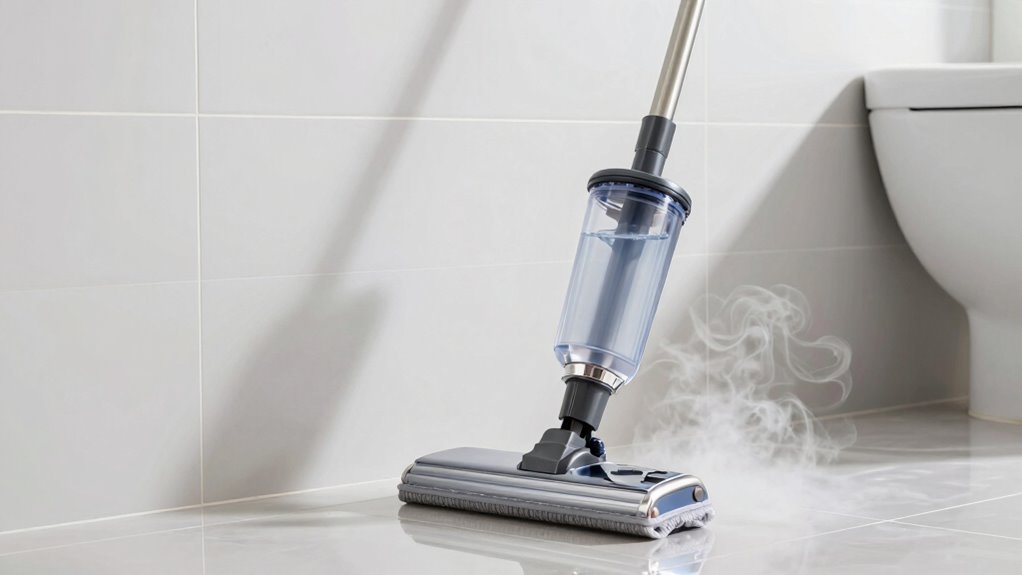
Many believe steam mops leave chemical residue or damage all surfaces, but that’s a myth. In reality, steam cleaning uses only heat, making it safe, eco-friendly, and residue-free—especially great for households with kids or pets. However, some surfaces like unsealed hardwood can be harmed if you use too much heat or keep the mop still too long. To get the best results and avoid damage, it is crucial to understand safe practices—continue to discover how to do it right.

Turn your quiet moments into listening time
- Thousands of audiobooks, podcasts and originals
- Listen on your phone, tablet or Echo — also offline
- Cancel anytime
Key Takeaways
- Steam cleaning uses heat to sanitize surfaces without chemical residue, making it a safe and eco-friendly option.
- Proper technique and manufacturer guidelines are essential to prevent damage to sensitive surfaces like unsealed hardwood.
- Steam mops effectively remove dirt and bacteria from hard surfaces but cannot replace vacuuming or deep cleaning.
- Regular maintenance, including cleaning the water tank and using distilled water, ensures optimal performance and longevity.
- Following safety instructions and proper usage maximizes cleaning efficiency and prevents heat-related surface damage.
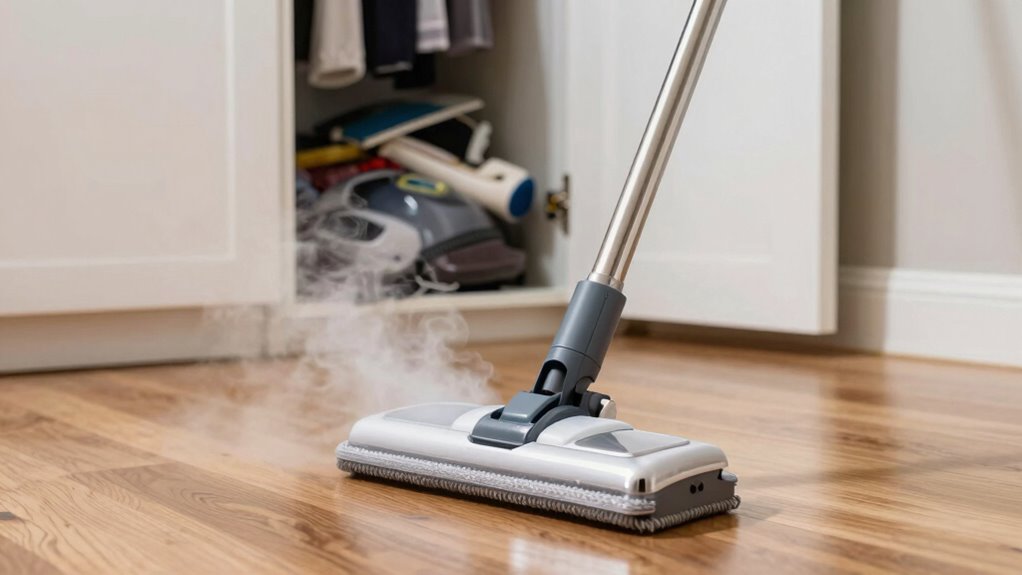
Many people believe steam mops are a miracle for cleaning, but there are several myths that can lead to misunderstandings about their effectiveness and proper use. One common misconception is that steam mops leave behind chemical residue. In reality, steam cleaning relies on the heat of steam to sanitize surfaces, so there are no chemicals involved unless you choose to add cleaning solutions. This makes steam mops a safer, eco-friendly option, especially for households with children or pets. However, some assume that because they use heat, they can be used on any surface without concern. This isn’t true, as certain materials—like unsealed hardwood or delicate upholstery—can be damaged by high heat. You need to be cautious and check manufacturer guidelines before using a steam mop on softer or sensitive surfaces.
Another myth is that steam mops can replace traditional cleaning methods entirely. While they excel at removing dirt, grime, and bacteria from hard surfaces, they don’t eliminate the need for regular vacuuming or deep cleaning in some cases. Over-reliance on steam mops might lead to overlooked areas or insufficient cleaning if you’re not prepared to supplement with other methods. Plus, some people worry that the intense heat could cause heat damage to certain flooring, especially if the mop is used improperly or held in one spot too long. This concern is valid because prolonged exposure to high heat can warp or discolor materials like vinyl or laminate flooring. To avoid heat damage, you should always follow the manufacturer’s instructions, keep the mop moving, and use the lowest effective steam setting.
Furthermore, many think that steam mops are universally safe and require no maintenance, but neglecting proper upkeep can reduce their lifespan and effectiveness. Regularly cleaning the mop head and filling the water tank with distilled water can prevent mineral buildup and ensure consistent steam output. Using the proper cleaning techniques can also help maintain the efficiency of your steam mop and prevent potential damage. If you ignore these maintenance steps, mineral deposits can clog the system, and the mop won’t generate enough heat or steam, diminishing its cleaning power. Additionally, understanding chemical safety when using cleaning devices can help prevent accidental exposure to harmful substances or mineral deposits that could pose health risks. Proper maintenance of the equipment is crucial for optimal performance and longevity, ensuring your steam mop remains effective over time.
As an affiliate, we earn on qualifying purchases.
Frequently Asked Questions
Can Steam Mops Be Used on Hardwood Floors Without Damage?
Yes, you can use a steam mop on wood flooring, but you need to follow safety precautions. Make sure your steam mop has adjustable steam levels and use the lowest setting. Keep the mop moving to avoid excess moisture that could damage your wood flooring. Always check your floor’s finish and manufacturer’s guidelines first. Proper safety precautions help prevent warping or swelling, ensuring your hardwood stays in great condition.
Are Steam Mops Effective Against All Types of Bacteria and Germs?
You might think a steam mop could wipe out every tiny germ and bacteria instantly, but they don’t achieve full sterilization effectiveness against all pathogens. While they excel at removing chemical residue and killing most germs, some bacteria and viruses may require stronger disinfectants. So, your steam mop is great for surface cleaning, but for complete sterilization, especially against more stubborn microbes, consider additional disinfecting methods.
How Long Does the Water Tank Typically Last During Cleaning?
The water tank typically lasts between 15 to 30 minutes during cleaning, depending on its water capacity and the steam mop’s settings. If your steam mop has a larger water capacity, you’ll enjoy a longer cleaning duration without needing frequent refills. Keep an eye on the water level, and plan your cleaning sessions accordingly. For extended use, consider models with larger tanks or refill options to maintain consistent cleaning.
Is There a Risk of Electric Shock With Steam Mops?
There is a minimal shock risk with steam mops if you follow proper electric safety guidelines. These devices are designed with safety features, like insulated cords and automatic shut-offs, to prevent electric shock. To further reduce the risk, avoid using the mop with damaged cords or near water sources. Always unplug the steam mop when refilling or not in use, and keep the cord away from water to guarantee safe operation.
Can Steam Mops Be Used on Carpets or Upholstery?
You can use a steam mop on carpets and upholstery, but with caution. For carpet safety, avoid overly wet areas to prevent damage and mold growth. Use a low heat setting for upholstery cleaning to prevent fabric damage or shrinking. Always test a small, hidden area first to guarantee it withstands the steam. Properly using a steam mop helps effectively sanitize and clean without harming your carpets or furniture.
best steam mop for pet households
As an affiliate, we earn on qualifying purchases.
As an affiliate, we earn on qualifying purchases.
Conclusion
Despite common myths, steam mops are versatile cleaning tools that effectively sanitize surfaces with just water. Many believe they damage floors or aren’t truly hygienic, but studies show steam mops kill up to 99.9% of germs and bacteria. In fact, over 65% of homeowners report using steam mops regularly for deep cleaning. So, don’t let misconceptions hold you back—embrace steam mops for a healthier, cleaner home with confidence.
As an affiliate, we earn on qualifying purchases.
steam mop with adjustable steam settings
As an affiliate, we earn on qualifying purchases.
As an affiliate, we earn on qualifying purchases.
Fall Picks
fall essentials
As an affiliate, we earn on qualifying purchases.