To find the right UPS size for your router, consider its power draw, usually between 5 and 15 watts, and add extra capacity for any connected devices like modems or switches. A UPS with around 600 VA can keep your router running for 10-20 minutes during outages. Prioritize models with surge protection and voltage regulation to guarantee safety and stability. Keep in mind, choosing the right size ensures reliable internet and device protection—there’s more to discover if you keep going.

Turn your quiet moments into listening time
- Thousands of audiobooks, podcasts and originals
- Listen on your phone, tablet or Echo — also offline
- Cancel anytime
Key Takeaways
- Most routers need a UPS with 600-1000 VA for 10-20 minutes of backup.
- Check your router’s power consumption (5-15W) and add extra capacity for connected devices.
- Choose a UPS with surge protection and automatic voltage regulation for device safety.
- Longer backup times require higher VA models, which are larger and more expensive.
- Match UPS size to your total device load to ensure stable internet and device longevity.
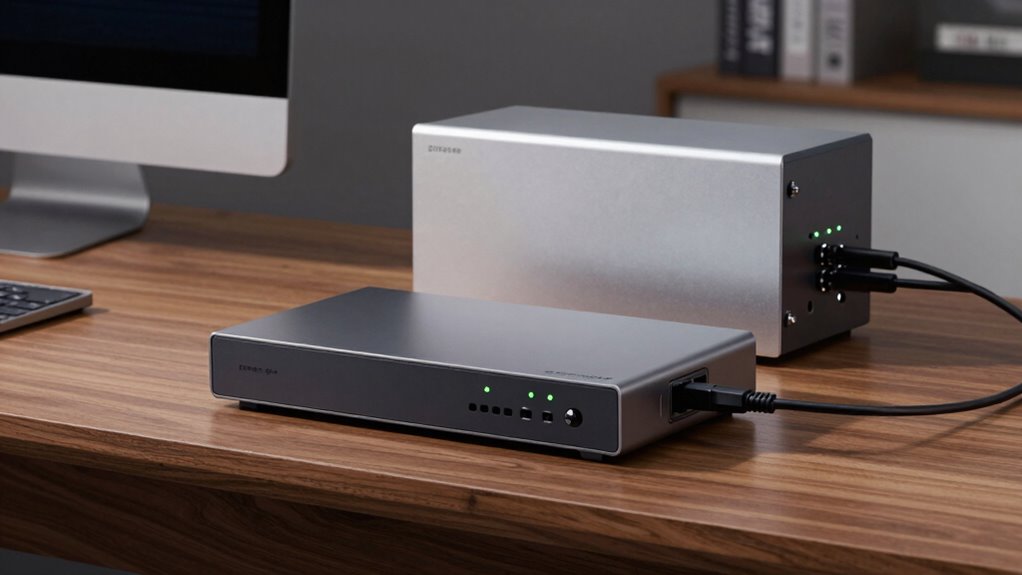
Having a UPS (Uninterruptible Power Supply) for your router is crucial to guarantee your internet stays connected during power outages. When the power flickers or goes out completely, a good UPS provides an essential battery backup, giving your router enough time to stay online and avoid interruptions. Without one, a sudden power surge or blackout can disconnect you at critical moments, whether you’re working from home, streaming, or gaming. Choosing the right size UPS ensures you get reliable backup power without overspending or underestimating your needs.
A UPS keeps your internet connected and devices protected during power outages and surges.
The size of the UPS you need largely depends on your router’s power consumption and how long you want it to stay powered during an outage. Most routers use between 5 to 15 watts, so you don’t need a massive system. However, if you have multiple devices connected—like modems, switches, or VoIP phones—you’ll want a UPS that can handle the combined load. To determine the appropriate size, check your router’s power specifications, usually listed on the device or its manual, and add a buffer for any additional connected equipment.
A key factor to contemplate is the battery backup capacity, which is measured in VA (volt-amps) or VA/Watts. A small, basic UPS with around 600 VA can typically power a single router for 10 to 20 minutes, enough time to save your work and shut down properly or wait out a short outage. For longer backup times, you might look at models with higher VA ratings, but keep in mind they come with increased cost and size. Also, consider the runtime during a power surge—if your area frequently experiences sudden spikes, choosing a UPS with surge protection features becomes crucial to shield your equipment from damage. Understanding power ratings and how they relate to your devices can help you select the most effective UPS, especially in areas prone to fluctuating voltages. Additionally, selecting a UPS with automatic voltage regulation can help stabilize your power supply and prevent damage. Investing in a UPS with monitoring capabilities can also help you keep track of battery health and performance over time.
Remember, a UPS isn’t just about keeping the lights on; it’s also about protecting your devices from damage caused by power surges. A unit with built-in surge protection helps prevent voltage spikes from frying your router or other connected electronics. When shopping for a UPS, look for models that explicitly mention surge suppression, as this adds an extra layer of security alongside the battery backup.
In the end, matching your UPS size to your needs isn’t complicated—just consider your total power draw, desired backup duration, and protection features. With the right size, you’ll ensure your internet connection remains stable during outages and your devices stay safe from unexpected power fluctuations. Properly selecting a UPS can also contribute to equipment longevity, saving you money on repairs or replacements in the long run.
Products Worth Considering

Bose TV Speaker Compact Soundbar with Bluetooth and HDMI-ARC, Black

Bose TV Speaker (2nd Gen) Compact Soundbar

Dyson Big Ball Multi Floor Canister Vacuum, Yellow
As an affiliate, we earn on qualifying purchases.
Frequently Asked Questions
Can a UPS Power Multiple Routers Simultaneously?
Yes, a UPS can power multiple routers simultaneously, depending on its power capacity and battery backup. You need to check the total power consumption of your routers and guarantee the UPS’s wattage or VA rating exceeds that sum. A higher-capacity UPS provides longer battery backup and can handle multiple devices efficiently. Always choose a UPS that matches or surpasses your combined device requirements for reliable, uninterrupted internet connectivity during outages.
How Long Should a UPS Keep My Router Running During Outages?
A UPS with sufficient battery capacity should keep your router running for at least 15 to 30 minutes during outages, giving you time to save work or switch to backup internet. The exact duration depends on your UPS’s power backup capacity and your router’s power consumption. To guarantee reliable connectivity, choose a UPS that provides enough runtime based on your needs, ideally with a little extra capacity for unexpected outages.
Is a Pure Sine Wave UPS Necessary for Routers?
You don’t necessarily need a pure sine wave UPS for your router, but it’s recommended. About 80% of routers are sensitive to power fluctuations, and pure sine wave UPS units provide cleaner power, reducing interference. They’re especially important if your router has a modem or other sensitive equipment. A pure sine wave guarantees power compatibility, preventing potential damage and ensuring smooth operation during outages, making it a smart investment for reliable internet.
What Is the Average Lifespan of a UPS for Routers?
A UPS for routers typically lasts 3 to 5 years, depending on usage and quality. Power surges and frequent outages can shorten its lifespan, so it’s essential to choose a unit with good surge protection. Backup duration varies but usually offers 10 to 30 minutes of power during outages. Regularly replacing the battery guarantees your router stays protected and functional, maintaining reliable internet during unexpected power disruptions.
How Often Should I Replace My UPS Battery?
You should replace your UPS battery every 3 to 5 years, as even the best battery wears out with time. While battery maintenance is vital, don’t forget that your UPS also offers essential power surge protection. Neglecting battery replacement risks losing data and damaging your router during outages or surges. Regularly checking your UPS guarantees reliable backup power and keeps your network safe, much like maintaining a sturdy foundation beneath a house.
Conclusion
Now that you know what size UPS your router truly needs, imagine the power you’ll have to keep your connection alive when the lights go out. But here’s the twist—there’s one more factor to take into account that could change everything. Are you ready to discover the secret to uninterrupted internet, no matter what surprises come your way? Stay tuned, because the best part is just ahead—and it might just save your day when you least expect it.