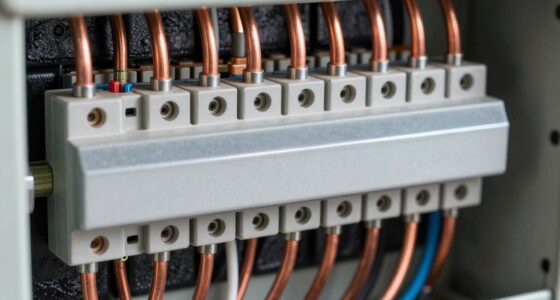
When choosing cable gauge for your 12V DC system, you need to consider both current draw and wire length. Because 12V systems operate at low voltage, even small voltage drops can affect performance, so thicker wires are often required for longer runs. Proper sizing helps prevent overheating, energy loss, and system failures. Understanding these differences ensures your setup runs safely and efficiently, and if you keep exploring, you’ll find practical tips to optimize your wiring choices.

Turn your quiet moments into listening time
- Thousands of audiobooks, podcasts and originals
- Listen on your phone, tablet or Echo — also offline
- Cancel anytime
Key Takeaways
- 12V systems experience higher voltage drops over distance, requiring thicker gauge wires for efficiency.
- Lower voltage increases the impact of resistance, making proper gauge selection crucial for safety and performance.
- Longer wire runs in 12V systems demand larger gauges to prevent voltage loss and overheating.
- DC wiring safety standards specify appropriate wire sizes based on current and voltage, especially for low-voltage systems.
- Proper cable gauge in 12V systems ensures minimal energy loss, reliable operation, and protection against overheating risks.

Selecting the correct cable gauge for DC wiring is essential to guarantee safety, efficiency, and reliable performance. When working with 12V systems, you need to pay close attention to wire length considerations because the longer the wire run, the more voltage drops you’ll experience. Voltage drop occurs when current travels through a wire, and if the wire is too thin or too long, it can reduce voltage at the device, leading to performance issues or even damage. To prevent this, you should use a thicker gauge wire for longer runs, ensuring the voltage remains within safe and functional limits. This is particularly critical when wiring solar panels, batteries, or other high-current components, where even slight voltage drops can considerably affect system efficiency. Proper wire sizing is vital for maintaining optimal system performance and safety.
Safety standards also play a crucial role in choosing the right cable gauge. These standards set minimum requirements for wire thickness based on the maximum current your system will draw. Using a wire gauge that’s too thin can cause overheating, which poses a serious fire risk. Conversely, choosing a wire that’s too thick might be unnecessary and more costly, but it ensures safety margins are met. Always refer to established safety standards and manufacturer recommendations to select a gauge that can handle your system’s maximum current safely. Remember, proper insulation and correct connections are equally important to meet safety standards and prevent shorts or electrical failures.
Your choice of cable gauge isn’t just about safety; it impacts system efficiency as well. If your wires are too thin, you’ll suffer from higher resistance, which means more energy loss as heat and less power delivered to your devices. On the other hand, using a wire that’s appropriately thick for your system minimizes resistance, reducing heat buildup and improving overall efficiency. For instance, if you’re wiring a 12V battery bank to a large inverter or LED system, knowing the expected current and wire length helps determine the ideal gauge to keep your system running smoothly without unnecessary energy waste.
As an affiliate, we earn on qualifying purchases.
Frequently Asked Questions
Can I Use the Same Cable Gauge for All 12V Appliances?
You shouldn’t use the same wire size for all 12V appliances because different appliances draw varying currents. Using too small a wire can cause excessive voltage drop, reducing performance and risking overheating. Always match the wire size to the current load, considering the distance from the power source. This guarantees your system remains safe and efficient, preventing issues caused by inadequate wire gauge and voltage drop.
How Does Cable Length Affect Gauge Selection?
You’ll want to evaluate cable length because longer runs increase cable resistance, which can cause voltage drop. As resistance rises, you need a thicker gauge cable to maintain proper voltage and prevent power loss. If your cable’s too thin for a long distance, voltage drop will reduce appliance performance and could damage components. Always calculate the necessary gauge based on length, current, and acceptable voltage drop to ensure reliable operation.
What Safety Precautions Should I Consider When Choosing Cables?
When selecting cables, you should prioritize safety by checking insulation materials to prevent shorts and damage. For example, using high-quality insulation like PVC reduces risk. Also, consider connector types to guarantee proper fit, preventing disconnections. Always choose cables rated for your system’s current load, and avoid exposed wiring. Properly secure connections and inspect for wear regularly to keep your setup safe and reliable.
Are There Specific Gauges Recommended for Solar DC Systems?
For solar DC systems, you should follow wire gauge standards and solar cable sizing guidelines to make certain of safety and efficiency. Typically, 10 to 12 AWG cables work well for most residential setups, but larger systems may require 8 or 6 AWG. Always consider the distance and current load, as longer runs need thicker cables. Proper cable sizing prevents voltage drops and reduces fire risks, keeping your system safe and reliable.
How Does Temperature Impact Cable Performance and Gauge Choice?
Temperature influences your cable performance by increasing resistance as it gets hotter, which can cause voltage drops and potential overheating. You should select cables with proper insulation that withstands temperature fluctuations, especially in outdoor or high-heat environments. Using cables rated for higher temperatures ensures durability and safety. Always consider ambient temperature and cable insulation ratings to maintain ideal performance and prevent damage in your 12V DC system.
As an affiliate, we earn on qualifying purchases.
Conclusion
Choosing the right cable gauge for your 12V DC system isn’t just a small detail—it’s the difference between your setup thriving or frying like a volcano eruption. Pay attention to your current and distance, and don’t settle for thin wires that could cause disaster. When you pick the perfect gauge, you’re safeguarding your equipment and ensuring reliable power. It’s a game-changer, turning your project into a powerhouse that’ll outlast the ages!
As an affiliate, we earn on qualifying purchases.
As an affiliate, we earn on qualifying purchases.
Halloween Picks
halloween
As an affiliate, we earn on qualifying purchases.