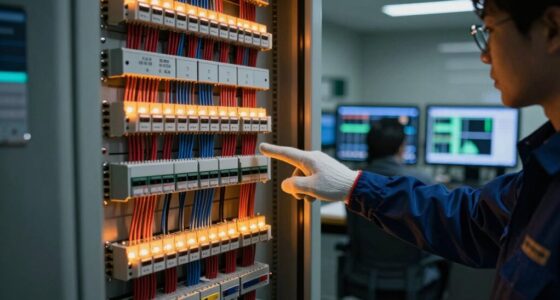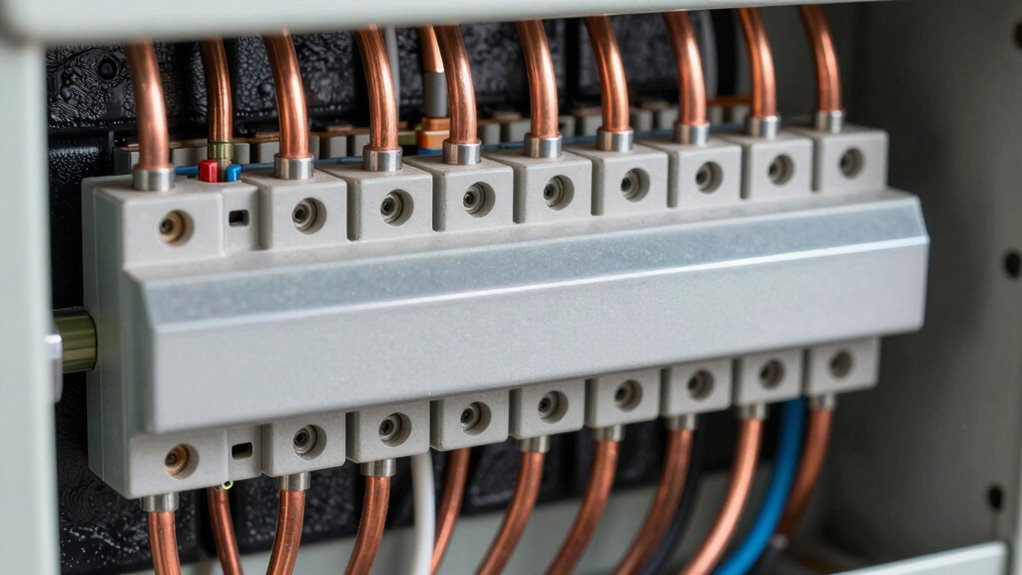

Neutral bonding varies between generators and main panels because each system has different safety and code requirements. In main panels, the neutral is usually bonded at the main breaker to create a clear path for fault currents and ensure safety. However, in generators, bonding depends on whether it’s set up as a standalone or part of a transfer switch system, to prevent circulating currents. Understanding these differences helps keep systems safe and compliant—discover more about how and why these practices differ.

Turn your quiet moments into listening time
- Thousands of audiobooks, podcasts and originals
- Listen on your phone, tablet or Echo — also offline
- Cancel anytime
Key Takeaways
- Generators often have isolated neutrals to prevent circulating currents and interference with sensitive electronics.
- Main panels usually bond the neutral to ground to ensure proper fault clearing and safety.
- Code requirements differ for generators and panels, affecting neutral bonding practices.
- Unbonded neutrals in generators help avoid unintended current paths and electrical noise.
- Proper bonding depends on system design, ensuring safety and compliance without matching all components.

Have you ever wondered why electrical systems need a neutral bond? It’s a fundamental part of guaranteeing safety and proper operation, especially when dealing with generators, panels, or any electrical distribution system. The neutral bond connects the neutral conductor to the grounding system, creating a clear path for fault currents to return to the source. This connection helps prevent dangerous voltage levels on metal parts and reduces the risk of electric shock. When you’re working with grounding systems, understanding the difference between bonding versus bonding becomes essential. Bonding involves creating a low-resistance connection between conductive parts, ensuring they stay at the same electrical potential. The goal is to eliminate voltage differences that could cause shocks or equipment damage.
In residential and commercial wiring, the neutral bond is typically established at the main service panel. This ensures that if a fault occurs, the electrical current can safely travel back to the source, trip the breaker, and disconnect power quickly. However, in generator setups or separate subpanels, sometimes the neutral isn’t bonded to ground, depending on the system design. This is because improper bonding can lead to circulating currents or voltage differences, which can interfere with sensitive electronics or create shock hazards. That’s why understanding grounding systems and their proper implementation is crucial. Grounding provides a reference point for the system voltage, while bonding ensures that all conductive parts are at the same potential. Proper grounding practices help maintain system safety and reliability.
You should recognize that bonding versus bonding isn’t just a technical term; it’s about how you connect systems to maintain safety and system integrity. When grounding systems are correctly implemented, they prevent unwanted voltage on metal parts, reduce electromagnetic interference, and make sure your equipment operates reliably. The neutral bond at the main panel is what keeps everything grounded and prevents dangerous voltage build-ups. But if you’re installing a generator or subpanel, you need to know whether to bond or isolate the neutral, based on local codes and system requirements.
As an affiliate, we earn on qualifying purchases.
Frequently Asked Questions
Can I Bond the Neutral to Ground in a Subpanel?
You shouldn’t bond the neutral to ground in a subpanel. Proper grounding methods involve separating the neutral and ground wires in subpanels to prevent stray currents and guarantee safety. In panel wiring, the main panel is where the neutral is bonded to the grounding system, but in subpanels, you must keep them isolated. Doing otherwise can cause electrical hazards and interfere with proper system operation.
What Are the Risks of Improper Neutral Bonding?
Improper neutral bonding can cause serious risks, including shock hazards and equipment damage. If grounding techniques aren’t followed according to bonding standards, it might create unintended current paths, leading to electrical fires or electrocution. You should always guarantee that the neutral is only bonded at the main panel and that subpanels and generators follow proper grounding and bonding practices. This helps maintain safety and compliance with electrical codes.
How Does Neutral Bonding Differ in Mobile vs. Stationary Generators?
You’ll find floating neutrals differ between mobile and stationary generators. Mobile units often feature floating neutrals, meaning they aren’t bonded to ground, risking shock hazards. Stationary generators typically bond neutrals to ground for safety. Understanding bonding versus grounding helps prevent problems; mobile generators usually keep neutrals floating, while stationary ones bond neutrals to ground for a stable, safe system. Always verify your generator’s bonding setup before use.
Is Neutral Bonding Required in All Generator Installations?
No, neutral bonding isn’t mandated in all generator installations, but it’s essential for safety considerations. You should bond the neutral in permanent, stationary generators used for building power to prevent electrical shock hazards and ensure proper system operation. For portable or mobile generators, neutral bonding depends on the setup and local codes. Always consult electrical codes and safety guidelines to determine if neutral bonding applies to your specific installation.
What Codes Govern Neutral Bonding Practices?
You need to follow grounding standards and bonding regulations when it comes to neutral bonding practices. The National Electrical Code (NEC) heavily influences these practices, especially Articles 250 and 445, which specify how and when to bond neutrals. Local codes and regulations may also apply, so always check with your authority having jurisdiction. Adhering to these standards guarantees safety, proper grounding, and compliance in your generator and panel installations.
main panel grounding and bonding accessories
As an affiliate, we earn on qualifying purchases.
As an affiliate, we earn on qualifying purchases.
Conclusion
Understanding why generators and panels don’t always match in neutral bonding is key to safe electrical setups. Did you know that improper neutral bonding is responsible for over 30% of electrical fires in residential buildings? By grasping these basics, you can prevent hazards and guarantee your system operates safely. Remember, always double-check your wiring and consult a professional if you’re unsure—your safety depends on it.
transfer switch generator bonding
As an affiliate, we earn on qualifying purchases.
As an affiliate, we earn on qualifying purchases.
electrical system grounding products
As an affiliate, we earn on qualifying purchases.
As an affiliate, we earn on qualifying purchases.
Fall Picks
fall essentials
As an affiliate, we earn on qualifying purchases.