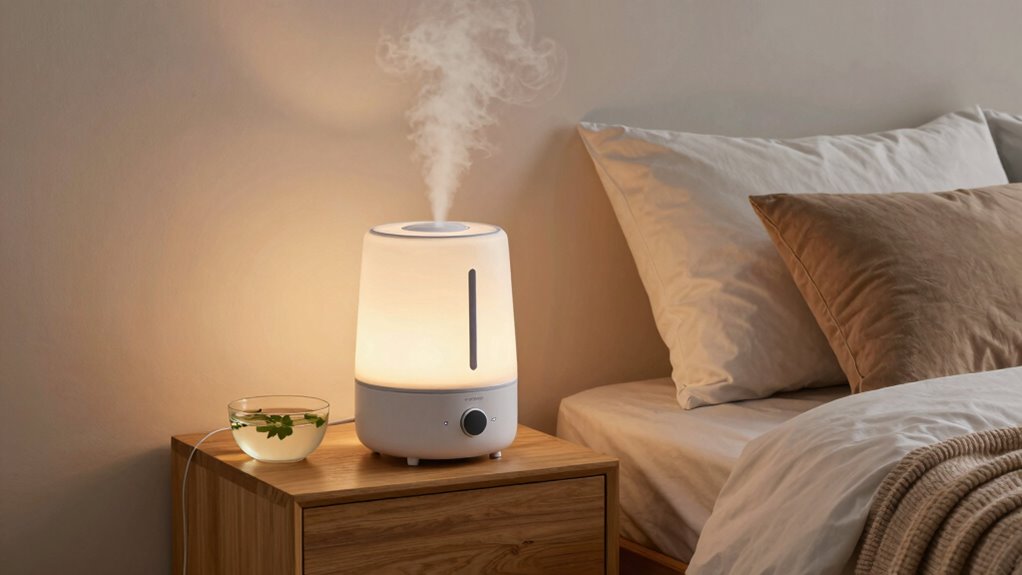

To build an affordable humidity setup for better sleep, focus on regular maintenance and smart placement of your humidifier in well-ventilated areas, away from walls or corners. Use natural airflow by keeping doors open or using a small fan to distribute moisture evenly. Monitor humidity levels with a simple hygrometer and tweak your setup as needed. Small adjustments like these can create a comfortable, safe environment—if you keep exploring, you’ll discover even more cost-effective tips.

Turn your quiet moments into listening time
- Thousands of audiobooks, podcasts and originals
- Listen on your phone, tablet or Echo — also offline
- Cancel anytime
Key Takeaways
- Use a small, affordable humidifier and maintain it regularly with vinegar or mild soap.
- Place the humidifier in a well-ventilated area, avoiding walls or corners for better airflow.
- Monitor humidity levels with a budget-friendly hygrometer and adjust the device accordingly.
- Maximize natural ventilation by keeping windows slightly open during sleep.
- Manage airflow with simple methods like door positioning and low-speed fans to distribute moisture evenly.

If you’re looking to improve your sleep environment without breaking the bank, creating a humidifier setup can be a cost-effective solution. A well-functioning humidifier adds moisture to the air, which can reduce dry skin, soothe irritated sinuses, and promote more restful sleep. But simply buying a humidifier isn’t enough. To get the most benefits, you need to focus on proper humidifier maintenance and managing bedroom airflow. These small steps can make a big difference without costing much.
Start with humidifier maintenance. Regularly cleaning your device prevents mold, bacteria, and mineral build-up, which could otherwise worsen respiratory issues or cause unpleasant odors. Follow the manufacturer’s instructions for cleaning schedules, usually once a week. Use mild soap and water or a vinegar solution to disinfect the tank and any removable parts. This not only keeps the air clean but also prolongs your humidifier’s life. Don’t forget to replace filters if your model has them; these can become breeding grounds for germs if neglected. Proper maintenance ensures your humidifier works efficiently, providing consistent moisture levels that suit your comfort needs. Additionally, keeping your humidifier in a well-ventilated area can help prevent the buildup of stagnant air and excess moisture. Ensuring proper humidifier placement can further improve its effectiveness and safety. Maintaining the right placement can also reduce the risk of water damage or mold growth in your room. Proper placement also helps in optimizing humidity distribution, making sure the moisture reaches all parts of your space evenly.
Regularly clean your humidifier to prevent mold, bacteria, and odors, ensuring healthier air and longer device life.
Next, pay attention to your bedroom airflow. Proper airflow helps distribute humidity evenly, preventing pockets of overly dry or damp air. You can improve airflow by positioning the humidifier in a strategic spot—preferably not right against a wall or in a corner, which can restrict circulation. Keep doors open or slightly ajar to allow fresh air to circulate freely and prevent stagnant, overly humid zones. Using a fan on low speed can assist in dispersing moisture throughout the room without creating drafts that disrupt sleep. Also, consider the room’s ventilation; if it’s too airtight, moisture may stay concentrated in one area, leading to mold or discomfort. Keeping windows slightly open during the night or ensuring your room has some natural ventilation can help maintain a balanced humidity level. Regularly checking your humidifier’s performance and adjusting your setup accordingly can help you avoid over-humidification and maintain optimal comfort. Proper air circulation is essential for creating a stable environment that supports healthy sleep. Additionally, monitoring humidity levels with a hygrometer can help you fine-tune your setup for the best results. Being aware of your room’s humidity balance allows for more precise adjustments and a healthier sleeping environment.
As an affiliate, we earn on qualifying purchases.
Frequently Asked Questions
What Is the Ideal Humidity Level for Sleep?
The ideal humidity level for sleep is between 40-60%, which creates a comfortable sleep environment and improves air quality. You’ll notice better breathing, less dryness, and fewer allergens in this range. Use a simple hygrometer to monitor your room’s humidity and adjust with a humidifier or dehumidifier as needed. Maintaining this balance helps you sleep more soundly and wake up refreshed, feeling your best.
How Often Should I Refill My Humidity Setup?
Refilling your humidity setup is like watering a delicate plant—it needs regular attention. You should check your device daily and refill as needed to maintain ideal humidity levels. The refill frequency depends on your setup’s size and room conditions but typically ranges from every couple of days to once a week. Consistent humidity maintenance ensures your sleep environment stays comfortable and restful without overdoing it.
Can I Use Household Items to Increase Humidity?
Yes, you can use household solutions to increase humidity, but be cautious of humidity myths. Items like damp towels, bowls of water, or houseplants boost moisture naturally. Just make certain you monitor humidity levels to prevent mold or excess dampness. While these solutions are budget-friendly, they might not provide consistent results, so consider using a hygrometer and adjusting as needed for ideal sleep comfort without overspending.
Are There Safety Concerns With DIY Humidity Setups?
Are you aware of the potential DIY safety and humidity hazards? While creating your own humidifier, safety should be your top priority. Avoid electrical risks by keeping devices away from water, and don’t overfill containers, which can cause leaks or mold. Always use non-toxic, safe materials, and monitor your setup regularly. If you’re unsure about safety, it’s better to invest in certified humidifiers rather than risking accidents or health issues.
How Do I Measure the Humidity Accurately?
To measure humidity accurately, you need reliable humidity sensors, preferably with calibration features. Regularly calibrate your sensors according to the manufacturer’s instructions to guarantee precision. Keep the sensors away from direct water contact or extreme temperatures, as these can skew readings. Use a hygrometer with a digital display for easy monitoring, and compare readings with a trusted, calibrated device periodically to maintain accuracy in your sleep setup.
As an affiliate, we earn on qualifying purchases.
Conclusion
Now that you know how to set up a budget-friendly humidity system for better sleep, you’re well on your way to a more comfortable night. Remember, sometimes the simplest solutions are the best, so don’t overcomplicate things or spend more than you need to. Keep it straightforward, and you’ll find that staying comfortable doesn’t have to break the bank. With a little effort, you can create a cozy sleep environment that’s easy on your wallet and good for your health.
small fan for airflow in bedroom
As an affiliate, we earn on qualifying purchases.
As an affiliate, we earn on qualifying purchases.
As an affiliate, we earn on qualifying purchases.
Halloween Picks
halloween
As an affiliate, we earn on qualifying purchases.