To get accurate air quality data, place your sensors at breathing height, about 3 to 6 feet off the ground, in central areas away from drafts, windows, or doors. Keep them at least 3 feet from vents, heating appliances, and electronic devices that emit heat or electromagnetic interference. Avoid damp areas like bathrooms or kitchens and protect outdoor sensors from direct sunlight and rain. For more tips on ideal placement, keep reading.
Key Takeaways
- Position sensors at breathing height (3–6 feet) in central, unobstructed areas away from drafts, vents, and pollution sources.
- Keep sensors at least 3 feet from HVAC vents, windows, doors, and potential airflow disruptors to ensure stable readings.
- Avoid placing sensors near heat sources, electronic devices, or direct sunlight to prevent false measurements.
- Choose locations with good air circulation, avoiding corners, behind furniture, or enclosed spaces that trap pollutants.
- For outdoor sensors, use weatherproof enclosures and select sites that sample representative ambient air with minimal environmental interference.
Keep Sensors Away From Direct Sources of Pollution
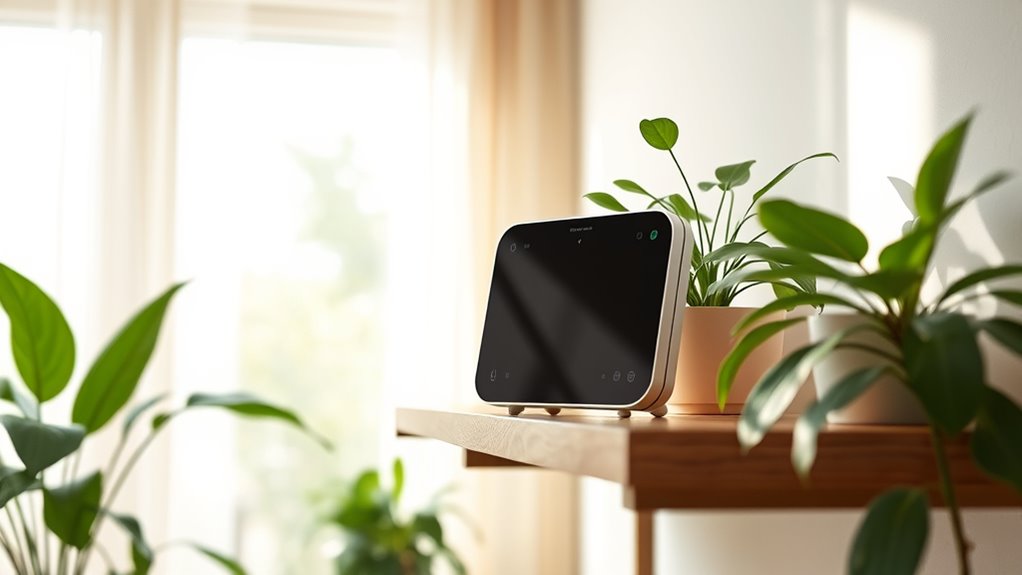
To guarantee accurate air quality readings, you should keep sensors away from direct sources of pollution such as grills, exhaust vents, or nearby traffic. These sources produce localized emissions that can skew sensor data, making it seem like the overall air quality is worse than it actually is. Place your sensors in areas free from immediate pollution sources to get a true representation of your indoor environment. Avoid positioning them near heating or cooling vents that can blow in pollutants or air drafts that may carry contaminants. Instead, find a central spot in the room where air circulates naturally, promoting proper air circulation and more accurate readings. Proper placement is crucial because sensor location significantly impacts the reliability of your measurements. Additionally, understanding how indoor air quality varies across different parts of your home can help you optimize sensor placement for the most representative data. Ensuring that sensors are placed away from localized pollution sources helps prevent inaccurate readings caused by temporary or external emissions. This way, your monitor provides reliable readings, helping you identify genuine air quality issues and take appropriate action. Proper placement is essential to ensure your air purifier and monitor work effectively together to improve your indoor air quality.
Avoid Placement Near Windows and Doors
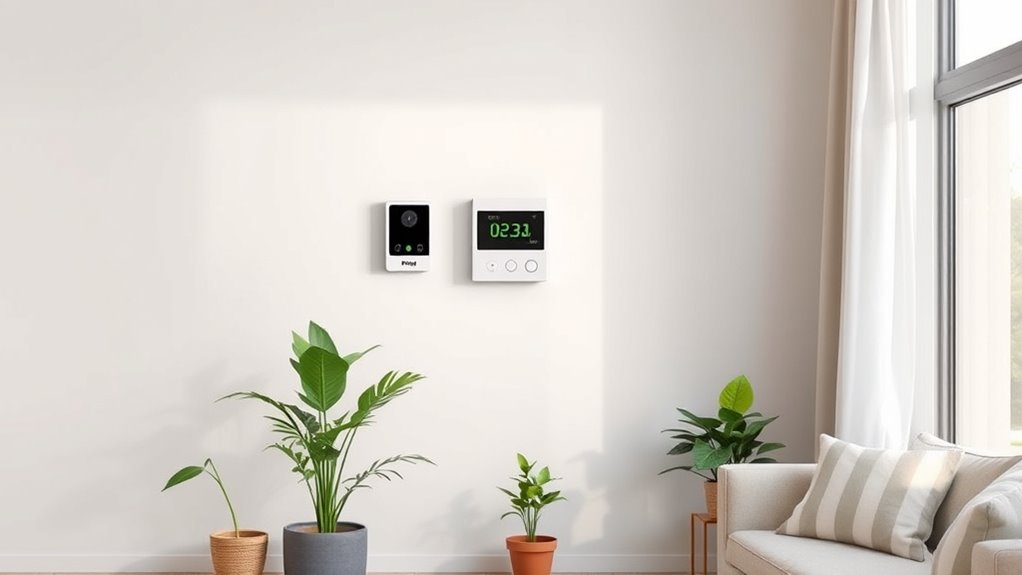
Placing your air quality monitor near windows or doors can lead to inaccurate readings due to fluctuating outdoor air influences. When windows or doors are open, outdoor pollutants, pollen, and humidity can enter unexpectedly, skewing your sensor’s results. Even when closed, drafts or temperature differences can cause air movement that affects readings. Indoor air stability is essential for accurate measurements, so positioning your monitor away from these entry points is recommended. To guarantee reliable data, position your monitor inside the room, away from drafts, direct sunlight, or sources of outdoor air. Additionally, avoiding areas with sudden outdoor air infiltration helps maintain consistent measurements. Ensuring proper placement minimizes airflow disturbances that could compromise data accuracy. Proper placement also helps prevent sensor interference caused by external environmental factors. Additionally, placing the sensor in a location with stable airflow conditions helps improve data reliability over time. Consistency is key, so avoid moving the sensor frequently or placing it near areas where outdoor air might suddenly infiltrate.
Position Sensors at Breathing Height
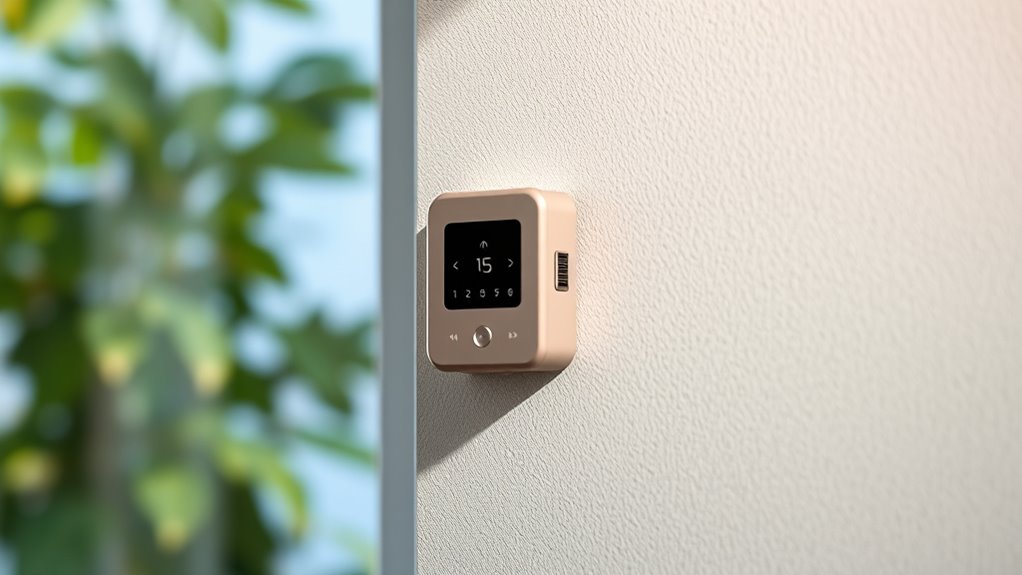
Position your air quality monitor at breathing height, typically around 3 to 6 feet off the ground, to guarantee accurate readings. This height aligns with where people breathe, giving you a realistic picture of indoor air quality. Placing monitors too high, like on shelves or near ceilings, can lead to skewed data that doesn’t reflect your everyday exposure. Similarly, positioning them too low might pick up ground-level pollutants or dust, which aren’t representative of overall air quality. Make certain the monitor is in a central location at this height, away from obstructions or direct airflow from vents. Proper placement at breathing height helps you detect pollutants where it matters most, giving you a true sense of your indoor environment and potential health risks. Understanding air distribution can further improve the placement and accuracy of your sensor readings. Additionally, considering air circulation patterns in your space can help optimize sensor location for more precise monitoring, especially since airflow dynamics influence how pollutants disperse and concentrate indoors. Recognizing ventilation efficiency is also key to ensuring the sensor captures an accurate representation of air quality throughout the space.
Steer Clear of Areas With High Humidity or Moisture
Avoid setting up your air quality monitor in areas with high humidity or moisture, as these conditions can distort readings and give you a misleading picture of your indoor air. Excess moisture can cause sensors to register falsely elevated levels of pollutants or particulate matter. To guarantee accurate readings, steer clear of:
- Bathrooms and shower areas, where humidity spikes after use
- Kitchens during cooking, especially when boiling or frying
- Basements prone to dampness or water intrusion
- Laundry rooms with ongoing drying cycles or leaks
Placing sensors in these spots can lead to inaccurate data, making it harder to assess your actual air quality. Instead, choose dry, well-ventilated locations that reflect consistent indoor conditions. Additionally, selecting a proper placement ensures your monitor provides the most reliable data possible.
Maintain Proper Spacing From Heating, Ventilation, and Air Conditioning Vents

Make certain your air quality monitor isn’t placed too close to vents, as this can cause inaccurate readings. Keep it clear of direct airflow to prevent drafts from interfering with measurements. Proper spacing ensures your monitor provides reliable data for better air quality management. Additionally, positioning the sensor away from potential pollutants like smoke or cooking fumes can further enhance measurement accuracy. Ensuring proper sensor placement is essential for capturing representative air quality data throughout your space. Being aware of air circulation patterns can help improve the overall effectiveness of your air quality monitoring setup. Also, consider the location’s layout to optimize sensor positioning for consistent and accurate readings. Recognizing how ventilation dynamics influence airflow can help you choose the best placement for your sensor.
Keep Clear of Vents
To make certain your air quality monitor provides accurate readings, it’s important to keep it clear of vents. Vents blow air that can skew sensor data, leading to false readings. To avoid this, follow these tips:
- Keep the monitor at least 3 feet away from any vents.
- Place it away from direct airflow to prevent rapid fluctuations.
- Avoid positioning it near vents that cycle frequently.
- Ensure vents aren’t pointing directly at the sensor.
- Consider the Free Floating concept to position your monitor for unbiased air quality readings.
- Remember that air circulation patterns influenced by vents can impact sensor accuracy, so proper placement helps maintain reliable measurements.
- Proper placement also involves understanding vent airflow dynamics to avoid areas with high turbulence that can cause inconsistent readings.
Prevent Draft Interference
Placing your air quality monitor too close to heating, ventilation, and air conditioning (HVAC) vents can cause false readings due to drafts and fluctuating airflow. When the monitor is near these vents, the device may detect the rapid changes in temperature or airflow rather than the room’s actual air quality. To prevent this, position your sensor at least three to five feet away from vents, ideally in an area with stable airflow. Avoid placing it directly in the path of vents or near drafty windows and doors. Proper spacing guarantees the monitor captures representative air samples, providing accurate readings. Keep in mind that consistent airflow helps your device measure pollutants, humidity, and other factors reliably for better indoor air quality management. Additionally, understanding airflow dynamics can help you choose the best location for your sensor, as air circulation patterns influence the distribution of pollutants throughout the room.
Choose Central Locations for Representative Readings
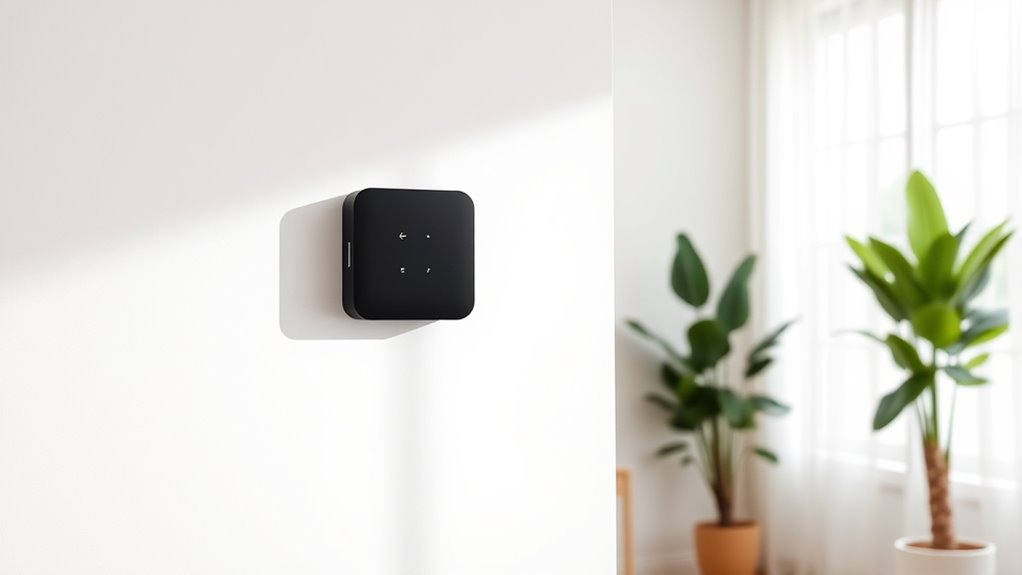
To get accurate air quality readings, pick a central spot away from corners. Make sure to elevate the sensor to avoid interference, and keep it clear of furniture or objects. These steps help guarantee your monitor provides reliable, representative data.
Avoid Corner Placement
Although corner locations might seem convenient, placing your air quality monitor there can lead to inaccurate readings. Corners tend to trap pollutants or create airflow patterns that skew data. To guarantee your monitor provides reliable results, avoid corners and consider central spots. Keep these points in mind:
- Corners can trap dust, smoke, and VOCs, causing false high readings.
- Air circulation is limited, leading to stagnant air and unreliable data.
- Nearby walls can reflect or block airflow, distorting measurements.
- Placing the monitor away from windows and vents prevents interference.
Elevate Sensor Height
Elevating your air quality monitor to a central, higher position helps make certain it captures a more accurate representation of your indoor environment. Placing the sensor at about eye level or slightly above ensures it measures air quality without interference from furniture, appliances, or people moving around. This height allows the monitor to detect pollutants and airborne particles evenly dispersed throughout the space. Avoid placing it too high, like on a shelf or ceiling, where airflow might be restricted, or too low, where it could pick up localized dust or fumes. By positioning the sensor centrally at a higher elevation, you improve the reliability of your readings, gaining a clearer picture of overall air quality in your home or office.
Minimize Obstructions
Placing your air quality monitor in a central location helps guarantee it captures a true reflection of your indoor environment. To guarantee accurate readings, minimize obstructions that could block airflow or interfere with sensor performance. Consider these key points:
- Keep the monitor away from furniture, curtains, or large objects that may block air circulation.
- Avoid placing it near electronic devices that emit heat or electromagnetic interference.
- Do not put it in corners or behind doors, where airflow might be restricted.
- Ensure it’s positioned at an appropriate height, roughly at your breathing level, for the most representative data.
Avoid Placing Sensors Behind Furniture or Curtains

To guarantee your air quality sensor provides accurate readings, avoid placing it behind furniture or curtains. Obstructions like couches, bookshelves, or thick drapes block airflow and trap pollutants, skewing the data. When a sensor is hidden, it may underestimate pollutant levels or miss sudden spikes, giving you a false sense of security. Keep your sensor in an open, well-ventilated spot at face level for the most reliable results. Avoid tight corners or enclosed spaces where air circulation is limited. Curtains and furniture can also absorb or reflect particles, leading to inaccurate readings. By positioning your sensor in a clear, unobstructed location, you ensure it accurately captures the air quality in your environment.
Steer Clear of Electrical Devices That Emit Heat or Electromagnetic Interference
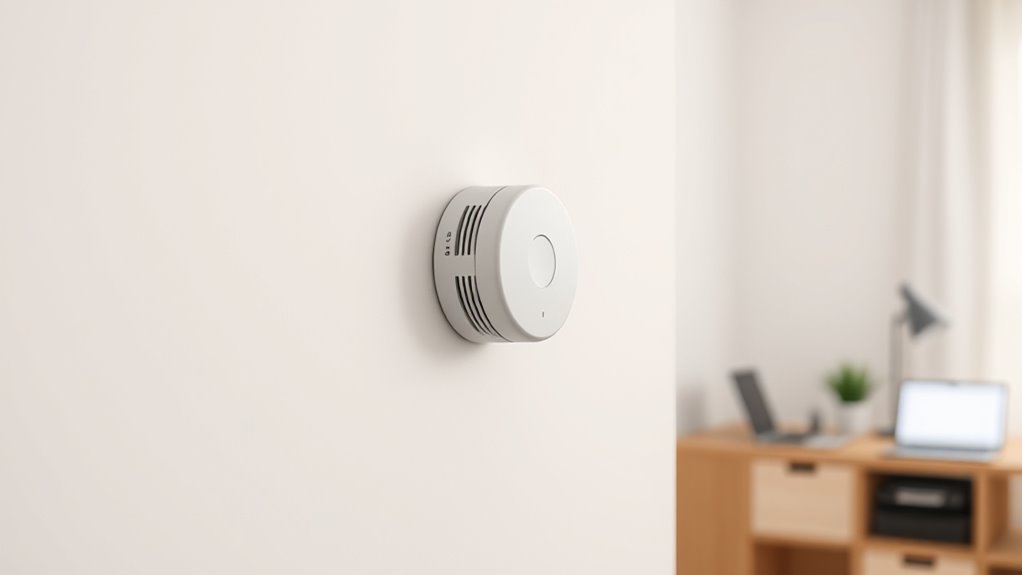
Keep your air quality monitor away from appliances that emit heat or electromagnetic interference, like microwaves or routers. High-heat areas can skew sensor readings, making them less precise. Minimizing electromagnetic interference helps guarantee your monitor provides reliable air quality data.
Keep Away From Appliances
Since electrical devices that emit heat or electromagnetic interference can distort air quality readings, it’s important to position your monitor away from them. These appliances can cause inaccurate data, making your readings unreliable. To avoid this, keep your sensor at a safe distance from:
- Microwaves – they emit electromagnetic waves when in use.
- Televisions and monitors – generate electromagnetic interference.
- Heaters and space heaters – produce heat that can skew sensor performance.
- Computers and printers – emit electromagnetic fields during operation.
Placing your monitor away from these sources ensures more accurate measurements. Keep it at least a few feet away from heat-emitting or electrically active appliances. This minimizes interference, giving you a true picture of your indoor air quality.
Avoid High-Heat Areas
Electromagnetic devices and heat sources can markedly impact your air quality monitor’s accuracy, so it’s essential to position your device away from high-heat areas. Avoid positioning it near stoves, heaters, or direct sunlight to prevent false readings caused by temperature fluctuations. Electrical devices like lamps, computers, or chargers emit heat that can skew sensor data. Keep the monitor away from vents or heating appliances that produce consistent warmth, as this can lead to inaccurate air quality assessments. Additionally, avoid areas where heat or electromagnetic interference might fluctuate, such as near microwave ovens or industrial equipment. Proper placement guarantees your monitor captures representative air quality data without distortion from external heat sources, giving you reliable readings to make informed decisions about your indoor environment.
Minimize Electromagnetic Interference
To guarantee your air quality monitor provides accurate readings, it’s important to reduce exposure to electrical devices that emit electromagnetic interference. These devices can distort sensor data and lead to inaccurate results. To minimize interference, avoid placing your monitor near:
- Microwave ovens when in use
- Wi-Fi routers or wireless devices
- Large appliances like refrigerators or washing machines
- Fluorescent or LED lighting fixtures emitting electromagnetic fields
Keep the monitor at least a few feet away from these sources to ensure cleaner signals. Also, turn off or unplug unnecessary electronics nearby during measurements. This helps maintain data integrity, giving you a clearer picture of your indoor air quality. Prioritizing placement away from electromagnetic sources enhances your monitor’s accuracy.
Consider Outdoor Sensor Placement for Accurate Ambient Air Quality
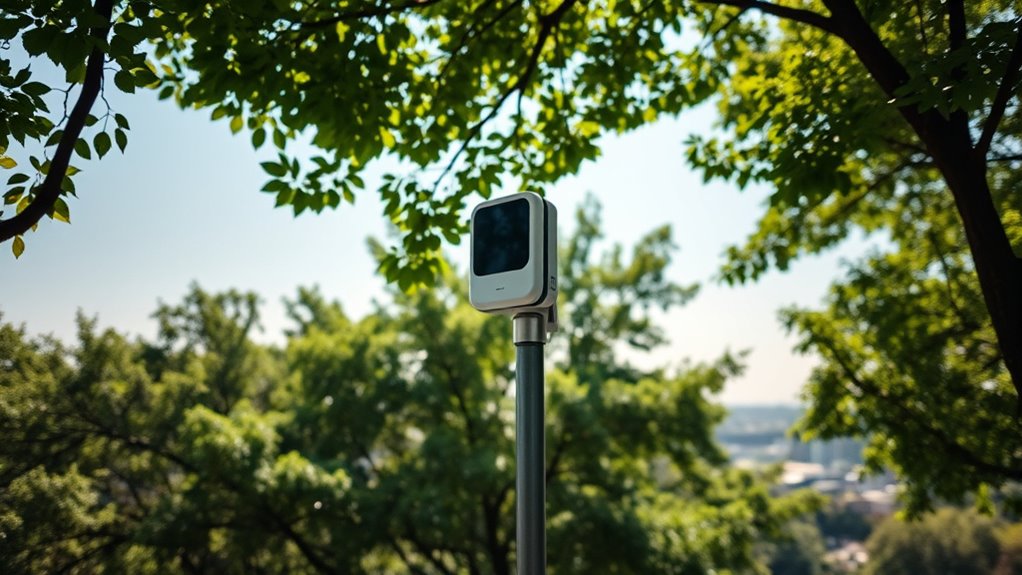
Choosing the right outdoor location for your air quality sensor is essential for obtaining accurate ambient readings. Place the sensor where it can sample the air representative of your environment, avoiding direct exposure to sources of pollution like busy roads or industrial sites. Keep it away from obstructions such as trees, buildings, or fences that may block airflow and skew results. Position the sensor at a height similar to breathing level, typically 4 to 6 feet above the ground, to reflect human exposure accurately. Ensure it’s protected from direct sunlight, rain, and snow, which can affect sensor performance. Regularly assess the site to ensure ongoing accuracy, adjusting placement if nearby sources or environmental factors change.
Regularly Check and Calibrate Sensors for Consistent Accuracy

Regularly checking and calibrating your air quality sensors is essential to guarantee they provide accurate and reliable data over time. Neglecting this can lead to false readings and misguided decisions. To keep your sensors in top shape, consider these key steps:
- Schedule routine calibration sessions, ideally monthly or quarterly.
- Use reference standards or professional calibration services for precision.
- Record calibration results to track sensor performance over time.
- Replace sensors showing persistent inaccuracies or drift.
Frequently Asked Questions
How Often Should I Calibrate My Air Quality Sensors?
You should calibrate your air quality sensors at least once every six months to guarantee accurate readings. If you notice inconsistent data or significant changes in air quality, calibrate more frequently. Regular calibration helps maintain sensor accuracy and reliability. Always follow the manufacturer’s instructions for calibration procedures, and consider professional calibration if your sensors are used for critical measurements or in sensitive environments.
Can Outdoor Sensors Be Affected by Weather Conditions?
Outdoor sensors can be greatly affected by weather, like a sail catching every gust. Rain, snow, wind, and extreme temperatures can skew readings or damage your device. Harsh conditions may cause false alarms or reduce sensor lifespan. To keep your data accurate, protect outdoor sensors with weatherproof casings, place them in shaded areas, and check them regularly. Think of weather as an unpredictable guest that needs careful hosting.
What Is the Ideal Height for Placing Sensors Indoors?
You should place indoor air quality sensors at about 3 to 6 feet above the floor, roughly at eye level. This height guarantees you get accurate readings that reflect your breathing zone. Keep the sensor away from walls, windows, or vents to avoid skewed data. Position it in a central, well-ventilated area, but away from direct sunlight or sources of pollution, for the most reliable results.
How Do I Prevent Electromagnetic Interference With Sensors?
Electromagnetic interference can diminish sensor accuracy by up to 50%. To prevent this, keep your sensors at least a foot away from devices like Wi-Fi routers, microwaves, and cordless phones. Use shielded cables if possible, and turn off unnecessary electronics nearby during measurements. Regularly check and calibrate your sensors to ensure consistent readings. By taking these steps, you’ll maintain reliable, precise air quality data.
Are There Specific Locations to Avoid for Sensor Placement?
Avoid placing your sensors near sources of electromagnetic interference, such as microwaves, Wi-Fi routers, or large electronic devices. Keep them away from direct sunlight, high humidity, and areas with heavy foot traffic, which can skew readings or damage the equipment. Don’t put sensors near vents or open windows that could cause drafts. Instead, choose stable, indoor locations with consistent airflow and minimal electronic interference for accurate results.
Conclusion
By thoughtfully placing your air quality sensors, you’re painting a clear picture of your indoor environment. Avoiding pitfalls like drafts, moisture, and electromagnetic interference guarantees accurate readings, so you can breathe easier knowing your space truly reflects the air you inhale. Remember, a well-placed sensor isn’t just a device—it’s your vigilant sentinel, standing guard like a lighthouse guiding you safely through the fog of pollutants. Trust your placement, and breathe with confidence.