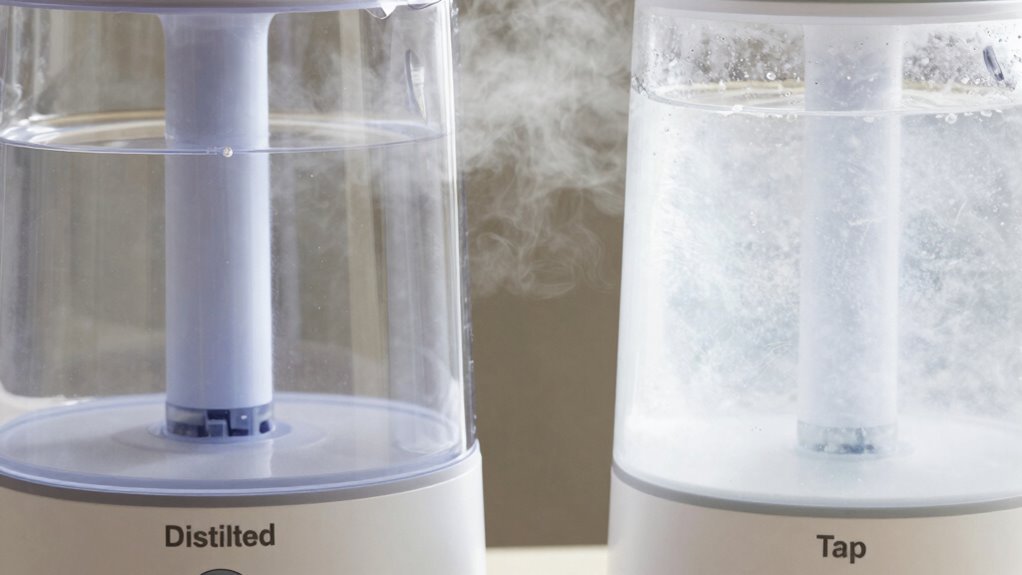

Choosing between distilled and tap water for your humidifier depends on your priorities. Distilled water is free of minerals, helping prevent mineral dust and buildup, which improves air quality and reduces cleaning needs. Tap water is more convenient and affordable but contains minerals that can cause dust and device deposits, needing more maintenance. If you want a cleaner, healthier environment, distilled water is better; for simplicity, tap water works with proper care. Keep exploring for more helpful tips.

Turn your quiet moments into listening time
- Thousands of audiobooks, podcasts and originals
- Listen on your phone, tablet or Echo — also offline
- Cancel anytime
Key Takeaways
- Distilled water is free of minerals, reducing mineral dust and buildup, leading to easier maintenance and better air quality.
- Tap water is more convenient and cost-effective but contains minerals that can cause dust and deposits inside the humidifier.
- Using distilled water minimizes health risks from inhaling mineral particles and prevents mold or bacteria growth.
- Tap water may require filtration and regular cleaning to mitigate mineral buildup and maintain humidifier performance.
- The choice depends on prioritizing air purity and device longevity (distilled water) versus convenience and lower cost (tap water).
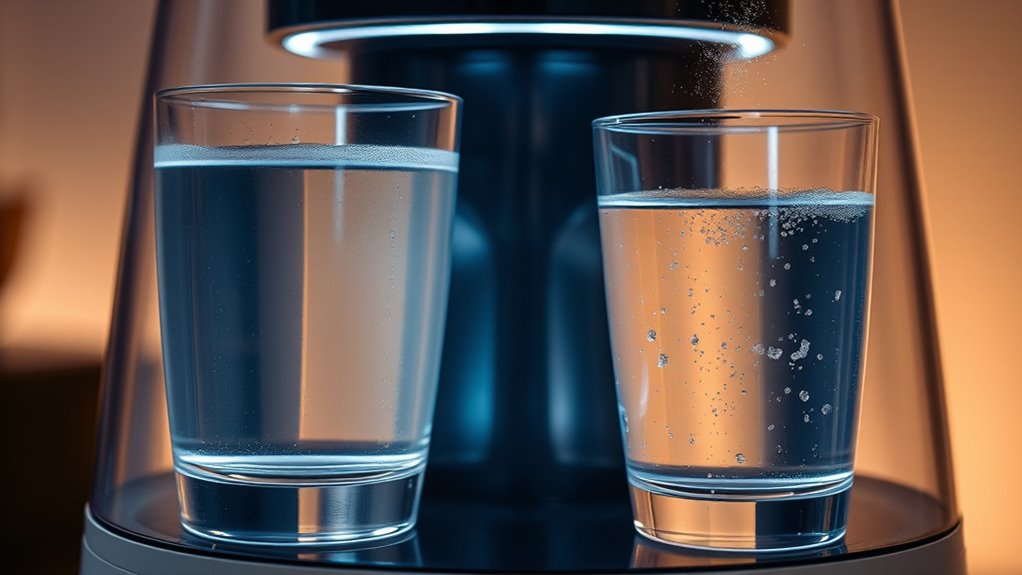
Choosing the right water for your humidifier is essential for maintaining healthy air quality and ensuring the device functions effectively. The type of water you use can substantially impact not only how well your humidifier works but also how clean and safe the air in your space remains. When considering water options, it’s important to weigh the pros and cons of distilled water versus tap water, especially in terms of air quality and maintenance tips. Using distilled water is often recommended because it’s free of minerals, bacteria, and other impurities. This means there’s less chance of mineral dust being released into the air, which can settle on furniture or be inhaled, potentially irritating your respiratory system. Because distilled water is purified, it reduces the buildup of mineral deposits inside the humidifier, making maintenance easier and less frequent. Regular cleaning is still necessary, but you’ll find that the device stays cleaner longer, and you avoid issues like mold or bacteria growth that can compromise air quality. Plus, distilled water’s purity helps keep the humidifier functioning at peak efficiency, ensuring consistent humidity levels and better air comfort. Additionally, using pure water can help prevent the dispersal of harmful contaminants into your indoor environment, contributing to healthier air quality overall.
On the other hand, tap water is more convenient and cost-effective, but it comes with some drawbacks. Tap water often contains minerals, such as calcium and magnesium, which can lead to mineral dust when the humidifier disperses moisture into the air. This mineral dust can settle on surfaces or be inhaled, potentially affecting air quality, especially if you or your family members have allergies or respiratory issues. Using tap water also means you need to pay closer attention to maintenance tips, like regular cleaning and descaling, to prevent mineral buildup inside the device. Over time, mineral deposits can impair the humidifier’s performance, cause it to work harder, and reduce its lifespan. Additionally, bacteria and other impurities in tap water can grow inside the device if not cleaned properly, further compromising air quality. With proper maintenance routines, you can mitigate some of these issues, but it remains essential to be diligent to ensure optimal operation.
Ultimately, your choice depends on your priorities and the quality of your tap water. If you’re focused on maintaining the best air quality and minimizing maintenance hassles, distilled water is the better option. It costs more upfront but can save you time and effort in the long run. If you opt for tap water, stay diligent with cleaning routines and consider using filters if available. Regularly changing water and following maintenance tips will help keep your humidifier clean, safe, and effective, ensuring your indoor air remains healthy and comfortable.
Frequently Asked Questions
Does Using Distilled Water Extend Humidifier Lifespan?
Using distilled water can extend your humidifier’s lifespan because its high water purity reduces mineral buildup. When you avoid minerals found in tap water, your equipment faces less wear and tear, helping it operate smoothly over time. This means fewer cleanings and repairs, ultimately improving equipment longevity. By choosing distilled water, you guarantee your humidifier stays in better condition longer, saving you money and hassle in the long run.
Can Tap Water Damage My Humidifier?
Yes, tap water can damage your humidifier. Its mineralization causes mineral buildup inside the device, leading to clogs and reduced efficiency. Over time, mineral dust can also accelerate humidifier corrosion, shortening its lifespan. To prevent this, consider using distilled water or regularly cleaning your humidifier. This way, you protect your device from damage caused by mineral deposits and corrosion, ensuring it works smoothly longer.
Is Mineral Dust Harmful to Respiratory Health?
Think of mineral dust as tiny, unwanted guests in your lungs—uninvited and potentially harmful. Mineral buildup from tap water can release particles that cause respiratory irritation, especially for allergy sufferers or those with asthma. These particles can clog your airways over time, making breathing uncomfortable. To protect your health, consider using distilled water, which minimizes mineral dust and keeps your respiratory system clearer and happier.
How Often Should I Clean My Humidifier?
You should clean your humidifier at least once a week to prevent mold, bacteria, and mineral dust buildup. Regular maintenance tips include emptying the water tank daily, rinsing it thoroughly, and using gentle cleaning solutions. If you notice mineral dust or residue, clean more frequently. Proper cleaning guarantees your humidifier functions efficiently, promotes healthier air quality, and reduces respiratory irritations caused by mineral dust or microbial growth.
Are There Health Risks With Distilled Water?
Did you know that using distilled water reduces mineral dust by up to 99%? Health safety is generally high with distilled water because it’s pure and free of contaminants. However, some argue that extremely pure water may lack beneficial minerals, though this isn’t a significant concern for humidifier use. Overall, distilled water offers excellent water purity, minimizing health risks and ensuring safe, cleaner humidifier operation.
Conclusion
Choosing between distilled and tap water for your humidifier might seem small, but it’s actually a game-changer for your health and home! Using tap water could release a storm of mineral dust that’s worse than a hurricane in your living room, while distilled water keeps things crystal clear and dust-free. Don’t let mineral dust turn your peaceful space into a chaotic mess—pick the right water and breathe easy, knowing you’ve won the battle against indoor pollution!
Halloween Picks
halloween
As an affiliate, we earn on qualifying purchases.