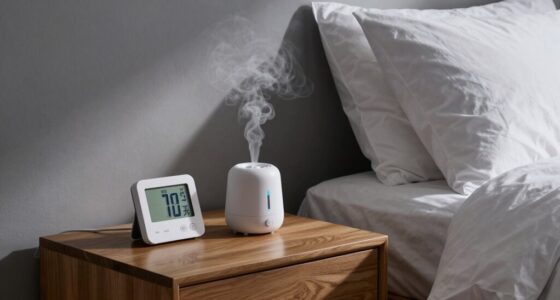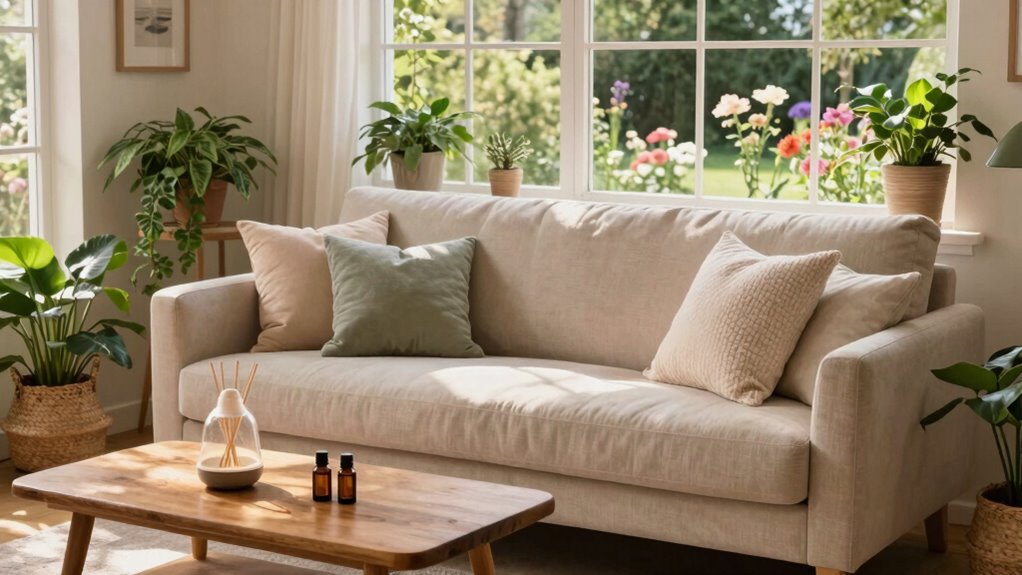

To create a stress-reducing home, maximize natural light and airflow by keeping windows unobstructed and adding indoor plants. Choose calming colors like soft blues, greens, and neutrals, and incorporate cozy textures and ergonomic furniture for comfort. Keep your space organized and clutter-free to prevent visual chaos. Add gentle sounds and soothing aromas to enhance relaxation. Design personal retreat zones with soft lighting and calming decor to foster peace—stay with us to explore these ideas further.
Listen free for 30 days with Audible
Thousands of audiobooks and originals — cancel anytime.
As an affiliate, we earn on qualifying purchases.
Key Takeaways
- Maximize natural light and fresh airflow with unobstructed windows, ventilation, and indoor plants to promote a calming, healthy environment.
- Use soothing color palettes and layered textures to create a visually and tactically peaceful space.
- Incorporate ergonomic furniture and maintain clutter-free areas to enhance physical comfort and reduce mental stress.
- Add sensory elements like calming sounds and aromatherapy to foster relaxation and emotional balance.
- Design quiet, personalized retreats with soft lighting and calming decor to provide restorative, stress-free zones.
As an affiliate, we earn on qualifying purchases.
Incorporating Natural Light and Airflow

Natural light and fresh airflow are essential for creating a calming home environment. When you let in plenty of sunlight, it boosts your mood and helps regulate your body’s internal clock, making you feel more alert and relaxed. Keep windows unobstructed to maximize daylight and consider using sheer curtains to diffuse harsh rays. Fresh air circulation reduces indoor pollutants and prevents stuffiness, which can heighten stress levels. Open windows regularly or use ventilation fans to keep air moving. Indoor plants also improve airflow naturally while adding a touch of serenity. Additionally, selecting the right filtration systems can enhance your home’s air quality without overwhelming your space. Incorporating air purification technology can further help remove pollutants and allergens from indoor air. Using high-quality air filters can make a significant difference in maintaining a healthy environment. By prioritizing natural light and airflow, you create a space that feels open, vibrant, and less cluttered—promoting peace and reducing stress in your daily life.
soothing essential oil diffusers
As an affiliate, we earn on qualifying purchases.
As an affiliate, we earn on qualifying purchases.
Choosing Calming Color Palettes

Selecting calming color palettes is a powerful way to foster relaxation in your home. Soft, muted tones like gentle blues, soothing greens, and warm neutrals create a peaceful atmosphere that eases stress. Stick to colors that evoke a sense of tranquility and avoid bright, jarring hues that may overstimulate your senses. Consider the natural light in your space when choosing shades; cooler tones work well in well-lit rooms, while warmer colors suit spaces with limited sunlight. Color psychology plays a significant role in how hues influence mood, so choosing the right shades can help promote calmness. Incorporating a European-inspired color palette can further enhance your environment by bringing in cultural elements associated with serenity and elegance. Using harmonious color schemes can help establish a balanced and soothing ambiance throughout your home. Consistency is key—use a cohesive palette throughout your rooms to promote harmony. Remember, your color choices influence your mood, so opt for hues that make you feel calm and centered. Additionally, understanding the impact of color on mood can guide you in selecting shades that truly resonate with your desired atmosphere.
ergonomic lounge chairs for relaxation
As an affiliate, we earn on qualifying purchases.
As an affiliate, we earn on qualifying purchases.
Utilizing Soft Textures and Comfortable Furniture

To create a calming space, choose plush upholstery that invites relaxation and softness. Layer textured elements like cozy throws and rugs to add depth and comfort. Incorporate ergonomic furniture that supports your body, making it easier to unwind and stay stress-free. Additionally, integrating proper ventilation systems can help maintain air quality and enhance overall relaxation. Exploring outdoor‑kitchen essentials can also contribute to a more inviting and functional environment. Incorporating natural elements like native plants can further promote tranquility and support sustainable practices in your backyard. Utilizing robotic cleaning solutions can help keep your space tidy effortlessly, reducing clutter and stress. Incorporating seasonal decorations can also enhance the ambiance and promote a sense of harmony in your space.
Plush Upholstery Choices
Choosing plush upholstery can considerably enhance the comfort and serenity of your home environment. Soft, cushioned fabrics like velvet, chenille, or microfiber invite you to sink in and relax after a long day. These materials create a cozy atmosphere that promotes calmness and reduces stress. When selecting plush furniture, focus on pieces with rounded edges and overstuffed cushions, which evoke a sense of safety and warmth. Opt for neutral or muted tones to foster tranquility and avoid overstimulation. Keep in mind that plush upholstery not only feels inviting but also encourages you to spend more time unwinding at home. Comfortable furniture can significantly influence your mood and stress levels, making your space more conducive to relaxation. By prioritizing soft textures, you cultivate a peaceful space that nurtures relaxation and emotional well-being. Additionally, choosing durable upholstery materials ensures your comfortable furniture remains inviting and stress-reducing over time. Incorporating nonstick coatings on furniture surfaces can also make maintenance easier, helping your space stay inviting and stress-free. Incorporating stress-reducing design elements like plush upholstery can further enhance your home’s calming atmosphere.
Layered Textural Elements
Incorporating layered textural elements transforms a room into a calming sanctuary by adding depth and tactile interest. You can achieve this by mixing soft fabrics like plush rugs, cozy throws, and cushioned pillows with sleek furniture surfaces. Using different textures engages your sense of touch, which promotes relaxation and comfort. Choose materials like velvet, chenille, or knits to create warmth and visual richness. Comfortable furniture with inviting, soft upholstery invites you to sit and unwind. Layering textures also helps balance a space, making it feel more inviting and less sterile. Texture mixing is an effective way to enhance the sensory experience in your home environment. By thoughtfully combining various textures, you can create a harmonious environment that nurtures your well-being. Incorporating natural materials like wood or stone can further enhance the layered textures, creating a more grounded and soothing atmosphere. Additionally, understanding electric bike horsepower can inspire you to select furniture and textures that complement an active, dynamic lifestyle. Exploring the benefits of dog bed support can also help tailor your space to be more comfortable for your pets, adding to the overall sense of relaxation. With thoughtful use of textures, your home becomes an oasis of calm that nurtures your well-being.
Ergonomic Comfort Features
Building on the calming effects of layered textures, prioritizing ergonomic comfort features guarantees your home remains a true sanctuary. Choosing furniture with plush cushions, supportive backrests, and adjustable features helps you relax fully. Soft, textured fabrics on sofas and chairs invite touch and comfort, reducing tension. Position your furniture thoughtfully to promote good posture and ease strain during daily activities. Incorporate ergonomic accessories like lumbar pillows or footrests to enhance comfort. The right setup minimizes physical discomfort, which can heighten stress. With comfortable, well-designed furniture, you create an environment that encourages relaxation and mindfulness. When your home supports your body naturally, stress melts away, leaving you feeling more balanced and centered. Comfort isn’t just luxury—it’s a essential part of your stress-reducing sanctuary.
As an affiliate, we earn on qualifying purchases.
Adding Plants and Greenery for Serenity

Adding plants and greenery can help purify the air naturally, making your home healthier and more invigorating. They also create a calming visual environment that eases stress and promotes relaxation. Incorporating greenery is a simple way to boost serenity and improve your overall well-being at home.
Natural Air Purification
Natural air purification can transform your home into a calming sanctuary by introducing plants and greenery that naturally filter the air. Plants like snake plants, peace lilies, and pothos absorb toxins and release oxygen, improving indoor air quality. When you place these plants in your living space, you create a healthier environment that promotes relaxation and reduces stress. Proper placement is key—position them where they can receive adequate light and airflow. Not only do they purify the air, but they also add a touch of nature’s serenity, helping you feel more grounded. Incorporating greenery into your home is a simple yet effective way to foster a peaceful atmosphere, making your space more inviting and conducive to relaxation.
Visual Calmness Enhancement
Incorporating plants and greenery into your home instantly enhances visual calmness, creating a serene environment that soothes your mind. Greenery adds natural beauty, reduces stress, and improves overall mood. To maximize these benefits, consider these tips:
- Choose low-maintenance plants like succulents or pothos for easy care.
- Place plants in areas where you spend most of your time, such as your living room or workspace.
- Use varied sizes and textures to create visual interest without clutter.
- Incorporate hanging or wall-mounted greenery to save space and add depth.
Creating Clutter-Free and Organized Spaces
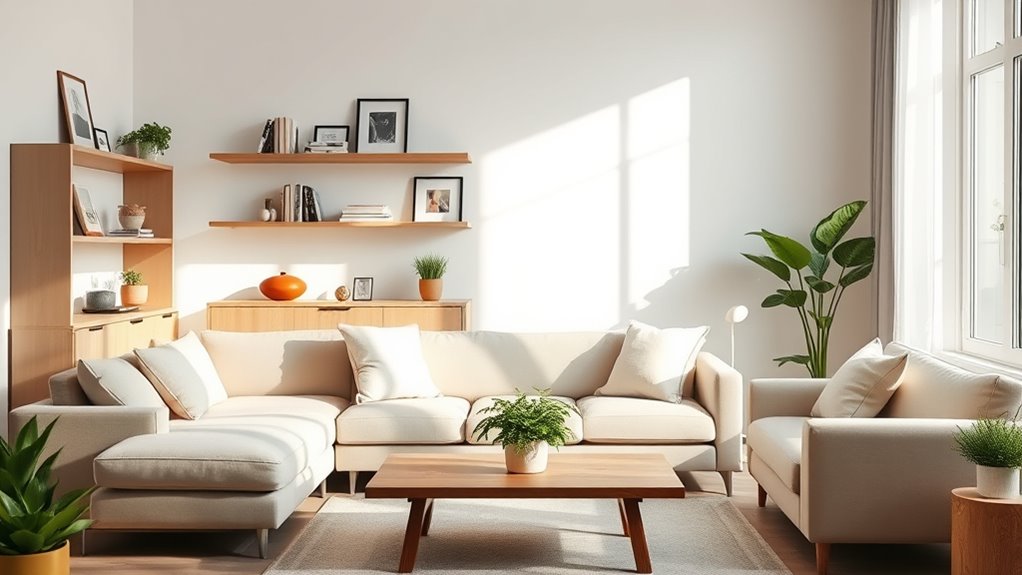
Have you ever noticed how clutter can increase stress rather than ease it? When your space is chaotic, your mind tends to feel overwhelmed, making it harder to relax. To create a calmer environment, start by decluttering regularly. Remove items you no longer need or use, and find designated spots for essentials. Keep surfaces clear and organized, so your eyes aren’t constantly darting around. Use storage solutions like baskets or containers to hide away clutter and maintain a tidy appearance. Establish daily routines to tidy up, preventing messes from piling up. Remember, an organized space isn’t about perfection but about reducing visual noise. When your environment is orderly, you’ll find it easier to breathe, focus, and enjoy your home.
Incorporating Gentle Sounds and Aromas

Adding gentle sounds and soothing aromas can considerably enhance your home’s calming atmosphere. These sensory elements help you relax and reduce stress quickly. Consider incorporating the following:
Enhance your home’s tranquility with calming sounds and soothing aromas for quick stress relief.
- Soft background music or nature sounds like rain or ocean waves
- Aromatherapy with essential oils such as lavender, chamomile, or vanilla
- Scented candles that emit calming fragrances
- Diffusers to disperse natural aromas evenly throughout your space
These small additions create a peaceful environment, promoting mental clarity and emotional balance. Gentle sounds and pleasant scents work together to block out noise and negative stimuli, turning your home into a serene retreat. By consciously choosing calming auditory and olfactory elements, you make your space more inviting and stress-free.
Designing Quiet Retreat Zones
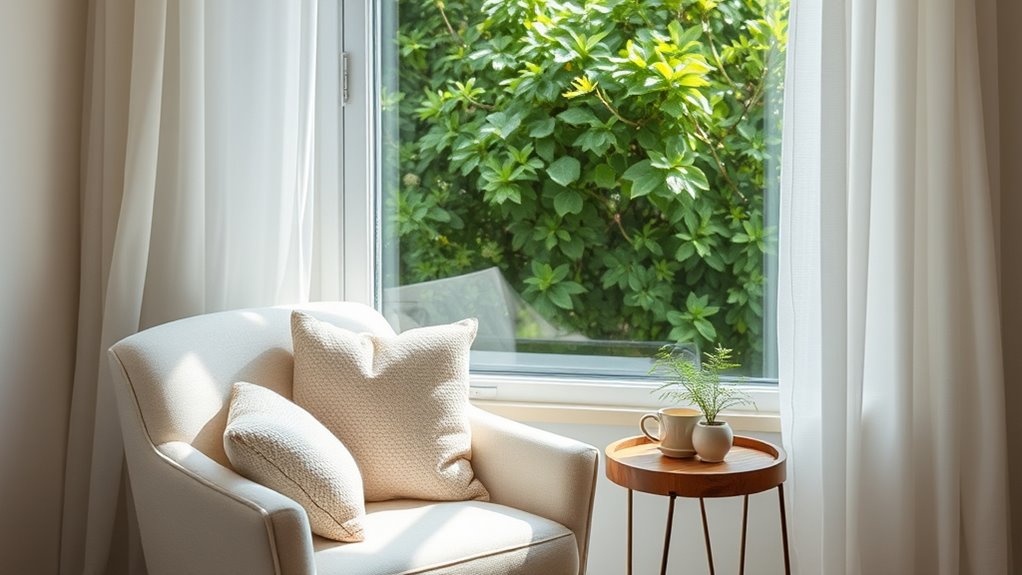
Creating a dedicated quiet retreat zone in your home provides a sanctuary where you can escape daily stress and recharge. Choose a space away from noise and high traffic areas, like a corner in your bedroom or a small nook. Keep it simple and clutter-free to promote calmness. Incorporate comfortable seating, such as a cozy armchair or cushions, and add soft lighting like lamps or fairy lights to create a soothing atmosphere. Use calming colors like neutral tones or soft pastels to enhance relaxation. Minimize electronic distractions by turning off devices or removing screens. Adding elements like a small water fountain or natural materials can help deepen the sense of tranquility. This space becomes your go-to spot for meditation, quiet reflection, or just unwinding.
Personalizing Your Space for Comfort and Tranquility

Personalizing your quiet retreat transforms it from a generic space into a true haven tailored to your preferences. When you add personal touches, you create an environment that feels welcoming and calming. Consider these key elements:
- Incorporate meaningful artwork or photographs that evoke positive memories.
- Use soft lighting options like lamps or candles to set a soothing mood.
- Choose comfortable furniture that invites relaxation and supports your posture.
- Add sensory elements like scented candles or calming essential oils to enhance tranquility.
Frequently Asked Questions
How Can I Reduce Noise Pollution in My Home Environment?
To reduce noise pollution in your home, start by adding soft furnishings like rugs, curtains, and plush furniture to absorb sound. Seal gaps around windows and doors with weatherstripping or caulking to block out external noise. Consider installing double-glazed windows for better insulation. Using white noise machines or calming background music can also mask disruptive sounds, creating a more peaceful and stress-free environment.
What Are the Best Indoor Plants for Air Purification?
You should consider getting snake plants, peace lilies, and spider plants for air purification. These plants are easy to care for and effectively filter toxins from the air. Place them in different rooms to maximize their benefits. Remember to water them appropriately and make sure they get enough light. Incorporating these plants into your home can improve air quality and create a calmer, healthier environment for you.
How Often Should I Clean and Declutter to Maintain Tranquility?
Keeping your home a sanctuary is like tending a peaceful garden. You should clean and declutter at least once a week to prevent chaos from taking root. Regularly sorting through your belongings and wiping surfaces clears the mental fog, making space for tranquility to flourish. Deep decluttering every few months helps maintain a serene environment, ensuring your space remains a calming retreat rather than a cluttered maze.
Which Lighting Options Promote Relaxation and Stress Relief?
You should opt for soft, warm lighting options like LED bulbs with dimming features, fairy lights, or Himalayan salt lamps to promote relaxation. These create a calming atmosphere and reduce stress. Avoid harsh, bright lights that can cause tension. Use multiple light sources to add depth and flexibility, adjusting brightness as needed. Proper lighting helps you unwind and fosters a sense of tranquility in your home environment.
How Can I Create a Sense of Privacy in Shared Spaces?
You can create privacy in shared spaces by using room dividers, curtains, or strategically placing furniture to block views. Incorporate tall plants or shelving units as natural barriers. Use soft lighting and calming colors to make the area feel more intimate. Keep personal items out of sight and designate specific zones for work, relaxation, or socializing. These steps help you establish boundaries and foster a sense of privacy and comfort.
Conclusion
Creating a stress-reducing home blends serenity with essentiality. You’ll find peace in calming colors and gentle sounds, yet energy in natural light and fresh greenery. A clutter-free space feels spacious, but cozy textures invite relaxation. Personal touches make your sanctuary uniquely yours, offering comfort amid tranquility. By balancing these elements, your home becomes a refuge—quiet yet lively, simple yet inspiring—a place where stress melts away, leaving you refreshed and centered every time you step inside.
Flea & tick season Picks
flea and tick prevention
As an affiliate, we earn on qualifying purchases.