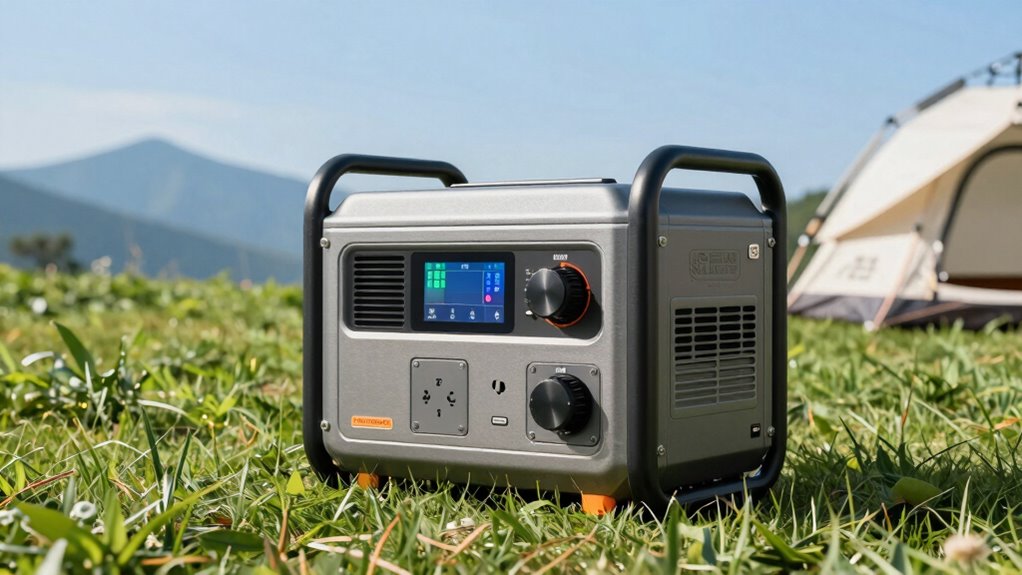

When searching for an inverter generator, the goal is to find a reliable, quiet, and efficient power source that fits your specific needs. The WEN 4800-Watt RV-Ready Portable Inverter Generator stands out as the best overall choice, offering a balance of power and portability. For those prioritizing ultra-quiet operation, the PowerSmart 3800 Watt Dual Fuel Inverter Generator makes a compelling case, especially for camping or RV use. Meanwhile, the Westinghouse 12000 Peak Watt Tri-Fuel Generator is ideal for heavy-duty backup power with versatile fuel options. These options highlight the key tradeoffs in this category: power output versus noise levels, fuel flexibility, and portability. Continue reading for a full breakdown of each model and how to choose the right inverter generator for you.

Turn your quiet moments into listening time
- Thousands of audiobooks, podcasts and originals
- Listen on your phone, tablet or Echo — also offline
- Cancel anytime
Complete the kit


Key Takeaways
- Top-ranked models like the WEN 4800-Watt RV-Ready generator excel in balancing power and portability, making them versatile for various uses.
- Fuel flexibility, such as dual- or tri-fuel options, adds convenience for emergency backup and outdoor activities but often comes at a higher cost.
- Quiet operation remains a top priority for camping and RV users, with many models now incorporating noise-reduction features.
- More powerful units like the Westinghouse 12000 Peak Watt models are better suited for heavy-duty backup but tend to be larger and more expensive.
- Price and features vary widely, so balancing your specific needs with budget constraints is essential for making the best choice.
| WEN 4800-Watt RV-Ready Portable Inverter Generator with Fuel Shut Off |  | Best Overall for Portability and Safety | Engine: 224cc | Surge Watts: 4800 | Rated Watts: 4000 | VIEW ON AMAZON | See Our Full Breakdown |
| Oxseryn Power Equipment 4400 Watts Inverter Generator Gas Powered, Portable Open Frame Generator, Low Noise with ECO Mode, RV Ready, Emergency Home Backup |  | Best for Long Runtime and Lightweight Portability | Peak Watts: 4400 | Running Watts: 3400 | Fuel Tank Capacity: 2 gallons | VIEW ON AMAZON | See Our Full Breakdown |
| Oxseryn 4400-Watts Inverter Generator, Gas Powered, Emergency Home Backup, RV Ready 30A Outlet, EPA Compliant |  | Best for Versatile Power and Portability | Wattage: 4400 watts | Fuel Type: Gasoline | Power Source: Fuel Powered | VIEW ON AMAZON | See Our Full Breakdown |
| Westinghouse 8200 Peak Watt Tri-Fuel Portable Inverter Generator with Remote Electric Start and CO Sensor |  | Best for Maximum Power and Fuel Flexibility | Peak Watts: 8200 | Running Watts: 6600 | Fuel Types: Gasoline, Propane, Natural Gas | VIEW ON AMAZON | See Our Full Breakdown |
| WEN 4800-Watt Dual Fuel Inverter Generator with Electric Start and CO Watchdog |  | Best for Dual Fuel Flexibility and Quiet Operation | Engine: 224cc dual-fuel engine | Surge Watts: 4800 | Rated Watts: 4000 | VIEW ON AMAZON | See Our Full Breakdown |
| WEN 6800-Watt Dual Fuel RV-Ready Electric Start Portable Inverter Generator |  | Best Overall for Versatile Backup Power | Engine: 224cc dual-fuel | Surge Watts: 6800 | Rated Watts: 5100 | VIEW ON AMAZON | See Our Full Breakdown |
| PowerSmart 3800 Watt Dual Fuel Inverter Generator for Camping or Home Use |  | Best for Quiet, Long-Run Power on a Budget | Power Output: 3800 starting watts / 3300 running watts (gas), 3500 starting watts / 3100 running watts (propane) | Noise Level: 59 dBA at 25% load | Runtime: Up to 8 hours on 1.3-gallon gas, up to 24 hours on 20-lb propane | VIEW ON AMAZON | See Our Full Breakdown |
| 2500W Portable Inverter Generator, Ultra Lightweight, Quiet, Home Backup & Camping |  | Best for Lightweight, Portable Power for Outdoor Adventures | Power Output: 2500 peak watts, 1900 running watts | Fuel Tank Capacity: 1.06 gallons | Runtime: Up to 17 hours at 25% load | VIEW ON AMAZON | See Our Full Breakdown |
| Westinghouse 12000 Peak Watt Dual Fuel Portable Inverter Generator with Remote Electric Start |  | Best for High-Power Home Backup with Remote Convenience | Peak Power: 12,000W | Running Power: 9,000W (gas), 8,100W (propane) | Fuel Type: Gasoline and Propane | VIEW ON AMAZON | See Our Full Breakdown |
| Westinghouse 12000 Peak Watt Tri-Fuel Portable Inverter Generator with Remote Start and Transfer Switch Ready |  | Best for Versatile Fuel Options and Whole-Home Backup | Peak Wattage: 12,000W | Running Wattage: 9,000W | Fuel Types: Gasoline, Propane, Natural Gas | VIEW ON AMAZON | See Our Full Breakdown |
| inverter generator | Noise Level | Engine | Fuel Tank Capacity |
|---|---|---|---|
| WEN 4800-Watt RV-Ready Portabl | — | 224cc | — |
| Oxseryn Power Equipment 4400 W | Under 72 dBA | — | 2 gallons |
| Oxseryn 4400-Watts Inverter Ge | — | — | — |
| Westinghouse 8200 Peak Watt Tr | — | 298 cc 4-stroke OHV | — |
| WEN 4800-Watt Dual Fuel Invert | 62 decibels at quarter load | 224cc dual-fuel engine | 1.9 gallons |
| WEN 6800-Watt Dual Fuel RV-Rea | — | 224cc dual-fuel | — |
| PowerSmart 3800 Watt Dual Fuel | 59 dBA at 25% load | — | — |
| 2500W Portable Inverter Genera | Under 59 dBA | 80CC 4-stroke | 1.06 gallons |
| Westinghouse 12000 Peak Watt D | 64 dBA | — | 7.9 gallons |
| Westinghouse 12000 Peak Watt T | 64 dBA | — | 7.9 gallons |
More Details on Our Top Picks
WEN 4800-Watt RV-Ready Portable Inverter Generator with Fuel Shut Off
This WEN model stands out for its combination of portability, safety features, and clean power delivery. Its 224cc engine provides 4800 surge and 4000 rated watts, enough for most RV and camping needs, but less suited for large household appliances compared to the Westinghouse 8200-watt model. The inclusion of a carbon monoxide sensor and fuel shutoff enhances safety during outdoor use. Its onboard wheels and telescoping handle make moving easier, yet manual fuel shutoff can be cumbersome and no noise level info leaves uncertainty about its quietness. Compared with larger units, this generator offers a balanced mix of features for those prioritizing transportability and sensitive electronics. However, it may fall short for users needing higher surge wattage or extended runtime without refueling.Pros:- Produces clean power safe for sensitive electronics
- Includes safety features like CO shutdown sensor
- Portable with wheels and telescoping handle
Cons:- Limited to 4800 surge watts, restricting larger appliance use
- Fuel shutoff requires manual operation, less convenient
Best for: Campers, tailgaters, and small-scale emergency users who prioritize safety and portability.
Not ideal for: Homeowners needing to run large appliances or sustained power for long periods, due to limited surge wattage and manual fuel management.
- Engine:224cc
- Surge Watts:4800
- Rated Watts:4000
- Receptacles:Four 120V, one RV (TT-30R), one 12V DC, two USB ports
- Features:Fuel shutoff, carbon monoxide sensor, portable with wheels and telescoping handle
- Warranty:3 years
Our verdict“This generator is ideal for outdoor users who need reliable, safe power without sacrificing portability.”
Oxseryn Power Equipment 4400 Watts Inverter Generator Gas Powered, Portable Open Frame Generator, Low Noise with ECO Mode, RV Ready, Emergency Home Backup
Compared with the WEN 4800, the Oxseryn 4400-watt model emphasizes extended runtime and ease of transport. Its 14-hour run time on a 2-gallon tank makes it suitable for longer camping trips or emergency use, yet it provides slightly less surge power than the WEN, limiting some higher-demand appliances. Its low noise level under 72 dBA is a plus for outdoor leisure, and at 56 lbs, it’s notably lighter for a generator of this capacity. Unlike the Westinghouse tri-fuel, it’s limited to gasoline, which simplifies fueling but reduces flexibility. This pick makes the most sense for users prioritizing lightweight design and longer operation over maximum power. For those needing higher wattage or multiple fuel options, other models may be better suited.Pros:- Long runtime of up to 14 hours on a small fuel tank
- Lightweight at 56 lbs for portable use
- Low noise operation under 72 dBA
Cons:- Slight gas smell upon arrival, possibly due to factory testing
- Limited to gasoline fuel, no dual-fuel capability
Best for: Campers and emergency users who value long runtime and portability over maximum power capacity.
Not ideal for: Home users needing to power large appliances or a variety of fuel sources, due to limited surge wattage and fuel options.
- Peak Watts:4400
- Running Watts:3400
- Fuel Tank Capacity:2 gallons
- Runtime at 25% load:14 hours
- Noise Level:Under 72 dBA
- Weight:56 lbs
Our verdict“This generator excels for outdoor enthusiasts seeking extended, quiet power with minimal weight.”
Oxseryn 4400-Watts Inverter Generator, Gas Powered, Emergency Home Backup, RV Ready 30A Outlet, EPA Compliant
This Oxseryn model offers a reliable 4400-watt output with a focus on versatility, including RV readiness and EPA compliance. Its 14-hour runtime on a 2-gallon tank matches the previous Oxseryn but emphasizes inverter technology and eco mode for fuel efficiency. The inclusion of cold start technology and overload protection adds to its appeal for outdoor and backup use. While it’s lightweight at 56 lbs, it’s designed for those who want a compact, portable unit with multiple safety features. Compared to larger tri-fuel options like Westinghouse, it’s less flexible but easier to handle and maintain. It’s best for users who need a dependable, portable power source for camping or emergencies without the complexity of multiple fuel types.Pros:- Long 14-hour runtime on small fuel tank
- Lightweight and portable at 56 lbs
- Includes inverter technology and eco mode for efficiency
Cons:- Slight smell of gas from factory testing
- Limited fuel capacity for extended use
Best for: Outdoor enthusiasts and backup power users seeking a portable, eco-friendly generator with dependable runtime.
Not ideal for: Users requiring extremely high wattage or multiple fuel options, as it is limited to gasoline.
- Wattage:4400 watts
- Fuel Type:Gasoline
- Power Source:Fuel Powered
- Starting Wattage:3400 watts
- Runtime:14 hours
- Additional Features:Cold Start Technology, Fuel Efficient, Low Oil Shutdown
Our verdict“This generator is well-suited for those needing portable, efficient power for outdoor or backup scenarios, with a focus on ease of use.”
Westinghouse 8200 Peak Watt Tri-Fuel Portable Inverter Generator with Remote Electric Start and CO Sensor
The Westinghouse iGen8200TFc clearly targets users needing high wattage and fuel flexibility. Its tri-fuel capability supports gasoline, propane, and natural gas, surpassing the single-fuel Oxseryn options. With up to 8,200 peak watts and 6,600 running watts, it handles larger loads—ideal for whole-house backup or heavy-duty outdoor projects. The remote start and transfer switch readiness add convenience, while the low THD and CO sensor enhance safety. However, the absence of specific weight and dimension data makes portability less certain, especially compared to lighter single-fuel models. Its price and complexity may be overkill for casual campers but perfect for serious backup power or job site use. It demands a higher investment for those who need maximum power and fuel options.Pros:- Tri-fuel capability for maximum fuel flexibility
- High peak and running wattage for demanding applications
- Remote electric start and transfer switch ready
Cons:- Weight and size not specified, potentially heavy and bulky
- Higher cost compared to smaller inverter generators
Best for: Homeowners and contractors who require high wattage, multiple fuel options, and remote start capability.
Not ideal for: Users with limited space or budget constraints, as its size and cost may be prohibitive.
- Peak Watts:8200
- Running Watts:6600
- Fuel Types:Gasoline, Propane, Natural Gas
- Engine:298 cc 4-stroke OHV
- Tank Capacity:3.9 gallons
- Run Time:Up to 17 hours at 25% load
Our verdict“This generator is tailored for users who need serious power and fuel flexibility, accepting added size and cost.”
WEN 4800-Watt Dual Fuel Inverter Generator with Electric Start and CO Watchdog
This WEN model emphasizes dual-fuel capability, allowing use with gasoline or propane, offering versatility for outdoor use and backup power. Its 4800 surge and 4000 rated watts are comparable to the single-fuel WEN but add the convenience of switching fuels, which can be a real advantage in emergencies. The electric start and CO Watchdog safety features enhance user confidence, but the run time of around 7 hours at half load limits its use for extended periods without refueling. Its noise level at 62 decibels makes it suitable for quiet environments, yet its weight and dimensions aren’t specified, which could hinder portability. For users prioritizing fuel choice and quiet operation, this is a compelling option, though it may fall short for those needing longer runtime or higher power.Pros:- Quiet operation at 62 decibels
- Dual-fuel capability with propane and gasoline
- Includes safety features like CO watchdog and overload protection
Cons:- Run time limited to approximately 7 hours at half load
- Weight and dimensions not specified, potential portability concerns
Best for: Campers and emergency users who want dual fuel options and quiet, safe power for sensitive electronics.
Not ideal for: Those needing long runtime or maximum wattage, as the limited 7-hour run time may require frequent refueling.
- Engine:224cc dual-fuel engine
- Surge Watts:4800
- Rated Watts:4000
- Noise Level:62 decibels at quarter load
- Fuel Tank Capacity:1.9 gallons
- Warranty:3 years
Our verdict“This generator suits users who value fuel flexibility, quiet operation, and safety features, with some tradeoffs in runtime.”
WEN 6800-Watt Dual Fuel RV-Ready Electric Start Portable Inverter Generator
This WEN model stands out for its dual-fuel capability, allowing operation on gasoline or propane, which enhances flexibility during power outages or outdoor events. Its 224cc engine delivers a robust 6800 surge watts, making it suitable for larger appliances or RV setups. Compared to the Westinghouse 12000 peak watt models, it offers a more manageable size and weight, though it lacks some of the higher wattage reserves. The inclusion of safety features like a CO shutdown sensor and fuel shutoff increases reliability, while onboard wheels and a telescoping handle make portability easier. However, the setup complexity with multiple outlets and fuel options may challenge beginners, and its weight could be cumbersome for frequent transport. This generator is perfect for users needing dependable, versatile backup power with mobility in mind.
Pros:- Runs on both gasoline and propane for fuel versatility
- Includes safety features like CO shutdown sensor
- Multiple outlets suitable for various electrical needs
- Portable with onboard wheels and telescoping handle
Cons:- Relatively heavy and bulky for some users
- Complex setup with multiple outlets and features
Best for: Homeowners or RV travelers needing flexible, high-capacity backup power with portable features
Not ideal for: Light campers or backpackers seeking ultra-lightweight, simple solutions due to its bulk and setup complexity
- Engine:224cc dual-fuel
- Surge Watts:6800
- Rated Watts:5100
- Fuel Types:Gasoline, Propane
- Receptacles:L14-30R 120V/240V, two 120V, TT-30R RV, 12V DC, two USB ports
- Additional Features:Fuel shutoff, CO shutdown sensor, onboard wheels, telescoping handle, LPG quick-connector, LPG regulator hose
- Warranty:3 years
Our verdict“This generator makes the most sense for users who prioritize fuel flexibility and higher power output in a portable design.”
PowerSmart 3800 Watt Dual Fuel Inverter Generator for Camping or Home Use
This PowerSmart model offers a balanced blend of quiet operation and runtime, making it ideal for camping trips or backup scenarios where noise levels matter. Delivering 3800 starting watts and 3300 running watts on gas, it is less powerful than the Westinghouse iGen12000DFc but still sufficient for most home or outdoor essentials. Its 59 dBA noise level makes it neighbor-friendly, unlike larger, louder units. Runtime extends up to 8 hours on a 1.3-gallon tank at 25% load, and it features safety measures such as a CO sensor and overload protection. Compared to smaller, less feature-rich generators, its longer runtime and safety features justify the higher price, although it may be overkill for very lightweight needs or minimal power requirements. This pick makes the most sense for users wanting quiet, reliable power without sacrificing safety or runtime.
Pros:- Quiet operation at 59 dBA, neighbor-friendly
- Long runtime up to 8 hours on gas and 24 hours on propane
- Multiple outlets including twist-lock and USB ports
- Includes safety features like CO sensor and overload protection
Cons:- Limited to 8 hours runtime on gas at 25% load
- Relatively heavy and bulky for portability
Best for: Campers or homeowners needing quiet, safe power with decent runtime at an affordable price
Not ideal for: Those requiring high wattage or ultra-portable solutions due to its size and weight
- Power Output:3800 starting watts / 3300 running watts (gas), 3500 starting watts / 3100 running watts (propane)
- Noise Level:59 dBA at 25% load
- Runtime:Up to 8 hours on 1.3-gallon gas, up to 24 hours on 20-lb propane
- Safety Features:Overload, short circuit, CO sensor, low oil shutdown
- Outlets:120V 30A twist-lock, 120V 20A duplex, 12V DC, dual 5V USB
- Warranty:2-year limited
Our verdict“This generator is ideal for users seeking quiet operation and long runtime for camping or backup power without high wattage demands.”
2500W Portable Inverter Generator, Ultra Lightweight, Quiet, Home Backup & Camping
This compact inverter generator emphasizes portability and quiet operation, weighing only 39.46 pounds and operating under 59 dBA. It provides 1900 watts of continuous power, making it suitable for sensitive electronics and small appliances during camping or emergency home use. Its 17-hour runtime at 25% load with a 1.06-gallon tank offers impressive endurance, especially considering its size. It features eco mode and a parallel port, boosting versatility. While it excels in portability and noise reduction compared to larger models like the Westinghouse iGen12000, its limited wattage makes it unsuitable for high-demand appliances or extensive power needs. This model is perfect for users prioritizing ultra-lightweight, quiet power in outdoor or backup scenarios.
Pros:- Very lightweight and portable with sturdy handle
- Quiet operation at under 59 dBA
- Long runtime with ECO mode and parallel capability
- Safe for sensitive electronics
Cons:- Limited to 1900W continuous power, not suitable for high-demand appliances
- Residual oil smell possible upon arrival
Best for: Campers or homeowners needing ultra-light, quiet power for small electronics and essentials
Not ideal for: Users requiring high wattage or running large appliances, given its 1900W continuous capacity
- Power Output:2500 peak watts, 1900 running watts
- Fuel Tank Capacity:1.06 gallons
- Runtime:Up to 17 hours at 25% load
- Weight:39.46 pounds
- Noise Level:Under 59 dBA
- Engine:80CC 4-stroke
Our verdict“This generator suits users who need a lightweight, quiet, and reliable power source for camping or small backup needs.”
Westinghouse 12000 Peak Watt Dual Fuel Portable Inverter Generator with Remote Electric Start
The Westinghouse iGen12000DFc combines high wattage capacity with user-friendly features. Offering up to 12,000 peak watts and 9,000 running watts, it easily supports large appliances or multiple electronics simultaneously. Its remote electric start adds convenience during power outages or outdoor activities, while its long runtime of 19 hours on a large 7.9-gallon tank surpasses many competitors. Compared to the smaller PowerSmart 3800W, it provides significantly more power for demanding needs. The noise level at 64 dBA is still reasonable for its size, but the generator’s weight and bulk reduce portability. Setup complexity and price might be barriers for casual users, but for those needing serious backup power, this model offers a balanced mix of power, safety, and convenience. This generator is best suited for users who require substantial power with remote start features for home or large outdoor setups.
Pros:- High peak power with 12,000W capability
- Remote electric start for convenience
- Long runtime of up to 19 hours on a full tank
- Includes digital display and CO sensor
Cons:- Heavy and less portable due to size
- Higher cost may deter budget-conscious buyers
- Setup may be complex for beginners
Best for: Homeowners or contractors needing high-capacity, remote-start backup power for critical appliances
Not ideal for: Those seeking ultra-light, portable generators for camping or minimal power needs due to its size and weight
- Peak Power:12,000W
- Running Power:9,000W (gas), 8,100W (propane)
- Fuel Type:Gasoline and Propane
- Fuel Tank Capacity:7.9 gallons
- Runtime:Up to 19 hours at 25% load
- Noise Level:64 dBA
Our verdict“This model caters to users needing significant power with remote control features for home backup or large outdoor applications.”
Westinghouse 12000 Peak Watt Tri-Fuel Portable Inverter Generator with Remote Start and Transfer Switch Ready
The Westinghouse iGen12000TFc stands out for its tri-fuel capability, allowing operation on gasoline, propane, or natural gas, which adds flexibility for different fuel sources. It offers the same high power output as its dual-fuel counterpart, with a peak of 12,000 watts and a runtime of 19 hours on 7.9 gallons of fuel. Its remote start and transfer switch readiness make it an excellent choice for whole-home backup, especially in areas prone to power outages. Despite its impressive features, its weight and bulk limit portability, making it more suitable for stationary use or backup scenarios rather than frequent transport. The complexity of setup and higher price point are considerations for users unfamiliar with transfer switches or multi-fuel systems. This generator makes the most sense for users who want maximum fuel flexibility and high power for whole-home or large-scale backup.
Pros:- Tri-fuel capability for maximum fuel flexibility
- High power with 12,000W peak and long runtime
- Remote start and transfer switch compatibility
- Quiet operation at 64 dBA
Cons:- Heavy and less portable
- More complex setup for beginners
- Higher price point
Best for: Homeowners or contractors needing versatile, long-lasting, high-capacity backup power with multiple fuel options
Not ideal for: Campers or users prioritizing lightweight, portable units due to its weight and setup complexity
- Peak Wattage:12,000W
- Running Wattage:9,000W
- Fuel Types:Gasoline, Propane, Natural Gas
- Fuel Tank Capacity:7.9 gallons
- Runtime at 25% load:19 hours
- Noise Level:64 dBA
Our verdict“This model is best suited for users seeking maximum fuel versatility and high capacity for whole-home backup solutions.”

How We Picked
I evaluated these inverter generators based on several key factors: power output, noise levels, fuel efficiency, portability, and overall build quality. I prioritized models that offer a good balance between performance and usability, especially for outdoor, RV, and backup power scenarios. Cost-effectiveness was also considered, ensuring that each pick provides value for its price point. The rankings reflect a combination of user-centric features, reliability, and versatility, with a focus on real-world application rather than niche or overly specialized units.Factors to Consider When Choosing Inverter Generator
Choosing the right inverter generator involves understanding your specific power needs, the environment you’ll use it in, and your budget. Beyond basic wattage ratings, considering features like noise reduction, fuel type, and portability can significantly impact your satisfaction with the unit. This guide highlights the most important factors to keep in mind, helping you avoid common pitfalls and choose a generator that offers the best long-term value.Power Output and Size
Determine your total power needs before selecting a generator. Larger appliances or multiple devices require higher wattage, but bigger units tend to be heavier and less portable. The trick is to choose a model that provides enough power for your essentials without unnecessary bulk. For occasional or light use, a smaller, lower-wattage inverter can be sufficient and easier to transport.
Noise Levels
Many inverter generators now feature noise-reduction technology, which is vital for camping, RV trips, or residential backup. A quieter generator improves comfort and reduces disturbance, especially in close quarters. However, lower noise often correlates with slightly higher cost or lower maximum power output, so consider your environment and prioritize accordingly.
Fuel Type and Efficiency
Dual- and tri-fuel models offer flexibility, allowing you to switch between gas, propane, or natural gas depending on availability. This can be a major advantage during emergencies or outdoor activities. Be aware that multi-fuel units tend to be more complex and slightly more expensive, but their versatility can justify the investment if you need reliable, long-term power options.
Portability and Size
Portability is key if you plan to move the generator frequently. Look for lightweight models with ergonomic handles and compact designs. Heavier units often have higher power outputs but can be cumbersome to transport. Consider whether you’ll need a wheel kit or other accessories to improve mobility, especially for larger units.
Price and Long-term Value
While it might be tempting to opt for the cheapest option, investing a bit more can yield longer-lasting, more reliable performance. High-quality inverters often feature better inverters, quieter operation, and more durable construction. Balance your budget with your anticipated usage to find a model that offers the best combination of features and reliability for your needs.
Frequently Asked Questions
How loud are inverter generators compared to traditional generators?
Inverter generators are generally quieter than traditional open-frame models because they use advanced noise-reduction technology and have smaller engines running at variable speeds. Most models operate between 50-65 decibels, comparable to normal conversation, making them suitable for camping and residential use. The quieter operation enhances comfort and reduces noise complaints, especially in confined or residential settings.
Can I run my entire home with an inverter generator?
While some high-capacity inverter generators can handle essential home appliances during outages, they typically aren’t designed to power an entire house. Most are best suited for critical devices like refrigerators, lights, and small appliances. For full-home backup, larger, dedicated standby generators might be more appropriate. Always check the wattage capacity and ensure your home’s load doesn’t exceed the generator’s output.
Is it safe to run an inverter generator indoors?
Running an inverter generator indoors is strongly discouraged due to carbon monoxide risks. Even models marketed as quiet and low-emission can produce dangerous levels of CO if used in enclosed spaces. Always operate generators outdoors in well-ventilated areas, away from windows, doors, and vents to prevent hazardous buildup of fumes.
How often should I perform maintenance on my inverter generator?
Regular maintenance is essential for reliable operation. Most manufacturers recommend checking and changing the oil after every 20-50 hours of use and inspecting the air filters regularly. Running the generator periodically, even when not in heavy use, helps keep the engine components lubricated and functioning properly. Consult your user manual for specific maintenance intervals tailored to your model.
What’s the best way to store my inverter generator during off-season periods?
Proper storage involves cleaning the unit thoroughly and draining any remaining fuel to prevent gum buildup and corrosion. Store the generator in a dry, cool place, ideally covered but protected from dust and moisture. Using a fuel stabilizer during storage can help prolong fuel shelf life. Regularly start and run the generator during storage periods to keep the engine in good condition.
Conclusion
For general outdoor use or RV trips, the WEN 4800-Watt RV-Ready Portable Inverter Generator offers a balanced mix of power, portability, and affordability, making it the best overall pick. Budget-conscious buyers seeking reliable backup power might prefer the Oxseryn 4400 Watts Inverter Generator for its value. Those needing maximum power and fuel flexibility should consider the Westinghouse 12000 Peak Watt Tri-Fuel Generator, though it comes with increased size and cost. Beginners or casual users will appreciate smaller, quieter models like the PowerSmart 3800 Watt Dual Fuel Inverter, which are easier to operate. Ultimately, your choice depends on your specific needs—prioritize accordingly to find the inverter generator that fits your lifestyle best.