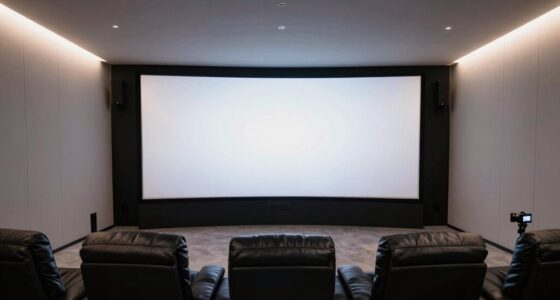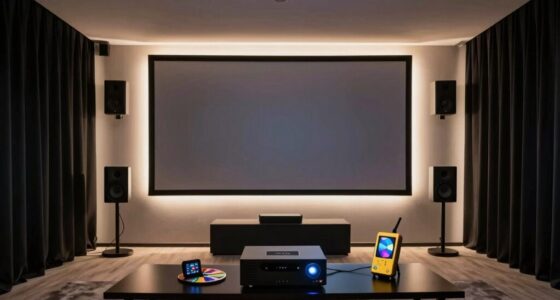
Projector screen materials vary based on your environment and viewing needs. Matte white surfaces offer clear images and wide viewing angles, ideal for most rooms. High-gain screens boost brightness for bright spaces but may cause hot spots. Acoustic transparent fabrics hide speakers without sacrificing sound quality. Silver and gray options enhance brightness or contrast, depending on lighting conditions. Specialty coatings reduce glare, while portable fabrics make setup easy on the go. If you want to explore these options further, keep exploring for more details.
Listen free for 30 days with Audible
Thousands of audiobooks and originals — cancel anytime.
As an affiliate, we earn on qualifying purchases.
Key Takeaways
- Different projector screen materials, such as matte white, high-gain, and metallic surfaces, offer varying brightness, contrast, and viewing angles.
- Matte white screens provide even light distribution and color accuracy, suitable for most ambient lighting conditions.
- High-gain surfaces amplify brightness but may cause hot spots and narrower viewing angles, ideal for large or well-lit spaces.
- Silver and gray screens adjust reflectivity to enhance brightness or contrast, depending on ambient light levels.
- Specialty coatings, including anti-glare and custom finishes, improve image clarity and performance in specific environments.

Airzentti 155 Pint Commercial Dehumidifier with Pump and Drain, Energy Star
- High Capacity Moisture Removal: Removes up to 155 pints daily
- Large Coverage Area: Suitable for up to 7,500 sq ft
- Versatile Application: Ideal for basements, attics, and more
As an affiliate, we earn on qualifying purchases.
Matte White Projector Screen Material

Matte white projector screen material is a popular choice for many users because it offers excellent image clarity and wide viewing angles. You’ll appreciate its ability to distribute light evenly across the surface, ensuring consistent brightness no matter where you’re seated. The matte finish reduces glare and minimizes reflections, so your image stays clear without distractions. Its neutral white color enhances color accuracy, making your visuals look vibrant and true to life. Plus, this material is versatile, suitable for various ambient lighting conditions, whether in a dark room or a well-lit space. You don’t need to worry about hotspots or uneven brightness, as matte white surfaces provide a smooth, uniform display. Overall, it’s an ideal option for everyday use, offering reliability and excellent picture quality. Additionally, choosing the right projector screen material can influence your overall image quality, and the light diffusion properties of matte white surfaces help maintain consistent image brightness across the entire screen, further improving your viewing experience. Its versatility makes it suitable for different projection setups and environments, ensuring you get the best results every time. For optimal performance, selecting a matte white material with high reflectivity can enhance brightness and clarity even further.

Waykar 125 Pint Crawl Space Dehumidifier with Pump & Drain Hose for Basements, Commercial & Water Damage Spaces up to 6500 Sq. Ft., Compact, Strong Dehumidification, 5-Year Quality Coverage
- High-capacity Dehumidification: 125 pints per day for large spaces
- Adjustable Humidity Control: 10%-90% RH range for precise settings
- Energy Efficient Rotary Compressor: Reduces power consumption and extends lifespan
As an affiliate, we earn on qualifying purchases.
High-Gain Screen Surfaces
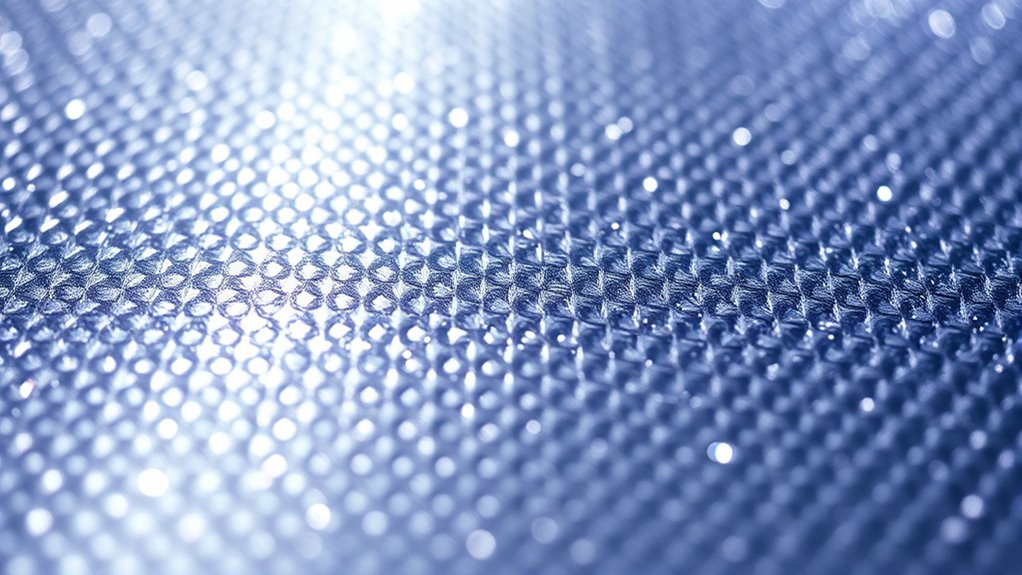
High-gain screen surfaces are designed to amplify the brightness of your projector’s image, making them ideal for environments with ambient light. They reflect more light toward you, enhancing visibility and contrast. This increased reflectivity can cause hot spots, where the image appears brighter in the center. High-gain screens are best suited for large venues or spaces with uncontrolled lighting. Their reflective surface often results in a narrower viewing angle, so you’ll want to position yourself carefully. Additionally, high-gain screens support energy-efficient setups by delivering brighter images without increasing projector wattage. They also require careful screen placement to avoid glare and hot spots. Proper installation ensures optimal performance and image quality. It’s important to consider ambient light levels when choosing a high-gain screen, as excessive light can diminish their effectiveness. To optimize performance, some high-gain screens incorporate special coatings that further enhance reflectivity and reduce glare. Here’s a quick comparison:
| Feature | High-Gain Screens |
|---|---|
| Brightness Enhancement | Up to 3-5 times brighter |
| Viewing Angle | Narrower (around 30°) |
| Best Environment | Well-lit rooms |
| Image Uniformity | May have hot spots |
| Ideal Use | Large venues, conference rooms |
Acoustic Transparent Materials

Acoustic transparent materials allow you to conceal speakers, cables, and other equipment behind the screen without compromising sound quality. These materials feature a porous or mesh-like structure that lets sound pass through with minimal distortion. They’re ideal if you want a clean, uncluttered look in your setup while maintaining clear audio. Common options include specialized fabrics or perforated screens designed specifically for this purpose. When installed correctly, they ensure your speakers remain hidden from view, creating a sleek appearance. It’s important to choose a material that offers good sound transparency without sacrificing image quality. Keep in mind that some acoustic transparent screens may slightly reduce brightness or contrast, but the benefit of discreet audio setup often outweighs these minor trade-offs. Additionally, understanding the Gold IRA markets can help investors diversify their portfolios, much like selecting the right screen material enhances your home theater experience. To maximize performance, consider proper installation techniques that ensure optimal sound and image quality. For optimal results, consider consulting with a professional to select the best screen material for your specific environment. Careful selection of these materials is essential because the porous structure directly impacts sound transmission and overall viewing experience. Exploring different sound transmission properties can further improve your setup’s effectiveness.

Waykar 70 Pint Energy Star Crawl Space Dehumidifier with Drain Hose for Basements, Commercial & Water Damage Spaces up to 5000 Sq. Ft., Compact, Strong Dehumidification, 5-Year Quality Coverage
- Dehumidification Capacity: 70 pints per day for large spaces
- Coverage Area: Effective up to 5,000 sq. ft.
- Adjustable Humidity: 10%-90% RH control
As an affiliate, we earn on qualifying purchases.
Silver and Gray Screen Options

Silver and gray screens have different reflectivity levels that affect how images appear on your projector. These differences influence brightness and contrast, making some options better suited for specific environments. If you’re in a well-lit room or need enhanced contrast, silver screens might be the best choice for you. Understanding reflectivity levels can also help you craft engaging presentations that resonate with your audience. Additionally, selecting the appropriate screen material can impact the overall viewing experience by optimizing image clarity and color accuracy. Recognizing the reflective properties can further assist in selecting the ideal material to suit your specific lighting environment and presentation needs. Being aware of how ambient light conditions interact with different screen types can also enhance your viewing experience by reducing glare and improving image quality.
Reflectivity Differences Explained
When choosing between silver and gray projector screens, understanding their reflectivity differences is essential. Silver screens tend to have higher reflectivity, meaning they bounce more light back to you, which enhances brightness. Gray screens, however, have lower reflectivity, absorbing some light to improve black levels and contrast. To clarify:
- Silver screens maximize reflectivity for brighter images in well-lit rooms.
- Gray screens reduce overall reflectivity, helping to improve contrast in ambient light.
- The difference impacts how vivid colors and dark scenes appear on your screen.
- Recognizing the reflectivity properties of each material helps you make an informed choice for your viewing environment.
- Additionally, understanding the material composition of these screens can influence their durability and ease of maintenance.
- The application environment also plays a crucial role in determining which screen material is most suitable for your needs.
- The science behind reflectivity explains how material properties affect light bounce and image quality, guiding better selection.
- Knowing the performance characteristics of each option enables you to select a screen that best matches your specific viewing conditions.
Brightness and Contrast Impact
Choosing the right projector screen material can considerably influence how bright and contrast-rich your images appear. Silver and gray screens are known for enhancing contrast, making dark scenes more defined and vibrant. Silver screens reflect light more efficiently, boosting overall brightness, especially in environments with some ambient light. Gray screens, on the other hand, absorb excess light, helping to improve contrast and prevent washout in brighter settings. If you’re in a darker room, a silver screen can deliver sharper, more vivid images. In brighter rooms, a gray screen helps maintain contrast without sacrificing brightness. Both options are excellent for increasing image depth, but your choice depends on the lighting conditions and the type of content you watch.
Ideal Environments for Silver
Silver screens excel in darker environments where their reflective properties enhance brightness and color vibrancy. They work best when ambient light is minimal, allowing the screen’s reflective qualities to shine. In such settings, you’ll notice sharper images and richer colors. To maximize performance, consider these factors:
- Controlled lighting: Keep lights dim or off to prevent ambient light from washing out the image.
- Dark room setup: Choose a space with limited windows and light-colored walls that don’t reflect unwanted light.
- Projection angle: Mount your projector at the correct distance and angle to ensure even light distribution on the screen.
Following these guidelines guarantees you get the most out of a silver or gray screen, especially in environments designed for high contrast and brightness.
Specialty and Custom Coatings

Specialty and custom coatings can markedly enhance your viewing experience by offering reflective coating types tailored to your needs. Anti-glare technologies help reduce reflections and improve image clarity in bright environments. You can also choose custom color options to match your decor or achieve specific visual effects.
Reflective Coating Types
Have you ever wondered how different reflective coatings can enhance your projector’s image quality? Specialty and custom coatings are designed to optimize light reflection for specific environments or preferences. First, metallic coatings like aluminum or silver offer high reflectivity and vibrant images, perfect for bright rooms. Second, dielectric coatings use multiple thin layers of materials to improve color accuracy and contrast, ideal for professional presentations. Third, specialized coatings can incorporate anti-microbial or weather-resistant properties, making them suitable for unique settings. These custom options allow you to tailor your screen’s performance to your needs, whether for home theaters, conference rooms, or outdoor use. Understanding these coating types helps you choose a reflective surface that maximizes your projector’s potential.
Anti-Glare Technologies
Ever struggle with glare or reflections that hinder your viewing experience? Anti-glare technologies are designed to minimize these issues, making your projector screen easier to view from different angles and lighting conditions. Specialty coatings use matte finishes or micro-roughened surfaces that diffuse ambient light, reducing reflections without sacrificing image quality. Some coatings incorporate optical films that absorb or scatter stray light, enhancing contrast and clarity. Custom coatings can be tailored to specific environments, like bright conference rooms or home theaters, to optimize performance. These anti-glare solutions help you enjoy sharper images, improved contrast, and less eye strain, especially in well-lit setups. By choosing the right anti-glare coating, you guarantee a clearer, more comfortable viewing experience regardless of lighting conditions.
Custom Color Options
Are standard projector screens limiting your visual setup? Custom color options can elevate your experience. Specialty and custom coatings allow you to choose hues that match your environment or branding, enhancing clarity and contrast. With these options, you can:
- Match your decor for seamless integration.
- Improve contrast in bright rooms with specific tinting.
- Reduce glare and enhance image quality through tailored coatings.
Portable and Foldable Screen Fabrics
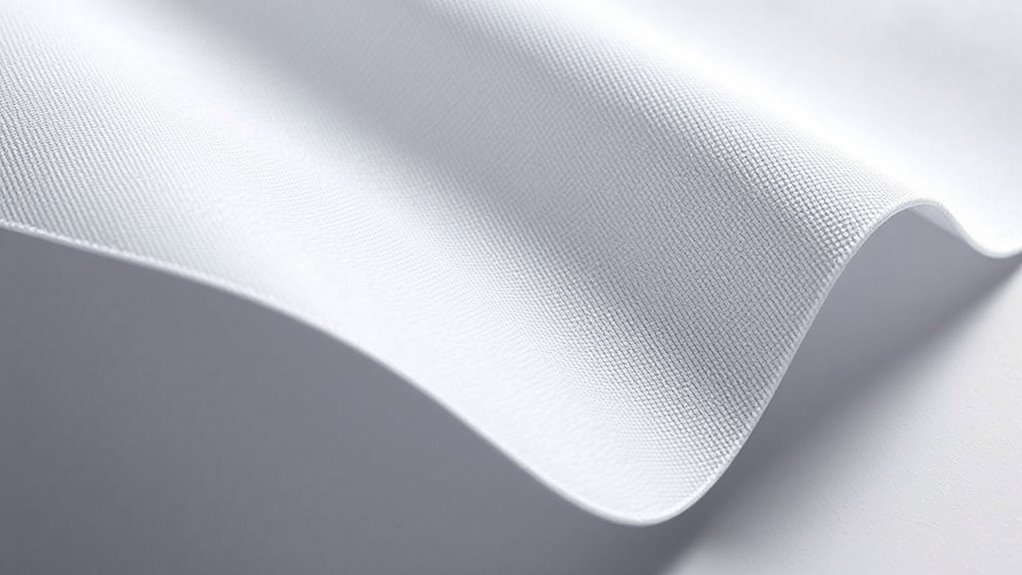
Portable and foldable screen fabrics have become popular choices for those who need flexibility and convenience in their projection setups. These fabrics are lightweight, easy to transport, and simple to set up, making them ideal for on-the-go presentations, outdoor events, or temporary installations. When choosing a foldable screen, look for materials that resist creases and wrinkles, ensuring a smooth surface for clear images. Many fabrics are designed to be durable and resistant to wear, so your screen stays in good condition over time. Additionally, foldable fabrics often come with travel bags or cases, making storage and transport effortless. Overall, they offer a practical solution for anyone who values portability without sacrificing image quality.
Frequently Asked Questions
Which Screen Material Offers the Best Image Sharpness?
You’ll find that glass or high-quality acrylic screens offer the best image sharpness because they provide a smooth, reflective surface that minimizes distortion and enhances clarity. These materials allow light to pass through with minimal diffusion, resulting in crisp, vibrant images. Keep in mind, though, they can be more expensive and fragile. If sharpness is your priority, investing in a glass or acrylic screen is your best option.
How Do Ambient Light Conditions Affect Screen Material Choice?
Ambient light is like a sneaky shadow, quietly dimming your screen’s brilliance. You’ll want a high-gain or ambient light rejecting screen to fight back, especially in bright rooms. These materials reflect more light toward you, making the image clearer and vibrant. In darker rooms, standard matte screens work fine, letting your projector shine without interference. Choose your material wisely—your viewing experience depends on it!
Are There Eco-Friendly Projector Screen Options Available?
Yes, eco-friendly projector screens are available. You can choose options made from recycled materials or biodegradable substrates, reducing environmental impact. Look for screens labeled as sustainable or eco-conscious, often crafted with non-toxic, water-based adhesives and natural fabrics like cotton or bamboo. These options not only help protect the environment but also provide high-quality images, making them a smart choice for environmentally aware users like you.
How Durable Are Specialty Coatings Over Time?
Like a vintage vinyl record, specialty coatings can be quite durable over time if you choose high-quality options. They resist scratches, fading, and moisture, maintaining their performance for years. However, the longevity depends on usage and care — regular cleaning and avoiding harsh chemicals help. With proper maintenance, you’ll find that these coatings often outperform standard surfaces, ensuring your projector screen stays pristine and effective for the long haul.
Can Portable Screens Be Used Outdoors Effectively?
Yes, you can use portable screens outdoors effectively if you choose the right type. Look for screens with weather-resistant materials and sturdy stands that can withstand wind and rain. Make sure to set them up in a shaded area to prevent glare and overheating. Portable screens with reflective surfaces and protective coatings perform well outdoors, giving you a clear, bright image even in various lighting conditions.
Conclusion
Now that you know the different projector screen materials, the choice isn’t just about what looks good—it’s about what transforms your viewing experience. Will you opt for a matte surface for sharp clarity, or push the boundaries with high-gain or specialty coatings? The perfect screen might still be waiting in the details. Decide wisely, because the right material could change everything, revealing a whole new level of immersion you never knew was possible. Are you ready to make that leap?
Back to school Picks
back to school
As an affiliate, we earn on qualifying purchases.