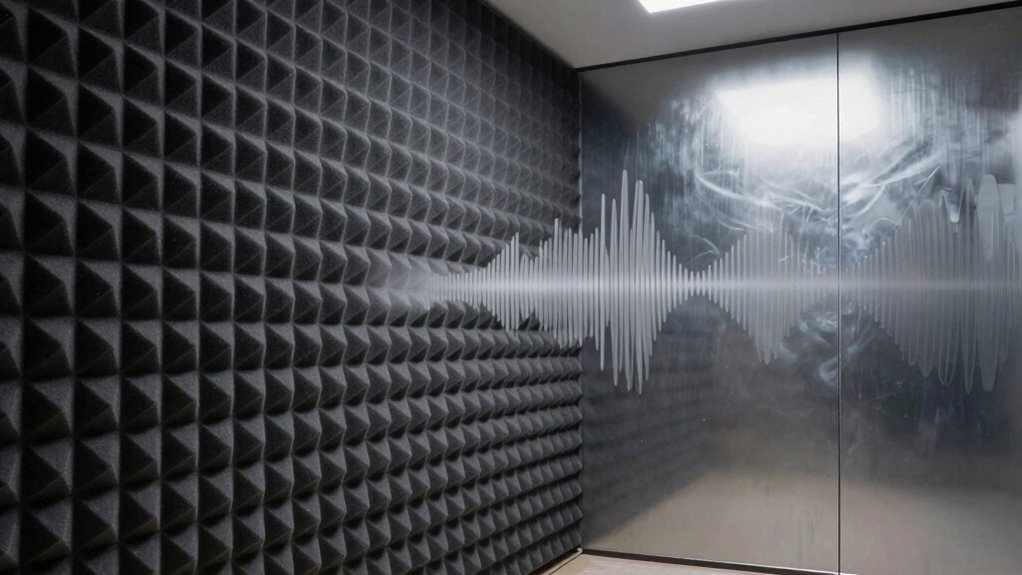

Sound reflection occurs when sound waves bounce off surfaces like walls or glass, causing echoes and reverberation, especially on smooth or hard materials. Absorption happens when porous materials like foam or insulation trap sound energy, converting it into heat and reducing echoes. Both play vital roles in shaping a space’s acoustics—reflection brightens and amplifies, while absorption dampens and clarifies. Exploring these differences further can help you create better acoustic environments.

Turn your quiet moments into listening time
- Thousands of audiobooks, podcasts and originals
- Listen on your phone, tablet or Echo — also offline
- Cancel anytime
Key Takeaways
- Sound reflection involves bouncing sound waves off surfaces, creating echoes and reverberation, while absorption traps sound energy to reduce echoes.
- Reflective materials like glass and concrete increase sound reflection, whereas porous materials like foam and mineral wool enhance absorption.
- Excessive reflection can cause muddiness; too much absorption results in dull sound environments.
- Balancing reflection and absorption is essential for optimal acoustic quality in spaces like concert halls and recording studios.
- Effective acoustic design uses both reflective surfaces and absorptive materials strategically to achieve desired sound characteristics.
What Is Sound Reflection and How Does It Work?

Have you ever wondered why sound bounces off walls or other surfaces? That’s because of sound reflection. When sound waves hit a surface, they bounce back rather than pass through. The way this works depends on the surface’s properties. Smooth, hard surfaces like concrete or glass reflect sound more effectively, causing echoes or reverberation. On the other hand, rough or soft surfaces scatter sound waves in different directions, reducing reflection. Reflection happens because sound waves follow the law of reflection: the angle of incidence equals the angle of reflection. This process is essential in spaces like concert halls, where reflections can enhance sound quality. Additionally, understanding sound reflection can help optimize acoustic environments for better listening experiences. The surface material’s reflective properties significantly influence how sound behaves in a space. Recognizing how different materials impact sound reflection can also aid in designing spaces with improved acoustic treatment. Moreover, advancements in material science contribute to developing surfaces that better control sound reflection for various applications.
The Science Behind Sound Absorption

Sound absorption occurs when certain materials trap sound energy, preventing it from reflecting back into the environment. These materials work by converting sound waves into small amounts of heat through internal friction, a process known as damping. When sound waves hit an absorbent surface, they lose energy as they penetrate the material. Porous materials like foam or fibrous insulations are effective because their tiny pores and fibers trap sound waves, dispersing their energy. The more porous and thicker the material, the better it absorbs sound. This process reduces echoes and reverberation, creating a more controlled acoustic environment. Energy-efficient materials are increasingly being used in sustainable building design to enhance sound absorption while minimizing environmental impact. By understanding the science behind absorption, you can choose the right materials to improve sound quality in any space.
Materials That Reflect Sound Waves
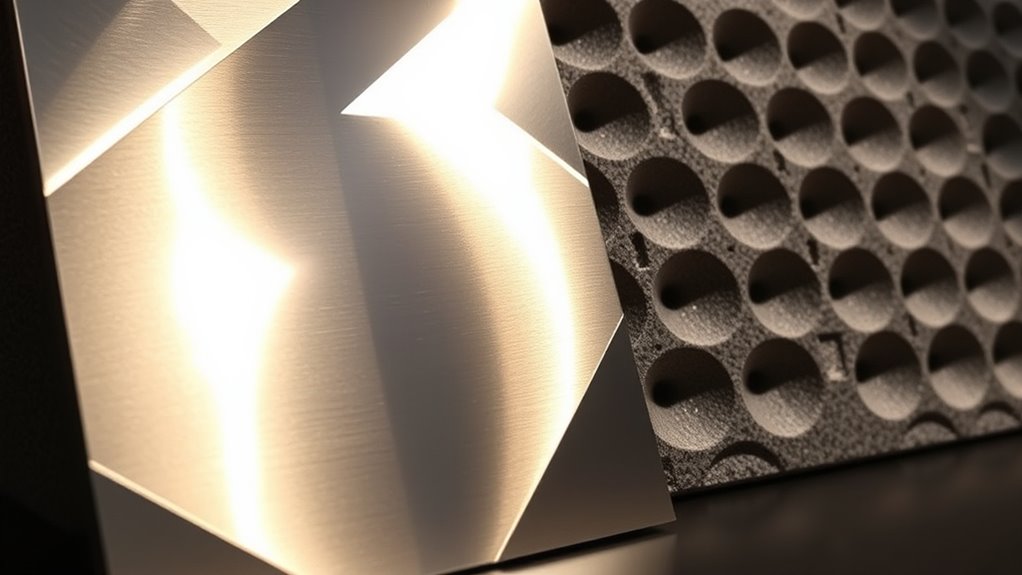
Materials that reflect sound waves do so by bouncing incoming sound energy back into the environment rather than absorbing it. Common reflective materials include hard surfaces like concrete, glass, metal, and dense wood. These materials have high acoustic impedance, which prevents sound waves from passing through or being absorbed. Instead, they cause the sound waves to bounce off, creating echoes or reverberations. You’ll often find reflective surfaces in places like concert halls and auditoriums, where controlling sound direction is essential. The smoothness and density of these materials enhance their reflective properties, making them ideal for directing sound or creating specific acoustic effects. Additionally, the surface texture of materials can influence their reflectivity, with smoother surfaces generally reflecting more sound. The material composition of reflective surfaces also plays a crucial role in how effectively they bounce sound waves back. Keep in mind, though, that highly reflective materials can cause unwanted echo or noise if not properly managed. Factors like surface angle can also influence how sound is reflected, allowing for tailored acoustic environments. Moreover, environmental conditions such as humidity and temperature can slightly alter the reflection characteristics of these surfaces.
Materials That Absorb Sound Waves

While reflective surfaces bounce sound waves back into a space, absorbing materials work to diminish sound energy rather than redirect it. You’ll find that materials like foam panels, mineral wool, and fibrous insulations are effective at soaking up sound. These materials contain porous structures that trap and convert sound energy into small amounts of heat, reducing echo and noise. When you install acoustic panels or carpets made from these materials, you’ll notice a significant drop in reverberation and background noise. Proper material selection can optimize sound absorption and enhance acoustic comfort. Using soundproofing techniques in conjunction with absorptive materials can further improve the acoustic environment. Additionally, understanding the sound absorption properties of different materials helps in designing effective soundproofing solutions. For example, the porous structure of these materials plays a crucial role in their ability to absorb sound waves. By choosing the right materials, you can control sound levels, making your environment more comfortable and acoustically balanced. Incorporating scientific principles of sound can guide the development of more effective acoustic treatments for various spaces.
Effects of Reflection and Absorption on Acoustic Environments

The way surfaces reflect and absorb sound considerably shapes the acoustic quality of a space. When you understand this, you can influence how sound travels, echoes, and feels inside a room. Reflection can create reverberation, making sounds linger and adding liveliness or chaos. Absorption reduces echoes, creating clearer sound and intimacy. The balance between these effects impacts speech intelligibility, music quality, and overall comfort. Too much reflection can cause muddiness, while excessive absorption might make a space feel dull. By controlling these factors, you shape the environment’s acoustic character. Developing a methodical approach to managing reflection and absorption ensures consistent and effective acoustic design. Incorporating visual and auditory cues can further aid in understanding and optimizing how sound interacts with various surfaces. Understanding sound behavior is essential for designing spaces that sound natural and pleasant. Additionally, awareness of room dimensions and surface materials can help predict how sound will behave within a given environment. Recognizing acoustic properties allows designers to tailor spaces for specific uses and improve overall sound quality.
How to Use Reflection and Absorption in Space Design
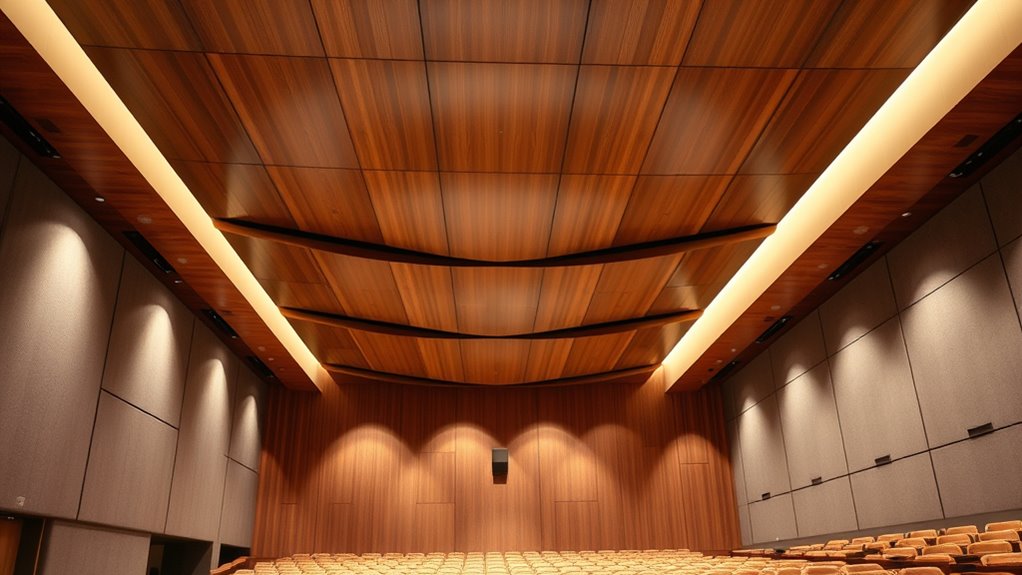
To effectively use reflection and absorption in space design, you need to contemplate how surface treatments influence sound behavior. Reflective surfaces, like hard walls and ceilings, bounce sound waves, creating lively environments suited for performance spaces or areas where clarity is essential. Conversely, absorptive materials such as foam panels, carpets, or curtains dampen sound, reducing echoes and controlling noise levels. When designing a space, consider balancing these elements: use reflective surfaces to enhance sound projection where needed, and incorporate absorptive materials to minimize unwanted reverberation. Placement matters—position reflective surfaces to direct sound towards listeners, and install absorptive materials in areas prone to excessive echo. Incorporating advanced nanomaterials can further optimize acoustic properties, providing innovative solutions for sound management. Understanding sound diffusion principles helps in creating more balanced acoustic environments. Additionally, considering surface texture can influence how sound waves are reflected or absorbed, further refining the acoustic experience. This strategic combination helps create acoustically comfortable environments tailored to specific uses.
Comparing Reflection and Absorption: Advantages and Disadvantages

Understanding the advantages and disadvantages of reflection and absorption helps you make informed decisions in space design. Reflection can brighten a room by dispersing sound evenly, ideal for lively environments like theaters. However, too much reflection creates echo and muddled audio. Absorption reduces noise and controls echo, making spaces clearer and more comfortable, perfect for recording studios or quiet offices. But, excessive absorption can make a space feel dull and lifeless. Reflection is easier to install and maintain but can cause unwanted noise. Absorptive materials often require careful placement and can be costly. soundproofing techniques can further enhance acoustic treatment by balancing reflection and absorption effectively. Additionally, considering acoustic materials tailored to your specific needs can optimize sound quality and comfort in any environment.
Practical Tips for Managing Sound in Different Spaces

To effectively manage sound, start by considering your room’s design and how it influences reflections and absorption. Choose materials that suit your space’s purpose, such as using soft fabrics for quiet areas or reflective surfaces for lively atmospheres. Implementing these strategies helps you control sound quality and create an ideal acoustic environment.
Room Design Strategies
Designing a room with sound in mind requires strategic placement of materials that either reflect or absorb audio. To optimize acoustics, consider the purpose of the space and how sound travels within it. Use furniture, rugs, and curtains to naturally diffuse sound waves and reduce echoes. Position sound-absorbing panels behind speakers or sound sources to minimize reflection. Incorporate bookshelves or decorative items that act as diffusers. Keep reflective surfaces away from direct sound paths to prevent unwanted reverberation. Balance reflective and absorptive elements based on your needs, whether for clarity in a recording studio or comfort in a living room. Thoughtful room design creates an environment where sound behaves predictably, making your space more functional and enjoyable.
Material Selection Tips
Choosing the right materials is essential for managing sound effectively in any space. Start by evaluating your needs—do you want to reduce echo or enhance clarity? For sound absorption, opt for soft, porous materials like acoustic panels, carpets, or heavy curtains. These materials trap sound waves, preventing them from bouncing around. If you need to reflect sound, use hard surfaces like glass, wood, or metal, which bounce sound energy effectively. Consider the room’s purpose when selecting materials; a recording studio benefits from soundproofing and absorption, while a conference room might need a balance of both. Always test materials in your space before committing. Proper material choice can dramatically improve acoustics and create a more comfortable environment.
Frequently Asked Questions
How Do Shape and Geometry Influence Sound Reflection and Absorption?
Shape and geometry greatly influence sound reflection and absorption. When you use flat, hard surfaces, they reflect sound waves efficiently, creating echoes. Curved or irregular shapes scatter sound, reducing reflections and improving acoustics. Absorptive materials with porous or fibrous structures trap sound energy, regardless of shape. By choosing the right geometry and materials, you can control how sound behaves in a space, enhancing clarity or reducing noise effectively.
Can Environmental Factors Like Temperature Affect Sound Reflection and Absorption?
Yes, environmental factors like temperature can affect sound reflection and absorption. When temperatures rise, air molecules move faster, which can change how sound waves travel and how materials absorb or reflect sound. Cooler temperatures slow down molecules, potentially increasing sound reflection. You’ll notice these effects more in outdoor spaces or large auditoriums where temperature variations are significant, influencing acoustics and sound quality.
Are There Eco-Friendly Materials for Sound Absorption and Reflection?
Yes, eco-friendly materials for sound absorption and reflection are available. You can opt for recycled cotton or wool insulation, cork panels, or hemp-based products. These materials are sustainable, biodegradable, and non-toxic, making them environmentally friendly choices. By choosing these options, you help reduce your carbon footprint while effectively managing sound in your space. It’s a smart way to combine eco-consciousness with acoustic performance.
How Does Sound Frequency Impact Reflection and Absorption Effectiveness?
Higher frequency sounds are reflected more easily by smooth, hard surfaces, making them less absorbed. Conversely, low-frequency sounds tend to penetrate and are absorbed better by porous, soft materials. You’ll notice that materials like carpets and foam are effective at absorbing high frequencies, while bass traps or thick curtains help reduce low-frequency sounds. Understanding this helps you choose the right materials to control sound reflections and absorption effectively in your space.
What Role Do Interior Decor Choices Play in Acoustic Management?
Your interior decor choices markedly influence acoustic management by affecting how sound waves behave in a space. Soft furnishings, carpets, and curtains absorb sound, reducing echo and noise. Meanwhile, hard surfaces like glass and wood reflect sound, increasing reverberation. You can optimize acoustics by balancing these elements—adding plush textiles for absorption and strategic placement of reflective surfaces—to create a comfortable, acoustically balanced environment.
Conclusion
Ultimately, understanding sound reflection and absorption helps you shape your space’s acoustic environment. When you align materials and design strategies, you create a balance that feels natural—not just controlled. It’s like tuning an instrument: the right mix of reflection and absorption produces harmony, whether you’re aiming for clarity or intimacy. By mastering these principles, you’ll craft spaces that resonate perfectly with their purpose, revealing that sound isn’t just heard—it’s felt deeply.
Fall Picks
fall essentials
As an affiliate, we earn on qualifying purchases.