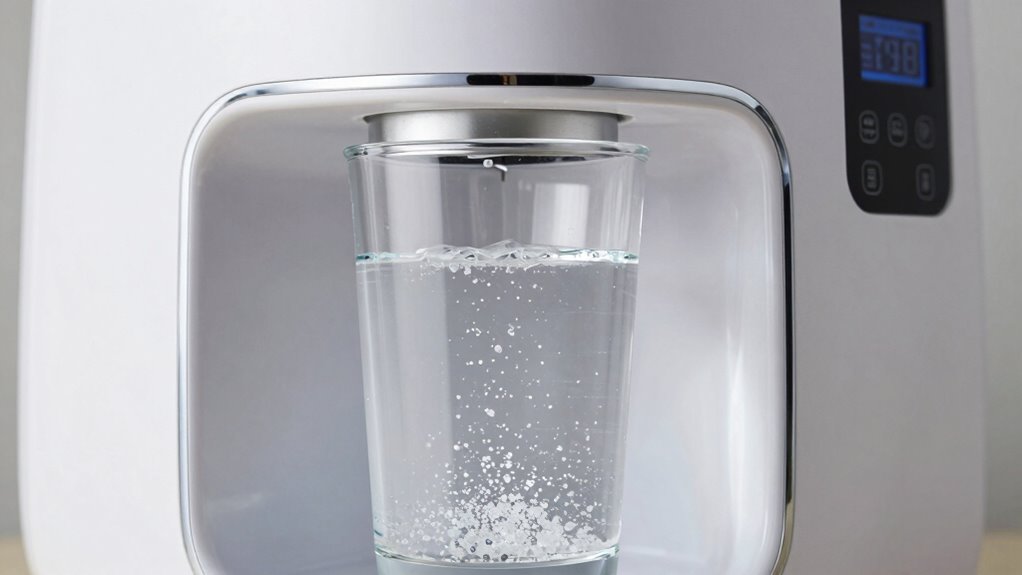

Water softeners remove minerals like calcium and magnesium from your water, which are responsible for hard water issues. They replace these minerals with sodium or potassium ions through an ion exchange process. This change helps improve soap lather, prevents mineral buildup in appliances, and leaves your laundry, dishes, skin, and hair feeling cleaner and softer. If you want to discover how softened water can benefit your home even more, keep exploring the details.

Turn your quiet moments into listening time
- Thousands of audiobooks, podcasts and originals
- Listen on your phone, tablet or Echo — also offline
- Cancel anytime
Key Takeaways
- Water softeners replace calcium and magnesium ions with sodium or potassium ions through ion exchange.
- They eliminate mineral deposits, preventing scale buildup in pipes and appliances.
- Softened water improves soap lathering and cleaning efficiency.
- They lead to brighter laundry, cleaner dishes, and smoother skin and hair.
- Water softeners extend the lifespan of appliances and plumbing systems by reducing mineral damage.

Have you ever noticed that your soap doesn’t lather well or that your clothes look dingy after washing? If so, you might be dealing with hard water, which contains high mineral content. Water softeners are designed to tackle these issues by changing the water’s chemistry. They do this primarily through mineral removal, targeting minerals like calcium and magnesium that cause hardness. When these minerals are present in water, they form deposits on your skin, hair, and your laundry, making everything feel dull and feel less clean. By removing these minerals, water softeners help your soap lather more effectively and improve the look and feel of your clothes.
Hard water causes mineral deposits that dull clothes and hinder soap lather; water softeners remove these minerals for cleaner, brighter laundry.
When you use a water softener, you’re essentially replacing calcium and magnesium ions with sodium or potassium ions. This ion exchange process neutralizes the minerals responsible for hardness, leaving you with softer water. The benefits go beyond just making soap lather better. You’ll notice your dishes come out cleaner, with fewer spots, because mineral deposits are less likely to cling to surfaces. Plus, your skin and hair will feel smoother, since there’s less mineral residue left behind. Softened water also helps extend the lifespan of appliances like dishwashers and washing machines, which often suffer damage from mineral buildup over time.
A key advantage of water softeners is their role in scale prevention. Hard water causes scale buildup inside pipes, water heaters, and appliances, leading to reduced efficiency and potential damage. With mineral removal, your water softener prevents this scale from forming in the first place. It acts as a barrier, stopping minerals from depositing on surfaces and inside plumbing. As a result, your plumbing remains clearer, and appliances operate more efficiently, saving you money on repairs and energy costs in the long run. This scale prevention feature makes water softeners an investment in both convenience and the durability of your household systems. Additionally, understanding how water treatment works can help you choose the most effective system for your needs.
In addition to improving cleaning and protecting your plumbing, water softeners also make maintenance easier. Because mineral buildup is minimized, you won’t need to descale appliances or clean mineral stains as often. This means less time and money spent on repairs and cleaning. Additionally, the use of water purification technology within some systems can further enhance water quality by removing other contaminants, providing even cleaner water for your home. Recognizing the importance of proper water quality management can help you make informed decisions about your water treatment options. Furthermore, choosing a system with regular maintenance features can ensure optimal performance and longevity. Ultimately, by changing the water’s composition, a water softener transforms your home’s water quality, making everyday chores simpler and extending the lifespan of your appliances. It’s about creating a more efficient, cleaner, and more comfortable living environment, all by addressing the root cause—hard water minerals.
As an affiliate, we earn on qualifying purchases.
Frequently Asked Questions
How Often Should I Replace the Water Softener Resin?
You should replace or renew your water softener resin every 10 to 15 years, depending on usage and water quality. During resin renewal, the resin beads are cleaned and recharged, improving softener regeneration efficiency. Keep an eye on your softener’s performance; if you notice decreased effectiveness or increased salt usage, it might be time for resin replacement. Regular maintenance guarantees ideal softener regeneration and consistent water quality.
Are Water Softeners Effective Against All Types of Mineral Deposits?
Water softeners are effective against many mineral deposits, especially those causing hard water effects like limescale buildup and soap scum. However, they’re less effective against certain mineral buildups such as iron or manganese stains. If you notice persistent mineral buildup despite softener use, you might need specialized treatments. Overall, water softeners considerably reduce most common mineral deposits, improving water quality and appliance longevity.
Can Water Softeners Remove Bacteria and Other Contaminants?
Water softeners don’t remove bacteria or other contaminants. They focus on bacterial removal and contaminant filtration related to minerals like calcium and magnesium, which cause hardness. If you want bacteria and harmful contaminants gone, you need additional purification methods like UV sterilizers or activated carbon filters. Softeners improve water quality for appliances but aren’t designed for bacterial removal or all-encompassing contaminant filtration, so consider supplemental systems for safe, clean water.
What Is the Lifespan of a Typical Water Softener?
Think of your water softener as a trusty car engine; with proper care, it can run smoothly for about 10 to 15 years. Its lifespan depends on water efficiency and maintenance. Regularly servicing it keeps it running longer and minimizes environmental impact. Over time, parts may wear out, but proactive upkeep guarantees you get the most out of your investment, preserving clean water and reducing waste.
Do Water Softeners Require Professional Installation or Maintenance?
You can often do a DIY installation of a water softener if you’re comfortable with plumbing, but professional help guarantees everything’s set up correctly. Regular maintenance tips, like checking salt levels and cleaning the resin tank, help keep it running smoothly. Whether you install or maintain it yourself, following the manufacturer’s instructions ensures maximum performance and longevity for your water softener.
best water softener for hard water
As an affiliate, we earn on qualifying purchases.
As an affiliate, we earn on qualifying purchases.
Conclusion
Imagine installing a water softener and noticing your soap lathers better and your appliances last longer. For example, a homeowner in a hard water area saw a 30% reduction in plumbing repairs after installing one. Water softeners don’t just improve your water quality—they protect your home and save you money over time. So, if hard water’s been causing you trouble, investing in a softener could be a game-changer, making daily routines smoother and more efficient.
water softener replacement resin beads
As an affiliate, we earn on qualifying purchases.
As an affiliate, we earn on qualifying purchases.
As an affiliate, we earn on qualifying purchases.
Halloween Picks
halloween
As an affiliate, we earn on qualifying purchases.