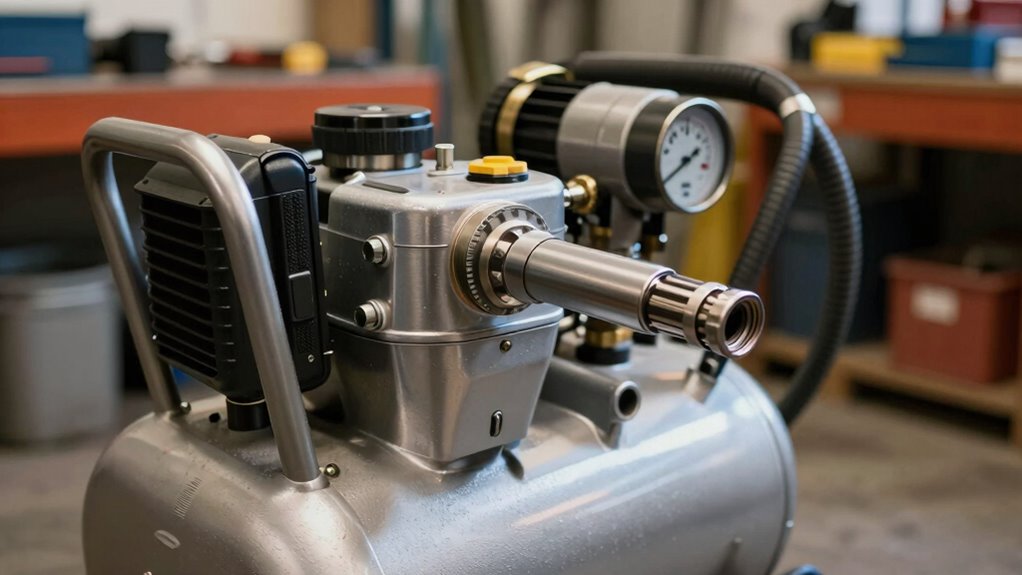

To handle common jobs with an air compressor, you’ll want to match the CFM to your tasks. For light-duty work like tire inflation or spray painting, 2-4 CFM usually works well. More demanding tasks, such as air tools or sandblasting, need 10+ CFM for peak performance. Picking the right CFM guarantees smooth operation without delays. Keep exploring to discover how choosing the correct specs can save you time and money.

Turn your quiet moments into listening time
- Thousands of audiobooks, podcasts and originals
- Listen on your phone, tablet or Echo — also offline
- Cancel anytime
Key Takeaways
- Light-duty jobs like tire inflation and spray painting typically require 2-4 CFM.
- Demanding tasks such as sandblasting need compressors with 10+ CFM for efficient operation.
- Match compressor CFM to tool requirements to prevent underperformance or overcapacity.
- Portable compressors with lower CFM (2-4) are ideal for mobility and small tasks.
- Higher CFM units improve productivity for heavy-duty and continuous-use applications.
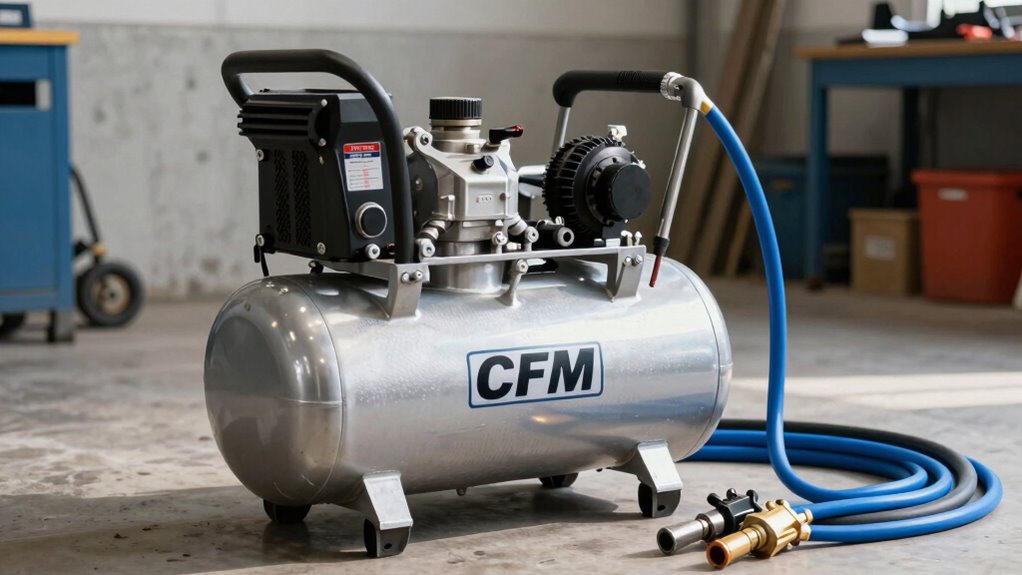
Air compressors are essential tools that convert power into stored compressed air, which you can use to operate a wide range of equipment. Whether you’re working on a construction site, doing home repairs, or managing a workshop, understanding how CFM (cubic feet per minute) relates to your needs is vital. CFM measures the airflow your compressor can deliver, directly impacting how efficiently your tools perform. For many projects, selecting the right compressor with the appropriate CFM ensures smooth operation without unnecessary delays.
If portability is a priority, you’ll want to look into portable units. These compact models are designed to move easily around your workspace or job site, making them ideal for tasks that require mobility. Portable air compressors often feature handles, wheels, and lightweight construction, so you can transport them without hassle. When considering what CFM you need, think about the tools you’ll be powering. For light-duty tasks like inflating tires, spray painting, or operating small pneumatic tools, a portable compressor with a CFM rating of around 2 to 4 should suffice. However, if you’re tackling more demanding jobs, such as heavy-duty sandblasting or operating larger air tools, you’ll need a unit with a higher CFM—perhaps 10 or more.
Another important factor is the type of compressor you choose, especially regarding oil-free models. Oil-free air compressors are popular for their low maintenance, cleaner air output, and quieter operation. They’re especially suitable if you’re working in environments where oil contamination must be avoided, like food processing or medical settings. Oil-free models tend to be lightweight and compact, making them a good match for portable units where ease of transport and quick setup are essential. Keep in mind, though, that oil-free compressors may have a shorter lifespan than oil-lubricated ones, but for many common jobs, they deliver reliable performance without the mess of oil spills. Additionally, understanding the types of compressors helps in choosing the right model for your specific needs, especially since different types are designed for specific applications based on their design and features. Being aware of the air delivery capacity can also help ensure your compressor meets the demands of your project.
Moreover, considering the maintenance requirements of your compressor can influence your choice, especially if you prefer a low-maintenance tool that fits into your workflow effortlessly. Selecting a compressor with easy maintenance features can save you time and extend its lifespan, making it a more cost-effective investment over time.
As an affiliate, we earn on qualifying purchases.
Frequently Asked Questions
How Do I Choose the Right CFM for My Project?
To choose the right CFM for your project, first assess your tools’ requirements, checking their CFM ratings. Select an air compressor with a slightly higher CFM to guarantee smooth operation and accommodate future needs. Regular air compressor maintenance helps keep performance at its best and reduces environmental impact. Always match your compressor’s CFM to your job’s demands, which helps save energy and extends the equipment’s lifespan.
What Factors Affect an Air Compressor’s CFM Output?
You’re spot on to ask what affects an air compressor’s CFM output. Factors like air quality play a role—dirt or moisture can clog the system and decrease efficiency. Noise levels also matter; higher noise often means more strain on the motor, impacting CFM. Keep your compressor well-maintained and in a clean, quiet environment to guarantee it runs at peak output, so you get the job done right the first time.
Can I Use a Lower CFM Compressor for High-Demand Tasks?
You can use a lower CFM compressor for high-demand tasks, but it’s not ideal. It may struggle to maintain air quality and could cause increased noise levels, which can be disruptive. The compressor might run constantly, reducing lifespan and efficiency. For peak performance, choose a compressor with higher CFM to guarantee consistent airflow, better air quality, and manageable noise levels during demanding jobs.
How Does CFM Relate to Compressor Size and Power?
Did you know that a 5 HP compressor can produce about 20 CFM? CFM directly relates to compressor size and power, impacting efficiency and maintenance needs. As you select a compressor, larger, more powerful units typically have higher CFM, boosting efficiency for demanding tasks but requiring more maintenance. Smaller compressors may save space but might struggle with high-demand jobs, possibly reducing overall efficiency and increasing long-term maintenance.
Is CFM More Important Than PSI for Most Jobs?
CFM is generally more important than PSI for most jobs because it determines how much air flows to your tools, impacting efficiency. Higher CFM ensures consistent air supply, especially for demanding tasks, while PSI affects pressure but not volume. Keep in mind, good air quality and lower noise levels enhance safety and comfort. So, prioritize CFM for performance, but don’t overlook air quality and noise to maintain a safe, productive work environment.
oil-free air compressor for spray painting
As an affiliate, we earn on qualifying purchases.
As an affiliate, we earn on qualifying purchases.
Conclusion
Understanding CFM is key to choosing the right air compressor for your tasks. Did you know that most DIY projects typically require between 2 to 4 CFM, while industrial jobs can demand over 20 CFM? This statistic highlights the importance of matching your compressor’s CFM to your project needs. By doing so, you’ll guarantee smooth operation, prevent equipment strain, and get the job done efficiently. Always consider your specific requirements before making a purchase.
heavy-duty air compressor 10 CFM
As an affiliate, we earn on qualifying purchases.
As an affiliate, we earn on qualifying purchases.
compact air compressor for tire inflation
As an affiliate, we earn on qualifying purchases.
As an affiliate, we earn on qualifying purchases.
Fall Picks
fall essentials
As an affiliate, we earn on qualifying purchases.