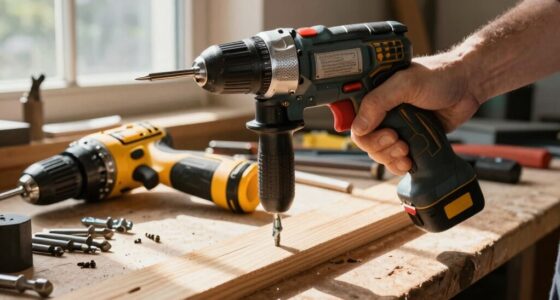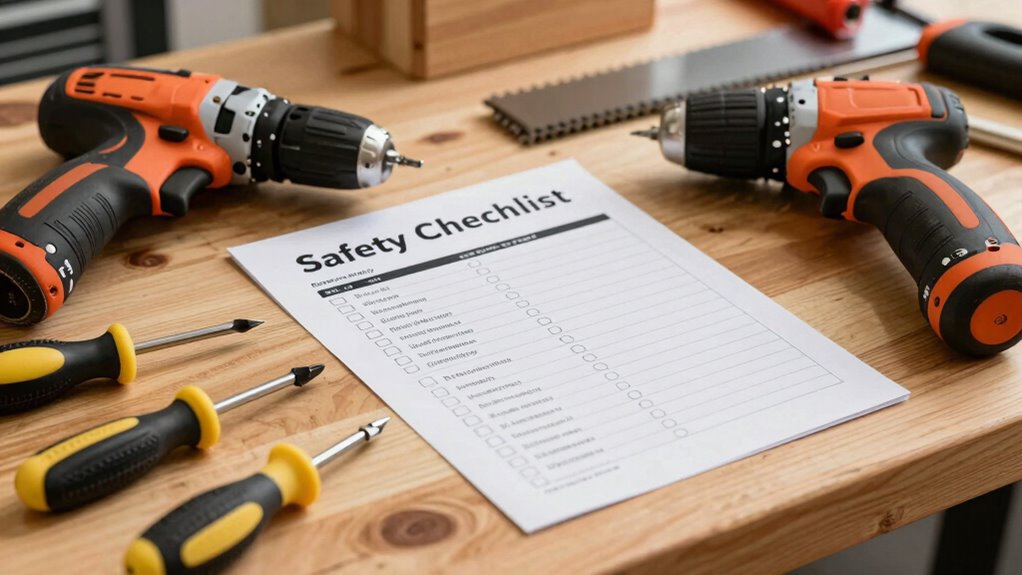

To stay safe with power tools, always wear PPE like safety glasses, hearing protection, and gloves. Check tools for damage, guarantee blades and attachments are secure, and keep them clean and lubricated. Use the correct tools for each job, keep your workspace organized, and never bypass safety guards. Stay alert, take breaks, and unplug tools when not in use. Following these steps helps prevent accidents—continue to learn more about maintaining a safe work environment.

Turn your quiet moments into listening time
- Thousands of audiobooks, podcasts and originals
- Listen on your phone, tablet or Echo — also offline
- Cancel anytime
Key Takeaways
- Inspect tools for damage, loose parts, and proper functionality before use.
- Wear appropriate PPE such as safety glasses, gloves, and hearing protection.
- Ensure workspace is clean, well-lit, and safety guards are in place.
- Use the correct tool for the task and operate it following manufacturer instructions.
- Turn off, unplug, and properly store tools after use to prevent accidents.
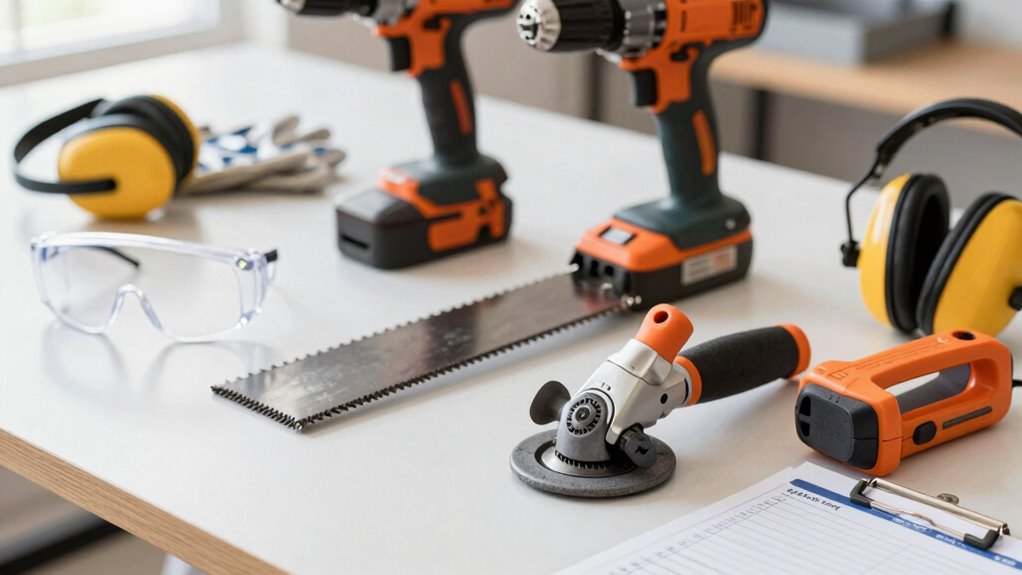
Using power tools safely is vital to prevent accidents and injuries on the job or at home. One of the most effective ways to do this is by consistently following a detailed safety checklist. Before you start any project, make sure you’re equipped with the right personal protective equipment (PPE). This includes safety glasses or goggles to shield your eyes from debris, hearing protection to guard against noise, and gloves if appropriate to improve grip and safety. Wearing the proper PPE minimizes the risk of cuts, burns, or other injuries caused by flying particles or loud noise. Never underestimate the importance of PPE; it’s your first line of defense when working with power tools.
Wearing proper PPE is essential for safety and protecting yourself from power tool hazards.
Another key step involves tool maintenance. Before operating any power tool, inspect it thoroughly for damage or wear. Check cords for frays or exposed wires, ensure switches work correctly, and confirm that blades, bits, or attachments are securely fastened. Dull blades or worn-out parts can cause the tool to operate unpredictably, increasing your risk of accidents. Regular maintenance, like cleaning dust and debris from the tool and lubricating moving parts, keeps everything functioning smoothly and prevents overheating or mechanical failure. Maintaining your tools isn’t just about prolonging their life; it’s about guaranteeing your safety every time you use them. Additionally, proper tool maintenance can help prevent unexpected malfunctions that could lead to injuries. Staying informed about power tool safety guidelines is essential for minimizing risks and ensuring a secure working environment. Practicing safe work habits is equally important to reduce the chances of accidents occurring during use.
When you’re ready to start, always verify that you’re using the correct tool for the job. Using an inappropriate or makeshift tool can lead to dangerous situations. Keep your workspace clean and organized to prevent tripping hazards and accidental contact with other objects. Make sure you have a stable footing and proper lighting so you can work with precision. Before powering up, double-check that all safety guards are in place and functioning as intended. Never bypass safety features—they’re there to protect you from injury. Ensuring proper tool selection is essential for maintaining safety standards.
Throughout the task, stay alert and focused. Avoid distractions that could lead to mistakes or mishandling of the tool. Take regular breaks if you’re working for an extended period, as fatigue can impair judgment and coordination. After finishing, turn off the power tool and unplug it before performing any cleaning or maintenance. Store your tools in a secure, dry place, away from children and unauthorized users. Proper storage prevents accidental injuries and prolongs the life of your tools. By adhering to these safety practices, you reduce the likelihood of accidents and create a safer environment for yourself and others. Following a power tool safety checklist isn’t just a recommendation; it’s a necessity for safe and efficient work.
As an affiliate, we earn on qualifying purchases.
Frequently Asked Questions
How Often Should Power Tools Be Inspected for Safety?
You should inspect your power tools before each use to guarantee safety. Check for proper power tool calibration, loose parts, and damaged cords. Always wear personal protective equipment, like gloves and eye protection, during inspections and operation. Regularly scheduled, more thorough inspections should occur weekly or monthly, depending on usage. By doing so, you prevent accidents, extend the tool’s lifespan, and maintain a safe working environment.
What Is the Proper Way to Store Power Tools Safely?
You should store power tools in a designated, secure area to guarantee safety compliance. Use proper tool storage solutions like shelving, cabinets, or toolboxes to keep blades and cords organized and protected from damage. Always unplug tools before storing, and keep them away from moisture and heat sources. Label storage spaces clearly, and regularly check for damage. Proper storage reduces accidents, prolongs tool life, and keeps your workspace safe and efficient.
Are There Specific Safety Gear Requirements for Different Tools?
Yes, different tools require specific safety gear for proper protection. You should always wear personal protective equipment like safety goggles, ear protection, and gloves based on the tool you’re using. For example, saws need eye and ear protection, while grinders require face shields and gloves. Always check the tool’s instructions for recommended safety gear, and don’t skip any safety steps to prevent injuries. Your safety depends on it.
How Do I Identify Faulty or Damaged Power Tools?
You can’t afford to ignore faulty power tools—they’re practically ticking time bombs! To identify damage, perform regular tool inspections, looking for frayed cords, cracks, or loose parts. Pay close attention to unusual noises, excessive vibrations, or overheating during use. Damage identification is essential; if anything seems off, stop using the tool immediately and get it repaired or replaced. Trust your instincts—better safe than sorry with power tools!
What Training Is Necessary for Safe Power Tool Operation?
You need proper training on power tool operation, which includes understanding safety protocols and using personal protective equipment like gloves and goggles. You should also learn emergency procedures to handle accidents effectively. Training guarantees you recognize potential hazards, operate tools correctly, and respond swiftly if something goes wrong. Always stay updated on safety practices, and never operate a power tool without completing thorough instruction and adhering to safety guidelines.
As an affiliate, we earn on qualifying purchases.
Conclusion
By following this power tool safety checklist, you greatly reduce the risk of accidents. Remember, nearly 30% of workplace injuries involve power tools, highlighting the importance of safety measures. Always wear protective gear, inspect tools before use, and stay alert. Staying vigilant and prepared keeps you safe on the job. Prioritize safety every time you handle power tools—your well-being is worth the extra effort. Stay safe and work smart!
As an affiliate, we earn on qualifying purchases.
As an affiliate, we earn on qualifying purchases.
Fall Picks
fall essentials
As an affiliate, we earn on qualifying purchases.