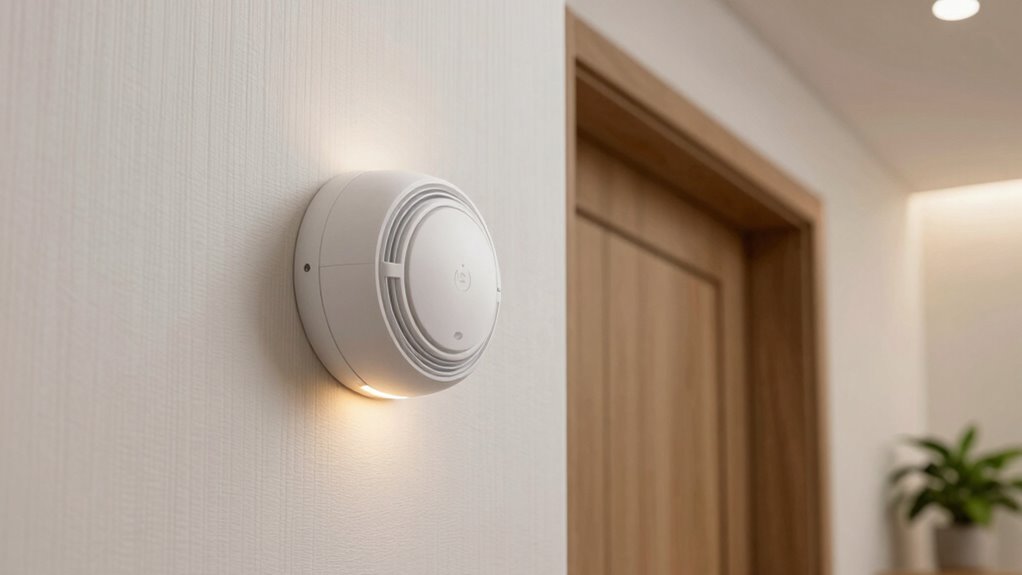

For smart smoke and CO detectors, install on the ceiling or high on the wall, about 4–12 inches from the ceiling for quick detection. Place detectors in hallways outside bedrooms, on each floor, and near kitchens or laundry areas, avoiding drafts or vents. Make certain they’re positioned where nothing blocks airflow, and keep them away from fans or windows. Proper placement is key to safety—you’ll discover more tips if you keep exploring.

Turn your quiet moments into listening time
- Thousands of audiobooks, podcasts and originals
- Listen on your phone, tablet or Echo — also offline
- Cancel anytime
Key Takeaways
- Install smoke detectors on ceilings or high on walls, 4–12 inches from the ceiling for optimal detection.
- Place CO detectors outside sleeping areas and on each home level, including the basement.
- Avoid installing detectors near vents, windows, doors, or areas with drafts to ensure accurate alerts.
- Position detectors away from kitchens and bathrooms to prevent false alarms from fumes or steam.
- Ensure detectors are unobstructed and have proper airflow for reliable early warning and safety.
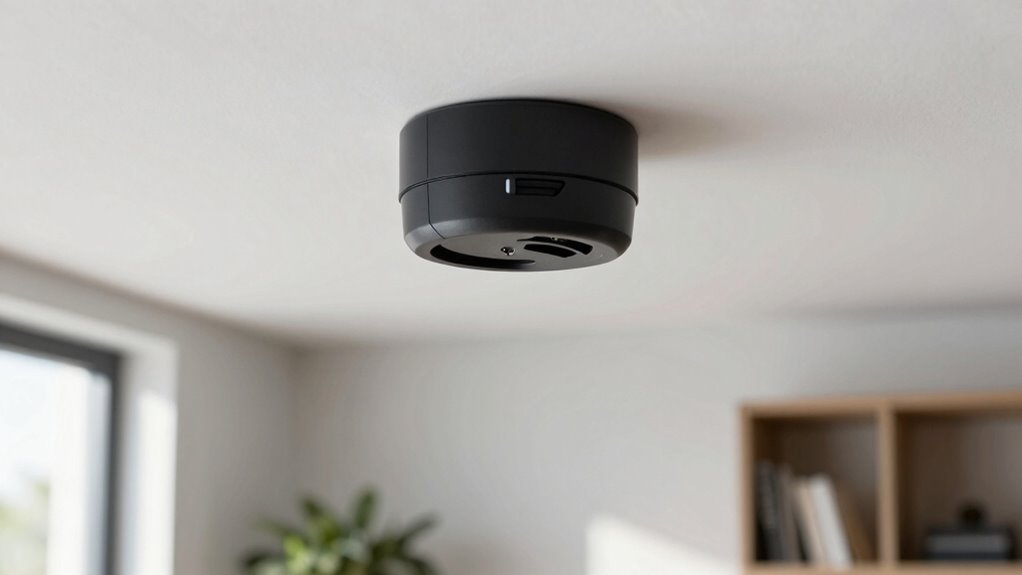
Installing smart smoke and carbon monoxide detectors correctly is essential for ensuring your home’s safety. Proper placement is key to making sure they work effectively when it matters most. These devices are designed to alert you quickly in case of fire or CO leaks, but their effectiveness depends heavily on where you position them. When it comes to fire safety, alarm placement isn’t just a suggestion; it’s a vital factor that can mean the difference between early detection and delayed warnings. You want to place these detectors where they can sense smoke and gases promptly, without being blocked or hindered by furniture, walls, or other obstructions.
For maximum fire safety, install smoke detectors on the ceiling or high on the wall, about 4 to 12 inches from the ceiling. Since smoke rises, placing them higher allows for faster detection of smoke particles. Avoid installing them near windows, vents, or doors where drafts could interfere with their sensors. In bedrooms, keep detectors outside the sleeping areas—on the ceiling in the hallway—so they can wake you up if a fire starts while you’re asleep. If you have multiple levels, be sure to install detectors on each floor, especially near kitchens and laundry rooms, but avoid placing them directly in these areas where cooking fumes or steam might cause false alarms. Proper detector placement is crucial for ensuring early warning and safety.
Carbon monoxide detectors require different placement considerations. Install them on every level of your home, including the basement, and outside each sleeping area. CO is odorless and colorless, so you won’t notice it without a proper detector. Place these devices at least 15 feet away from fuel-burning appliances, but not too far from bedrooms, so you’re alerted promptly during sleep. Mount them at eye level or slightly higher, but never on the floor or directly next to vents or windows where drafts could dilute the alarm signal. Additionally, understanding the proper air circulation around detectors can greatly enhance the safety and reliability of your alarm system. Ensuring proper airflow around the detectors helps maintain their sensitivity and reduces the chances of false alarms.
Products Worth Considering

Ring Battery Doorbell 2K Plus (2nd Gen) and Spotlight Cam Plus Battery Bundle

Philips Hue Festavia 130-Foot Indoor/Outdoor Smart String Lights, 500 LEDs

TCL QM64L 85-Inch QD-Mini LED 4K Smart Fire TV
As an affiliate, we earn on qualifying purchases.
Frequently Asked Questions
Can Smart Smoke/Co Detectors Be Interconnected Wirelessly?
Yes, smart smoke/CO detectors can be interconnected wirelessly, thanks to wireless connectivity features. This allows them to communicate across your home without physical wiring, making installation easier. Make certain you meet the installation requirements, such as compatible devices and a stable Wi-Fi network. When set up correctly, wireless interconnected detectors alert you simultaneously if smoke or CO is detected, enhancing your safety without the hassle of traditional wiring.
How Often Should Smart Smoke/Co Detectors Be Tested?
Think of your smart smoke/CO detectors as the vigilant guards of your home automation system. You should test them at least once a month to make certain they’re working correctly—like giving a guard a quick check. Regular testing is essential for fire safety, helping you catch issues early. Just as a guard needs training, your detectors need periodic tests to stay alert and protect your home and loved ones effectively.
Do Smart Smoke/Co Detectors Require Professional Installation?
You don’t necessarily need a professional for smart smoke/CO detector installation if you follow the manufacturer’s installation guidelines carefully. Just guarantee you adhere to safety considerations, like turning off power before wiring and placing detectors in recommended locations. Many smart detectors are designed for straightforward setup, but if you’re uncomfortable with electrical work or complex mounting, hiring a professional ensures safety and proper functioning.
Are Smart Smoke/Co Detectors Compatible With Smart Home Systems?
Yes, smart smoke/CO detectors are compatible with many smart home systems, enhancing your emergency preparedness. They connect seamlessly via Wi-Fi or Zigbee, allowing remote alerts and automation. Regular device maintenance guarantees they function properly, so check batteries and update firmware often. Integrating these detectors into your smart home system helps you respond quickly to emergencies, providing peace of mind and better safety for your household.
What Is the Battery Life of Smart Smoke/Co Detectors?
Smart smoke/CO detectors typically offer a battery longevity of about 5 to 10 years, depending on the model. They use advanced power management to optimize battery life, often featuring replaceable batteries or long-lasting built-in ones. You’ll want to regularly check their status through your smart home app to verify they’re functioning properly. Proper maintenance helps maximize their battery life, keeping you safe without frequent replacements.
Conclusion
Now that you know where to install your smart smoke and CO detectors, are you ready to prioritize your safety? Proper placement guarantees they’ll alert you early in an emergency, giving you precious time to react. Don’t leave your safety to chance—install them correctly and stay prepared. After all, isn’t peace of mind worth a few simple steps? Take action today and protect what matters most.