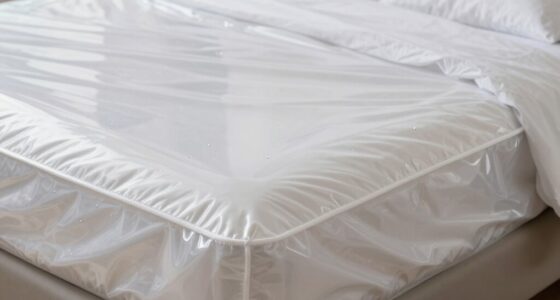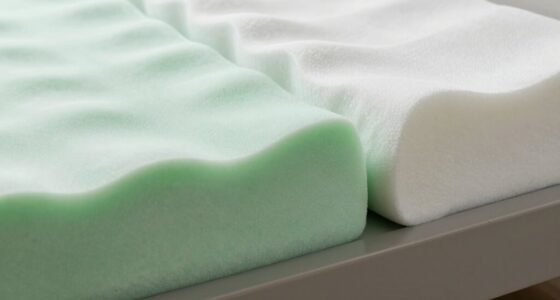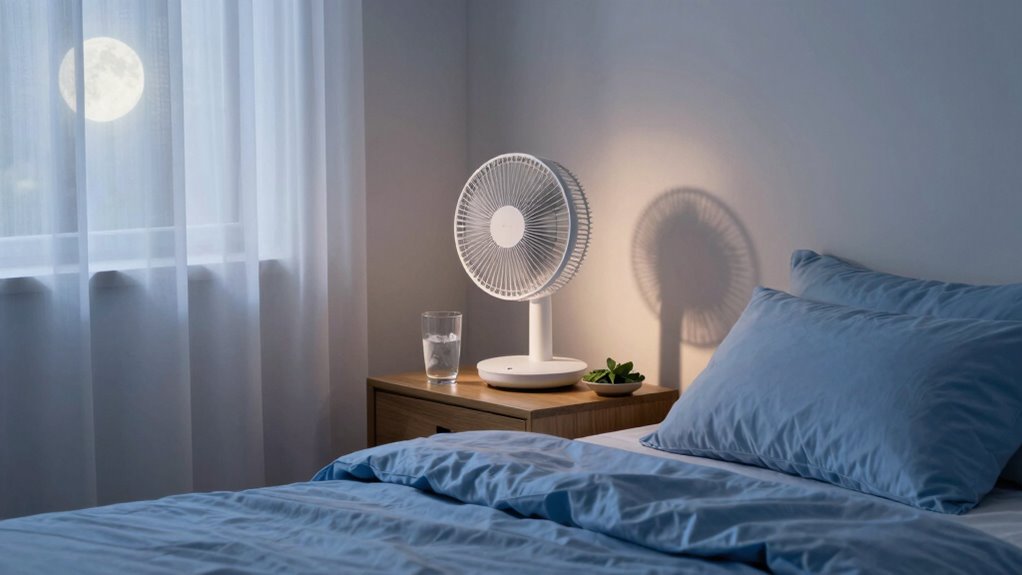
To stop overheating at night, keep your bedroom cool by maintaining a temperature between 60-67°F and ensuring good ventilation with fans or open windows. Use breathable bedding made from natural fibers and avoid heavy blankets. Establish a relaxing bedtime routine, like warm baths or gentle stretches, to help your body cool down naturally. Stay hydrated during the day and avoid spicy or caffeinated foods before bed. If you want to discover more ways to stay cool all night, keep exploring these tips.

Get books, candles and calm essentials delivered free — and shop member deals
- Fast, free delivery on millions of items
- Access to Prime Big Deal Days deals on October 6–7
- Prime Video, Amazon Music and more included
Key Takeaways
- Maintain a cool room temperature between 60-67°F and ensure good ventilation throughout the night.
- Use breathable bedding made from natural fibers like cotton or linen, avoiding heavy blankets.
- Incorporate cooling tools such as a cooling pillow or damp cloth on wrists or forehead.
- Avoid spicy foods, caffeine, and large meals before bed to prevent core temperature rise.
- Utilize smart home devices to automatically regulate room temperature and air quality.
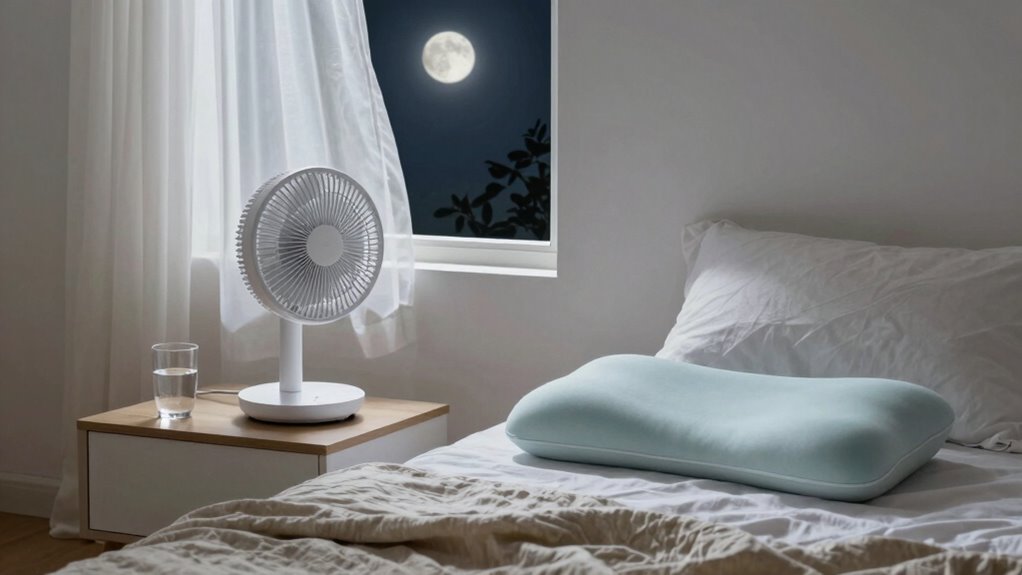
If you find yourself tossing and turning because of night sweats or feeling overheated, you’re not alone. Many people struggle with overheating during sleep, which can disrupt rest and leave you exhausted. The key to cooling down starts with your sleep environment. Make your bedroom a place that promotes a comfortable temperature—ideally between 60 to 67 degrees Fahrenheit. Keep your room well-ventilated by opening windows or using a fan, especially if it tends to get warm at night. Lightweight, breathable bedding made from natural fibers like cotton or linen can also help regulate your body heat. Avoid heavy blankets or duvet covers that trap heat, and instead, opt for a single, thin layer that allows air to circulate around your body.
Your bedtime routines play an essential role in managing your body temperature before sleep. Try to wind down at least an hour before bed by avoiding screens, as the blue light emitted can interfere with melatonin production and raise your core temperature. Instead, engage in calming activities such as reading, gentle stretching, or taking a warm bath. Curiously, a warm bath can initially raise your body temperature, but when you step out, your body responds by cooling down more rapidly, which can help prevent overheating during the night. Incorporate cooling techniques into your bedtime routines, like using a cooling pillow or applying a damp cloth to your wrists or forehead to encourage heat loss. Additionally, understanding your body’s natural temperature regulation processes can help you develop better strategies for staying cool at night. Developing awareness of your body’s cooling mechanisms can further improve your comfort during sleep. Establishing a consistent sleep routine can further enhance your body’s ability to manage temperature fluctuations during sleep.
Consistent sleep routines also help your body establish a natural rhythm, making it easier to regulate temperature. Going to bed and waking up at the same time every day conditions your internal clock to promote better sleep and temperature control. Avoid caffeine or spicy foods close to bedtime, as they can increase your core temperature and make it harder to stay cool. Staying well-hydrated during the day supports your body’s natural cooling processes, so drink plenty of water but try to limit intake right before bed to prevent disruptions from bathroom trips. Being aware of environmental factors such as humidity levels and room temperature can further assist in maintaining a comfortable sleeping environment. Incorporating smart home technology, like thermostats or air quality monitors, can help optimize your sleep environment automatically.
As an affiliate, we earn on qualifying purchases.
Frequently Asked Questions
Can Certain Foods Cause Nighttime Overheating?
Yes, certain foods can cause nighttime overheating. Spicy foods contain capsaicin, which can raise your body temperature and make you feel warmer. Caffeine intake, especially later in the day, stimulates your nervous system and can increase your metabolic rate, leading to a hotter body at night. Avoiding spicy foods and limiting caffeine in the evening can help you stay cooler and sleep more comfortably.
Does Sleep Position Affect Overheating?
Your sleep posture and pillow choice definitely influence overheating. When you sleep in a position that exposes more skin or restricts airflow, you trap heat, making you feel hotter. Opt for a sleep posture that allows better ventilation, like sleeping on your back or side. Use a breathable pillow that wicks away moisture. These adjustments help regulate your body temperature, reducing the chances of overheating during the night.
Are There Specific Clothing Materials to Prevent Night Sweats?
Imagine Sarah, who switched to sleepwear made from breathable fabrics and moisture-wicking materials, noticing her night sweats lessen considerably. Choosing clothing with these fabrics helps regulate body temperature by allowing heat and moisture to escape, preventing overheating. Look for pajamas crafted from natural fibers like cotton or specialized synthetic blends designed for breathability and moisture management. Such clothing supports comfortable, sweat-free sleep, especially during hot nights or hormonal fluctuations.
How Does Hydration Impact Nighttime Body Temperature?
Hydration greatly impacts your nighttime body temperature by maintaining electrolyte balance, which helps regulate heat. Drinking water too close to bedtime can disrupt your sleep, so aim for hydration timing earlier in the evening. Proper hydration guarantees your body cools efficiently and prevents overheating. When your electrolytes are balanced, your body’s natural cooling process works better, reducing night sweats and helping you stay comfortable through the night.
Can Stress Management Help Reduce Overheating at Night?
Imagine your mind as a thermostat; when stress spikes, it cranks up your internal heat. Stress management, through relaxation techniques like deep breathing or meditation, acts like a gentle breeze, calming that thermostat. By reducing stress, you lower your body’s heat production, making it easier to cool down at night. Practice relaxation techniques regularly, and you’ll find it easier to stay cool and rest peacefully through the night.
As an affiliate, we earn on qualifying purchases.
Conclusion
To stay cool at night, implement these tips and enjoy restful sleep. Remember, over 80% of people experience sleep disruptions due to overheating, so you’re not alone. By keeping your room well-ventilated, choosing breathable bedding, and staying hydrated, you can considerably reduce nighttime overheating. Don’t let heat ruin your sleep—take action tonight! With a few simple adjustments, you’ll wake up refreshed and ready to face the day.
As an affiliate, we earn on qualifying purchases.
As an affiliate, we earn on qualifying purchases.
Fall Picks
fall essentials
As an affiliate, we earn on qualifying purchases.