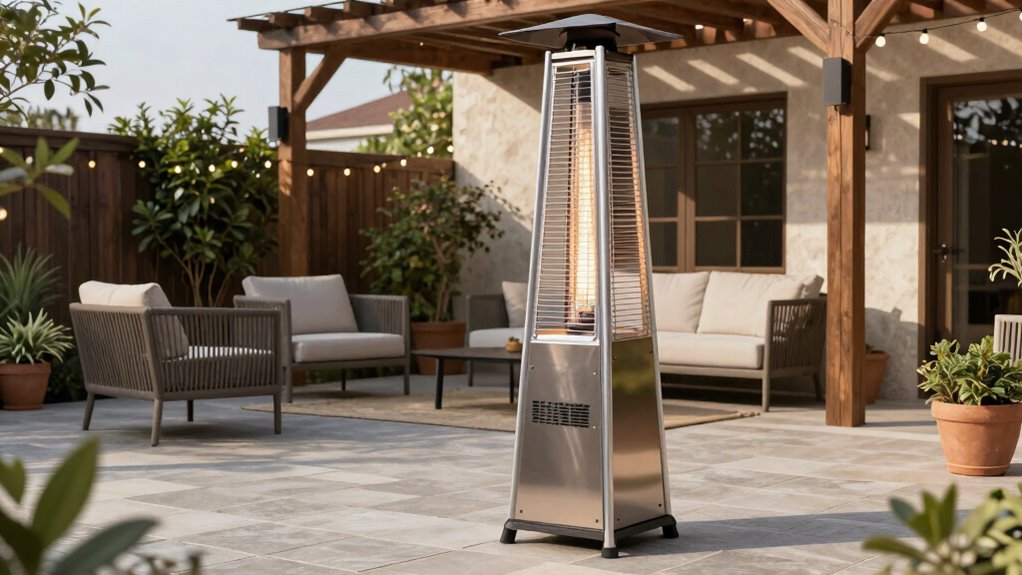

To guarantee safe patio heater use, keep flammable materials at least three feet away and place the heater on a stable, level surface away from obstacles and foot traffic. Use proper cords and ensure excellent ventilation, especially with gas heaters, to prevent gas buildup or accidental fires. Secure wall-mounted units and protect portable ones from weather. For more tips on safe placement and handling, keep exploring how to enjoy your patio heater responsibly.
Listen free for 30 days with Audible
Thousands of audiobooks and originals — cancel anytime.
As an affiliate, we earn on qualifying purchases.
Key Takeaways
- Keep flammable materials at least three feet away from the heater to prevent fire hazards.
- Place heaters on stable, level surfaces away from foot traffic and obstacles.
- Ensure proper ventilation and avoid operating gas heaters in enclosed spaces.
- Use weather-resistant cords and secure portable units to prevent tipping or damage.
- Regularly inspect for and remove combustible items and potential hazards nearby.
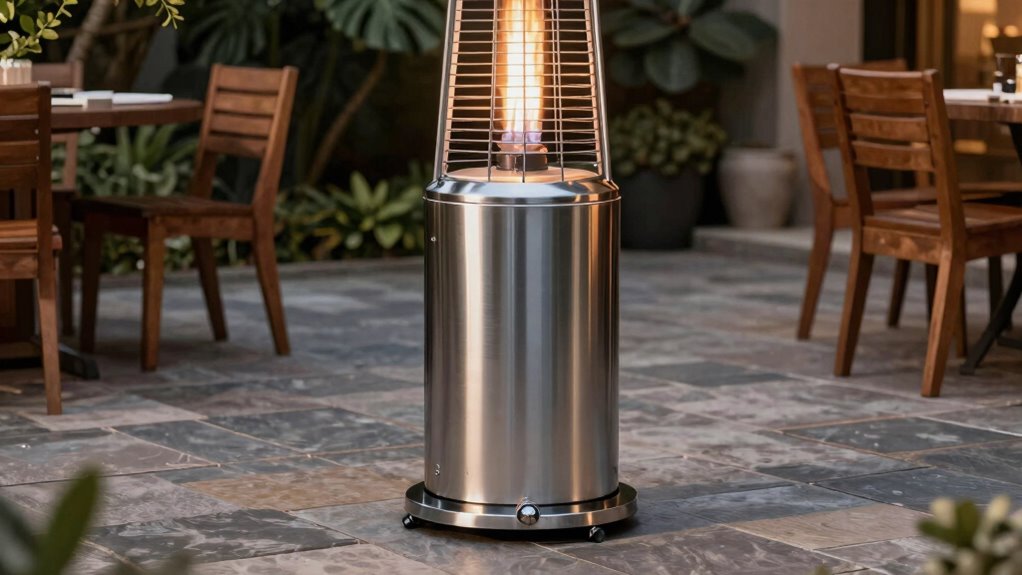
A patio heater can extend your outdoor living season, but safety and proper placement are vital to prevent accidents. One of the most important considerations is keeping flammable materials far away from the heater. Items like paper, cloth, dry leaves, or wooden furniture can ignite if they come into contact with the heat source. Always maintain a safe clearance zone around the heater, ideally at least three feet, to minimize the risk of fire. Before operating your heater, inspect the surrounding area to verify nothing combustible is nearby. This simple step can save you from potential fires and property damage.
Keep flammable materials at least three feet away to ensure safe outdoor heating.
Electrical hazards are another critical concern. If your patio heater is electric, make sure it’s plugged into a grounded outlet and that the cord isn’t frayed or damaged. Never force an extension cord that isn’t rated for outdoor use; instead, use a proper outdoor extension cord with a Ground Fault Circuit Interrupter (GFCI). Keep cords away from water and high-traffic areas to avoid tripping hazards or electrical shocks. When setting up your heater, avoid running cords across walkways or through doorways, as this increases the risk of accidental disconnection or damage. Additionally, ensuring proper ventilation is crucial to prevent the buildup of dangerous gases, especially when operating gas-powered heaters. This includes verifying that the area has adequate airflow to disperse heat and gases effectively. Proper ventilation not only helps disperse heat but also reduces the risk of gas accumulation in the area. Regularly checking for leaks or damage to gas lines is essential for gas safety, which can prevent potentially hazardous situations. Proper placement also involves selecting a stable, level surface to prevent tipping. An unstable base could cause the heater to fall, possibly leading to fires or injuries. Position the heater in a location where it’s easily accessible but not in the way of foot traffic. If you’re using a wall-mounted or tabletop heater, ensure it’s securely installed and that the mounting hardware can support its weight. For portable models, consider the wind conditions; strong gusts can tip over the heater or cause it to move closer to flammable objects. Always secure or weigh down portable units if necessary, especially on breezy days. Additionally, consider weather conditions and protect the heater from exposure to rain or snow, which can damage electrical components or cause unsafe conditions.
Ventilation is equally important. Never operate a patio heater in an enclosed space, as carbon monoxide buildup can pose serious health risks. Even in semi-enclosed areas, ensure there’s enough airflow to prevent dangerous gas accumulation. Regularly check for leaks or damage to gas lines if you’re using a propane heater. Keeping the heater in the correct position, away from overhanging branches or low-hanging structures, reduces the chance of accidental contact with combustible objects or damage from weather elements. Furthermore, proper heater placement can prevent accidental tipping or contact with obstacles, enhancing overall safety.
outdoor patio heater safety cover
As an affiliate, we earn on qualifying purchases.
As an affiliate, we earn on qualifying purchases.
Frequently Asked Questions
Can Patio Heaters Be Used Indoors Safely?
You shouldn’t use patio heaters indoors because they pose safety risks, including poor indoor ventilation and potential gas leaks. These heaters release carbon monoxide, which can be deadly in enclosed spaces, so proper indoor ventilation is essential if they’re used temporarily. To prevent gas leaks, make sure the heater is correctly installed and maintained, and never operate it in enclosed areas without adequate ventilation. Always follow manufacturer instructions for safe use.
What Is the Lifespan of a Typical Patio Heater?
Think of your patio heater as a trusty friend, aging gracefully over years. Typically, a patio heater lasts about 5 to 10 seasons with proper maintenance and diligent safety precautions. Regularly cleaning and inspecting it keeps the flames dancing safely. Like tending a garden, consistent heater maintenance guarantees it remains reliable, extending its lifespan. So, with care, your outdoor warmth source can serve you well, season after season.
Are There Eco-Friendly Patio Heater Options Available?
Yes, eco-friendly patio heater options are available. You can choose models that use eco-friendly fuels like propane or bio-ethanol, which produce fewer emissions. Solar-powered heaters are also an excellent choice—they harness sunlight to generate heat without any emissions or energy costs. These options help you stay warm outdoors while minimizing your environmental impact, making your outdoor space greener and more sustainable.
How Often Should I Inspect My Patio Heater for Safety?
You should inspect your patio heater regularly—at least once a month—to guarantee safety. Conduct maintenance checks for signs of wear, leaks, or corrosion, and follow safety guidelines to prevent accidents. Always turn off and disconnect the heater before inspecting. A thorough safety check helps catch issues early, maintaining safe operation and extending your heater’s lifespan. Staying vigilant with these inspections keeps you safe and your patio heater functioning properly.
Can Patio Heaters Be Used on Wooden Decks Safely?
Using patio heaters on wooden decks can be safe if you prioritize deck protection and maintain proper heater clearance. Keep the heater at least three feet away from any combustible materials, including your deck’s surface. Always use a heat-resistant mat or pad underneath the heater to protect the wood. Regularly inspect for stability and signs of wear, ensuring safe operation while enjoying your outdoor space.
electric patio heater with GFCI plug
As an affiliate, we earn on qualifying purchases.
As an affiliate, we earn on qualifying purchases.
Conclusion
By being vigilant about patio heater placement and practicing proper safety steps, you’ll prevent potential problems and promote peaceful, pleasurable outdoor experiences. Keep clear of combustibles, check for leaks, and position heaters prudently. Prioritize safety, and you’ll enjoy cozy, carefree evenings without concern. Remember, responsible placement and precautions aren’t just precautions—they’re the pillars of a perfect, pleasant patio. Protect your peace by practicing safety, and savor the serenity of your stunning outdoor space.
gas patio heater with ventilation
As an affiliate, we earn on qualifying purchases.
As an affiliate, we earn on qualifying purchases.
weather-resistant outdoor extension cord
As an affiliate, we earn on qualifying purchases.
As an affiliate, we earn on qualifying purchases.
Fall Picks
fall essentials
As an affiliate, we earn on qualifying purchases.

![10 Things To Do For This Saturday in L.A. [7-4-2026]](https://oboval.com/wp-content/uploads/2026/07/10-things-to-do-for-this-saturday-in-l-a-7-4-2026-featured-560x300.jpg)