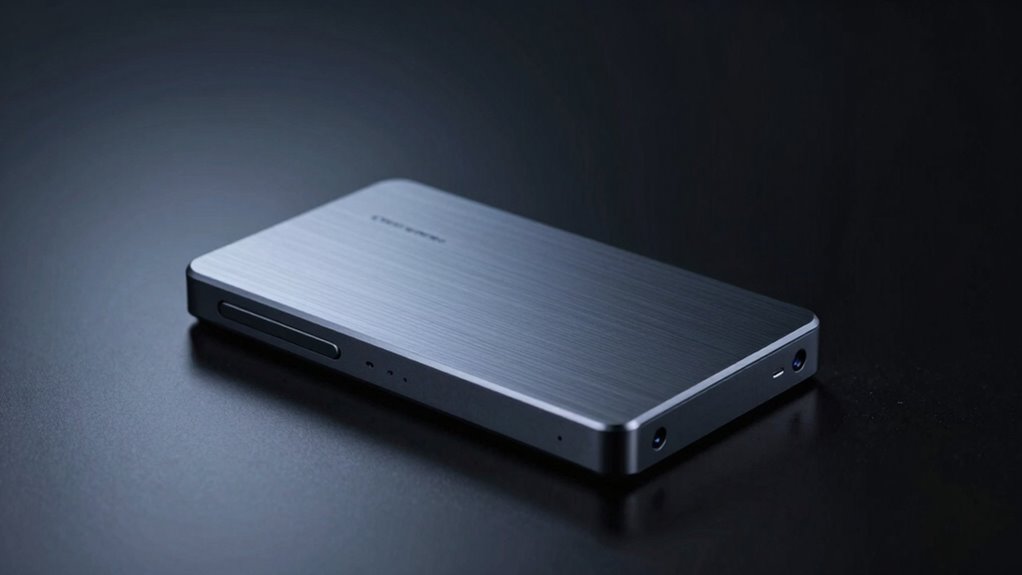

When choosing an external SSD, you need to weigh speed against durability based on your needs. Faster drives, like NVMe models, provide quick data transfers, ideal for large files and demanding workflows. But if you frequently travel or work in tough environments, rugged, durable drives with shock and temperature resistance are better. Finding the right balance depends on your usage, and knowing more details can help you pick the best fit for your situation.

Turn your quiet moments into listening time
- Thousands of audiobooks, podcasts and originals
- Listen on your phone, tablet or Echo — also offline
- Cancel anytime
Key Takeaways
- Faster drives like NVMe offer quick data transfer but may consume more power and have less physical resilience.
- Rugged SSDs prioritize durability, protecting data against shocks, drops, and extreme temperatures, often at the expense of speed.
- Encryption enhances data security but can slightly reduce transfer speeds, balancing safety and performance.
- Choosing between speed and durability depends on usage, such as editing or travel, requiring a tailored balance.
- Environmental resilience and power efficiency are crucial for portable drives, impacting overall performance and longevity.
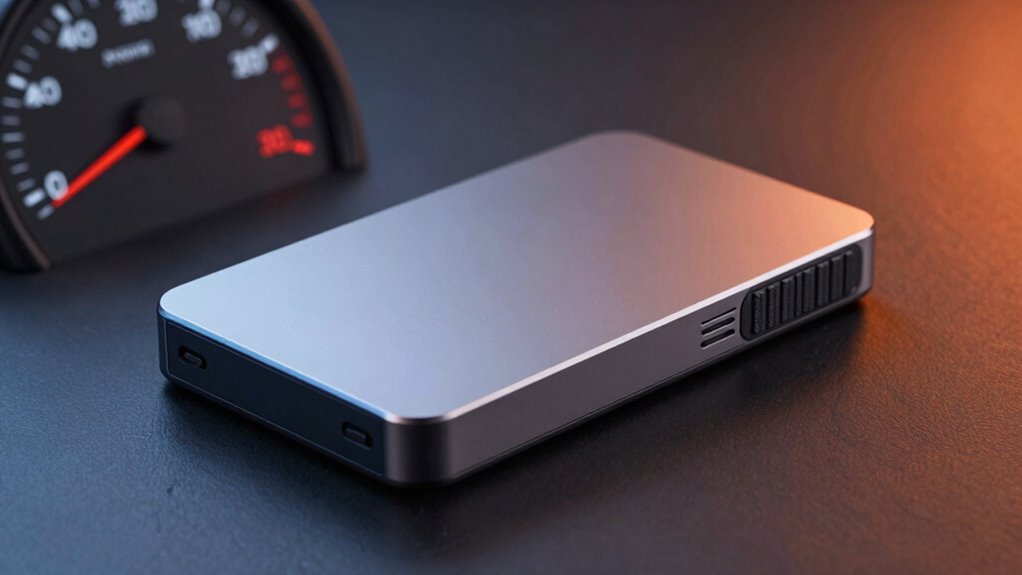
When choosing an external SSD, you often face a trade-off between speed and durability. On one hand, faster drives can transfer data rapidly, which is essential if you work with large files or need quick access. On the other hand, more durable SSDs are built to withstand physical shocks, drops, and environmental challenges, guaranteeing your data stays safe over time. Balancing these factors depends on your specific needs and how you plan to use the device. If speed is your top priority, you’ll likely lean toward drives with advanced NVMe technology that delivers blazing-fast transfer rates. But keep in mind, these high-speed drives might also have higher power consumption, which can impact battery life if you’re using them with laptops on the go. Conversely, if durability is what matters most—say, if you’re frequently traveling or working in rough environments—you’ll want a rugged external SSD designed to endure drops, vibrations, and extreme temperatures. Such drives may sacrifice some speed but offer peace of mind knowing your data won’t be lost in transit. Additionally, considering data encryption features can be crucial for maintaining security in various scenarios.
Data encryption becomes a critical aspect when you’re concerned about security. Many external SSDs come with built-in encryption features, which are essential if you’re handling sensitive information. These security features can add a little overhead to data transfer speeds but greatly enhance your protection against unauthorized access. When considering durability, encryption also plays a role, as it ensures that even if the drive is lost or stolen, your data remains inaccessible without the proper credentials. Incorporating durability features can further safeguard your data, especially in rugged environments. Properly assessing performance metrics like read/write speeds helps ensure the drive meets your specific workflow needs. Moreover, understanding power consumption can help you select a drive that balances performance with energy efficiency, especially for portable use. Additionally, considering environmental resilience can help ensure your data remains protected in challenging conditions, further aligning with your durability needs. Ultimately, your choice between speed and durability hinges on your usage patterns. If you need quick data transfer for editing videos or running applications directly from the drive, prioritize speed and look for drives with efficient data encryption that doesn’t hinder performance. If your primary concern is protecting your data during frequent travel or rough handling, opt for a rugged, durable model, even if it means sacrificing a bit of speed. Remember, the best external SSD for you balances the right amount of speed, security, and resilience to match your lifestyle and workflow.
As an affiliate, we earn on qualifying purchases.
Frequently Asked Questions
How Do External SSDS Perform in Extreme Temperatures?
External SSDs generally struggle with extreme temperatures, affecting their temperature resilience. High heat can cause overheating, leading to potential data loss or hardware damage, while cold temperatures may slow down performance. Good thermal management is essential; look for SSDs with built-in heat sinks or insulation to enhance temperature resilience. Properly managing thermal conditions ensures your external SSD performs reliably and prolongs its lifespan in extreme environments.
Are External SSDS Vulnerable to Water or Moisture Damage?
Like a fortress guarding its treasures, your external SSD’s water resistance offers some protection against water or moisture damage. While many models boast moisture protection, they’re not completely invulnerable to water ingress, especially if the seals are compromised. You should handle your device with care, avoiding exposure to high humidity or direct water contact. Using a protective case adds an extra layer of security, ensuring your data stays safe from moisture threats.
What Is the Impact of Frequent Ejection on SSD Lifespan?
Frequent ejection can reduce your SSD’s lifespan because each ejection risks damaging internal components or connectors. High ejection frequency may also compromise data integrity, especially if the drive isn’t safely ejected beforehand. To protect your SSD, avoid constant removal and guarantee proper ejection procedures. Regularly backing up your data minimizes potential loss from wear and tear caused by repeated ejections, helping maintain both device longevity and data security.
Can External SSDS Be Affected by Magnetic Fields?
External SSDs are generally unaffected by magnetic fields, as they store data electronically rather than magnetically. Notably, over 90% of data security breaches involve physical access to storage devices, making magnetic interference less of a concern. However, strong magnetic interference could potentially disrupt sensitive electronic components, risking data integrity. To protect your data, keep external SSDs away from powerful magnets and magnetic fields, ensuring both durability and security.
Do External SSDS Require Special Software for Optimal Durability?
External SSDs generally don’t need special software for durability, but keeping their firmware updated can improve reliability and performance. Firmware updates often include bug fixes and enhancements that protect your data. Additionally, enabling data encryption can secure your files and prevent unauthorized access, which indirectly boosts durability by minimizing data corruption or loss. Regularly updating firmware and using encryption tools help maintain your external SSD’s longevity and peak functioning.
rugged external SSD with shock resistance
As an affiliate, we earn on qualifying purchases.
As an affiliate, we earn on qualifying purchases.
Conclusion
When choosing an external SSD, do you prioritize blazing-fast speeds or long-lasting durability? It all depends on your needs—if you need quick access to large files regularly, speed might be your best bet. But if you’re often on the go and worry about drops or rough handling, durability could save you more trouble. Ultimately, understanding what matters most to you helps you make the right choice. After all, isn’t protecting your data worth considering both?
As an affiliate, we earn on qualifying purchases.
high speed external SSD for video editing
As an affiliate, we earn on qualifying purchases.
As an affiliate, we earn on qualifying purchases.
Halloween Picks
halloween
As an affiliate, we earn on qualifying purchases.