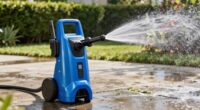
For buyers searching for a gas pressure washer around 4000 PSI, I’d make the Simpson PowerShot 4400 PSI my best overall pick for its high-pressure, high-flow combination and larger 420cc engine. The three 4200 PSI, 4.0 GPM models offer a more accessible route to fast, heavy-duty cleaning, while the Simpson PowerShot 3500 PSI with Honda GX200 puts engine reputation ahead of headline output. The central tradeoff is not PSI alone: high water flow can speed up large jobs, but it also calls for careful surface handling and more demanding upkeep. Lower-output options from Westinghouse and Simpson are easier to match with routine home cleaning, though they give up throughput. Read on for the full breakdown of how these ten options differ and which one fits your work.

Turn your quiet moments into listening time
- Thousands of audiobooks, podcasts and originals
- Listen on your phone, tablet or Echo — also offline
- Cancel anytime
Complete the kit


Key Takeaways
- The Simpson PowerShot 4400 PSI leads on stated capacity in this lineup, pairing the highest listed pressure with 4.0 GPM and a 420cc CRX engine; its size and output may be more than routine home jobs require.
- Three 4200 PSI, 4.0 GPM models share the same core output figures, so buyers should distinguish them by included hose details, accessory listings, seller support, and verified specifications rather than assuming one cleans faster.
- The Simpson PowerShot 3500 PSI stands apart through its Honda GX200 engine, while its 2.5 GPM flow makes it a different kind of pick from the higher-throughput 4.0 GPM machines.
- The Simpson Clean Machine and Westinghouse WPX3400 sit closer to everyday residential use than the 4000-plus PSI options; the WPX3400 lists slightly more flow than the Clean Machine, and both offer five-nozzle sets.
- The Westinghouse WPX3200 is the lowest-output option in this group, making it a better match for lighter cleaning than a buyer who specifically needs sustained, high-throughput work near 4000 PSI.


| pressure washer gas 4000 psi | Hose length | Flow rate | Engine | Pressure |
|---|---|---|---|---|
| Simpson Clean Machine 3400 PSI | 25 ft | 2.5 GPM | 208 cc CRX | 3400 PSI |
| 4200 PSI Gas Pressure Washer | 25 ft | — | 212cc, 7 HP | — |
| 4200 PSI 4.0 GPM Gas Pressure | 25 ft | 4.0 GPM | 212cc, 7 HP, 4-stroke OHV gasoline engine | 4200 PSI |
| Westinghouse WPX3400 Gas Press | 25 ft | 2.6 GPM | 212cc 4-stroke OHV | 3400 PSI |
| Simpson PowerShot 3500 PSI Gas | 25 ft | 2.5 GPM | Honda GX200 | 3500 PSI |
| 4200 PSI Gas Pressure Washer 4 | 25 ft | 4.0 GPM | — | — |
| Westinghouse WPX3200 Gas Press | 25 ft | 2.5 GPM | 212cc 4-stroke Westinghouse OHV | 3200 PSI |
| Simpson PowerShot 4400 PSI Gas | 50 ft | 4.0 GPM | CRX 420cc | 4400 PSI |
| Commercial 4000 PSI 4 GPM 212 | 25 ft | 4 GPM | — | — |
| 4200 PSI Gas Pressure Washer 4 | 25 ft | 4.0 GPM | 212cc, 7 HP, 4-stroke OHV gasoline | 4200 PSI |
More Details on Our Top Picks
Simpson Clean Machine 3400 PSI Gas Pressure Washer, 2.5 GPM, CRX engine
I’d choose the Simpson Clean Machine for recurring home jobs such as washing patio furniture, siding, and modest driveway sections—not for chasing the highest output in this roundup. Its 3400 PSI and 2.5 GPM are below the 4200 PSI, 4.0 GPM machines, so larger, heavily soiled areas will take more time. The tradeoff is a simpler residential fit: the maintenance-free axial cam pump avoids the service demands associated with a triplex pump like the Simpson PowerShot’s, while four quick-connect tips cover common spray tasks. Pneumatic tires help move its 64-pound frame over uneven ground, but that weight still takes effort to lift or load. I’d skip it for commercial workloads or for buyers who need California availability; the listed compliance is 49-state.
Pros:- 3400 PSI and 2.5 GPM suit a range of routine residential cleaning jobs.
- Maintenance-free axial cam pump keeps pump upkeep simpler than a triplex-pump setup.
- Four quick-connect tips provide options for concentrated spray, broader rinsing, and soap application.
- Pneumatic tires and a powder-coated steel frame support outdoor maneuvering and regular use.
Cons:- Lower flow rate than the 4.0 GPM washers means slower progress on broad or heavily soiled surfaces.
- At 64 pounds, it can be awkward to lift into a vehicle or carry up steps.
- Listed as 49-state compliant, so it is not suited to California buyers.
Best for: Homeowners who regularly clean decks, siding, and outdoor furniture and want a gas washer without the higher output of commercial-oriented options.
Not ideal for: Contractors, buyers cleaning large areas quickly, or California shoppers; its 2.5 GPM output is modest beside the 4.0 GPM models, and it is listed as 49-state compliant.
- Pressure:3400 PSI
- Flow rate:2.5 GPM
- Engine:208 cc CRX
- Pump:Maintenance-free axial cam
- Hose length:25 ft
- Nozzles:4 quick-connect tips: 0°, 15°, 40°, and soap
- Weight:64 lb
- Compliance:49-state compliant
Our verdict“Choose this Simpson for routine home cleaning and simpler pump upkeep, but move to a 4.0 GPM model for larger or more demanding jobs.”
4200 PSI Gas Pressure Washer, 4.0 GPM, 212CC 7HP Commercial Gas Power Washer with Spray Gun, Wand, and 5 Nozzle Set
I’d put this 4200 PSI, 4.0 GPM washer near the top for buyers who need fast coverage across driveways, decks, and other broad surfaces. Its flow rate is well above the Simpson Clean Machine’s 2.5 GPM, which can reduce time spent rinsing and working through large areas. The 212cc, 7 HP engine, commercial-grade pump, five-nozzle set, and soap tank make it a more work-focused package than the residential Simpson. That output comes with familiar gas-machine costs: fuel, engine maintenance, operating noise, and a 66-pound chassis. The supplied data lists EPA and CARB certification, a useful distinction from the Clean Machine’s 49-state compliance. I’d still compare the exact pump and service support before choosing it over the more established Honda-powered Simpson PowerShot.
Pros:- 4.0 GPM flow rate supports faster coverage than the 2.5 GPM Simpson Clean Machine.
- 4200 PSI and a 7 HP, 212cc engine are suited to demanding outdoor cleaning tasks.
- Five nozzles and a soap tank provide flexibility across different surfaces and cleaning approaches.
- Listed EPA and CARB certifications broaden its stated compliance compared with the 49-state Clean Machine.
Cons:- At 66 pounds, it can be difficult to load or move without using its wheels.
- Gas operation brings fuel handling, engine maintenance, and more noise than an electric washer.
- The provided product data does not identify the pump type, limiting comparison of pump construction with the Simpson PowerShot.
Best for: Property owners and frequent DIY cleaners who want high flow for large paved areas and need a gas-powered washer listed with EPA and CARB certification.
Not ideal for: Buyers who need a light, quiet, low-maintenance washer or who mainly clean small household items; its 66-pound weight and gas engine are more machine than those jobs require.
- Maximum pressure:4200 PSI
- Maximum flow rate:4.0 GPM
- Engine:212cc, 7 HP
- Hose length:25 ft
- Weight:66 lb
- Dimensions:20 × 20 × 22 in
- Tank volume:1 L
- Certifications:EPA and CARB certified
Our verdict“Pick this model for high-flow driveway and deck cleaning when its 4.0 GPM output matters more than lower weight or simpler upkeep.”
4200 PSI 4.0 GPM Gas Pressure Washer, 212cc Heavy Duty Power Washer for Outdoor Cleaning
The main reason I’d choose this 4200 PSI, 4.0 GPM model over the Westinghouse WPX3400 is its combination of high flow and a stated 3.6 L fuel tank. That pairing suits longer jobs on driveways, decks, or multiple outdoor surfaces, where the WPX3400’s 2.6 GPM output is less oriented toward rapid coverage. Five quick-connect tips include a 60° option, giving buyers a broader-angle choice for less concentrated rinsing than the narrowest spray patterns. Its anti-rust-coated steel frame and 10-inch pneumatic wheels add practical durability and mobility, though they do not make this a lightweight machine. The available data confirms EPA, CARB, and ETL certifications but gives no weight or pump type, so I can’t rank its portability or pump construction against the Simpson PowerShot with confidence.
Pros:- 4200 PSI and 4.0 GPM provide substantially higher stated flow than the Westinghouse WPX3400.
- Stated 3.6 L fuel tank is suited to extended cleaning sessions.
- Five quick-connect nozzles, including a 60° tip, offer several spray choices.
- Anti-rust-coated steel frame and pneumatic wheels are designed for outdoor use and uneven ground.
Cons:- Gas operation requires fuel and engine oil, along with routine maintenance.
- Its steel-frame gas design is less portable than a compact or electric washer.
- The supplied specifications do not state weight or pump type, leaving key ownership and durability comparisons unresolved.
Best for: Homeowners or property managers handling long cleaning sessions across driveways, decks, and several outdoor surfaces who want high flow and a sizable stated fuel tank.
Not ideal for: Buyers with limited storage, a need for easy lifting, or a preference for a named pump specification; this is a gas-powered steel-frame washer, and the supplied data omits its weight and pump type.
- Pressure:4200 PSI
- Flow rate:4.0 GPM
- Engine:212cc, 7 HP, 4-stroke OHV gasoline engine
- Nozzles:5 quick-connect tips: 0°, 15°, 25°, 40°, and 60°
- Hose length:25 ft
- Fuel tank capacity:3.6 L
- Wheels:10-inch pneumatic
- Frame:Heavy-duty steel with anti-rust coating
- Certifications:EPA, CARB, and ETL
Our verdict“Choose this washer for sustained, high-flow outdoor cleaning if the large stated fuel tank matters more than a fully specified pump and weight.”
Westinghouse WPX3400 Gas Pressure Washer, 3400 PSI, 2.6 GPM, Onboard Soap Tank, 5 Nozzle Set
I’d steer buyers toward the Westinghouse WPX3400 when onboard detergent handling and nozzle choice matter more than maximum throughput. Its 3400 PSI and 2.6 GPM sit close to the Simpson Clean Machine’s residential output, while the five-tip set adds a 25° option and a dedicated soap nozzle. The onboard soap tank makes detergent-based work more convenient than relying on a separate setup, especially for siding or grimy outdoor furniture. It remains far below the 4200 PSI, 4.0 GPM washers for moving quickly across large paved areas, so I wouldn’t choose it for frequent heavy-duty work. Never-flat 12-inch wheels avoid tire-pressure hassles, but the listing still describes a bulky gas machine, and the 212cc engine requires fuel and maintenance.
Pros:- Onboard soap tank simplifies detergent application for suitable cleaning jobs.
- Five nozzles include 0°, 15°, 25°, 40°, and soap tips for varied spray needs.
- 2.6 GPM flow is slightly higher than the Simpson Clean Machine’s 2.5 GPM.
- Never-flat 12-inch wheels avoid the upkeep associated with pneumatic tires.
Cons:- Its 2.6 GPM output is well below the 4.0 GPM options for covering large surfaces quickly.
- A gas engine requires fuel, maintenance, and acceptance of operating noise.
- The washer may arrive with residual oil or fuel odor from manufacturing.
Best for: Homeowners cleaning siding, vehicles, decks, and outdoor furniture who want an onboard soap tank and a varied nozzle set without stepping up to 4.0 GPM output.
Not ideal for: Contractors or owners with extensive driveway areas who prioritize rapid coverage; its 2.6 GPM flow trails the 4.0 GPM washers in this roundup.
- Pressure:3400 PSI
- Flow rate:2.6 GPM
- Engine:212cc 4-stroke OHV
- Hose length:25 ft
- Nozzle set:5 tips: 0°, 15°, 25°, 40°, and soap
- Soap tank:Onboard
- Fuel tank capacity:3.3 L
- Wheels:12-inch high-profile, never-flat
Our verdict“Choose the WPX3400 for detergent-friendly household cleaning and never-flat wheels, not for the fastest work on large areas.”
Simpson PowerShot 3500 PSI Gas Pressure Washer, 2.5 GPM, Honda GX200 Engine
I’d favor the Simpson PowerShot for buyers who value a named engine and a triplex pump over the higher flow of the 4200 PSI machines. Its Honda GX200 and AAA triplex pump give it a more service-focused specification than the Clean Machine’s axial cam pump, while the 3500 PSI rating is only a modest step above that residential model. The important limitation is flow: at 2.5 GPM, it cannot match the 4.0 GPM washers for rapid coverage of broad driveways or large commercial surfaces. A 25-foot MorFlex hose and pneumatic tires support regular jobsite handling, but its 74-pound weight makes loading and transport more demanding than the other listed Simpson. The supplied data also limits sale to 49 states, so California buyers should look elsewhere.
Pros:- Honda GX200 engine with low-oil shutdown is a strong fit for recurring use.
- AAA triplex pump offers a different, service-focused pump setup from the Clean Machine’s axial cam pump.
- MorFlex hose is described as kink-resistant and includes quick-connect fittings.
- Pneumatic tires and a steel frame support movement around work areas.
Cons:- At 2.5 GPM, it falls well short of the 4.0 GPM options for rapid large-area cleaning.
- Its 74-pound weight makes transport and loading more demanding than the Clean Machine.
- Listed as limited to 49 states, making it unsuitable for California buyers.
Best for: Frequent DIY users and cleaning professionals who prioritize a Honda GX200 engine, triplex pump, and durable hose for recurring demanding jobs.
Not ideal for: California buyers, users who need fast coverage of large areas, or anyone who regularly lifts a washer into a vehicle; it is listed for 49 states and weighs 74 pounds.
- Pressure:3500 PSI
- Flow rate:2.5 GPM
- Engine:Honda GX200
- Pump:AAA triplex
- Hose length:25 ft
- Hose:MorFlex, kink-resistant, with quick-connect fittings
- Weight:74 lb
- Dimensions:21 × 24 × 34 in
Our verdict“Choose the PowerShot for recurring work where its Honda engine and triplex pump matter more than 4.0 GPM coverage or easy lifting.”
4200 PSI Gas Pressure Washer 4.0 GPM 212CC Gas Powered Commercial High Pressure Washer with 25ft Hose & 5 Nozzles
With 4.0 GPM flow and a stated maximum of 4200 PSI, this model suits buyers who want high-volume cleaning for large driveways, fences, or other tough outdoor jobs. Its 212cc engine and steel-braided 25-foot hose give it a more work-focused setup than the Westinghouse WPX3200, which trades away pressure and flow for a lighter-duty cleaning profile. Five quick-connect nozzles add flexibility, but the high output still calls for care: a narrow spray can damage softer wood, paint, or vehicle finishes.
The steel frame and pneumatic tires help with outdoor mobility, although the machine is heavy and noisy compared with lower-output options. Gas operation also means fuel and engine upkeep. I’d pick it over the WPX3200 for demanding, repeated cleaning—not for delicate surfaces or buyers who need a quieter, low-maintenance machine.
Pros:- 4.0 GPM flow and up to 4200 PSI suit demanding outdoor cleaning
- Five quick-connect nozzles cover multiple spray patterns and soap application
- Steel-braided 25-foot hose and steel frame support a rugged work setup
- Pneumatic tires help roll the machine across uneven outdoor areas
Cons:- High output can harm delicate surfaces if the wrong nozzle or distance is used
- Heavy build and engine noise may be inconvenient for some households
- Gas engine requires refueling and regular maintenance
Best for: Homeowners and property maintainers tackling large, heavily soiled outdoor surfaces who want 4.0 GPM flow and broad nozzle choice.
Not ideal for: Buyers mainly washing cars, delicate decks, or small patios, or anyone who needs a quiet, lightweight washer with minimal upkeep.
- Maximum pressure:4200 PSI
- Flow rate:4.0 GPM
- Engine displacement:212cc
- Engine power:7 HP
- Hose length:25 ft
- Nozzles:5 quick-connect nozzles
- Fuel tank capacity:3.6 L
- Hose material:Steel-braided
- Certifications:EPA, CARB, ETL
Our verdict“Choose this model over the Westinghouse WPX3200 when high flow and tough-surface cleaning matter more than low weight and quieter operation.”
Westinghouse WPX3200 Gas Pressure Washer, 3200 PSI, 2.5 GPM, Onboard Soap Tank, 5 Nozzle Set
The WPX3200 is the practical pick here for regular home jobs rather than maximum output. At 3200 PSI and 2.5 GPM, it has less cleaning capacity than the 4000- and 4200-PSI, 4.0-GPM machines in this lineup, but that lower output can be easier to manage for cars, outdoor furniture, and general deck upkeep. Its onboard soap tank and five-nozzle set make it ready for jobs that alternate between detergent and rinsing.
Compared with the 4200 PSI gas washer with a steel-braided hose, this Westinghouse is a less forceful choice for stubborn, broad-area grime. The 25-foot hose and never-flat wheels help around the yard, while the 63-pound weight makes lifting it into a vehicle less appealing. It still requires gas-engine care, so I’d skip it if I wanted electric-level convenience.
Pros:- Moderate pressure and flow suit a range of routine household cleaning jobs
- Onboard soap tank simplifies detergent application
- Five nozzles include a dedicated soap option
- Never-flat wheels and a steel frame support yard use
Cons:- Lower pressure and flow than the 4.0 GPM models limit heavy-duty cleaning speed
- At 63 pounds, it can be awkward to lift or load
- Gas operation brings refueling, maintenance, and possible residual fuel or oil odor
Best for: Homeowners who clean cars, outdoor furniture, and moderately dirty decks or driveways and value an onboard soap tank.
Not ideal for: Contractors or property owners who regularly remove heavy buildup from large areas and need 4.0 GPM-class flow.
- Pressure:3200 PSI
- Flow rate:2.5 GPM
- Engine:212cc 4-stroke Westinghouse OHV
- Soap tank volume:1.6 liters
- Hose length:25 ft
- Weight:63 lb
- Dimensions:21 in L x 19.5 in W x 23.6 in H
- Nozzle set:0°, 15°, 25°, 40°, and soap
Our verdict“Pick the WPX3200 for routine household cleaning and built-in soap convenience, but choose a 4.0 GPM model for large or heavily soiled jobs.”
Simpson PowerShot 4400 PSI Gas Pressure Washer, 4.0 GPM, CRX 420cc Engine
The Simpson PowerShot is the lineup’s most work-oriented choice, combining 4400 PSI, 4.0 GPM, and a 420cc CRX engine. That larger engine and rated pressure set it apart from the 212cc 4200 PSI models, while the 50-foot hose gives more reach before the washer has to be repositioned. Its welded-steel frame is aimed at demanding use, and five quick-connect tips cover common spray and soap needs.
This capacity makes the most sense for prosumers or contractors with recurring, heavy outdoor cleaning—not occasional car washing. Compared with the Commercial 4000 PSI 4 GPM model, the Simpson offers higher stated pressure and twice the hose length, but it is also bulky and heavy. It is listed as 49-state compliant and does not ship to California, which rules it out for some buyers.
Pros:- Highest stated pressure in this group at 4400 PSI with 4.0 GPM flow
- 50-foot hose reduces how often the washer needs to be moved
- 420cc engine and welded-steel frame suit demanding use
- Five quick-connect tips include a soap nozzle
Cons:- Does not ship to California according to the supplied product details
- Heavy, bulky construction can make storage and transport difficult
- High output may be excessive for delicate surfaces and occasional cleaning
Best for: Prosumer users and contractors who need high pressure, 4.0 GPM flow, and extended hose reach for recurring outdoor work.
Not ideal for: California buyers, occasional users with limited storage, or anyone who wants a lighter machine for small household jobs.
- Pressure:4400 PSI
- Flow rate:4.0 GPM
- Engine:CRX 420cc
- Hose length:50 ft
- Nozzle tips:0°, 15°, 25°, 40°, and soap
- Frame:Welded steel
- Compliance:49-state compliant
Our verdict“Choose the PowerShot for frequent, demanding work and added hose reach, provided its size and 49-state availability fit your needs.”
Commercial 4000 PSI 4 GPM 212 CC 7.0 HP Gas Pressure Washer with 9″ Wheels
This model lands directly on the roundup’s stated target: 4000 PSI and 4 GPM, backed by a 212cc, 7.0 HP gas engine. Its five-nozzle set makes it adaptable to different cleaning patterns, while 9-inch wheels help it roll over yard surfaces. Compared with the Simpson PowerShot 4400, it gives up some rated pressure and the longer hose, but its core flow and pressure figures still suit substantial driveway, fence, and yard work.
The tradeoff is a relatively basic setup. The supplied details list a 25-foot hose and no adjustable pressure control, so users need to choose the nozzle and distance carefully—especially on softer materials. Like the 4200 PSI 212cc models, it requires fuel and engine maintenance; its large wheels help mobility but do not make a heavy machine easy to lift or load.
Pros:- 4000 PSI and 4 GPM match the target performance class
- Five nozzle types cover common spray patterns and soap use
- 9-inch wheels assist movement across outdoor ground
- 212cc, 7.0 HP engine provides gas-powered operation away from outlets
Cons:- 25-foot hose offers less reach than the Simpson PowerShot’s 50-foot hose
- No digital controls or adjustable pressure settings are listed
- Heavy build and gas-engine upkeep add effort before and after use
Best for: Homeowners or property crews seeking a gas washer at the exact 4000 PSI, 4 GPM class for driveways, fences, and other tough surfaces.
Not ideal for: Buyers who want a long hose, adjustable pressure controls, or a compact machine for delicate and occasional cleaning.
- Maximum pressure:4000 PSI
- Flow rate:4 GPM
- Engine displacement:212cc
- Engine power:7.0 HP
- Hose length:25 ft
- Wheel diameter:9 in
- Nozzle types:0°, 15°, 25°, 40°, and soap
- Certifications:EPA, CARB, ETL
Our verdict“Choose this model for a direct 4000 PSI, 4 GPM setup with large wheels, but opt for the Simpson PowerShot if you need more hose reach and higher rated pressure.”
4200 PSI Gas Pressure Washer 4.0 GPM 212CC Gas Power Washer with 25ft Hose & 5 Nozzles
This 4200 PSI model pairs 4.0 GPM flow with a 212cc, 7 HP four-stroke OHV engine, putting it in the same high-output class as the B0HHP1BWZ8 washer. Its clearest distinction is the specified 10-inch pneumatic wheels, which may suit buyers who need to move a gas washer across rougher yard surfaces. A 3.6-liter fuel tank and five quick-connect nozzles round out a setup for extended outdoor cleaning without relying on an electrical outlet.
Compared with the Simpson PowerShot 4400, this model has lower stated pressure and a shorter 25-foot hose, but it uses a smaller 212cc engine. It remains a heavy machine, and the supplied description flags setup and maintenance as potential hurdles for beginners. The high output is useful on tough surfaces, though it can be too aggressive for paint, vehicles, or soft wood without careful nozzle selection and technique.
Pros:- 4200 PSI and 4.0 GPM support demanding outdoor cleaning
- 10-inch pneumatic wheels are suited to moving across outdoor terrain
- 3.6-liter fuel tank supports extended gas-powered work
- Five quick-connect nozzles provide options for different tasks
Cons:- 25-foot hose gives less reach than the Simpson PowerShot’s 50-foot hose
- Heavy construction can complicate transport and storage
- Setup, fuel handling, and engine maintenance may challenge beginners
Best for: Property owners who need 4.0 GPM-class cleaning and expect to roll the washer over uneven outdoor ground.
Not ideal for: First-time users seeking simple setup, buyers with limited storage, or anyone focused mainly on delicate surfaces and light jobs.
- Pressure:4200 PSI
- Flow rate:4.0 GPM
- Engine:212cc, 7 HP, 4-stroke OHV gasoline
- Hose length:25 ft
- Nozzles:5 quick-connect nozzles
- Fuel tank capacity:3.6 L
- Wheels:10-inch pneumatic wheels
- Certifications:EPA, CARB, ETL
Our verdict“Pick this 4200 PSI washer if large pneumatic wheels matter for your terrain, but choose the Simpson PowerShot for higher stated pressure and a longer hose.”

How We Picked
I ranked these washers by how well their stated pressure and flow suit demanding cleaning, then weighed engine details, included accessories, and features that affect day-to-day use. For a near-4000 PSI search, I gave more weight to a balanced pressure-and-flow specification than to a high PSI number by itself. I also separated high-output workhorses from lower-output residential options instead of treating every machine as interchangeable.
The Simpson PowerShot 4400 ranks first because it has the strongest stated output in this group and a 420cc engine. The 4200 PSI, 4.0 GPM machines follow as similar high-throughput alternatives, with their listed differences too limited to justify a firm performance distinction without more verified build or support information. Simpson’s Honda-powered 3500 PSI model earns a distinct place for its engine specification, while the Clean Machine and Westinghouse models rank lower for buyers whose stated priority is power near 4000 PSI. I treat listed specifications as claims to compare, not proof of equivalent performance across brands.
| pressure washer gas 4000 psi | Certifications |
|---|---|
| Simpson Clean Machine 3400 PSI | — |
| 4200 PSI Gas Pressure Washer | EPA and CARB certified |
| 4200 PSI 4.0 GPM Gas Pressure | EPA, CARB, and ETL |
| Westinghouse WPX3400 Gas Press | — |
| Simpson PowerShot 3500 PSI Gas | — |
| 4200 PSI Gas Pressure Washer 4 | EPA, CARB, ETL |
| Westinghouse WPX3200 Gas Press | — |
| Simpson PowerShot 4400 PSI Gas | — |
| Commercial 4000 PSI 4 GPM 212 | EPA, CARB, ETL |
| 4200 PSI Gas Pressure Washer 4 | EPA, CARB, ETL |
Factors to Consider When Choosing Pressure Washer Gas 4000 Psi
A washer near 4000 PSI can be excessive for some home tasks and useful for others. I’d choose by matching pressure, water flow, surface type, and job duration rather than buying the largest number on the label. These factors help avoid paying for capability you won’t use or choosing a machine that makes delicate cleaning harder.
Match PSI and GPM to the Job, Not the Headline
PSI describes pressure, while GPM describes water volume; together they shape how quickly a washer can move dirt across a surface. Higher flow can make broad cleaning more productive, but pressure alone does not tell you how fast the job will go. A common mistake is to buy the highest PSI available for every task, then use an aggressive nozzle on siding, painted wood, or softer masonry. For driveways and other durable surfaces, throughput may matter more than chasing a few extra PSI. For mixed household use, a machine with lower output and sensible nozzle choices can be easier to control. Check that the advertised figures match the exact model and operating setup before comparing machines.
Think About Surface Risk and Nozzle Control
High-output machines demand more care because the wrong spray pattern or distance can damage finishes, force water behind cladding, or mark wood. A wide fan nozzle and a test pass in an inconspicuous area reduce risk, but they do not make every surface safe for high pressure. Buyers often assume a larger nozzle set means every nozzle is appropriate for every material; nozzle color and angle still need to match the job. Consider whether you’ll clean durable concrete regularly or switch between concrete, vehicles, decking, and siding. If delicate surfaces make up much of your work, prioritize controllability and lower-output options over maximum capacity. Keep the spray moving and follow the surface manufacturer’s cleaning guidance.
Check Water Supply and Hose Setup
A 4.0 GPM washer needs a suitable water supply to perform as intended; a restricted hose or weak supply can limit operation. Buyers sometimes focus on the machine and overlook the faucet, hose diameter, hose length, and connection compatibility. A 25-foot pressure hose, as listed with some options here, affects reach but may still require careful placement of the washer to cover a large area. Long runs and tight workspaces can add setup friction, so think through where the unit will sit and how you’ll move around the job. Confirm inlet requirements and included fittings in the exact product listing rather than assuming standard accessories will fit. Adequate supply also helps reduce interruptions during extended cleaning.
Weigh Engine Size Against Upkeep and Portability
A larger engine can support heavier work, but it also adds bulk and brings routine gasoline-engine maintenance. Oil checks, fuel handling, storage, and seasonal care belong in the ownership decision, not just the first purchase. A 420cc engine such as the one listed on the Simpson PowerShot 4400 is aimed at a different workload than a 212cc unit, but engine displacement alone does not establish durability or service quality. Consider how often the washer will run and whether you have a dry, ventilated place to store it. Wheels can help on suitable ground, yet they do not remove the effort of loading or moving a heavy machine over steps. If jobs are occasional and modest, a smaller, simpler option may be easier to live with.
Pay More for a Specific Advantage
Spend for a capability you can name, such as higher flow for frequent large-area cleaning, an engine specification you prefer, or accessories that reduce setup friction. A premium label or a larger PSI number is not enough on its own to justify choosing one model over another. In this lineup, several 4200 PSI machines list the same 4.0 GPM and 212cc engine, so compare warranty terms, parts access, hose and fitting details, and seller support before deciding. Those practical factors can matter more over time than a small difference in advertised pressure. For occasional cleaning, a lower-output washer may cover the work without the added engine size and operating demands. For regular commercial-style jobs, prioritize serviceability and a clear maintenance plan alongside output.
Frequently Asked Questions
Is a 4200 PSI, 4.0 GPM washer meaningfully different from a 4000 PSI model?
The difference in stated pressure is small, and it should not be the only reason to choose one machine. Flow rate, nozzle choice, engine, and build details also shape the cleaning experience and pace. In this roundup, several 4200 PSI options share the same listed 4.0 GPM and 212cc engine, so their headline figures do not separate them clearly. Compare the exact model’s accessories, warranty, fittings, and service support before making a decision. Also confirm that the rating describes the same operating conditions across the listings you’re comparing.
Can I safely use a 4000 PSI-class washer on a car or wood deck?
It can be possible with careful technique, but a high-output gas washer can damage paint, soft wood, or nearby seals. Use a wide spray angle, maintain distance, and test a hidden area before cleaning the full surface. A detergent application and a gentle rinse may be better than trying to remove every mark with concentrated pressure. Do not assume a low-pressure setting or nozzle makes a surface automatically safe; technique and the surface’s condition matter. If vehicle and deck cleaning are your main tasks, a lower-output model may be easier to control than the 4200- or 4400-PSI options here.
Do I need a special water supply for a 4.0 GPM pressure washer?
You need a supply that can keep up with the washer’s water demand, or performance may suffer and operation may become less consistent. Check the product’s inlet requirements and compare them with your faucet, hose diameter, and hose length before buying. A narrow or kinked garden hose can restrict delivery, even when the machine itself has a high flow rating. For a long cleaning session, make sure the water source remains steady rather than relying on a brief initial flow. If your supply is limited, a lower-GPM model may be a more practical match.
Should I choose the Honda-powered 3500 PSI Simpson over a 4200 PSI, 4.0 GPM model?
Choose based on the work and the engine specification you value, not on brand or PSI alone. The PowerShot 3500 lists a Honda GX200 and 2.5 GPM, while the 4200 PSI alternatives list 4.0 GPM and 212cc engines. The higher-flow models are better aligned with moving water across large, durable surfaces, while the Honda-powered option may appeal to buyers who prioritize that engine designation and accept lower listed flow. Check parts availability, warranty coverage, and service options for the exact model. The listing data alone cannot establish which machine will last longer.
What should I compare when several 4200 PSI models have the same listed output?
When pressure, flow, and engine figures match, look beyond the headline specification. Compare warranty terms, service access, fittings, hose construction, frame details, and the precise accessories included. The three 4200 PSI listings here vary in how they describe their hose and accessory package, so verify the exact contents rather than assuming similarly named products are identical. Check whether replacement parts and clear maintenance instructions are available for the specific seller and model. If those details remain unclear, a more established model with a clearly documented support path may be a safer choice than relying on matching output claims.
Conclusion
Best overall: I’d choose the Simpson PowerShot 4400 for frequent, demanding work where its listed 4400 PSI, 4.0 GPM, and 420cc engine make sense. Best value: Among the 4200 PSI, 4.0 GPM options, I’d compare the exact included hose, accessories, warranty, and support; their shared headline figures do not identify a clear performance winner. Best premium: The same PowerShot 4400 is the strongest fit for buyers who want the highest stated output in this group and accept a larger machine. Best for beginners: I’d start with the Westinghouse WPX3200 for lighter household jobs, since it is the least aggressive option listed here, while still taking care with nozzle choice. Best for a specific engine preference: The Simpson PowerShot 3500 with Honda GX200 suits buyers who prioritize that engine specification over 4.0 GPM flow. If your work is mostly routine home cleaning, the WPX3400 or Clean Machine may be a more sensible fit than buying into 4000-plus PSI capacity you won’t use.