To avoid measuring mistakes when creating stackable sets, always use accurate tools and double-check your measurements. Regular calibration of scales and inspecting your tools for damage guarantee precise results. Rushing through measurements can lead to errors, so take your time and verify multiple times. Small inaccuracies can cause instability and affect the final look. Keep your tools in good condition, and you’ll create balanced, professional stacks. Want to learn more? Stick around to discover key tips for perfect measurement.

Turn your quiet moments into listening time
- Thousands of audiobooks, podcasts and originals
- Listen on your phone, tablet or Echo — also offline
- Cancel anytime
Key Takeaways
- Always calibrate measuring tools regularly to ensure accurate ingredient amounts for stacking consistency.
- Double-check measurements multiple times to prevent errors that could compromise the set’s balance.
- Use appropriate, precision-designed tools rather than eyeballing measurements for better accuracy.
- Inspect and maintain measuring devices to avoid inaccuracies caused by damage or wear.
- Follow best measurement practices, including slow, deliberate steps and verification, to ensure uniform, stable stacks.
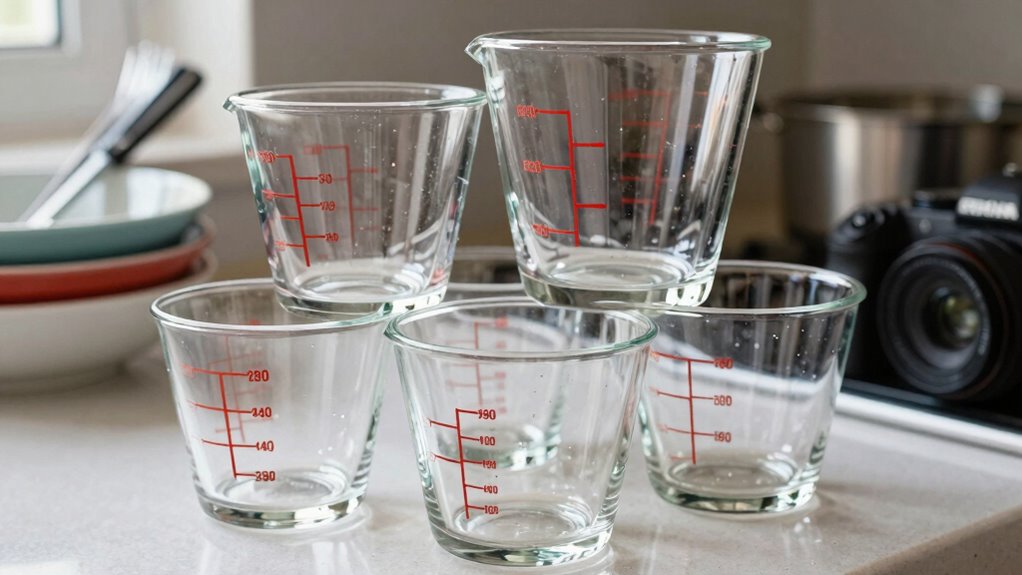
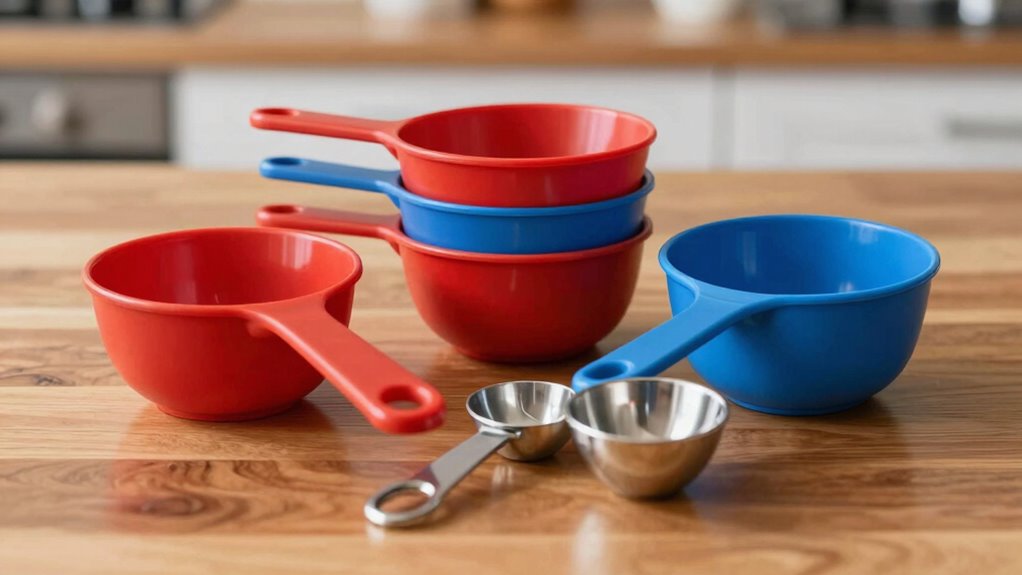
Have you ever made a mistake because you didn’t measure carefully? It’s a common slip, especially when working with stackable sets that require precise ingredient accuracy. When you’re stacking or layering ingredients, even a small miscalculation can throw off the entire outcome. To avoid this, it’s vital to pay close attention to how you measure and guarantee your tools are properly calibrated. Proper tool calibration guarantees that your measuring devices give accurate readings every time, preventing errors caused by inaccurate measurements. Whether you’re using measuring cups, spoons, or digital scales, regular calibration helps maintain their precision, so you’re confident in the amounts you add.
One of the most overlooked aspects is ingredient accuracy. When you’re working with multiple components in a stackable set, each ingredient must be measured accurately to maintain consistency. For example, if you’re layering ingredients in a dessert or assembling a multi-layered dish, an over- or under-measurement can lead to imbalance in texture or flavor. It’s tempting to eyeball measurements, but that can introduce small errors that compound over the course of your process. Instead, always double-check your measurements, especially when dealing with delicate or complex stacks. Use the correct tools designed for precise measurement, and don’t rush through this step. Accurate ingredient measurement is the foundation of a successful stackable set. Additionally, understanding the importance of measurement precision can help you recognize the value of meticulousness in your preparation, especially when working with precise measurements that require strict adherence. Being aware of measurement accuracy not only improves your results but also minimizes waste and rework. Developing a habit of proper technique and attention to detail can further enhance your cooking process, especially when precision is critical.
Furthermore, it’s vital to keep your measuring tools in good condition. Regularly check that your scales and measuring cups are working correctly and recalibrate them if you notice discrepancies. For digital scales, follow the manufacturer’s instructions for calibration, and keep the device on a flat, stable surface during use. For traditional measuring cups and spoons, ensure they are not warped or damaged, which could affect the accuracy. When you take the time to maintain your tools and verify their calibration, you minimize the risk of measurement errors that can ruin your carefully assembled stacks. Incorporating proper maintenance routines for your tools can significantly improve overall measurement accuracy.
Finally, develop a habit of measuring multiple times if you’re unsure about a particular ingredient. It might seem tedious, but verifying your measurements a second or third time adds confidence to your process. When stacking ingredients, precision is key—you want each layer to fit perfectly and look professional. By focusing on ingredient accuracy and guaranteeing your tools are calibrated, you set yourself up for success. Small steps like these help you avoid costly mistakes and ensure your stackable sets turn out exactly as intended, with clean, balanced, and appealing results every time.
digital kitchen scale with calibration
As an affiliate, we earn on qualifying purchases.
As an affiliate, we earn on qualifying purchases.
Frequently Asked Questions
How Do I Choose the Right Stackable Set for My Space?
To choose the right stackable set for your space, first measure your storage area carefully, considering height, width, and depth. Think about your storage organization needs—do you need more visibility or easy access? Opt for sets that maximize space optimization without cluttering. Select versatile pieces that fit well together, and consider stackable options that adapt to your evolving storage needs, making your space both functional and tidy.
What Tools Are Best for Measuring Stackable Items Accurately?
Cut to the chase, using the right tools guarantees you don’t end up barking up the wrong tree. A tape measure or a ruler provides straightforward measurement techniques for stackable items, while calibration tools like digital calipers guarantee precision. For best results, double-check measurements and keep tools properly calibrated. This way, you’ll measure accurately, avoid mishaps, and keep your stackable sets perfectly aligned and secure.
How Can I Prevent Stacking Errors During Assembly?
To prevent stacking errors during assembly, focus on maintaining precision accuracy and measurement consistency. Double-check measurements before stacking each item, and use calibrated tools like digital calipers or laser measures to guarantee accuracy. Develop a standardized process, follow step-by-step procedures, and train your team to adhere to these protocols. Regularly review and adjust your methods to catch any discrepancies early, reducing errors and ensuring a stable, well-aligned stack.
Are There Specific Materials That Are More Prone to Measurement Mistakes?
Certain materials are more prone to measurement mistakes due to their sensitivity and measurement accuracy challenges. For example, soft or flexible materials like foam, fabric, or thin plastics can deform easily, causing inaccuracies. Additionally, materials that expand or contract with temperature changes, such as metals or certain plastics, require precise measurement techniques. To prevent errors, always consider the material’s sensitivity and adjust your measurement methods accordingly for better accuracy.
How Often Should I Double-Check Measurements When Stacking?
A stitch in time saves nine, so you should double-check measurements frequently when stacking. To maintain accuracy calibration and measurement consistency, verify your measurements before each stacking session and periodically during longer projects. This habit helps catch errors early and guarantees your set remains level and secure. Trust your tools, but don’t rely on them blindly—double-checking is your best safeguard against costly mistakes.
As an affiliate, we earn on qualifying purchases.
Conclusion
By paying close attention to your measurements, you’re gently steering clear of potential pitfalls that could disrupt your stacking success. Remember, small inaccuracies can sometimes lead to bigger surprises down the line, so it’s wise to double-check your work. With a little extra care, you’ll find your sets fitting together seamlessly, turning what could be a tricky task into a smooth, satisfying experience. Keep those measurements precise, and enjoy the perfect stack every time.
precision measuring tools for baking
As an affiliate, we earn on qualifying purchases.
As an affiliate, we earn on qualifying purchases.
As an affiliate, we earn on qualifying purchases.
Halloween Picks
halloween
As an affiliate, we earn on qualifying purchases.