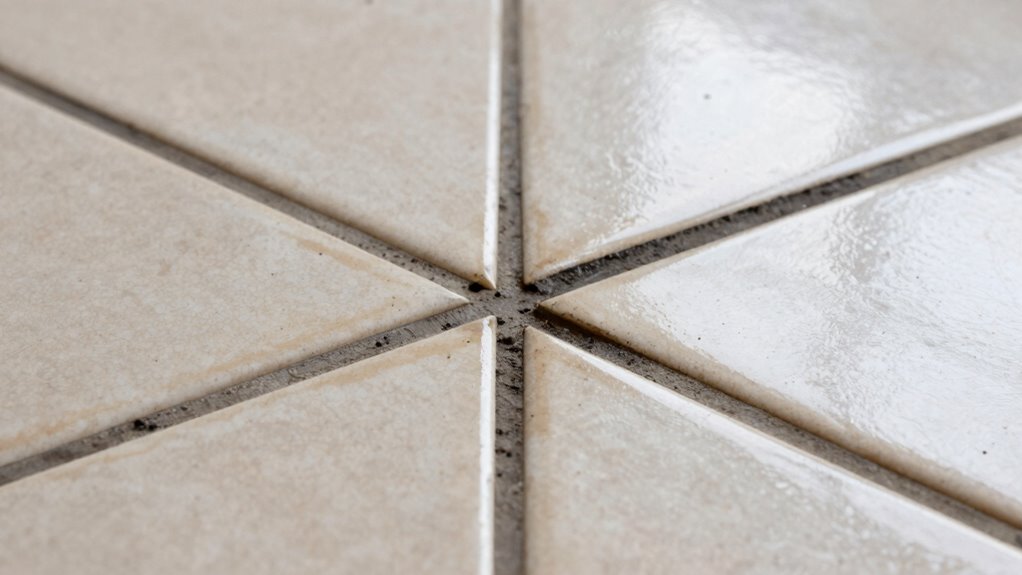

Grout gets dark so quickly because its porous surface absorbs dirt, stains, and moisture along foot traffic, leading to discoloration and mold growth. Tiny particles seep in, making it look dull and dirty over time. Without proper cleaning and sealing, this buildup worsens, trapping moisture and encouraging mold. Regular maintenance, gentle cleaning, and sealing help keep grout bright. Stay with us to understand more about preventing this common issue and maintaining fresh-looking grout.
Key Takeaways
- Grout’s porous nature absorbs dirt, stains, and moisture, causing quick discoloration.
- Moisture, mold, and mildew thrive in damp areas, darkening grout over time.
- Ineffective cleaning products or techniques can leave residues, accelerating darkening.
- Lack of regular sealing allows dirt and moisture to penetrate and stain grout easily.
- High traffic and spills increase dirt buildup and moisture, leading to faster darkening.
Top picks for "grout tile reality"
Open Amazon search results for this keyword.
As an affiliate, we earn on qualifying purchases.
The Porous Nature of Grout and Its Impact
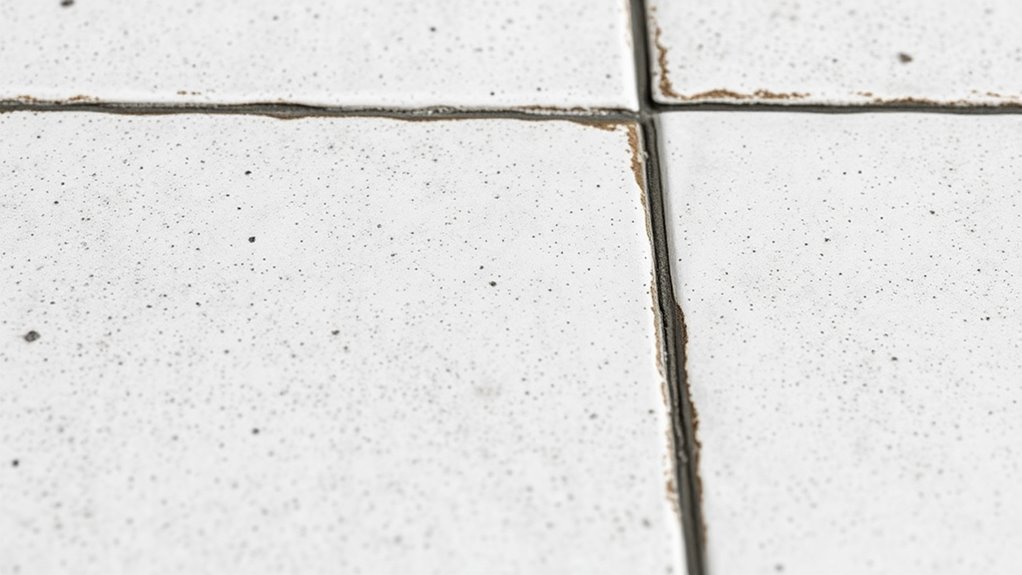
Because grout is porous, it readily absorbs dirt, stains, and moisture from its surroundings. This means that every time you walk on your tiled surface, tiny particles can seep into the surface, making it look dull and discolored over time. Moisture trapped within the pores can also cause mold and mildew growth, further darkening the grout. Unlike non-porous materials, grout doesn’t resist staining naturally, so spills or dirt can settle deep into its structure. This absorption process happens quickly, especially in high-traffic areas or humid environments. As a result, grout requires regular cleaning and sealing to prevent deep stains and maintain its original appearance. Sealing grout is an effective way to create a protective barrier against these issues. Understanding this porous nature helps you realize why grout needs consistent care to keep it looking fresh. Additionally, energy-efficient cleaning methods can help reduce the environmental impact of maintaining your tiled surfaces. Employing proper cleaning techniques can also extend the life of your grout and keep it looking new longer.
Common Causes of Grout Discoloration
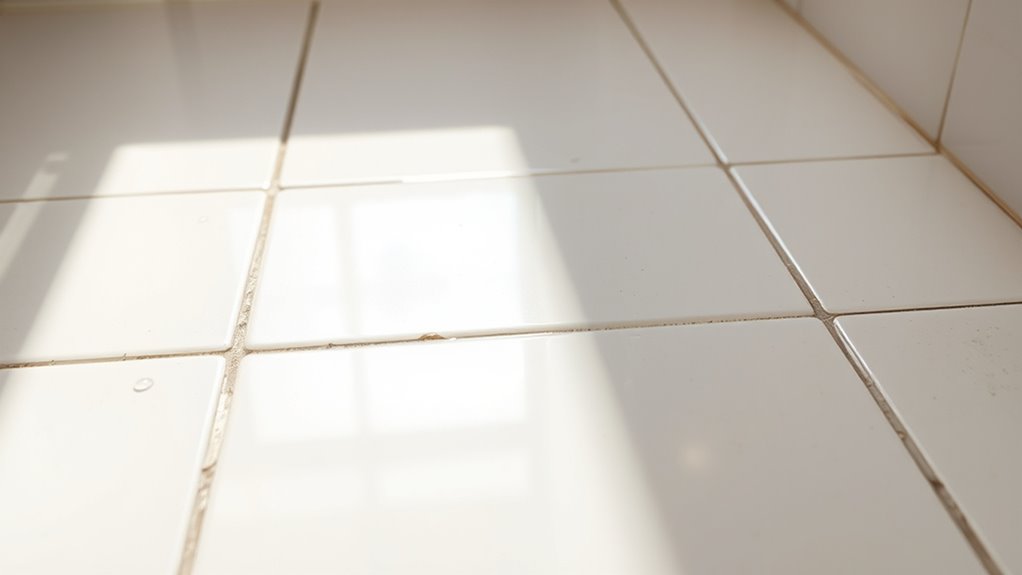
Moisture and mold are common culprits that cause grout to darken or stain over time. Dirt and debris can also accumulate, making your grout look dull and discolored. Recognizing these causes helps you take targeted steps to keep your grout looking fresh. Additionally, proper cleaning techniques are essential to prevent buildup and maintain the grout’s appearance. Using air purifiers can help reduce indoor pollutants that contribute to mold growth and discoloration.
Moisture and Mold
Have you noticed dark patches or discoloration on your grout lines? Moisture buildup is a common culprit. When water seeps into the grout, it creates an environment ideal for mold growth. Mold thrives in damp, poorly ventilated areas, turning your grout black or green over time. Even minor leaks or high humidity can contribute to persistent moisture issues. If you don’t address these problems, mold can spread and cause health concerns. Regularly checking for leaks, improving ventilation, and drying the area after water exposure can help. Using mold-resistant grout and sealing it properly also reduces moisture absorption. By controlling moisture levels, you prevent mold from taking hold and keep your grout looking clean and fresh longer.
Dirt and Debris
Dirt and debris are common culprits behind grout discoloration, especially in high-traffic or heavily used areas. Over time, these particles settle into the tiny pores of grout lines, making them look stained or darkened. Regular foot traffic brings in dirt from shoes, spills, and dust, all of which can accumulate if not cleaned promptly. Even cleaning with harsh chemicals or improper techniques can push dirt deeper into the grout instead of removing it. When dirt builds up, it creates a dull, discolored appearance that’s tough to restore without deep cleaning. To prevent this, you need to sweep or vacuum frequently and use a gentle, pH-balanced cleaner to remove surface dirt before it becomes embedded. Consistent maintenance keeps grout looking bright and fresh.
How Moisture Contributes to Darkening
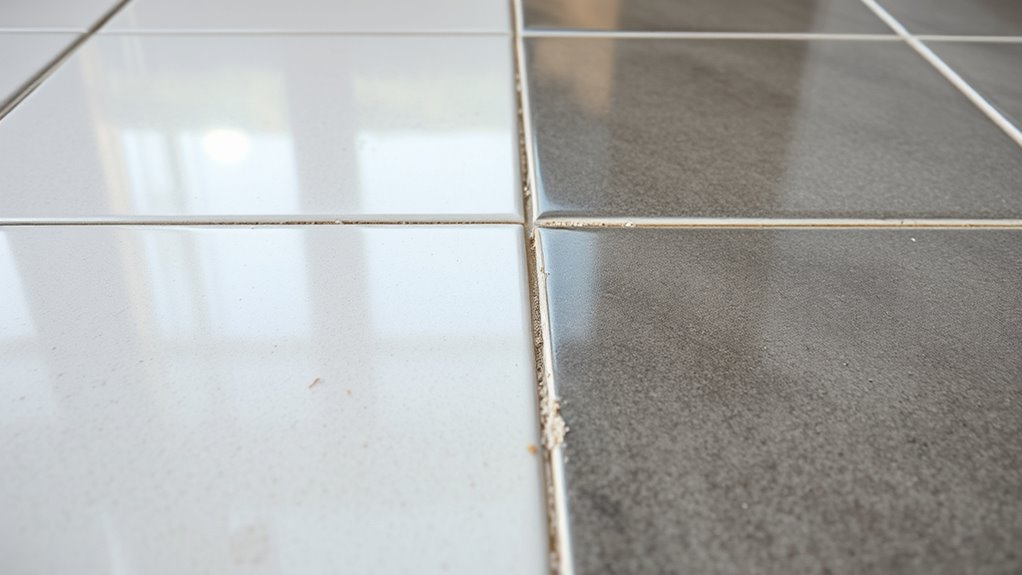
When moisture seeps into tile and grout, it can cause darkening over time. Moisture provides an ideal environment for mold, mildew, and bacteria to thrive, which can stain the grout and make it look darker. Even small leaks or high humidity levels can keep the grout damp enough for these organisms to grow. As mold and mildew develop, they create a persistent dark film that’s hard to remove. Additionally, moisture can cause minerals and salts in water to deposit on the surface, creating discoloration. This buildup amplifies the dark appearance, especially in areas with poor ventilation. Proper ventilation can significantly reduce moisture buildup and help prevent darkening. Regularly inspecting for leaks and maintaining good airflow can further minimize moisture-related issues and preserve the grout’s original appearance. Understanding the impact of moisture infiltration and the resulting microbial growth is essential for long-term tile maintenance. Taking proactive steps to control humidity levels can help you protect your tile and grout from premature darkening.
The Role of Dirt and Debris Accumulation
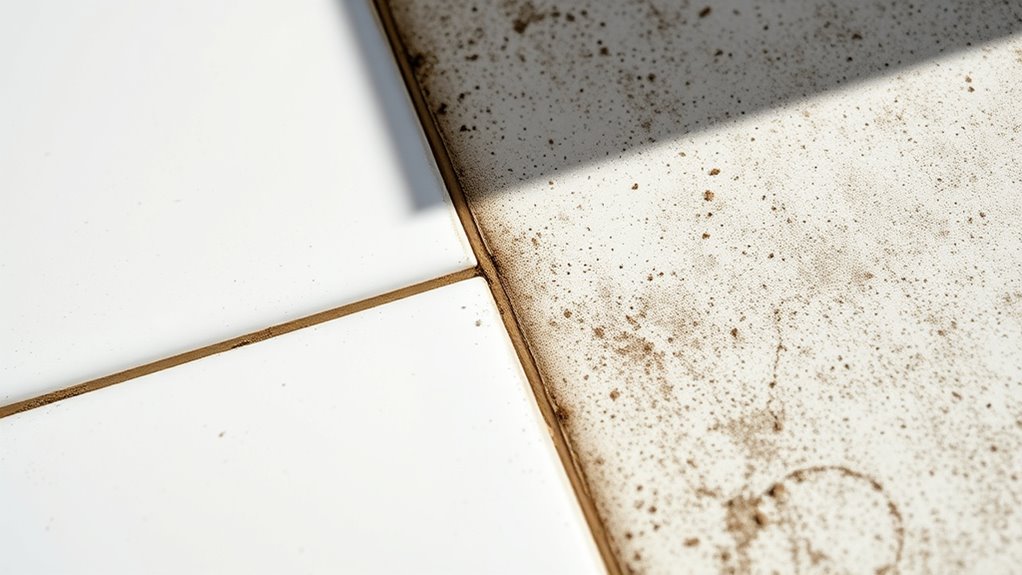
Dirt and debris can quickly accumulate on your tile and grout, causing discoloration and dullness. Different types of build-up, like mud, grease, or mineral deposits, affect how your surface looks and feels. Factors like traffic and cleaning methods can trap debris deeper, making it harder to keep things spotless.
Types of Dirt Build-up
Understanding the different types of dirt build-up is essential for effective tile and grout cleaning. Surface dirt, like dust and loose debris, sits on top and can be wiped away easily, but it often masks deeper grime. Then, there’s ingrained dirt, which penetrates the porous grout and becomes embedded over time, making it harder to remove. Oil and grease particles cling to the surface and trap dirt, causing dark stains that resist cleaning. Biological substances like mold, mildew, and soap scum can also accumulate, especially in damp areas, leading to discoloration and odors. Recognizing these different types helps you choose the right cleaning methods and products. Without understanding what’s causing the darkening, you might only treat the surface and miss the deeper, more stubborn buildup. Additionally, Free Floating can influence how dirt settles and accumulates, affecting cleaning strategies and results.
Debris Trapping Factors
The way debris and dirt settle on tile and grout surfaces considerably influences how easily they can be cleaned. Fine particles, like dust and dirt, tend to settle into grout lines and tiny crevices, making them harder to remove. Larger debris, such as crumbs or pet hair, can accumulate quickly if not cleaned regularly, increasing staining risk. Textured grout surfaces trap more debris than smooth ones, leading to faster discoloration. Foot traffic also plays a role; high-traffic areas trap more dirt, pushing particles deeper into the grout. Over time, this buildup creates a stubborn layer that resists regular cleaning methods. Understanding how debris traps in your tile and grout can help you adopt better cleaning habits and maintain a brighter, cleaner surface longer. Regular review sessions and employing proper cleaning techniques can significantly reduce debris buildup and prolong the appearance of your grout.
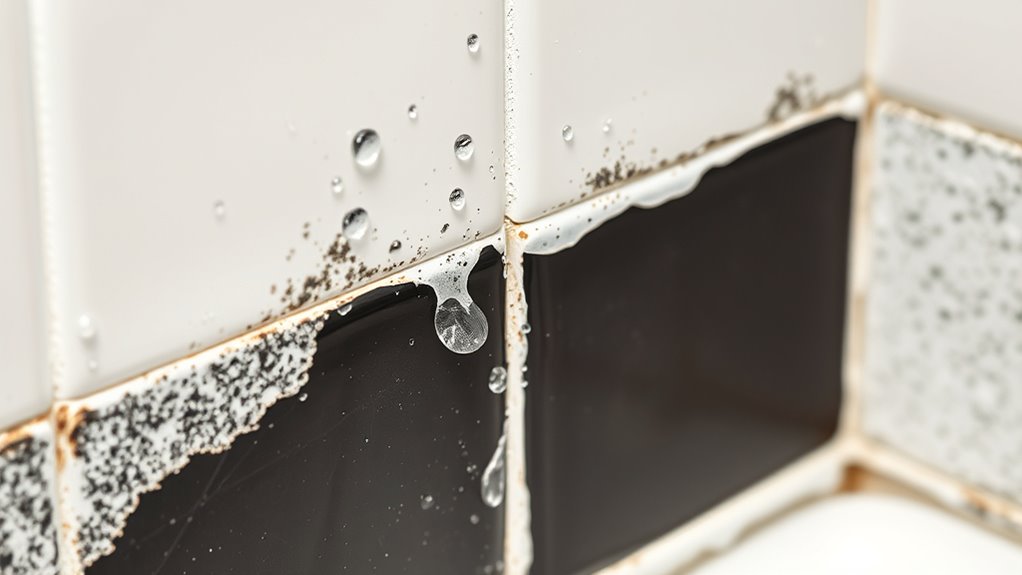
Mold and mildew often hide in the smallest, overlooked corners of your tile and grout, making them easy to miss during regular cleaning. These hidden offenders thrive in damp, dark areas where moisture lingers, even after you think you’ve cleaned thoroughly. You might notice dark spots or a musty smell, but not realize mold is lurking out of sight. Mold spores can cause health issues, especially if you have allergies or respiratory problems. It’s important to inspect grout lines carefully and address any signs of discoloration promptly. Regularly dry your tiles and use proper ventilation practices to reduce moisture. Deep cleaning with specialized mold and mildew removers helps eliminate these stubborn intruders, preventing them from spreading and causing further damage. Additionally, understanding the importance of proper ventilation can significantly reduce moisture buildup and inhibit mold growth in your tiles.
The Effect of Cleaning Products and Techniques
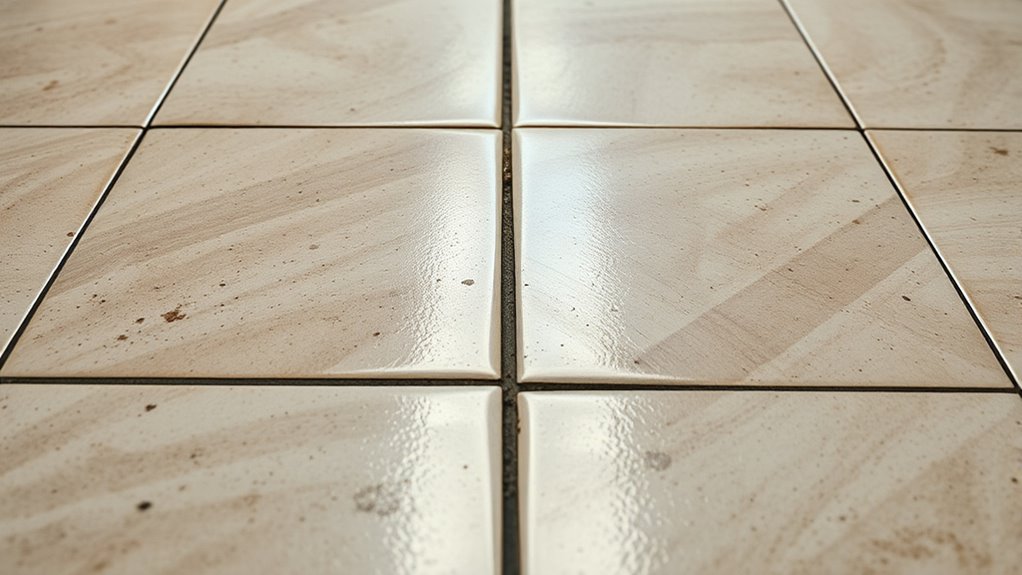
Choosing the right cleaning products and techniques can considerably impact how effectively you remove dirt, grime, and mold from your tile and grout. Harsh chemicals may seem powerful, but they can damage the grout or cause discoloration over time. Instead, opt for gentle, pH-neutral cleaners or natural solutions like vinegar and baking soda. Using a stiff-bristled brush helps dislodge debris without scratching the surface. Avoid overly aggressive scrubbing or using abrasive tools that can wear down the grout. Proper technique also matters: let the cleaning solution sit for a few minutes to loosen dirt, then scrub thoroughly. Rinsing well prevents residue buildup, which can attract more dirt and cause grout darkening. Understanding tile and grout maintenance can help you develop a routine that preserves their appearance over time. Additionally, selecting cleaning methods aligned with material safety can prevent unintended damage and prolong the life of your tiles. Regularly inspecting and maintaining your grout helps prevent the buildup of mold and dirt that contribute to darkening and staining. Incorporating gentle cleaning methods that consider the porosity of grout can also reduce the likelihood of stains setting in permanently.
Preventive Measures to Keep Grout Bright
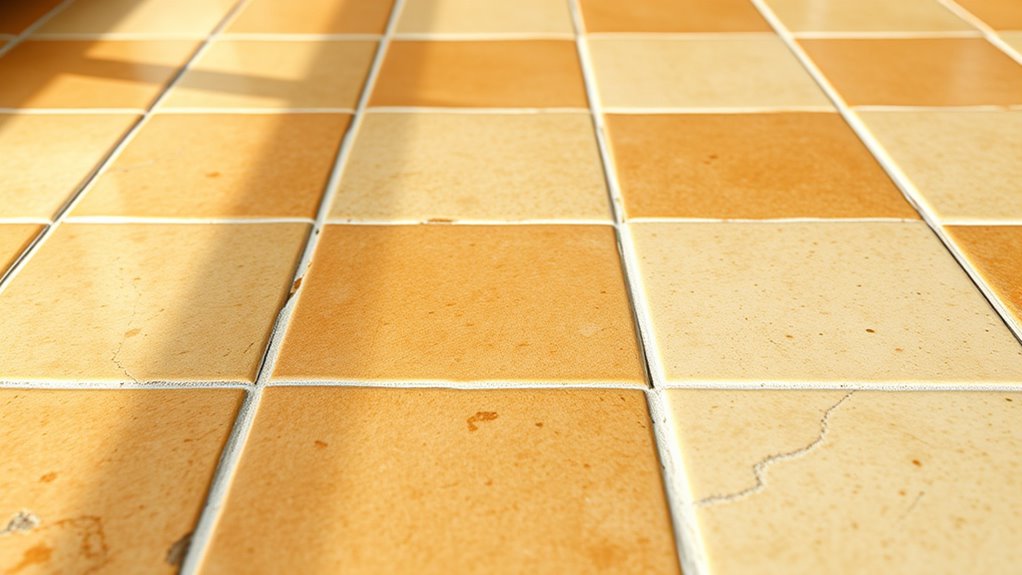
To keep your grout looking bright and fresh, adopting simple preventive habits can make a significant difference. Regularly sealing your grout creates a barrier against dirt, stains, and moisture that cause discoloration. Make it a routine to reseal every 6 to 12 months, depending on foot traffic and product recommendations. Immediately wipe up spills, especially acidic substances like vinegar or citrus, to prevent staining. Use mats or rugs in high-traffic areas to reduce dirt and debris tracked onto your tiles. Avoid harsh cleaning agents that can erode the grout’s surface; instead, opt for pH-neutral cleaners. Keeping the surface dry and promptly addressing any messes guarantees your grout stays bright longer. Incorporating smart cleaning solutions that utilize AI can help monitor and maintain your tile surfaces more effectively. Consistent preventive care preserves both the appearance and longevity of your tiled surfaces.
Long-Term Maintenance Tips for Fresh-Looking Grout
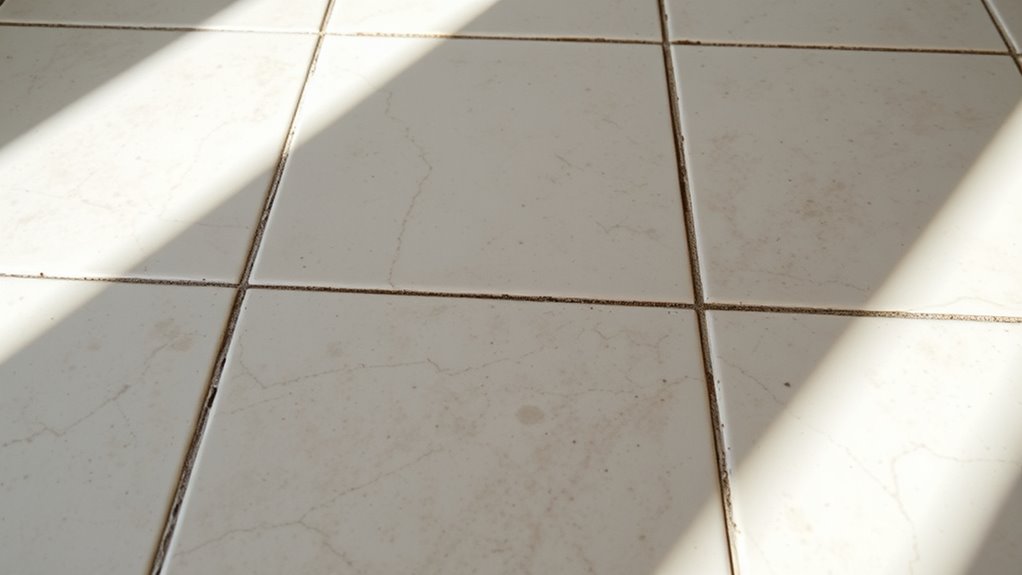
Maintaining the fresh look of your grout over time requires consistent effort and mindful habits. Regularly clean your tiled surfaces with a gentle, pH-neutral cleaner to prevent dirt buildup. Wipe spills immediately to stop stains from setting. Incorporate weekly dry mopping or sweeping to remove surface debris. Seal your grout at least once a year with a high-quality sealer to block moisture and stains. Avoid harsh chemicals or abrasive scrubbers that can damage the grout’s surface. When deep cleaning, use a soft brush and avoid excessive scrubbing, which can wear down the grout. Keep high-traffic areas well-maintained and address any cracks or damage promptly to prevent dirt accumulation. Understanding the importance of proper long-term maintenance can significantly extend the durability and appearance of your grout. Regular upkeep and proper cleaning techniques help preserve the grout’s appearance and extend its vibrant, fresh look. Additionally, being aware of mammography guidelines and scheduling regular screenings can contribute to early detection of potential issues, ensuring your overall health remains in top condition. Staying informed about industry trends and market information can also help you make informed decisions about your home maintenance routine.
Frequently Asked Questions
Can Sealing Grout Prevent It From Darkening Over Time?
Sealing grout can help prevent it from darkening over time, but it’s not a guarantee. When you seal your grout, you create a barrier that repels dirt, stains, and moisture, keeping it looking cleaner longer. However, if the sealant wears off or isn’t applied properly, grout can still darken. Regular sealing and maintenance are key to keeping your grout looking fresh and bright.
Are There Specific Cleaning Products That Cause Grout to Stain?
Yes, some cleaning products can cause grout to stain. Harsh chemicals like bleach, ammonia, or acidic cleaners may break down grout’s sealant or leave residue that attracts dirt, leading to discoloration. Always opt for pH-neutral or specially formulated tile and grout cleaners. Test new products in a small, hidden area first, and rinse thoroughly to prevent staining and maintain your grout’s appearance over time.
How Often Should I Deep Clean My Grout to Maintain Brightness?
You should deep clean your grout every 6 to 12 months to keep it bright. Did you know that grout can trap up to 40% more dirt and bacteria than tile surfaces? Regular deep cleaning prevents dirt buildup, mold, and stains from setting in. Use a gentle, pH-balanced cleaner and a brush to scrub thoroughly. This routine helps maintain a fresh, vibrant look and extends the lifespan of your grout.
Does Hard Water Contribute to Grout Discoloration?
Yes, hard water definitely contributes to grout discoloration. The minerals in hard water, like calcium and magnesium, settle into the porous grout, causing it to stain and darken over time. If you notice your grout getting darker quickly, consider installing a water softener or using a grout sealant. Regular cleaning with a pH-balanced cleaner can also help prevent mineral buildup and keep your grout looking bright.
Are There Professional Treatments to Restore Darkened Grout?
Think of grout like a white shirt that’s gone dingy over time—you can’t just toss it in the wash. Professional treatments, like deep cleaning with specialized grout cleaners or steam cleaning, can restore its brightness. I once saw a grout line transform after a pro used a high-pressure steam cleaner, making it look almost brand new. These methods effectively lift dirt, stains, and discoloration, giving your tiles a fresh, renewed appearance.
Conclusion
To keep your grout looking fresh, think of it like a sponge that easily soaks up dirt and moisture. Regular cleaning, quick stain removal, and sealing can help prevent it from darkening. Stay proactive with maintenance, and your grout will stay as bright as the sun on a clear day. By giving it proper care, you’ll enjoy a clean, vibrant space that feels as inviting as a warm hug.