
To vacuum carpet like a pro, start by choosing the right equipment and preparing your area by removing obstacles and stains. Use a systematic pattern, beginning with straight passes along the carpet’s length, then overlap each pass slightly for a deep clean. Vary your pattern in high-traffic zones and along edges, finishing with a crosshatch pattern for a polished look. Keep your technique consistent, and you’ll achieve professional results every time—keep going to learn all the insider tips!

Turn your quiet moments into listening time
- Thousands of audiobooks, podcasts and originals
- Listen on your phone, tablet or Echo — also offline
- Cancel anytime
Key Takeaways
- Use straight, overlapping passes in a consistent pattern, such as crisscross or linear, for thorough and professional cleaning.
- Adjust vacuum settings and height based on carpet type to optimize dirt removal and prevent damage.
- Maintain a steady, controlled speed and proper alignment to ensure even coverage and maximize suction.
- Cover high-traffic areas with extra passes and change directions to lift embedded dirt effectively.
- Finish with a crosshatch pattern to ensure fibers are lifted uniformly and achieve a polished, professional look.
best vacuum cleaner for deep carpet cleaning
As an affiliate, we earn on qualifying purchases.
As an affiliate, we earn on qualifying purchases.
Choosing the Right Vacuum and Attachments

Have you ever wondered how to choose the perfect vacuum and attachments for your carpets? Start by considering your carpet type—thicker, plush carpets need a vacuum with strong suction and a beater brush to lift dirt effectively. For low-pile carpets, a lighter vacuum with adjustable settings works well. Look for models with multiple attachments, like crevice tools and upholstery brushes, to tackle different surfaces and tight spots. HEPA filters can trap allergens, making your home healthier. Also, think about weight and maneuverability—if you have stairs or large areas, a lightweight, cordless option might be best. Choosing the right vacuum and attachments guarantees you clean efficiently and extend your carpet’s lifespan. It’s all about matching features to your specific carpet needs. Additionally, selecting essential oils for carpet cleaning can help maintain freshness and eliminate odors naturally. Considering ergonomic vacuum design can make your cleaning routine more comfortable and reduce strain. Understanding modern vacuum technology can also guide you to models with advanced features for better cleaning performance. Exploring innovative cleaning features can further enhance your vacuuming efficiency and effectiveness, especially when combined with knowledge about color accuracy in projectors to improve your overall home environment.
As an affiliate, we earn on qualifying purchases.
Preparing Your Carpet Before Vacuuming

Before you start vacuuming, it’s important to prepare your carpet to guarantee the cleaning process is as effective as possible. Begin by removing loose objects, such as toys, shoes, or furniture, to give your vacuum unobstructed access. Next, perform a quick shake or beat of the rugs to loosen embedded dirt and dust. If your carpet has visible stains or spots, treat these areas with a stain remover and let it sit for a few minutes. Vacuum any high-traffic areas more thoroughly, as they tend to accumulate more dirt. Clearing the surface ensures your vacuum can reach deep into the fibers and pick up debris more efficiently. Proper preparation minimizes missed spots and helps achieve a cleaner, fresher carpet. Additionally, understanding your vacuum’s power source and choosing the right equipment can make a significant difference in your cleaning results. For optimal results, consider the type of vacuum that best suits your carpet’s texture and your cleaning needs. Being aware of carpet maintenance practices can also prolong the life and appearance of your carpet over time. Incorporating regular upkeep routines can further enhance your cleaning efficiency and extend the lifespan of your carpets. To maximize effectiveness, you might explore advanced cleaning techniques that go beyond basic vacuuming.
HEPA filter vacuum for allergens
As an affiliate, we earn on qualifying purchases.
As an affiliate, we earn on qualifying purchases.
Starting With a Straight Line Pattern
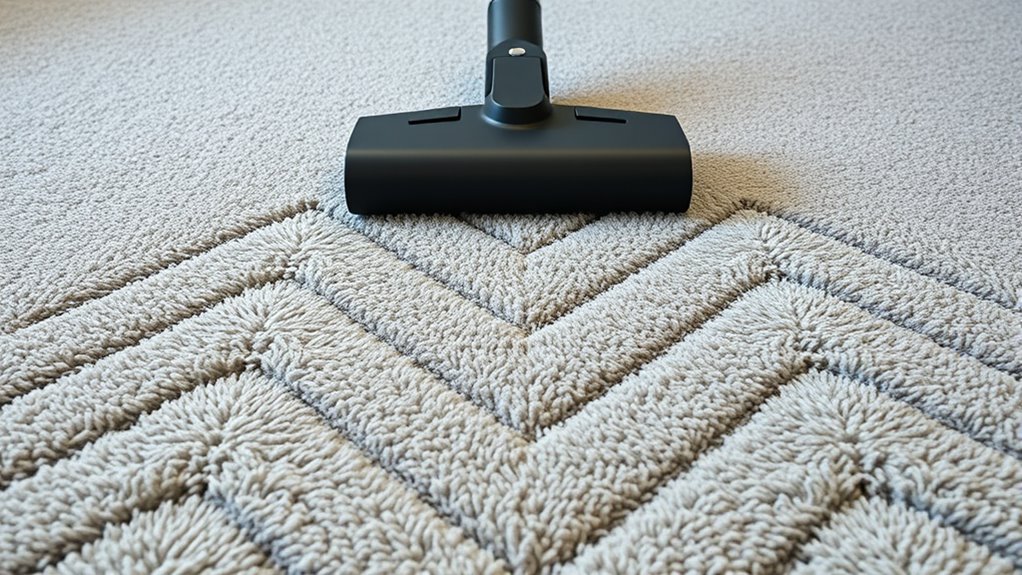
To start with a straight line pattern, make sure your vacuum head is aligned properly with the edge of the carpet. Keep a steady, consistent speed as you move back and forth to guarantee even cleaning. This approach helps you cover the area efficiently and achieve a professional-looking result.
Align the Vacuum Head
Starting with a straight line pattern is essential for a professional-looking vacuuming job, and properly aligning the vacuum head makes this process much easier. Before you start, verify the vacuum head is straight and centered over the carpet. Keep the head flat against the surface to maximize suction and avoid missed spots. Use your hand or foot to adjust the alignment if needed, making sure the edges are parallel to the lines you plan to vacuum. This helps maintain a consistent pattern and prevents zigzagging or overlapping excessively. Consistently aligning the vacuum head creates clean, even lines and ensures thorough coverage of the carpet. Proper vacuum technique also reduces wear on your equipment and extends its lifespan. Additionally, paying attention to navigation and mapping can help you plan your pattern for more efficient cleaning. Taking the time to adjust your path and follow a planned route can further improve the overall results. Taking a moment to assess your space can help you identify the most efficient pattern for your specific layout. Being mindful of wave and wind patterns in your vacuuming approach can help you achieve a more uniform clean. Take your time to position the head correctly before moving forward, setting a solid foundation for a polished, professional finish.
Maintain Consistent Speed
Maintaining a steady, consistent speed while vacuuming guarantees your carpet looks uniformly clean and professional. Moving too fast can miss dirt, while going too slow wastes time and energy. Keep a relaxed, even pace as you push the vacuum forward and pull it back. This consistent motion helps ensure the fibers are thoroughly cleaned and prevents uneven patches. To stay consistent, focus on your breathing and arm movements, avoiding sudden speed changes. Using proper equipment like a quality vacuum with adjustable settings can also enhance your results. Consider these tips: – Use smooth, controlled strokes – Avoid rushing or hesitating – Maintain the same pace across each pass – Keep your grip steady on the handle – Practice slow, deliberate movements until it becomes natural. Additionally, understanding air purifier maintenance can help you create a cleaner environment that complements your vacuuming efforts. Being aware of your vacuuming technique can further optimize your cleaning efficiency and results. Incorporating consistent cleaning patterns can also help maintain an even appearance across your entire carpet.
cordless lightweight vacuum for stairs
As an affiliate, we earn on qualifying purchases.
As an affiliate, we earn on qualifying purchases.
Creating Overlapping Passes for a Deep Clean
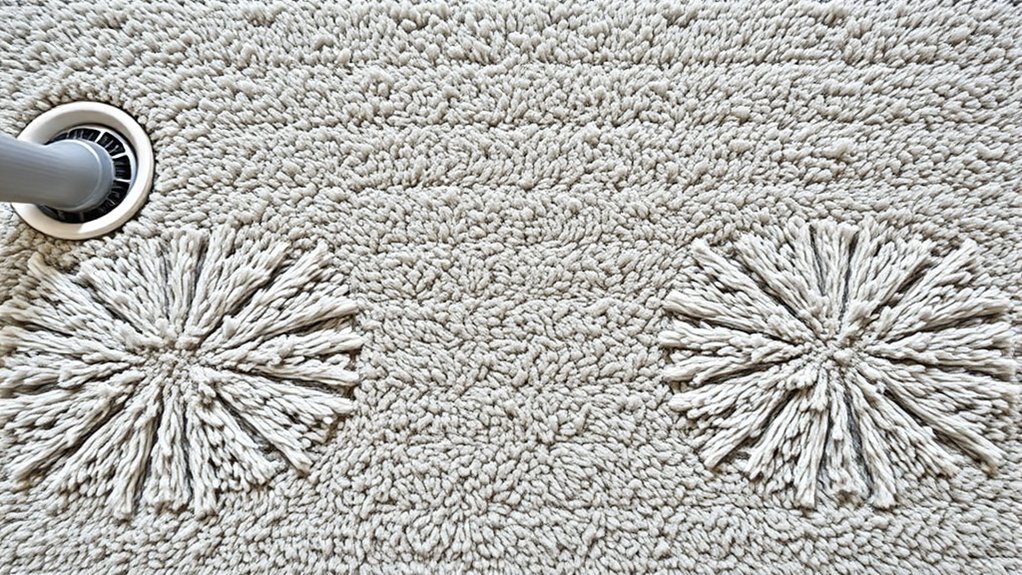
Creating overlapping passes is essential for a deep clean because it guarantees no area gets missed or overlooked. As you vacuum, make sure each pass slightly overlaps the previous one, covering the entire carpet surface thoroughly. This technique ensures you pick up embedded dirt, pet hair, and debris that might otherwise be left behind. Maintain a steady, consistent speed to give the vacuum enough time to extract dirt from the fibers. Don’t rush through sections; instead, slow down slightly for heavily soiled areas. Overlapping passes also help prevent streaks or patches of unclean carpet. By systematically covering every inch with overlapping passes, you maximize dirt removal and achieve a professional, deep-cleaned look. Incorporating proper technique into your routine transforms a routine vacuum into a deep-cleaning powerhouse. Additionally, understanding the history of cleaning methods can help you appreciate the evolution of effective vacuuming practices. Using a vacuum with powerful suction can further enhance your cleaning results.
Varying Your Pattern for Different Areas
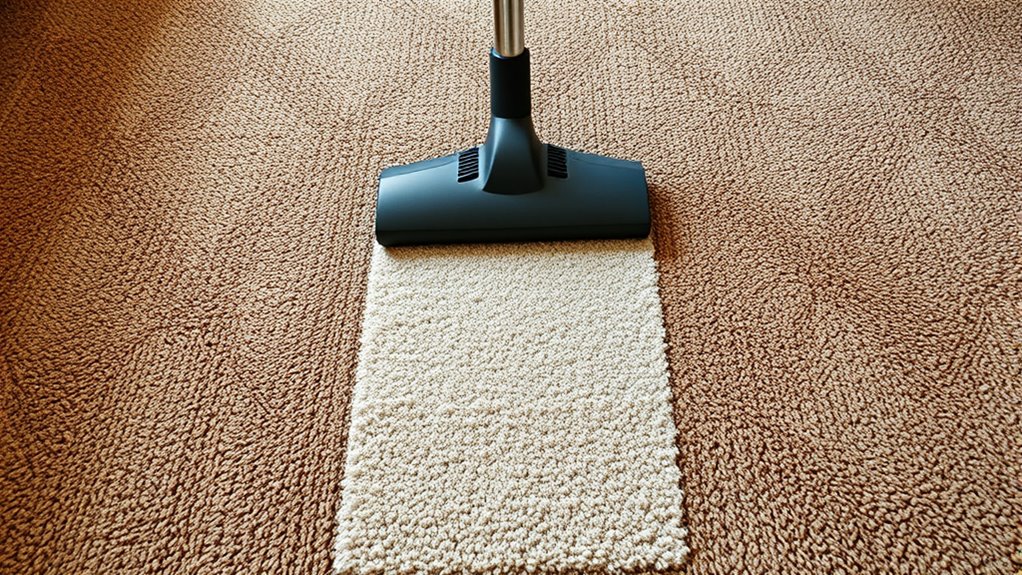
To get your carpet truly clean, you should modify your vacuuming pattern based on the area. Different carpet types and room shapes require specific techniques, like changing direction or overlapping passes. Using directional methods ensures every inch gets the attention it needs. For example, adjusting your pattern can help prevent uneven wear, much like selecting the right dog bed for a Golden Retriever’s comfort and support. Incorporating the use of best vacuums for dust removal in 2024 can further enhance your cleaning efficiency and ensure allergens are effectively captured. Additionally, paying attention to vacuuming techniques tailored to your carpet type can maximize cleanliness and prolong the lifespan of your flooring.
Adjust for Carpet Type
Since different carpet types have unique textures and pile heights, modifying your vacuuming pattern is essential for effective cleaning. For low-pile carpets, use slow, deliberate passes to dislodge dirt embedded deep in the fibers. High-pile or shag carpets require you to go over the area multiple times, moving in different directions to lift debris from the dense fibers. For berber carpets, avoid aggressive agitation to prevent damage; instead, use gentle, overlapping strokes. Frieze or textured carpets benefit from a crisscross pattern to ensure thorough cleaning without excessive wear. Additionally, consider the carpet’s weave and density to determine if you need to adjust your vacuum’s height setting or suction power for ideal results. Tailoring your approach guarantees a cleaner, longer-lasting carpet.
Cover Different Room Shapes
When cleaning different room shapes, adjusting your vacuuming pattern guarantees a more thorough job. For rectangular rooms, vacuum along the length and width in straight lines to cover every inch efficiently. In irregular spaces, create a pattern that follows the room’s natural flow, avoiding missed spots. For L-shaped or oddly angled areas, break the space into sections and vacuum each separately. This ensures all corners and edges get attention. To help you plan, here’s a quick guide:
| Room Shape | Pattern Tips |
|---|---|
| Rectangular | Long parallel passes along length and width |
| Irregular | Follow natural flow, avoid missed corners |
| L-Shaped | Divide into sections, vacuum each thoroughly |
| Small or tight spots | Use a zigzag or circular motion |
Use Directional Techniques
Varying your vacuuming pattern across different areas prevents missed spots and guarantees a deeper clean. Changing directions helps lift dirt from various angles, making sure nothing gets left behind. For example, vacuum along the grain of the carpet in one pass, then go perpendicular on the next to dislodge debris trapped deep within fibers. Using different patterns also prevents carpet wear over time by distributing foot traffic evenly. To maximize efficiency, switch techniques based on the room’s layout or furniture placement. Here are some effective directional techniques:
- Vacuum in straight lines for open areas
- Use zigzag patterns for densely packed spots
- Vary your pattern when shifting between rooms
- Focus on edges with side-to-side motions
- Overlap your passes to ensure complete coverage
Using the Edges and Corners Effectively

To achieve a truly professional-looking vacuuming job, it is essential to pay special attention to the edges and corners of your carpet. These areas often trap dust, dirt, and debris that regular passes can miss. Use the crevice tool or the edge of your vacuum cleaner to reach tight spots along baseboards and in corners. Slide the nozzle carefully into corners, making multiple passes if needed, to dislodge hidden dirt. For edges, angle the vacuum slightly to guarantee the brush or nozzle contacts the surface thoroughly. Avoid rushing; slow, deliberate movements help pick up every particle. By focusing on these less accessible areas, you’ll leave your carpet looking cleaner and guarantee dust doesn’t settle in unnoticed.
Covering High-Traffic Zones Thoroughly

Focusing on edges and corners improves the overall cleanliness, but high-traffic zones demand even more attention to guarantee your carpet stays fresh and dirt-free. These areas experience frequent wear, so thorough vacuuming is essential. Move systematically across these zones, overlapping your passes to ensure no dirt is left behind. Use slow, deliberate strokes to lift debris embedded deep within the fibers. Pay extra attention to pathways, doorways, and entry points where dirt accumulates faster. Adjust your vacuum’s height for maximum suction, especially if your carpet pile is thick. Regularly check and clean your vacuum’s brush roll to maintain efficiency. By dedicating extra care to high-traffic zones, you prevent dirt buildup and extend your carpet’s lifespan.
- Focus on overlapping passes
- Use slow, steady strokes
- Adjust vacuum height as needed
- Pay attention to entryways
- Clean your vacuum’s brush roll regularly
Finishing With a Crosshatch Pattern for Final Touches

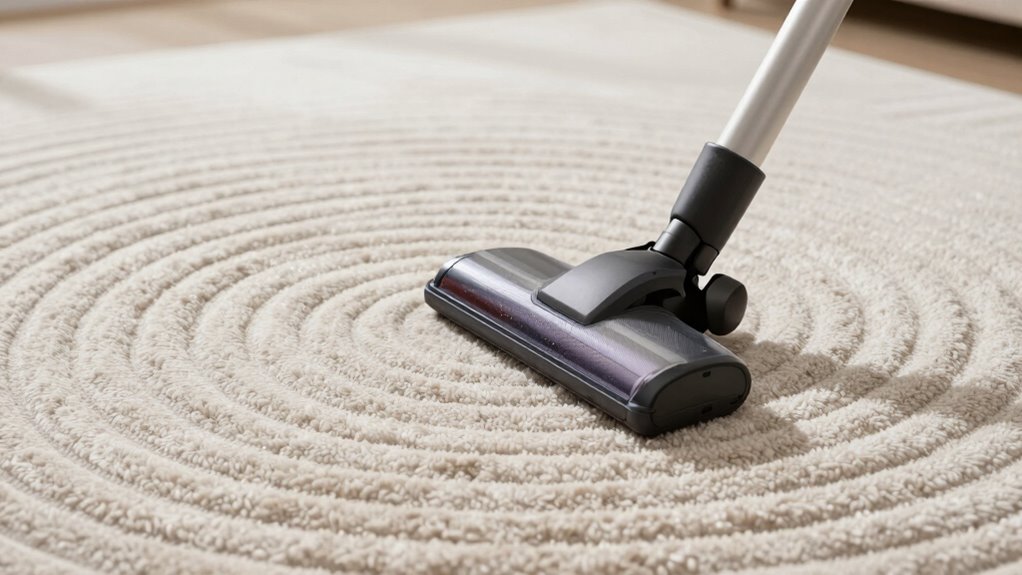
Once you’ve vacuumed thoroughly, finishing with a crosshatch pattern guarantees no area is overlooked. To do this, start by vacuuming in straight lines along one direction, then go over the same area at a 90-degree angle. This crisscross motion ensures every carpet fiber is lifted and debris is removed. It also helps create a uniform, professional appearance. Pay extra attention to high-traffic zones or areas prone to dirt buildup. Keep your vacuum moving steadily and avoid pressing down too hard, which can damage fibers. The crosshatch pattern not only maximizes cleaning efficiency but also leaves your carpet looking fresh and well-maintained. This final step seals your cleaning routine, giving your carpet a polished finish that lasts longer.
Frequently Asked Questions
How Often Should I Vacuum My Carpet for Optimal Cleanliness?
You should vacuum your carpet at least once a week to maintain ideal cleanliness. If you have pets, allergies, or heavy foot traffic, consider vacuuming more often—up to three times a week. Regular vacuuming removes dirt, dust, and allergens that can accumulate over time. Use a high-quality vacuum with proper attachments, and follow a consistent pattern to guarantee thorough cleaning and prevent dirt buildup.
Can I Use a Vacuum on Delicate or Antique Carpets Safely?
You can absolutely vacuum delicate or antique carpets, but you have to handle them with care—think of it as giving your cherished heirloom a gentle hug. Use a vacuum with a low suction setting or a handheld cleaner with soft brushes. Avoid beater bars or aggressive attachments that could damage fibers. Regular, gentle vacuuming keeps your prized rugs clean without risking their beauty, letting them tell their stories for generations.
What’s the Best Way to Handle Stubborn Pet Hair?
To tackle stubborn pet hair, start by using a vacuum with a powerful brush roll and strong suction. You should go over the area slowly, making multiple passes in different directions to loosen hair from fibers. For extra effectiveness, try a rubber broom or gloves to lift hair before vacuuming. Regularly empty your vacuum canister or replace the bag to maintain maximum suction. This way, you’ll keep your carpets fur-free and fresh.
How Do I Prevent My Vacuum From Damaging the Carpet Fibers?
Sure, you want to keep your carpet pristine without turning it into a tangled mess. To prevent damage, always use the correct attachment and set your vacuum to the appropriate height—too low, and it’s like a hairbrush for your fibers. Regularly check your brush roll for debris, and avoid aggressive pushing. With gentle, consistent strokes, you’ll protect your carpet’s fibers and keep it looking fresh.
Are There Specific Patterns for Different Carpet Textures?
Yes, different carpet textures benefit from specific vacuum patterns. For plush carpets, go with slow, overlapping strokes to lift dirt from deep fibers. For looped or Berber carpets, vacuum in straight lines to avoid snagging fibers. Frieze or shag carpets require gentle, crisscross motions to prevent damage. Adjust your vacuum’s height accordingly, and always vacuum in multiple directions to guarantee thorough cleaning without harming the carpet’s texture.
Conclusion
Now that you know the pattern, your carpet will never look the same. Follow these steps, and you’ll reveal a level of cleanliness that surprises even you. But here’s the twist—you might discover some hidden dirt lurking in the corners or under furniture. Are you ready to master the ultimate vacuuming technique? Keep practicing, stay consistent, and watch your carpet transform before your eyes. The secret to professional results is just a pattern away—are you prepared to unseal it?
Halloween Picks
halloween
As an affiliate, we earn on qualifying purchases.