

To understand battery ecosystems, start by learning how recycling recovers valuable materials and reduces environmental impacts. Get familiar with supply chain management, which coordinates raw materials, manufacturing, and recycling, improving efficiency and transparency. Explore technological innovations like smart monitoring and automation that make the system smarter and more sustainable. Recognize the importance of collaboration among stakeholders and continuous innovation to build a resilient, eco-friendly battery ecosystem. Keep exploring to discover how these pieces come together for a cleaner energy future.

Turn your quiet moments into listening time
- Thousands of audiobooks, podcasts and originals
- Listen on your phone, tablet or Echo — also offline
- Cancel anytime
Key Takeaways
- Understand the importance of recycling in recovering valuable materials and minimizing environmental impact.
- Learn how supply chain management integrates raw material sourcing, manufacturing, logistics, and recycling.
- Explore technological innovations like smart monitoring and automation to enhance efficiency and transparency.
- Recognize the need for collaboration among manufacturers, recyclers, and policymakers to build a sustainable ecosystem.
- Focus on continuous innovation and stakeholder commitment to improve sustainability and adapt to market and technological shifts.
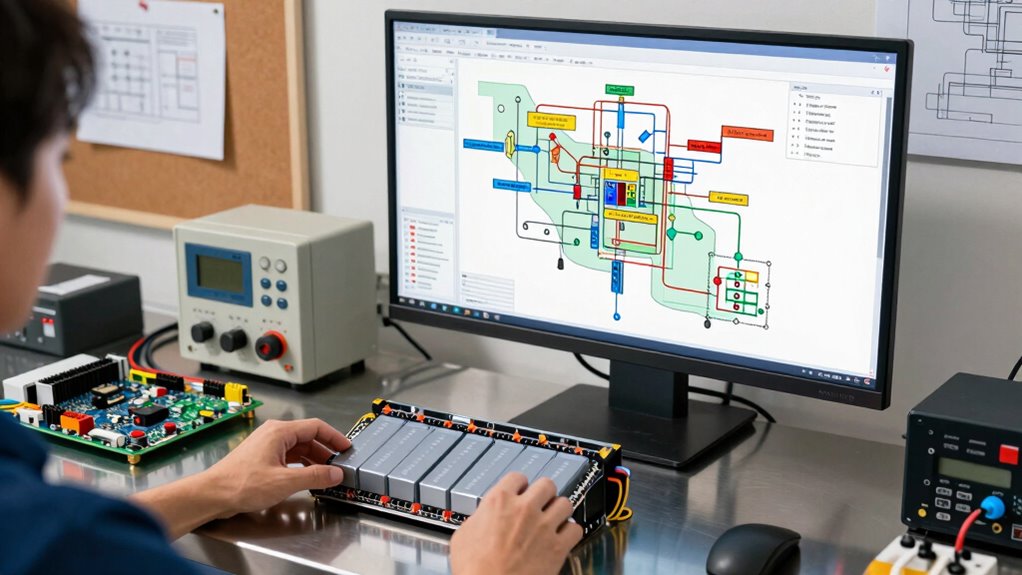
Building a robust battery ecosystem is essential for powering a sustainable future. As you explore this growing industry, understanding how various components fit together helps you see the bigger picture. One of the most critical aspects is battery recycling, which guarantees that valuable materials are recovered and reused, reducing environmental impact and dependence on raw material extraction. When you focus on battery recycling, you contribute to a circular economy, where batteries are not just disposed of but integrated back into the supply chain. This process minimizes waste, conserves resources, and supports a more sustainable model, making it crucial for the long-term health of the ecosystem.
Focusing on battery recycling promotes a circular economy, reduces waste, and sustains the long-term health of the ecosystem.
Alongside recycling, supply chain management plays a pivotal role. It involves coordinating every step from raw material extraction to manufacturing, distribution, and ultimately, recycling. Effective supply chain management means you can track materials, optimize logistics, and reduce costs, all while maintaining transparency and sustainability. A well-managed supply chain helps prevent bottlenecks and ensures the timely availability of critical components needed for battery production. It also allows you to respond swiftly to market demands and technological shifts, keeping the ecosystem resilient and adaptable. Incorporating emerging technologies like smart monitoring and automation further enhances supply chain efficiency, enabling real-time data-driven decisions that improve sustainability outcomes. Additionally, embracing digital transformation can significantly boost supply chain visibility and responsiveness.
As you begin to grasp the interconnectedness of these elements, you’ll see that building a battery ecosystem isn’t just about technology—it’s about creating a sustainable, efficient cycle. You need a steady flow of raw materials, innovative recycling methods, and careful logistics planning. This interconnected approach aids in reducing environmental footprints and supports clean energy initiatives. Additionally, understanding the importance of collaboration among manufacturers, recyclers, and policymakers enables you to foster partnerships that strengthen the entire system. Recognizing the significance of raw material sustainability and responsible sourcing is essential for a truly resilient ecosystem. Moreover, integrating advanced data analytics into the supply chain can improve forecasting and resource allocation, further enhancing sustainability efforts.
Furthermore, embracing emerging technologies like smart monitoring and automation enhances supply chain management, making it more transparent and responsive. These tools allow you to track battery performance and lifecycle, which informs better recycling strategies and material recovery. An increased focus on technology integration can drive further improvements in efficiency and environmental impact. As you develop expertise, you’ll recognize that creating a resilient battery ecosystem requires continuous innovation and a commitment to sustainability from every stakeholder involved.
As an affiliate, we earn on qualifying purchases.
Frequently Asked Questions
How Do Battery Ecosystems Impact Renewable Energy Integration?
Battery ecosystems play a vital role in renewable energy integration by providing essential battery storage, which smooths out fluctuations in energy supply and demand. This boosts energy resilience, ensuring a reliable power supply even when renewable sources like solar or wind are intermittent. You benefit from a more stable grid, reduced reliance on fossil fuels, and a cleaner environment as battery ecosystems make renewable energy more practical and dependable.
What Are the Key Challenges in Scaling Battery Ecosystems?
Scaling battery ecosystems faces key challenges like material sourcing and supply chain disruptions. You’ll need reliable access to essential materials such as lithium, cobalt, and nickel, which can be scarce or environmentally problematic. Managing a complex supply chain is vital to meet growing demand without delays or cost increases. Addressing these issues requires innovation in sourcing, recycling, and supply chain resilience to support large-scale deployment of batteries.
How Does Battery Recycling Fit Into Ecosystems?
Battery recycling plays a crucial role in ecosystems by enabling battery reuse and reducing waste. You can participate in recycling processes that recover valuable materials like lithium, cobalt, and nickel from used batteries. This not only minimizes environmental impact but also supplies raw materials for new batteries, creating a sustainable loop. Embracing recycling helps close the battery lifecycle, ensuring resources are reused efficiently within the ecosystem.
What Are Emerging Technologies Shaping Future Battery Ecosystems?
Emerging technologies like advanced battery chemistry, including solid-state and lithium-silicon batteries, are transforming future ecosystems by offering higher energy density and safety. You’ll also see innovations in charging infrastructure, such as fast-charging stations and wireless charging, making energy more accessible. These advancements promote sustainability and efficiency, creating a more resilient and eco-friendly battery ecosystem. Staying updated on these tech trends helps you better understand the future landscape of energy storage.
How Do Policy and Regulations Influence Battery Ecosystem Development?
Think of policy incentives and regulatory frameworks as the guiding compass steering the battery ecosystem’s growth. When policies support innovation, like tax credits or grants, they act as fuel for development. Clear regulations set safety and environmental standards, building trust and attracting investments. Together, they shape a sustainable future, encouraging companies to innovate, scale, and collaborate, ultimately transforming the battery landscape into a resilient and thriving ecosystem.
As an affiliate, we earn on qualifying purchases.
Conclusion
Now that you’ve navigated the roadmap to battery ecosystems, remember that understanding each component is like deciphering a secret code to innovation. As you dive deeper, embrace curiosity and keep exploring—because the future of energy depends on your insights. Don’t just observe; participate. After all, in the world of batteries, isn’t it true that the most powerful energy comes from the spark of your own discovery? Keep pushing forward—your journey has just begun.
automated supply chain management software
As an affiliate, we earn on qualifying purchases.
As an affiliate, we earn on qualifying purchases.
renewable energy battery storage
As an affiliate, we earn on qualifying purchases.
As an affiliate, we earn on qualifying purchases.
Columbus Day / Indigenous Peoples' Day Picks
long weekend sales
As an affiliate, we earn on qualifying purchases.