Vented kitchen hoods exhaust air outside, removing smoke, grease, and odors efficiently, which keeps your indoor air fresher and reduces lingering buildup. Recirculating hoods filter contaminants through filters and return clean air indoors, but their performance depends on regular filter maintenance. If you prioritize better airflow and less ongoing upkeep, vented hoods are ideal. To understand how these options impact your indoor environment and what to contemplate, keep exploring these differences further.
Key Takeaways
- Vented hoods expel smoke and odors outside, resulting in fewer indoor air quality issues.
- Recirculating hoods filter air through charcoal and grease filters, which may reduce airflow and leave odors indoors.
- Vented models typically provide higher airflow efficiency with less ongoing filter maintenance.
- Recirculating hoods require regular filter cleaning and replacement to maintain effective ventilation.
- Choosing between them depends on kitchen setup, maintenance willingness, and indoor air quality priorities.
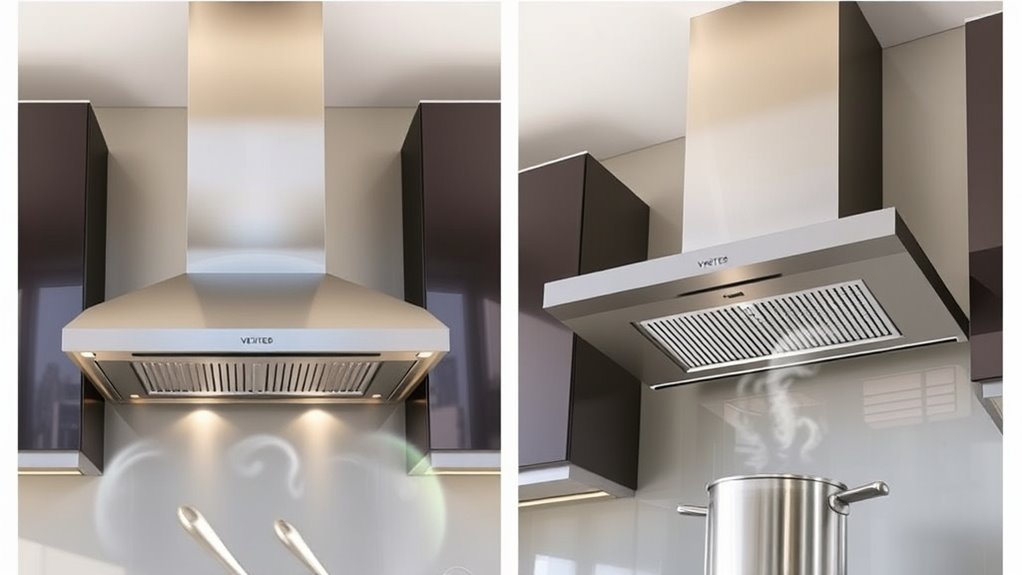
A kitchen hood is an indispensable appliance that helps keep your cooking area clean and safe by removing smoke, grease, and odors. When choosing between recirculating and vented hoods, understanding how each impacts indoor air quality and maintenance is vital. One key factor to evaluate is airflow efficiency. Vented hoods, which expel air outside through ductwork, generally provide higher airflow efficiency because they directly remove contaminated air from your kitchen. This means less smoke, grease, and odors linger, resulting in a fresher environment. Recirculating hoods, on the other hand, filter the air and return it indoors, which can sometimes compromise airflow efficiency, especially if the filters are clogged or not properly maintained.
Vented hoods offer higher airflow efficiency by removing air outside, while recirculating models depend on filters that require regular maintenance.
Filter maintenance becomes an important aspect when considering recirculating hoods. These units rely heavily on filters—typically grease and charcoal filters—to clean the air before recirculating it. If you neglect filter maintenance, airflow reduces dramatically, diminishing the hood’s ability to effectively trap grease and odors. Regularly cleaning or replacing grease filters ensures that airflow remains essential and prevents buildup that could cause the motor to work harder. Charcoal filters in recirculating hoods are also necessary for odor removal but need replacing every few months to keep odors at bay. Without consistent filter maintenance, your kitchen’s air quality may decline, leading to lingering smells and greasy surfaces.
In vented hoods, filter maintenance mainly involves cleaning the grease filters, which can usually be washed and reused. This process is straightforward and, with routine upkeep, maintains high airflow efficiency. Ductwork should also be inspected periodically to prevent blockages or buildup that could hinder airflow. In contrast, recirculating hoods require more frequent filter changes because their efficiency directly depends on the cleanliness of the filters. If filters become clogged or saturated, airflow drops, and the hood’s performance diminishes. This ongoing maintenance, while slightly more involved, ensures your kitchen stays well-ventilated and free of unwanted odors and grease. Additionally, considering air quality is essential when selecting your kitchen ventilation system to ensure a healthy indoor environment.
Ultimately, your choice between recirculating and vented hoods hinges on your kitchen setup and maintenance willingness. Vented hoods often provide superior airflow efficiency with less ongoing filter maintenance, but they require ductwork installation. Recirculating models are easier to install but demand diligent filter upkeep to keep airflow high and indoor air quality essential. By understanding these aspects, you can select the right hood that balances convenience, performance, and indoor air cleanliness, ensuring your kitchen remains a safe, enjoyable space to cook.
Frequently Asked Questions
How Often Should I Clean My Kitchen Hood Filters?
You should clean your kitchen hood filters at least once a month to maintain filter maintenance and guarantee peak performance. If you cook often or fry frequently, consider cleaning them every two weeks. Regular cleaning prevents grease buildup, reduces fire risk, and keeps the air fresh. Remember to follow the manufacturer’s cleaning instructions and use appropriate cleaning solutions to keep your filters in top shape.
Can a Recirculating Hood Effectively Remove Smoke?
A recirculating hood can effectively improve air quality by filtering smoke, but it doesn’t remove smoke as efficiently as vented systems. It captures grease and odors through filters, reducing indoor smoke buildup, but some fine particles may escape. If you want better smoke removal for heavy cooking, consider a vented hood. For lighter cooking or apartment settings, a recirculating hood still helps, but keep filters clean for ideal air quality.
What’s the Lifespan of a Typical Vented Kitchen Hood?
A vented kitchen hood typically lasts around 10 to 15 years with proper maintenance. You should follow a regular maintenance schedule, including cleaning filters and inspecting the vent system, to prolong its lifespan. Keep in mind, replacement costs can range from $200 to $600 or more, depending on the model and installation. Staying on top of maintenance helps prevent costly repairs and ensures your hood performs efficiently for years.
Are There Energy Efficiency Differences Between Recirculating and Vented Hoods?
You’ll find that vented hoods generally use less energy because they vent air outside, reducing the need for repeated filtration. Recirculating hoods tend to consume more energy due to their reliance on fans and filters, which can decrease filtration efficiency over time. If energy efficiency is your priority, vented hoods are typically better, but proper maintenance is essential to keep filtration systems working effectively and minimize energy use.
Do Different Hood Types Impact Indoor Air Quality Differently?
Imagine your kitchen turning into a smoky, smelly battlefield if you pick the wrong hood. Vented hoods dramatically improve air quality by venting out odors and airborne grease, keeping your space fresh and clean. Recirculating hoods, on the other hand, only filter air, often leaving lingering odors and pollutants. So, your choice directly impacts odor control and overall indoor air quality, making vented hoods the cleaner, healthier option.
Conclusion
Choosing between a recirculating and vented kitchen hood is like picking the right brush for a painting—you want the one that best captures the essence of your space. Vented hoods sweep away odors and smoke, clearing the air like a fresh breeze, while recirculating hoods recycle air, filtering out impurities but leaving some odors behind. Understanding these differences helps you create a healthier, more comfortable kitchen—your culinary sanctuary, where fresh air flows as freely as your creativity.