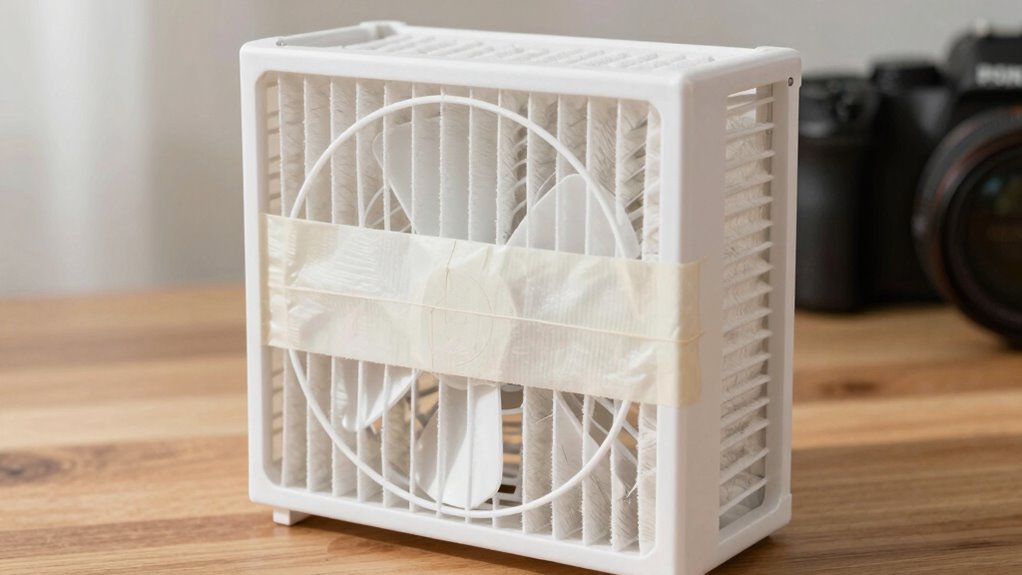

DIY box-fan filters can help improve indoor air quality by capturing larger particles like dust and pollen, especially during wildfire season or post-renovation. However, they have limits; they may not effectively filter viruses or tiny pollutants and can pose safety risks if improperly assembled or used with incompatible fans. To guarantee safety, secure filters well, avoid airflow blockages, and handle components carefully. If you want to know more about how to make and use them safely, keep going.

Turn your quiet moments into listening time
- Thousands of audiobooks, podcasts and originals
- Listen on your phone, tablet or Echo — also offline
- Cancel anytime
Key Takeaways
- DIY box-fan filters effectively improve air quality temporarily in small spaces but may not filter viruses or fine pollutants reliably.
- Proper assembly, secure filter attachment, and sealing are essential to prevent safety hazards and airflow leaks.
- Limitations include reduced airflow and potential strain on the fan; use compatible fans and avoid overloading outlets.
- Regular maintenance, including filter replacement every few weeks and safety checks, ensures optimal performance and safety.
- Always handle filters carefully, keep electrical cords organized, and operate devices on stable surfaces to minimize risks.
Understanding How DIY Box-Fan Filters Work

Understanding how DIY box-fan filters work begins with recognizing that they use a fan to pull air through a filter, trapping airborne particles like dust, pollen, and pollutants. When you turn on the fan, it creates airflow that moves from the open side of the filter toward the fan’s motor. As air passes through the filter material, tiny particles get caught, reducing the amount of contaminants circulating in your space. The filter acts as a barrier, capturing particles that would otherwise stay suspended in the air. This process improves indoor air quality and can help alleviate allergies or respiratory issues. The effectiveness depends on the filter’s material and thickness, as well as how well the fan can draw air through the filter. Additionally, selecting the right filter technology, such as high-efficiency particulate air (HEPA), can significantly enhance filtration performance. Using a properly rated filter ensures optimal air purification, and choosing the correct filter size and fit can prevent bypass and maintain proper airflow, further improving safety and effectiveness.
Situations Where DIY Filters Can Be Effective

DIY box-fan filters work best in situations where portable, affordable air cleaning solutions are needed quickly. If you’re in a space with high pollution, dust, or allergens, and you need to improve air quality fast, a DIY filter can be a practical option. They’re especially useful during wildfire seasons or in areas with poor outdoor air quality. When you’re setting up a temporary workspace, home office, or bedroom and want to reduce airborne contaminants without investing in expensive commercial units, DIY filters can serve as an effective stopgap. Additionally, if you’re in a situation where you need to address a sudden increase in airborne particles, such as post-renovation or during cleaning, these filters offer a quick, low-cost solution. Understanding how to safely build and use these filters can help prevent potential risks and maximize their benefits. Using appropriate essential oils in DIY filters can also enhance air quality and provide additional health benefits, especially for respiratory health. Ensuring proper filter materials are used can significantly improve the effectiveness and safety of your DIY air filtration setup.
Risks and Limitations of Using DIY Box-Fan Filters

While DIY box-fan filters can be helpful, they come with some risks and limitations you should consider. You might find that they don’t filter air as effectively as commercial options, and improper assembly can cause safety issues. Additionally, their airflow capacity can be limited, reducing their overall effectiveness in larger spaces. Moreover, understanding the filtering efficiency of DIY solutions is important, as they often lack the rigorous testing of commercial filters. It’s also crucial to recognize that air exchange rates may not meet recommended standards when using homemade filters. Furthermore, the ventilation provided by DIY filters may not be sufficient for maintaining safe indoor air quality in high-risk environments. Considering home filtration systems can often provide more reliable and safer air purification options for various needs. Evaluating the filter materials used in DIY setups can help ensure better safety and performance.
Inadequate Filtration Efficiency
Despite their ease of construction, DIY box-fan filters often fall short in providing reliable filtration, which can pose significant health risks. They may not effectively capture smaller airborne particles like viruses or fine pollutants. This means you might believe you’re protected, but contaminants can still bypass the filter, leading to potential health issues. The filtration efficiency depends heavily on filter quality and proper installation. If the filter isn’t rated for high efficiency, you risk exposing yourself to harmful particles. Here’s a quick comparison:
| Filter Type | Particle Size Captured | Efficiency Level |
|---|---|---|
| DIY Filter | 0.3–10 microns | Variable, often low |
| HEPA Filter | 0.3 microns | ≥99.97% |
Choosing the right filter is vital for effective protection.
Improper Assembly Risks
Even if you select a filter with high filtration ratings, improper assembly can substantially compromise its effectiveness. If the filter isn’t securely attached to the fan or if gaps exist around the edges, unfiltered air can bypass the filter entirely. This reduces the air quality improvement you’re aiming for and can give a false sense of protection. Using the wrong size or type of filter can also cause poor fit or airflow issues, creating stress on the fan motor or decreasing filtration efficiency. Additionally, poorly assembled filters may fall apart or shift during operation, risking damage or airflow leaks. Always double-check that the filter is properly aligned, sealed, and securely fastened. Proper assembly is essential to ensure your DIY filter functions safely and effectively.
Limited Airflow Capacity
Have you considered how much air your DIY box-fan filter can actually move? Many DIY setups have limited airflow compared to commercial HEPA systems. Your fan, combined with the filter’s thickness and material, restricts airflow, reducing circulation efficiency. This means it might not clean the air quickly enough in larger spaces or high-traffic areas. If airflow is too weak, pollutants linger longer, reducing the filter’s effectiveness. You may also notice your fan runs louder or strains under the load. To improve performance, you can try using a more powerful fan or reducing filter thickness, but these changes can increase noise or decrease filter lifespan. Always remember, a DIY filter has inherent limitations that can impact its ability to adequately ventilate or purify your environment. Additionally, understanding airflow capacity is essential for optimizing your setup and ensuring safety and effectiveness. Recognizing the performance limitations of DIY filters can help set realistic expectations for their use. Being aware of filter material quality can also influence the overall safety and durability of your DIY solution. Moreover, assessing the filter’s compatibility with your fan can prevent issues related to inadequate filtration or equipment damage.
Furthermore, paying attention to the airflow dynamics within your setup can help you identify bottlenecks and improve overall efficiency.
Safety Precautions for Building and Operating DIY Air Purifiers

Building and operating your DIY air purifier can be safe and effective if you follow proper precautions. Always guarantee your fan is compatible with the filter and that it’s rated for continuous use. Keep electrical connections secure, and avoid overloading outlets to prevent fire hazards. Use a surge protector and inspect cords regularly for damage. Place the purifier on a stable, flat surface away from water or moisture to prevent electrical shocks. Never leave the device unattended for long periods, and turn it off when cleaning or changing filters. Make sure your workspace is well-ventilated, and handle filters carefully to avoid inhaling dust particles. Regularly check your electrical system to ensure it can support your DIY setup safely. Additionally, understanding air quality fundamentals can help you optimize your purifier’s effectiveness and safety. Proper filter maintenance is essential for sustained performance and safety. Following these safety measures helps reduce risks and keeps your DIY air purifier working effectively. Maintaining awareness of ventilation techniques can further improve your setup’s safety and efficiency. Always stay informed about electrical safety practices to prevent potential hazards during operation.
Tips for Maximizing Effectiveness and Safety

To guarantee your DIY box-fan filter works safely and effectively, focus on proper placement and maintenance. Place the filter in a location with good airflow, away from obstructions, and ensure it’s stable to prevent accidents. Keep the filter and fan clean by regularly checking for dust buildup or damage, which can reduce efficiency and pose safety risks. Use secure fastenings to prevent the filter from falling or shifting. Avoid blocking the fan’s intake or exhaust to maintain ideal airflow. Replace the filter material when it becomes dirty or clogged, typically every few weeks. Additionally, understanding global chaos caused by outages can help in planning backups and contingency measures for critical setups. Ensuring proper electrical safety practices can further prevent hazards related to DIY air filtration systems. Maintaining awareness of security zone info can assist in safeguarding your equipment against theft or vandalism. Finally, confirm the fan’s cords are neat and out of the way to prevent tripping hazards or electrical issues. Regularly inspecting your setup for equipment stability ensures safe operation and prolongs the life of your DIY filter system. Proper care maximizes filtration and keeps your setup safe.
Alternatives to DIY Box-Fan Filters for Better Air Quality

If you’re looking for better air quality, consider enhanced air purification devices that offer higher filtration efficiency. Professional HVAC solutions can also provide complete and reliable air cleaning for larger spaces. These alternatives often outperform DIY options, ensuring healthier indoor air.
Enhanced Air Purification Devices
While DIY box-fan filters are popular for their affordability, they may not always deliver the highest level of air purification. Commercial air purifiers equipped with HEPA filters are a better choice for removing fine particles, allergens, and pathogens effectively. These devices often feature advanced filtration stages and quieter operation. When selecting an air purifier, consider factors like room size, filter lifespan, and noise levels. Here’s a quick comparison:
| Feature | DIY Box-Fan Filter | Commercial HEPA Air Purifier | Benefits |
|---|---|---|---|
| Cost | Low | Higher | Long-term savings |
| Filtration Efficiency | Moderate | High | Better air quality |
| Noise Level | Variable | Usually quieter | Comfort during use |
| Maintenance | Replace filters yourself | Replacement filters available | Easier upkeep |
| Coverage Area | Limited | Suitable for larger spaces | Effective for whole rooms |
Professional HVAC Solutions
Looking for a reliable way to improve indoor air quality? Professional HVAC systems offer a proven solution. These systems are designed to filter large volumes of air efficiently, using high-grade filters like HEPA or MERV-rated options. Unlike DIY methods, they can be customized to suit your space’s specific needs, whether it’s a home, office, or industrial setting. HVAC professionals can install, maintain, and upgrade these systems to guarantee ideal performance and safety. They also provide better airflow management, reducing pollutants, allergens, and airborne pathogens effectively. While they require a higher upfront investment, professional HVAC solutions deliver consistent, reliable air quality improvements over time. If you prioritize long-term safety and effectiveness, investing in a professionally installed HVAC system is generally the best choice.
Frequently Asked Questions
How Long Do DIY Box-Fan Filters Typically Last Before Needing Replacement?
You should replace your DIY box-fan filter every 1 to 3 months, depending on usage and air quality. If you notice reduced airflow, increased dust buildup, or odors, it’s time for a change. Regular inspection helps verify your filter remains effective. Keep in mind, using a filter beyond its lifespan can decrease air quality and strain your fan, so don’t delay replacing it to maintain safety and efficiency.
Can DIY Filters Effectively Remove All Types of Airborne Pollutants?
DIY filters can effectively reduce many airborne pollutants like dust, pollen, and some bacteria, but they can’t eliminate all types, especially viruses and harmful gases. You should understand their limitations and use them as supplementary measures rather than sole solutions. Regularly check and replace the filter materials to maintain efficiency. While they improve air quality, for high-risk environments, consider certified air purifiers for all-encompassing protection.
Is It Safe to Leave a DIY Air Purifier Running Overnight?
It’s generally safe to leave a DIY air purifier running overnight if you’ve built it correctly and followed safety guidelines. Make sure it’s placed on a stable surface, not near flammable materials, and that the fan has proper wiring and ventilation. Regularly check for overheating or unusual noises. If you notice any issues, turn it off immediately. Proper setup and vigilance guarantee safer, effective use overnight.
What Are Common Signs That a DIY Filter Is No Longer Effective?
You notice the filter isn’t working when airflow slows down unexpectedly, or if dust and allergens seem to stick around longer. If the filter looks visibly dirty or clogged, it’s a clear sign it’s no longer effective. Unusual odors or increased dust in your room also indicate it’s time to replace or clean your DIY filter. Regularly check for these signs to keep your air purifier working efficiently.
Are There Specific Brands or Materials Recommended for DIY Filter Components?
You should choose high-quality, HVAC-approved materials like HEPA filters or MERV 13 filters for your DIY filter components. Avoid cheap or unverified materials that may not effectively trap particles or could release harmful fibers. Brands like Filtrete, Honeywell, and 3M are trusted options. Make sure the materials fit your fan properly, and replace them regularly to maintain peak filtration and safety.
Conclusion
Now that you know when and how to use DIY box-fan filters safely, remember there’s more beneath the surface. Will your homemade filter truly protect you, or could hidden risks catch you off guard? The choice is yours—understanding the limits and precautions is key. Stay vigilant, keep learning, and don’t settle for less. The next step could make all the difference in your air quality—and your safety. Are you ready to take it?
Halloween Picks
halloween
As an affiliate, we earn on qualifying purchases.