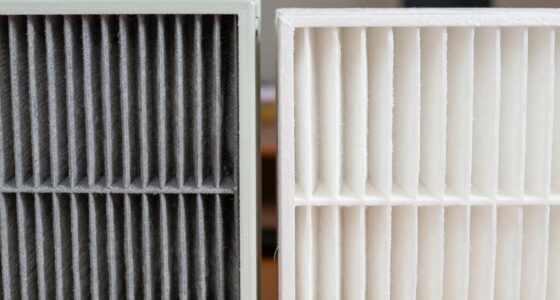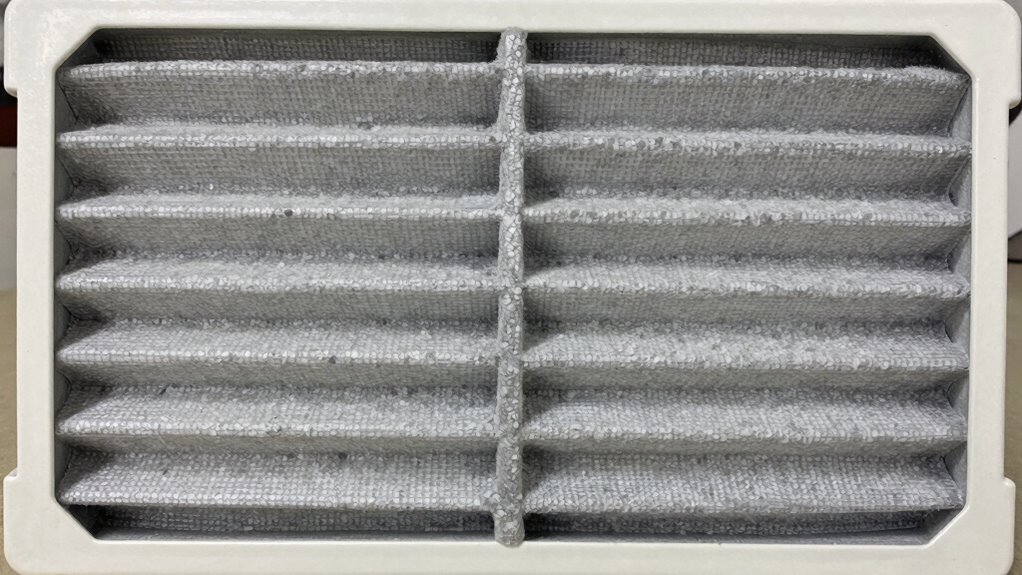

MERV ratings show how well your HVAC filter captures airborne particles, with higher numbers meaning better filtration of smaller pollutants like smoke, bacteria, and viruses. Lower ratings mainly trap larger debris like dust and pollen. Choosing the right MERV depends on your indoor air quality needs and your system’s capabilities. If you’re curious about how to optimize your filter selection and improve air quality without harming your system, keep exploring for more insights.
Key Takeaways
- MERV ratings measure a filter’s ability to capture particles of specific sizes, from large debris to microscopic allergens.
- Higher MERV ratings trap smaller particles like bacteria and smoke but may restrict airflow if not matched with HVAC capacity.
- Filters with lower MERV ratings mainly block larger particles and are easier on HVAC systems, promoting better airflow.
- Proper filter installation and regular replacement are essential for maintaining filtration effectiveness and indoor air quality.
- The best filter choice balances filtration efficiency with system compatibility to optimize air quality without overloading the HVAC system.
Understanding MERV Ratings: The Basics

MERV ratings, or Minimum Efficiency Reporting Value ratings, are a standardized way to measure how well an air filter can trap particles. They help you understand a filter’s ability to remove contaminants from the air in your home or building. The higher the MERV rating, the more efficient the filter is at catching smaller particles like pollen, pet dander, and bacteria. MERV ratings typically range from 1 to 20, with lower ratings suited for basic filtration and higher ratings used in specialized applications. Knowing your filter’s MERV rating helps you choose the right one for your needs, balancing filtration performance with airflow. This rating system makes it easier to compare filters and guarantee you’re getting the level of air cleanliness you want. Additionally, integrating smart home air quality monitors can provide real-time feedback on your indoor air, ensuring your filtration system is effectively improving your environment. Properly selected filters based on MERV ratings can also help optimize HVAC system efficiency, reducing energy consumption and prolonging equipment lifespan. Understanding the particle size that filters can capture allows for more precise matching of filters to specific indoor air quality concerns. By selecting the appropriate MERV-rated filter, you can better manage the indoor air quality and create a healthier living environment for everyone. Incorporating filter replacement schedules can help maintain optimal filtration performance over time.
How MERV Ratings Are Calculated

The calculation of MERV ratings involves testing air filters against a standardized set of particle sizes to determine their efficiency. During testing, filters are exposed to specific particles, such as dust, pollen, and smoke, within controlled airflow conditions. You’ll see how well the filter captures particles at various sizes by measuring the percentage of particles it traps. The results are then scored based on how effectively the filter removes particles across different size ranges. This scoring process considers the filter’s ability to catch both larger and smaller particles, which directly impacts its MERV rating. Overall, this standardized testing guarantees that MERV ratings accurately reflect your filter’s real-world performance in capturing airborne contaminants. Standardized testing ensures consistent and reliable measurement of filter performance across different brands and models. Additionally, testing conditions are designed to simulate real indoor environments, providing a more practical assessment of filter effectiveness. Conducting these tests in controlled environments helps ensure that results are comparable and dependable. Furthermore, performance evaluation uses these controlled parameters to maintain fairness and accuracy in rating different filters. In addition, understanding the testing procedures can help consumers make more informed choices when selecting air filters.
MERV Ratings and Particle Sizes

Since MERV ratings are based on how well filters trap particles of different sizes, understanding which particles are involved helps clarify what these ratings really mean. Filters are tested with particles ranging from 0.3 to 10 microns, which includes dust, pollen, pet dander, smoke, and bacteria. Smaller particles, like bacteria and smoke, are harder to capture and require higher MERV ratings. Larger particles, such as dust and pollen, are easier to trap even with lower-rated filters. Knowing the size of particles relevant to your indoor environment helps you choose a filter that effectively captures what matters most. The MERV rating indicates how efficiently a filter captures particles at specific size ranges, directly impacting your indoor air quality. Additionally, ventilation strategies techniques can influence how effectively these filters perform in different environmental conditions. Understanding your indoor air quality needs can also guide you toward optimal filter selection for your specific environment, especially when considering the particle size distribution in your space. Incorporating appropriate air exchange rates can further improve overall air quality and filter performance.
What Do Different MERV Levels Mean for Indoor Air Quality

Have you ever wondered how different filter ratings impact the air you breathe? Higher MERV levels mean your filter can trap smaller particles, improving air quality. For example:
- Low MERV (1-4): Basic filters, mainly catching dust and larger debris, leave smaller allergens and bacteria in the air.
- Medium MERV (5-8): Better at filtering pollen, pet dander, and mold spores, creating a healthier environment.
- High MERV (13-16): Capture tiny particles like bacteria, smoke, and viruses, markedly reducing airborne contaminants. Understanding air filtration efficiency can help you select the most suitable filter for your space. Additionally, filter lifespan can vary based on MERV rating and usage, affecting overall indoor air quality. Proper maintenance and replacement schedules are essential for maintaining optimal air quality.
Pros and Cons of High vs. Low MERV Filters
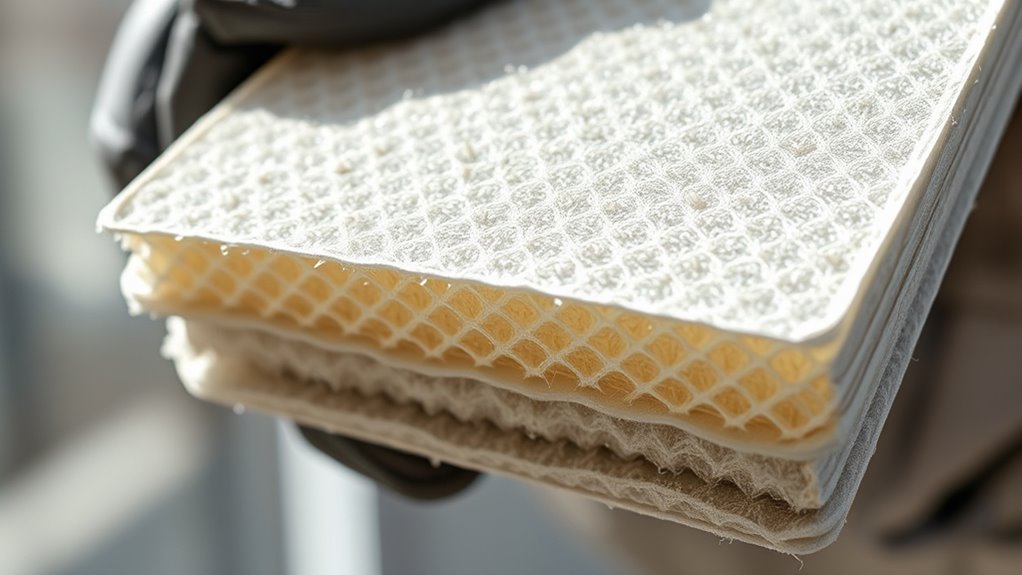
Choosing between high and low MERV filters involves weighing their benefits and drawbacks. High MERV filters capture more airborne particles, improving indoor air quality, especially for allergy sufferers or those with respiratory issues. However, they can restrict airflow, putting extra strain on your HVAC system and potentially reducing efficiency or causing damage over time. They also tend to be more expensive and require more frequent replacement. Additionally, selecting the right filter involves understanding filter efficiency and how it impacts overall system performance. Proper filter maintenance is essential to ensure optimal operation and longevity of your HVAC equipment. Low MERV filters are more affordable, promote better airflow, and are easier on your system. But, they don’t filter out smaller particles effectively, which could leave indoor air less clean. Proper filter selection is essential to balance air quality with system performance. Considering air filtration standards can help in choosing the most suitable option for your needs. If you prioritize clean air and have a robust HVAC system, high MERV might be worth it. Otherwise, a lower MERV filter could be a practical choice. Incorporating a well-designed filtration strategy can optimize air quality without overburdening your HVAC system.
Selecting the Right MERV Rating for Your Home or Business
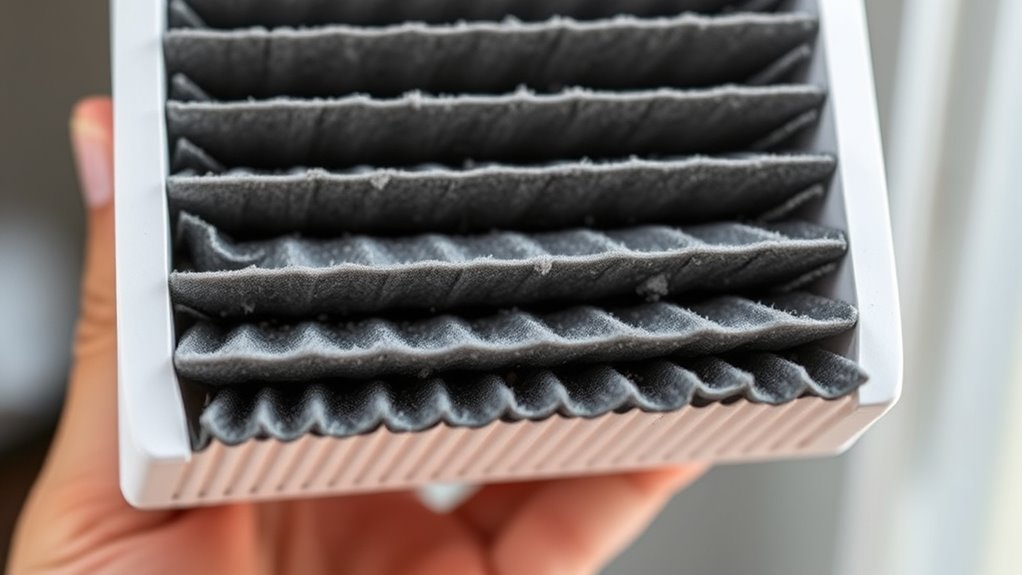
Selecting the right MERV rating for your home or business involves evaluating your specific air quality needs and HVAC system capabilities. First, consider the level of airborne particles you want to remove, such as pollen, pet dander, or bacteria. Next, check your HVAC system’s specifications to make sure it can handle higher-rated filters without strain. It’s also important to consider the filter efficiency to ensure you are achieving your desired air quality levels without compromising system performance. Finally, balance your indoor air quality goals with your system’s efficiency and maintenance requirements. To visualize, think of:
- Filtering out dust and allergens like a fine sieve
- Protecting your HVAC system from clogging and damage
- Maintaining airflow without sacrificing comfort
- Understanding the Gold IRA Market helps in making informed investment decisions.
Common Misconceptions About MERV Ratings
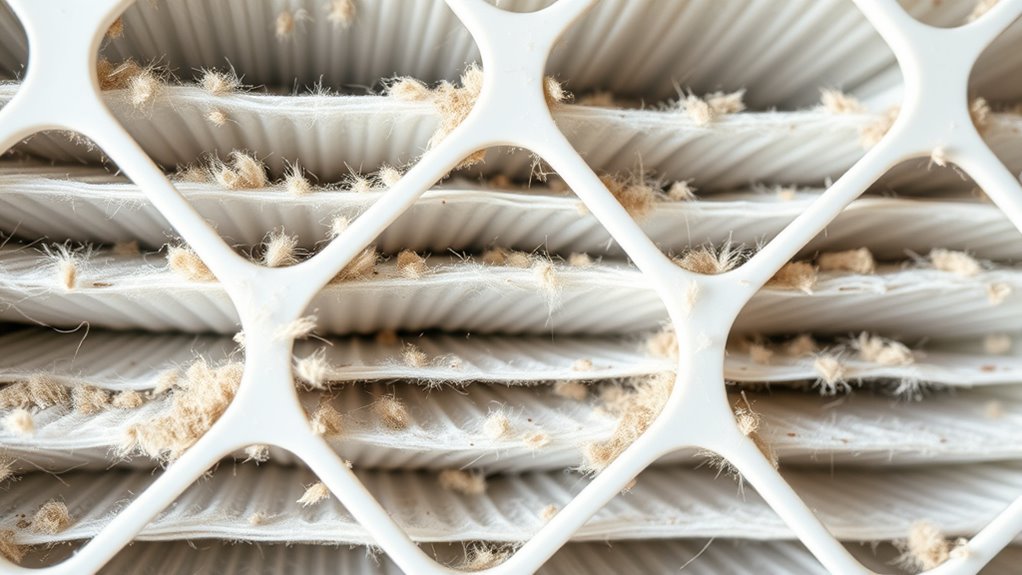
Many people assume that higher MERV ratings always mean better air quality, but that’s not necessarily true. While higher ratings indicate finer particle capture, they can also restrict airflow more than necessary for your system. This can lead to decreased efficiency, higher energy costs, and potential strain on your HVAC. Some believe that a MERV 16 filter will eliminate all pollutants, but even the best filters can’t remove gases, odors, or viruses completely. Additionally, many think that a higher MERV rating is suitable for every home or business, but not all systems are designed to handle high-rated filters. Choosing an excessively high MERV without considering your system’s capabilities might do more harm than good. Always match your filter’s MERV rating to your system’s specifications for ideal performance.
Tips for Maintaining Your HVAC Filter’s Effectiveness
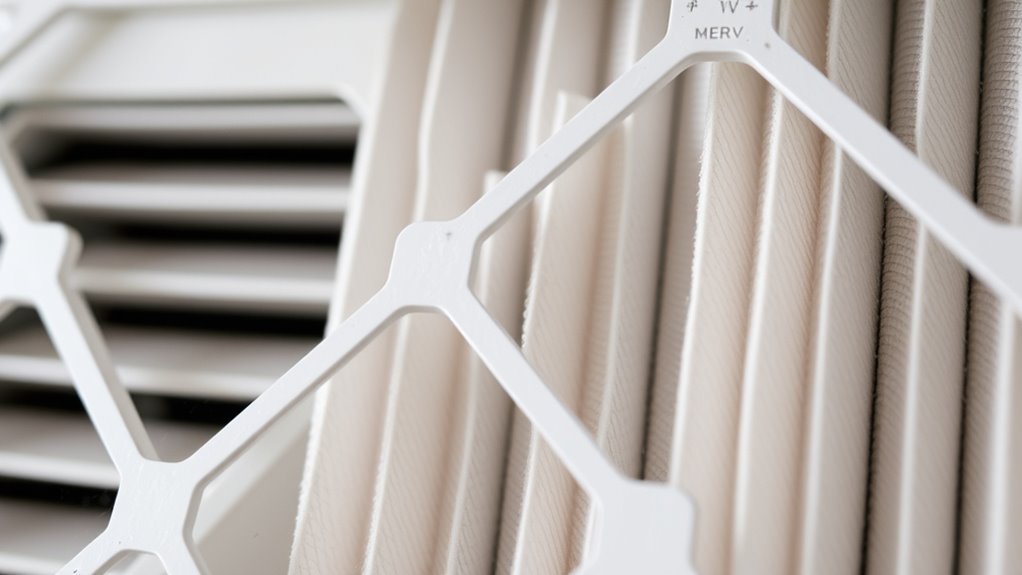
To keep your HVAC filter working effectively, make sure to replace it regularly according to your system’s recommendations. Proper installation is also key—double-check that the filter is seated correctly to prevent air bypass. By staying on top of these steps, you’ll improve air quality and system efficiency.
Regular Filter Replacement
How often should you replace your HVAC filter to keep it working effectively? Typically, you should change it every 1 to 3 months, depending on your home environment. Regular replacement prevents dust buildup, maintains airflow, and guarantees your system runs efficiently.
Imagine these scenarios:
- Dust and allergens accumulating like a thick fog, blocking airflow.
- Pet hair and pollen settling deep into the fibers, reducing filter lifespan.
- Excess debris clogging the filter, forcing your system to work harder.
Proper Installation Techniques
Proper installation is essential to guarantee your HVAC filter works effectively. First, ensure you turn off your system before replacing the filter. Check the airflow direction arrows on the filter’s frame—they must align with the system’s airflow. Insert the filter gently without forcing it, making sure it fits snugly within the filter slot. Avoid gaps or misalignment, as these can let unfiltered air bypass the filter. Regularly inspect for proper placement and replace filters at recommended intervals. Also, clean surrounding areas to prevent dust buildup that could compromise the filter’s performance. Correct installation guarantees ideal air quality, system efficiency, and prolongs the lifespan of your HVAC unit. Take your time during installation to avoid mistakes that could reduce your filter’s effectiveness.
Frequently Asked Questions
How Often Should I Replace My HVAC Filter Based on MERV Rating?
You should replace your HVAC filter every 1 to 3 months, depending on its MERV rating. Higher-rated filters (like MERV 13-16) trap more particles and may need changing more often, especially if you have allergies or pets. Lower-rated filters last longer but are less effective. Check your filter monthly and replace it when it looks dirty or clogged to keep your system running efficiently and maintain good air quality.
Can a Higher MERV Rating Restrict Airflow in My System?
Yes, a higher MERV rating can restrict airflow in your system. While it captures more particles, it also creates more resistance, making your HVAC work harder. This increased effort can reduce efficiency and strain your system, especially if the filter isn’t designed for high-MERV ratings. To prevent issues, choose a filter that balances filtration with airflow, and replace it regularly to maintain peak performance.
Are There Health Risks With Very High MERV Filters?
Yes, very high MERV filters can pose health risks if they prevent airflow, leading to poor ventilation and potential mold growth or dust buildup. If your system isn’t designed for such filters, it might strain your HVAC unit, causing inefficiency or damage. Always consult your system’s specifications and a professional before installing filters with extremely high MERV ratings to guarantee safety and proper operation.
Do MERV Ratings Affect HVAC Energy Efficiency?
Think of your HVAC system as a delicate balance beam—when you add a higher MERV filter, it’s like adding weight, affecting efficiency. Higher MERV ratings can slow airflow, making your system work harder and consume more energy. While they trap more particles, you might see increased energy bills. To keep things running smoothly, select a filter that balances filtration with airflow, ensuring comfort without sacrificing efficiency.
How Do I Know if My Filter’s MERV Rating Is Genuine?
You can verify if your filter’s MERV rating is genuine by checking the packaging for the official MERV label and manufacturer details. Purchase from reputable suppliers and avoid cheap, unbranded filters. Look for certifications or third-party testing labels that confirm the rating. If you’re unsure, contact the manufacturer directly or compare the filter’s specifications with industry standards to guarantee authenticity.
Conclusion
Now that you’ve decoded MERV ratings, you’re like a filter expert ready to make smarter choices. Just as a key unfastens a door, understanding these ratings opens the way to cleaner air and healthier spaces. Keep your filter maintained, select the right level for your needs, and breathe easier knowing you’re in control—like a captain steering your home’s air quality through calm and storm. Your environment’s freshness starts with your choice.