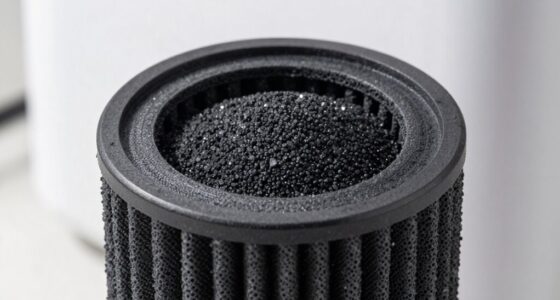
MERV and HEPA filters serve different purposes in air purification. MERV filters are designed for general use, capturing larger particles like pollen and pet dander, making them common in residential HVAC systems. HEPA filters, on the other hand, trap at least 99.97% of tiny particles around 0.3 microns, such as viruses and mold spores, often used in hospitals and high-performance air purifiers. Understanding these differences helps you choose the right filter—if you want to learn more, keep exploring how each one works.

Turn your quiet moments into listening time
- Thousands of audiobooks, podcasts and originals
- Listen on your phone, tablet or Echo — also offline
- Cancel anytime
Key Takeaways
- MERV filters are versatile and suitable for residential HVAC, while HEPA filters are designed for high-efficiency air purification in specialized environments.
- HEPA filters trap at least 99.97% of 0.3-micron particles, whereas MERV ratings indicate their ability to capture different particle sizes.
- HEPA filters are dense and highly effective for removing small particles like viruses and mold spores, but can restrict airflow more than MERV filters.
- MERV filters balance cost, airflow, and allergen removal, making them ideal for everyday use; HEPA filters are best for critical health or contamination control.
- Choosing between them depends on whether the goal is broad filtration efficiency or maximum particle removal for health-sensitive environments.
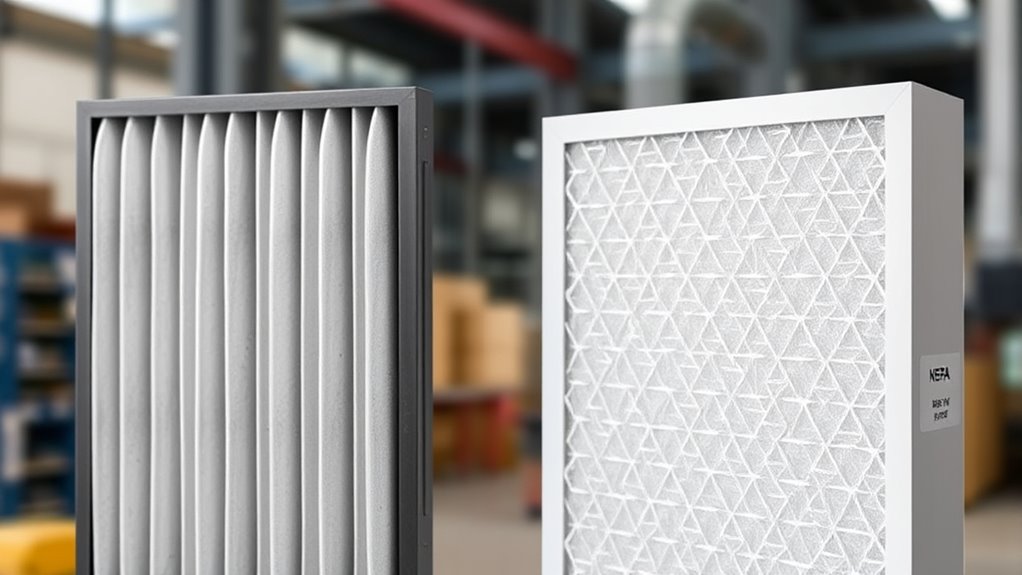
When choosing an air filtration system, understanding the differences between MERV and HEPA filters is essential. Both play crucial roles in air purification, but they serve different purposes due to their design and filter efficiency. Knowing how each filter works helps you select the right system for your needs, whether it’s improving indoor air quality or tackling specific airborne pollutants.
Understanding MERV and HEPA filters helps you choose the right air purification system for your needs.
MERV, or Minimum Efficiency Reporting Value, refers to a rating system that measures a filter’s ability to trap particles of various sizes. The higher the MERV rating, the better the filter is at capturing smaller particles, such as pollen, pet dander, and dust mites. MERV filters are quite versatile; they’re often found in residential HVAC systems, where they help reduce allergens and maintain cleaner air. They’re effective for general air purification, but their filter efficiency varies depending on the rating. For example, a MERV 8 filter is suitable for basic filtration, while a MERV 13 or higher can trap much smaller particles, including some bacteria and smoke particles. This range allows you to balance cost, airflow, and filtration needs, making MERV filters adaptable for different environments.
HEPA, or High-Efficiency Particulate Air, filters push the boundaries of air purification with their exceptional filter efficiency. These filters are designed to trap at least 99.97% of particles as small as 0.3 microns. That level of performance makes HEPA filters ideal for environments requiring the strictest air cleanliness, such as hospitals or allergy sufferers. If you’re concerned about airborne viruses, mold spores, or fine dust, a HEPA filter provides a significant advantage. However, HEPA filters are denser and can restrict airflow more than MERV filters, so they’re typically used in standalone air purifiers rather than integrated HVAC systems. Despite their higher cost and maintenance requirements, their superior filter efficiency makes them the go-to choice for critical air purification needs. Additionally, understanding the filter efficiency helps ensure you select the most suitable filter for your specific health and safety requirements.
Choosing between MERV and HEPA depends on your specific priorities. If you want broad, cost-effective air purification for everyday use, a high-rated MERV filter might suffice. But if you need maximum filtration for sensitive health conditions or specialized environments, a HEPA filter is worth the investment. Remember, a filter’s efficiency isn’t just about capturing particles—it’s about doing so consistently without sacrificing airflow or performance. Both types of filters have their strengths, so understanding their differences ensures you get the most effective air filtration system for your space.
Frequently Asked Questions
Can MERV and HEPA Filters Be Used Together Effectively?
Yes, you can use MERV and HEPA filters together effectively. Doing so enhances air quality by combining the strengths of each filter type. Just make certain filter compatibility with your system to avoid airflow issues. Using a MERV filter first captures larger particles, while the HEPA filter catches smaller pollutants, creating a layered approach that improves overall air purification and keeps your indoor environment healthier.
How Often Should Each Filter Type Be Replaced?
You should replace MERV filters every 3 to 6 months, depending on air quality and usage, while HEPA filters generally need replacement every 12 to 18 months. Follow the manufacturer’s replacement guidelines for maximum air filter lifespan, and check for signs of dirt or reduced airflow. Regularly changing your filters ensures cleaner air and maintains HVAC efficiency, preventing buildup that can compromise indoor air quality.
Are HEPA Filters Suitable for Large Industrial Spaces?
Absolutely, HEPA filters are suitable for large industrial spaces! They can handle the massive volume of air needed to improve industrial air quality, making filter installation essential for maintaining a safe environment. With their high efficiency, HEPA filters trap tiny particles that other systems miss, ensuring cleaner air. You’ll want to choose the right size and setup, but rest assured, they’re powerful enough to meet the demands of large-scale industrial air quality needs.
Do MERV Filters Remove Bacteria and Viruses?
MERV filters can remove some airborne pathogens, but their filter efficiency varies markedly. Generally, MERV ratings up to 13 can trap larger bacteria and viruses, but they might not catch the tiniest airborne pathogens effectively. For better removal of bacteria and viruses, HEPA filters are recommended because they offer higher filter efficiency, capturing 99.97% of particles as small as 0.3 microns, including most airborne pathogens.
What Are the Cost Differences Between MERV and HEPA Filters?
Thinking about filter costs? Well, brace yourself—HEPA filters tend to cost a pretty penny, with higher filter pricing due to their advanced filtration. MERV filters are usually more budget-friendly, making them perfect for everyday use. The cost comparison shows that HEPA filters can be 2-3 times pricier than MERVs, so if you’re on a tight budget, don’t expect to splurge on top-tier filtration without feeling it in your wallet.
Conclusion
Understanding the difference between MERV and HEPA filters helps you make better decisions for your air quality. Did you know that HEPA filters can trap 99.97% of particles as small as 0.3 microns? That’s incredibly effective at capturing allergens and viruses. So, whether you choose a MERV for everyday use or a HEPA for maximum filtration, you’re taking an essential step toward a healthier, cleaner environment. Your lungs will thank you for it.
Fall Picks
fall essentials
As an affiliate, we earn on qualifying purchases.