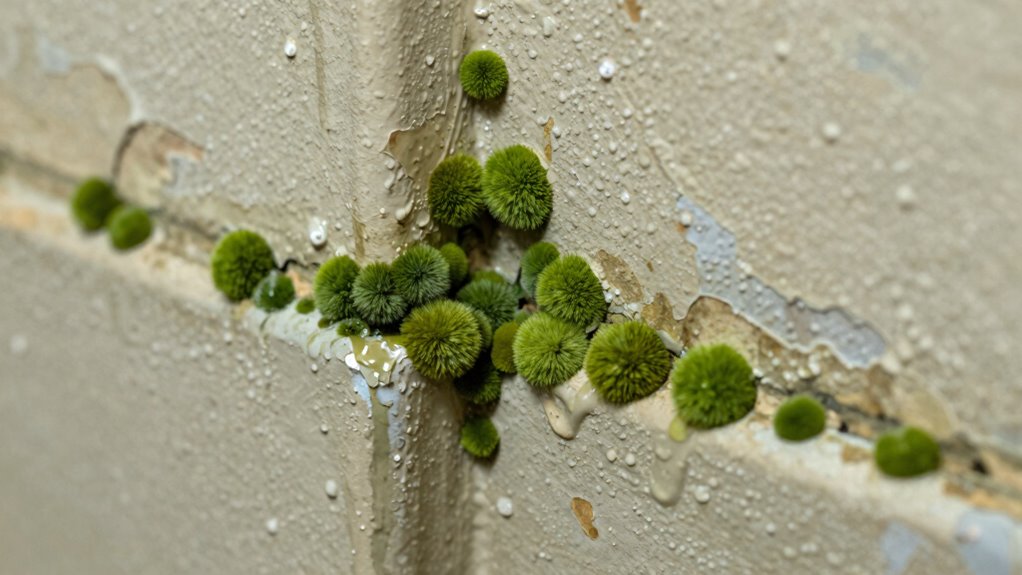

You should keep your indoor humidity below 60%, ideally between 30-50%, to prevent mold growth. When humidity levels rise above this range, moisture accumulates, creating perfect conditions for mold spores to settle and grow. Poor ventilation and damp areas can worsen the problem. If you want to understand how to better control moisture and keep mold at bay, there’s more to discover that can help protect your home and health.
Key Takeaways
- Mold growth accelerates when indoor humidity exceeds 60%.
- Maintaining humidity between 30-50% minimizes mold risk.
- High humidity creates ideal conditions for mold spores to settle and grow.
- Proper ventilation helps keep humidity below mold-promoting levels.
- Using dehumidifiers in damp areas effectively reduces moisture, preventing mold.
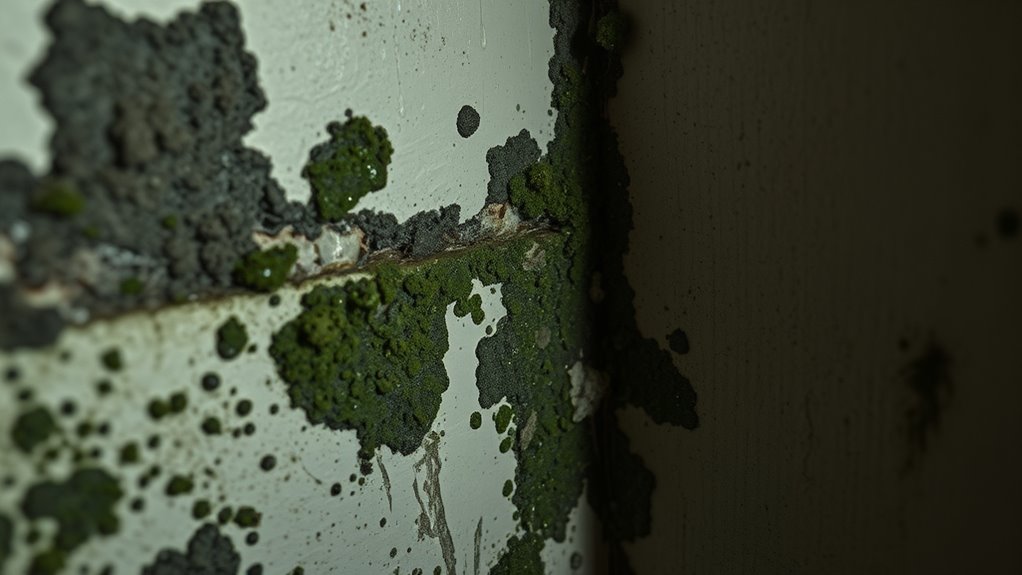
High humidity levels create the perfect environment for mold to thrive. When moisture accumulates in your home, it encourages mold spores to settle and grow, especially in areas that stay damp or poorly ventilated. To prevent this, practicing good ventilation is essential. Proper ventilation practices help reduce indoor humidity, making it harder for mold to take hold. You should aim to increase airflow in areas prone to moisture, like bathrooms, kitchens, and basements. Use exhaust fans during and after activities that generate humidity, such as showering or cooking. Opening windows whenever weather permits also helps circulate fresh air and lower indoor moisture levels.
Consistent ventilation practices are a key part of mold prevention. Don’t rely solely on passive methods like leaving windows open; consider installing exhaust fans with timers or humidity sensors to maintain ideal airflow. Ventilating poorly ventilated spaces can considerably cut down on moisture accumulation. Additionally, ensure that your home’s ventilation system is functioning properly and isn’t blocked by dust or debris. Regular maintenance of HVAC systems, including filters, keeps air moving efficiently and reduces the chances of mold spores settling in hidden corners.
Beyond just increasing airflow, managing indoor humidity levels is vital. Keep humidity below 60%, ideally around 30-50%, to inhibit mold growth. Using dehumidifiers in damp areas can help maintain these levels, especially in humid climates. When humidity remains high, even the best ventilation practices may not be enough, so combining these strategies is your best defense. Also, address any sources of water leaks or persistent dampness immediately, since moisture intrusion provides perfect conditions for mold spores to colonize.
You should be proactive in inspecting your home for signs of excess moisture or mold growth. Look for visible mold, musty odors, or damp patches on walls, ceilings, and floors. By establishing good ventilation practices and controlling indoor humidity, you’re actively working to prevent mold before it becomes a problem. Mold prevention isn’t a one-time effort but an ongoing process that involves monitoring humidity levels and ensuring proper airflow. Remember, mold spores are everywhere, but controlling moisture and ventilation reduces their chances of growing into visible, health-threatening colonies. Taking these steps keeps your home safer, healthier, and mold-free.
Additionally, understanding indoor air quality and how it influences mold growth can help you make more informed decisions about ventilation and moisture control.
Frequently Asked Questions
How Quickly Can Mold Grow at High Humidity Levels?
Mold growth can begin within 24 to 48 hours when humidity levels stay above 60%. High humidity creates the perfect environment for mold spores to settle and multiply quickly. If you notice moisture or dampness, it’s essential to reduce humidity levels promptly, ideally below 50%, to slow down or prevent mold growth. Acting fast helps protect your home and health from mold-related issues.
Are Some Materials More Prone to Mold Growth Than Others?
Certain materials are more prone to mold growth because they’re porous and retain moisture easily. You’ll find that fabrics, drywall, wood, and carpet are especially vulnerable, as they hold onto moisture longer than non-porous surfaces like metal or plastic. When these porous materials stay damp, mold spores settle and thrive. To prevent this, keep these surfaces dry and well-ventilated, reducing the risk of mold development.
Can Mold Develop in Dry Environments With Occasional Humidity Spikes?
Think of your home as a delicate dance floor. In dry environments, mold usually stays off the stage, but humidity fluctuations can change the tune. When occasional humidity spikes occur, they create brief, damp spots perfect for mold to take root. These fleeting moments of increased moisture, even in generally dry spaces, can encourage mold growth if you don’t monitor and control humidity levels carefully.
What Health Issues Are Caused by Mold Exposure?
Mold exposure can cause you to experience respiratory issues like coughing, wheezing, and throat irritation. You might also develop allergic reactions such as sneezing, runny nose, or itchy eyes. For some, mold exposure worsens asthma symptoms or triggers sinus infections. If you notice these health problems, it’s essential to address mold growth promptly and improve ventilation to reduce your risk of ongoing health issues.
How Effective Are Dehumidifiers in Preventing Mold Growth?
Dehumidifiers dramatically diminish mold’s menace by maintaining moisture levels below 60%. Proper dehumidifier maintenance maximizes their mold prevention prowess, preventing mold from multiplying. Regularly emptying, cleaning filters, and monitoring humidity guarantees peak operation. Incorporate additional mold prevention techniques like fixing leaks and improving ventilation. With consistent care, dehumidifiers become a powerful tool in protecting your space from mold growth and maintaining a healthier, mold-free environment.
Conclusion
So, keep the humidity in check like a gentle hand guiding a delicate dance. When moisture rises above 60%, mold’s shadow lengthens, waiting to take hold. Think of your home as a fortress, where controlling humidity is your shield against mold’s silent invasion. Stay vigilant, breathe easy, and let the air stay crisp and dry. By maintaining these thresholds, you’re weaving a barrier, a shield of freshness that keeps mold at bay and your space safe.